
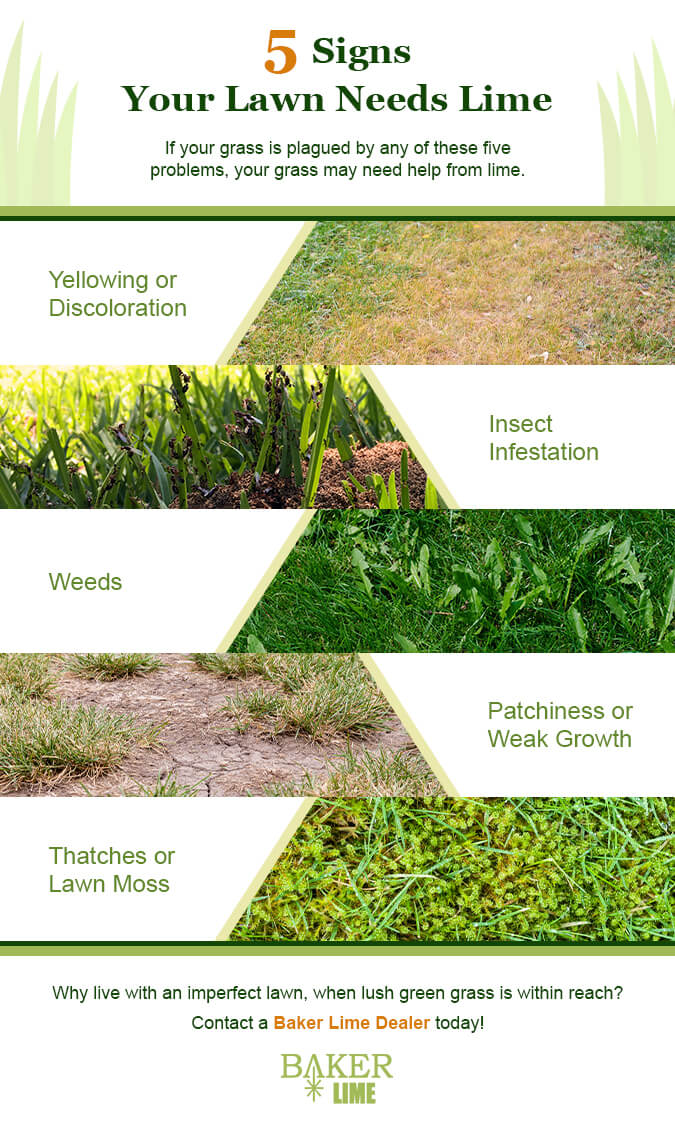
Image Source: www.bakerlime.com
How Much Lime To Add To Lawn: Your Guide to Greener Grass
To determine how much lime to add to your lawn, the most accurate method is to perform a soil test. This test will reveal your soil’s pH level and recommend specific lime application rates. Generally, you’ll need to apply between 5 to 10 pounds of lime per 100 square feet to raise the pH by one full point in most soil types, but this can vary significantly.
A healthy, vibrant lawn is the envy of the neighborhood. While proper watering, mowing, and fertilization play crucial roles, the unsung hero of lush turf is often overlooked: soil pH. Your lawn’s soil needs to be within a specific pH range for essential nutrients to be available to the grass roots. If your soil is too acidic, your grass will struggle, no matter how much fertilizer you apply. This is where lime comes in. But how much lime should you add to your lawn? This comprehensive guide will walk you through everything you need to know to achieve greener, healthier grass.
Fathoming Your Soil’s pH Needs
The foundation of successful lawn care lies in understanding your soil’s characteristics. Soil pH is a measure of acidity or alkalinity on a scale of 0 to 14, with 7 being neutral. Most turfgrasses thrive in a slightly acidic to neutral pH range, typically between 6.0 and 7.0.
- Acidic Soil (pH below 6.0): In acidic soils, essential nutrients like nitrogen, phosphorus, and potassium become less available to grass roots. Aluminum and manganese, which are toxic to plants in high concentrations, become more soluble and can damage grass. You might notice stunted growth, yellowing leaves, and a thinner turf.
- Alkaline Soil (pH above 7.0): In alkaline soils, nutrients like iron, manganese, and zinc can become locked up, leading to deficiencies. This often manifests as yellowing grass, particularly between the veins of the leaves (chlorosis).
Why is this information critical? Because adding lime is specifically designed to correct acidic soil conditions by raising the pH. If your soil pH is already within the ideal range or is alkaline, adding lime will not benefit your lawn and could even cause harm.
The Crucial Role of a Soil Test for Lime
Before you even think about buying lime, the absolute first step is to get a soil test for lime. This is non-negotiable if you want effective and safe results. Relying on guesswork can lead to over-liming, which can create its own set of problems, including nutrient deficiencies and potential toxicity.
How to Get a Soil Test:
- Contact your local Cooperative Extension Office: Most counties have an Extension office affiliated with a state university. They offer affordable, accurate soil testing services. You’ll usually get a kit with instructions on how to collect soil samples.
- Private Soil Testing Labs: Several private labs also offer soil testing services, though they may be more expensive.
- DIY Test Kits: While readily available, these kits are generally less accurate and provide less detailed recommendations than professional lab tests. Use them only as a very rough guide.
What Your Soil Test Will Tell You:
A good soil test report will provide:
- Soil pH: The current acidity or alkalinity of your soil.
- Nutrient Levels: Levels of essential nutrients like phosphorus, potassium, calcium, and magnesium.
- Organic Matter Content: An indicator of soil health and its ability to retain moisture and nutrients.
- Lime Recommendations: This is the key! The report will specify the type and amount of lime needed to adjust your soil pH to the optimal range for turfgrass. It will often give recommendations in pounds per 100 square feet.
Deciphering Lime Application Rates
Once you have your soil test results, you’ll have a clear understanding of how much lime for soil pH adjustment is needed. The report will typically specify the recommended application rate in pounds per 100 square feet.
General Guidelines (Always Refer to Your Soil Test!):
- To raise pH by 0.5 points: This usually requires about 5 pounds of lime per 100 square feet.
- To raise pH by 1.0 point: This typically requires about 10 pounds of lime per 100 square feet.
Important Considerations for Lime Application Rates:
- Soil Type: Soils with a higher clay content have a greater cation exchange capacity (CEC) and require more lime to change the pH compared to sandy soils.
- Severity of Acidity: The lower your soil pH, the more lime you’ll need to apply to achieve the desired increase.
- Type of Lime: Different types of lime have varying effectiveness and nutrient content.
Choosing the Best Lime for Your Lawn
Not all lime is created equal. The two most common types of agricultural lime used for lawns are dolomitic lime vs calcitic lime. Understanding the difference will help you choose the best lime for lawns.
Dolomitic Lime vs Calcitic Lime
Both dolomitic and calcitic lime are derived from limestone, but they differ in their mineral composition and, consequently, their calcium and magnesium content.
-
Calcitic Lime (Calcium Carbonate – CaCO₃):
- Contains primarily calcium carbonate.
- Is a good source of calcium.
- Reacts faster in the soil than dolomitic lime.
- Recommended for soils that are deficient in calcium but have adequate magnesium levels.
-
Dolomitic Lime (Calcium Magnesium Carbonate – CaMg(CO₃)₂):
- Contains both calcium and magnesium carbonate.
- Is a good source of both calcium and magnesium.
- Reacts more slowly in the soil than calcitic lime.
- Recommended for soils that are deficient in both calcium and magnesium, or primarily magnesium.
How to Decide:
Your soil test report should guide your decision. If your soil test indicates a deficiency in magnesium, dolomitic lime is generally the preferred choice. If your soil has sufficient magnesium levels, calcitic lime is perfectly suitable and will provide calcium.
Other Forms of Lime
- Ground Limestone: This is the most common form. It can be further categorized by particle size. Finer ground limestone reacts faster with soil but can be dusty and harder to spread evenly. Coarser ground limestone reacts slower but is easier to handle.
- Pelletized Lime: This lime has been processed into small pellets. It’s less dusty, easier to spread evenly, and often preferred for home lawn applications. While it might react slightly slower than finely ground lime, the ease of application often makes it the best lime for lawns for many homeowners.
When to Lime a Lawn: Timing is Everything
Knowing when to lime a lawn is as important as knowing how much. Applying lime at the wrong time can be ineffective or even detrimental.
Ideal Times for Liming:
- Fall: This is often considered the best time to lime a lawn. The soil is moist, and the cool weather allows the lime to gradually work into the soil over the winter months. The freezing and thawing cycles can also help break down the lime and incorporate it into the soil.
- Spring: If you miss the fall window, early spring is the next best option. Aim to apply lime several weeks before you plan to fertilize or seed your lawn to allow it to start adjusting the soil pH.
Times to Avoid Liming:
- Summer: Avoid applying lime during hot, dry summer months. The grass is already under stress, and lime can further dehydrate it.
- Late Winter/Early Spring Freeze-Thaw Cycles: While fall is ideal, avoid applying lime just before or during periods of heavy frost or significant freeze-thaw cycles in late winter or early spring, as this can lead to lime being washed away before it can react with the soil.
- When the Lawn is Wet or Dormant: Applying lime when the grass is wet can cause it to clump and stick to the blades, which is inefficient and can potentially harm the grass.
How Often to Lime:
This depends entirely on your soil test results and how much your pH needs to be adjusted. Some soils may only need liming every 2-3 years, while others might require annual applications until the pH is corrected. Never apply more than the recommended amount from your soil test in a single application. It’s better to make multiple, smaller applications over time to gradually adjust the pH.
How to Apply Lime to Lawn: The Mechanics of Greener Grass
Now that you know why, when, and what kind of lime to use, let’s delve into how to apply lime to lawn effectively.
Equipment You’ll Need:
- Lime: As determined by your soil test.
- Spreader:
- Broadcast Spreader (Rotary Spreader): This is the most common and recommended type for spreading granular lime. It casts the material in a wide arc.
- Drop Spreader: This type drops the material in a narrow band directly in front of the spreader. It’s more precise for edge applications but can be more time-consuming for large areas.
- Gloves and Eye Protection: To protect yourself from dust.
- Measuring Tools: For accurate measurement of lime and lawn area.
Steps for Applying Lime:
-
Measure Your Lawn: Accurately calculate the square footage of the area you need to lime. This is crucial for determining the correct amount of lime.
- Area = Length × Width
- For irregular shapes, break them down into smaller, regular shapes (squares, rectangles, triangles) and add their areas.
-
Calculate the Amount of Lime: Based on your soil test recommendations and your lawn’s square footage, calculate the total amount of lime needed. For example, if your test recommends 5 lbs per 100 sq ft and your lawn is 1000 sq ft, you’ll need 50 lbs of lime (1000 sq ft / 100 sq ft * 5 lbs).
-
Calibrate Your Spreader: This is a critical step often overlooked. Different spreaders and different types of lime will require different settings.
- Read the Spreader Manual: Most spreaders have charts or guides for common lawn products.
- Consult the Lime Bag: The lime bag itself will usually provide recommended spreader settings for various brands and models. These are a good starting point.
- Test Application: For precise calibration, measure out a known quantity of lime (e.g., 1 lb) and spread it over a small, measured area (e.g., 100 sq ft) using a specific spreader setting. Weigh the remaining lime. If you used approximately the correct amount, your setting is likely accurate. Adjust as needed.
-
Set Your Spreader: Once calibrated, set your spreader to the determined setting.
-
Load the Spreader: Carefully pour the measured lime into the spreader hopper. Wear gloves and eye protection.
-
Apply the Lime:
- Start at the Edge: Begin spreading along one edge of your lawn, walking at a steady, consistent pace.
- Overlap Passes: For broadcast spreaders, overlap your passes by about half the spreader’s width to ensure even coverage and avoid striping.
- Go in Multiple Directions: For best results, make two passes over the lawn, the second pass perpendicular to the first. This helps ensure complete and even lawn lime coverage.
- Avoid Overlapping Extensively: While overlap is necessary, excessive overlap can lead to over-application in certain areas.
-
Clean Your Equipment: Rinse your spreader thoroughly after use to prevent lime from clogging the mechanism or corroding the metal parts.
Garden Lime for Lawn: Is it the Same?
Yes, garden lime for lawn use is generally the same type of lime you would find in agricultural or landscaping supply stores. The term “garden lime” often refers to ground limestone. When purchasing, look for either calcitic or dolomitic lime, depending on your soil test recommendations. The key is to ensure it’s a product intended for soil amendment and not industrial lime.
Fathoming Dolomitic Lime vs Calcitic Lime (A Deeper Dive)
We touched on this earlier, but let’s explore the dolomitic lime vs calcitic lime choice a bit further.
| Feature | Dolomitic Lime | Calcitic Lime |
|---|---|---|
| Composition | Calcium Magnesium Carbonate (CaMg(CO₃)₂) | Calcium Carbonate (CaCO₃) |
| Nutrients | Calcium and Magnesium | Primarily Calcium |
| Reactivity | Slower to react | Faster to react |
| Best For | Soils deficient in Magnesium and Calcium | Soils deficient in Calcium, adequate Magnesium |
| Effect on pH | Raises pH | Raises pH |
| Cost | Can be slightly more expensive due to magnesium | Generally less expensive |
| Homeowner Use | Good choice if magnesium is needed | Good choice if only calcium is needed |
What if my soil test doesn’t specify magnesium?
If your soil test does not explicitly mention a magnesium deficiency, but it does indicate a need for lime, calcitic lime is usually a safe and effective choice. It will address the pH issue and provide essential calcium without potentially over-applying magnesium.
Understanding Lime Spreader Settings
Proper lime spreader settings are crucial for even application and to avoid damaging your lawn. As mentioned, the best way to set your spreader is through a combination of the manufacturer’s recommendations and a quick calibration test.
General Tips for Spreader Settings:
- Start Low: If unsure, start with a lower setting and make a test pass. You can always increase it.
- Consistency is Key: Maintain a consistent walking speed and pattern.
- Read the Lime Bag: The bag will often have specific settings for popular spreader models.
- Weather Conditions: Avoid spreading in windy conditions, as this can blow the lime off course and lead to uneven coverage.
Common Mistakes to Avoid When Liming Your Lawn
Even with the best intentions, several common mistakes can hinder your efforts to achieve greener grass.
- Skipping the Soil Test: This is the most significant mistake. Applying lime without knowing your soil’s pH can lead to ineffective treatment or even harm.
- Over-Application: Applying more lime than recommended can raise the pH too high, locking up essential nutrients and stressing your grass.
- Under-Application: Not applying enough lime will not correct the soil pH sufficiently, and you won’t see the desired results.
- Improper Timing: Liming during hot, dry weather or when the lawn is excessively wet can be detrimental.
- Uneven Spreading: This results in patchy areas where the pH is corrected and other areas where it is not, leading to an unevenly colored and growing lawn.
- Using the Wrong Type of Lime: Not considering your soil’s specific nutrient needs (especially magnesium) when choosing between dolomitic and calcitic lime.
- Applying Lime with Fertilizer: While you might see combo products, it’s generally best to apply lime and fertilizer separately, with lime applied several weeks before or after fertilization, to allow each to work effectively.
Frequently Asked Questions (FAQ)
Q1: How often should I re-lime my lawn?
A: The frequency of liming depends on your soil test results. Some lawns may only need it every 2-3 years, while others might require annual applications until the pH is corrected. Always follow your soil test recommendations.
Q2: Can I apply lime and fertilizer at the same time?
A: It’s generally not recommended. Lime works to adjust soil pH, and fertilizer provides nutrients. Applying them together can interfere with each other’s effectiveness. It’s best to apply lime several weeks before or after fertilizing.
Q3: What happens if I put too much lime on my lawn?
A: Over-liming can raise the soil pH too high, making essential nutrients like iron, manganese, and zinc unavailable to your grass, leading to deficiencies and yellowing. It can also create an environment where certain soil-borne diseases are more prevalent.
Q4: Is pelletized lime better than ground lime for my lawn?
A: Pelletized lime is often preferred for home lawns because it’s easier to spread evenly, less dusty, and generally easier to handle. While finely ground lime reacts slightly faster, the ease of application with pelletized lime often makes it the more practical choice.
Q5: My lawn looks yellow. Is it because of my soil pH?
A: Yellowing grass can be caused by many factors, including nutrient deficiencies (like iron or nitrogen), overwatering, underwatering, disease, or pests. However, if your soil is too acidic (low pH), it can make certain nutrients unavailable, leading to yellowing. A soil test will help determine if pH is the culprit.
Q6: How long does it take for lime to work on my lawn?
A: The speed at which lime works depends on the type of lime, soil type, and moisture. Finely ground lime begins to react within weeks, while coarser or pelletized lime can take months. It’s a gradual process, with noticeable effects on soil pH often taking 3-6 months or even longer.
Achieving a lush, green lawn is a rewarding endeavor. By understanding your soil’s needs, conducting regular soil tests, and applying the correct amount of lime at the right time, you’ll be well on your way to a healthier, more vibrant turf. Remember, patience and precision are your best allies in this green quest.