
A typical lawn mower battery operates at 12 volts (V). This is the standard voltage for most gasoline-powered walk-behind and riding mowers, though electric mowers can vary significantly. Knowing your lawn mower battery voltage is crucial for proper maintenance and replacement.
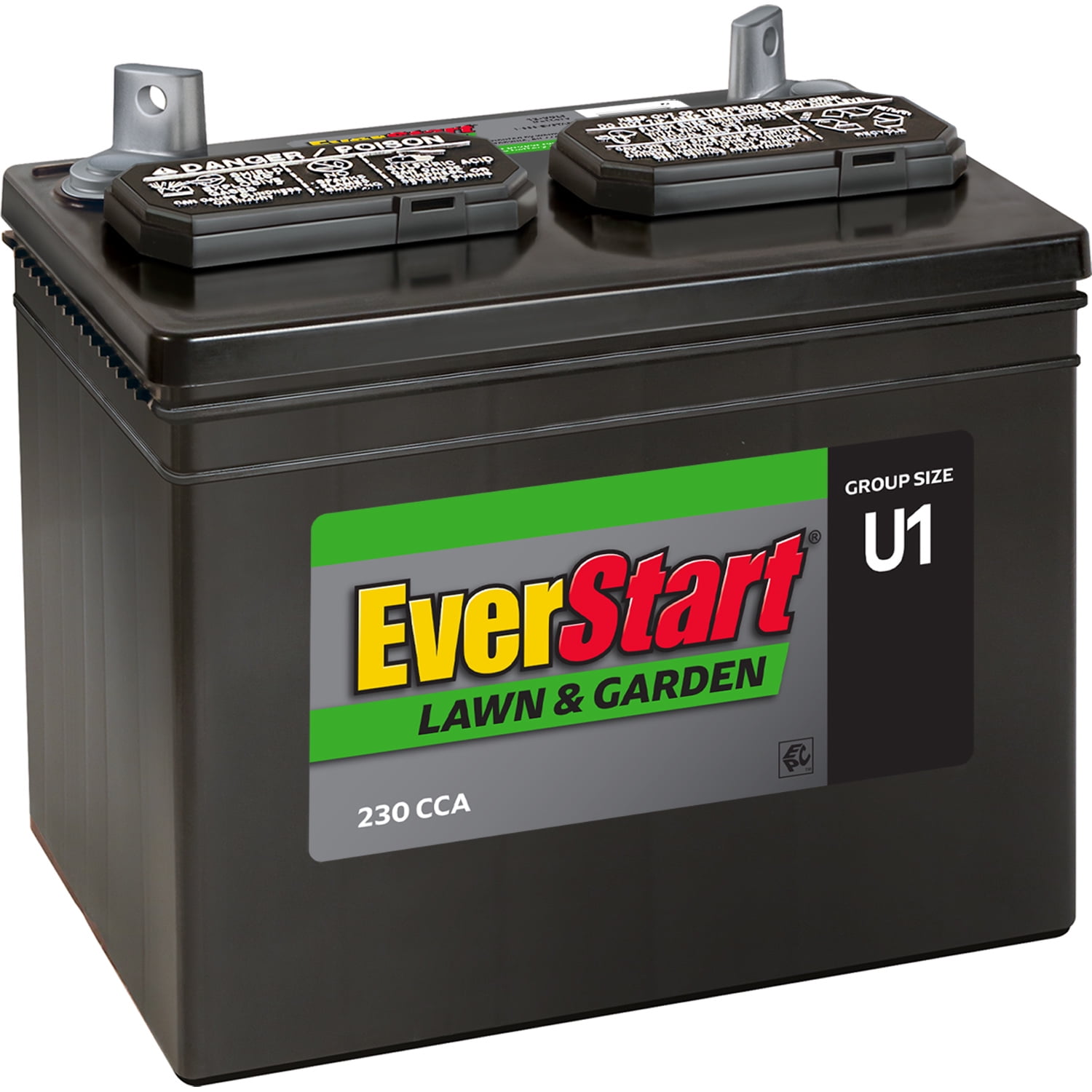
Image Source: i5.walmartimages.com
Deciphering Lawn Mower Battery Voltage
Choosing the right battery for your lawn mower is more than just picking one that fits. The voltage is a key specification, directly impacting how your mower starts and runs. This guide will help you navigate the world of lawn mower batteries, from their voltage to their power, ensuring your lawn care equipment performs at its best.
The Role of Voltage in Mower Operation
Voltage, measured in volts (V), is the electrical potential difference that drives the flow of electricity. Think of it as the “push” behind the electrical current. In a lawn mower, the battery’s voltage determines:
- Starting Power: A higher voltage can provide more torque to the starter motor, making it easier to crank the engine, especially in colder weather.
- Electrical System Functionality: Many electronic components on modern mowers, such as lights, charging ports, and control panels, rely on a specific voltage to operate correctly.
- Battery Compatibility: Using a battery with the wrong voltage can damage your mower’s electrical system.
Common Lawn Mower Battery Voltage Standards
When you look at a lawn mower battery, you’ll typically see a voltage rating. The overwhelming majority of gasoline-powered lawn mowers use a 12-volt battery. This is a standardized voltage across the automotive and small engine industries, making replacement easier.
However, this isn’t the only voltage you might encounter.
6-Volt Systems: A Look Back
While less common today, some older or very small walk-behind mowers might have used 6-volt batteries. These are significantly less powerful than 12-volt systems and are rarely found in modern equipment. If you have an antique mower or a very basic model, it’s worth checking if it’s a 6-volt system, but the vast majority will be 12-volt.
Electric Mowers: A Different Ballgame
Electric lawn mowers, particularly cordless models, operate on different principles and often utilize different battery chemistries and voltages.
- Cordless Mower Battery Voltage: These can vary widely. You’ll find cordless mowers with battery packs ranging from 18V, 36V, 40V, 56V, 60V, 80V, and even higher. These systems are designed to power the electric motor directly, often without a separate starting system like a gasoline engine. The higher the voltage, generally the more power the mower can deliver.
- Electric Lawn Mower Battery Types: Common types include Lithium-ion (Li-ion) and Nickel-Cadmium (Ni-Cd). Li-ion is now the dominant technology due to its longer lifespan, lighter weight, and better power delivery.
Fathoming Battery Voltage for Lawn Mower Needs
Understanding the battery voltage for lawn mower use involves knowing what’s standard and what might be specific to your machine.
Walk-Behind Mower Batteries
Most walk-behind mowers with electric start rely on a 12-volt battery. These are typically compact and designed to provide enough power for a few engine starts and to run any integrated accessories.
Battery Size and Type for Walk-Behind Mowers
These 12V batteries often resemble small automotive batteries but are usually a Group U1 size or similar. They are commonly of the lead-acid variety, either flooded (wet cell) or sealed (AGM – Absorbed Glass Mat).
- Flooded Lead-Acid: These are the traditional “wet” batteries. They require checking and topping up the electrolyte levels with distilled water. They are generally less expensive but require more maintenance.
- AGM Batteries: These are sealed and maintenance-free. The electrolyte is absorbed in a matting material. They are more resistant to vibration and can handle deeper discharge cycles better than flooded batteries. They are often a premium choice for longevity.
Riding Mower Battery Voltage: Powering the Ride
Riding mower battery voltage is almost universally 12 volts (V). This is because riding mowers have larger engines that require more cranking power than walk-behind mowers. A 12V system provides the necessary juice to turn over these more robust engines, along with powering lights, accessories, and potentially hydrostatic transmissions.
Lawn Tractor Battery Volts: Specifics for the Big Jobs
Similarly, lawn tractor battery volts will also be 12 volts (V). Lawn tractors are essentially smaller versions of riding mowers, often featuring more powerful engines and additional features, all of which demand a 12V electrical supply.
Common Battery Group Sizes for Riding Mowers and Lawn Tractors
The physical size and terminal configuration of these 12V batteries are critical. Common group sizes for riding mowers and lawn tractors include:
- Group U1: This is a common size for smaller riding mowers and some larger walk-behind mowers.
- Group U1R: Similar to U1, but with reversed terminal orientation.
- Group 24: Larger and more powerful, often found in bigger riding mowers and tractors.
- Group 26: Another common size for various riding mower applications.
- Group 35: Often used in more compact riding mowers.
It’s essential to consult your mower’s owner’s manual or measure your existing battery to determine the correct group size and dimensions.
Small Engine Battery Voltage: The Heartbeat of Many Machines
The term small engine battery voltage often refers to batteries used in machinery powered by small internal combustion engines. This primarily includes lawn mowers, but also other equipment like snow blowers, garden tractors, and some ATVs. For the vast majority of these applications, the small engine battery voltage will be 12 volts (V).
Lead-Acid vs. Lithium-Ion in Small Engine Applications
While lead-acid batteries have been the standard for decades, Lithium-ion (Li-ion) batteries are starting to make inroads in the small engine market.
- Lead-Acid (SLA):
- Pros: Lower initial cost, widely available, robust technology.
- Cons: Heavier, shorter lifespan, sensitive to deep discharge, can lose charge over winter if not maintained.
- Lithium-ion (Li-ion):
- Pros: Much lighter, longer lifespan, excellent power delivery, faster charging, hold charge longer, more resistant to deep discharge.
- Cons: Higher initial cost, requires specific charging systems, may not be compatible with older charging systems.
If you’re considering a Li-ion replacement for a lead-acid battery, ensure it’s designed as a direct replacement and that your mower’s charging system is compatible.
Exploring Lawn Mower Battery Power: Beyond Just Voltage
While voltage is a critical specification, lawn mower battery power is a combination of voltage and amperage-hour (Ah) rating, as well as Cold Cranking Amps (CCA).
Ampere-Hours (Ah): The Capacity Measure
Ampere-hours (Ah) measure the battery’s capacity – how much electrical charge it can store and deliver over time. A higher Ah rating means the battery can power your mower for longer or provide more starting power before depleting.
- Example: A 12V, 20Ah battery can theoretically deliver 1 amp for 20 hours, or 2 amps for 10 hours, and so on.
For riding mowers and lawn tractors, you’ll often see Ah ratings between 14Ah and 35Ah, depending on the size and power requirements of the mower.
Cold Cranking Amps (CCA): The Starting Punch
Cold Cranking Amps (CCA) indicate the battery’s ability to deliver a burst of current at cold temperatures (0°F or -18°C). This is crucial for starting engines in colder weather. A higher CCA rating means a stronger start.
- Typical CCA for lawn mower batteries: Range from 150 CCA to 350 CCA or more for larger riding mowers.
Watt-Hours (Wh): A More Complete Picture
Watt-hours (Wh) provide a more comprehensive measure of battery power by combining voltage and Ah (Wh = V × Ah). This metric is particularly useful when comparing batteries with different voltages, like those found in electric mowers.
- Example:
- A 12V, 20Ah battery has a power of 12V * 20Ah = 240Wh.
- A 40V, 5Ah battery (common in cordless mowers) has a power of 40V * 5Ah = 200Wh.
This shows that while the 40V battery has a lower Wh rating, its higher voltage can still translate to significant power for an electric motor.
Maintaining Your Lawn Mower Battery
Proper care ensures your battery lasts longer and performs reliably.
Charging Your Lawn Mower Battery
- Use the Right Charger: Always use a charger specifically designed for your battery type (lead-acid or lithium-ion) and voltage. A charger with a lower amperage rating (e.g., 2-amp charger) is safer for maintaining charge and preventing overcharging.
- Avoid Overcharging: Leaving a battery on a charger for extended periods can damage it, especially older lead-acid types. Many modern “smart” chargers have a trickle-charge mode that automatically stops charging when the battery is full.
- Charging Frequency: Charge your battery whenever it shows signs of weakness or before storing the mower for an extended period.
Storing Your Lawn Mower Battery
- Clean Terminals: Ensure battery terminals are clean and free of corrosion. Use a wire brush to clean them if necessary.
- Cool, Dry Place: Store the battery in a cool, dry place away from extreme temperatures.
- Maintain Charge: For lead-acid batteries, it’s best to use a trickle charger or a battery maintainer if the mower will be stored for more than a month. Li-ion batteries hold their charge better but can still benefit from occasional top-ups.
Winterizing Your Mower
- Remove and Charge: It’s generally recommended to remove the battery from your mower during winter storage. Clean the terminals and store the battery in a cool, dry place, ideally on a shelf off the concrete floor (though this is more critical for older flooded lead-acid batteries).
- Use a Maintainer: Connect a battery maintainer to keep the charge optimal throughout the winter.
Common Issues and Troubleshooting
My Mower Won’t Start – What Could Be Wrong?
If your mower won’t start, the battery is a prime suspect.
- Check Battery Connections: Ensure the terminals are clean and the cables are securely attached. Loose or corroded connections can prevent power flow.
- Test Battery Voltage: Use a voltmeter to check the battery’s voltage. A healthy 12V battery should read around 12.6V when fully charged. If it’s significantly lower (e.g., below 12V), it may be discharged or failing.
- Inspect Battery for Damage: Look for cracks, leaks, or swelling, which indicate a damaged battery.
- Consider Battery Age: Lead-acid batteries typically last 3-5 years. If yours is older, it might be time for a replacement.
What Happens If I Use the Wrong Voltage Battery?
Connecting a battery with a voltage significantly higher than what your mower’s electrical system is designed for can cause serious damage.
- Too High Voltage: Can burn out electronic components, fry wiring, and damage the starter motor.
- Too Low Voltage: May not provide enough power to start the engine, or could lead to weak performance and premature wear on the starter motor trying to compensate.
Always match the voltage of the replacement battery to the original battery and your mower’s specifications.
Frequently Asked Questions (FAQ)
Can I use a different Ah rating on my lawn mower battery?
Yes, you can generally use a battery with a higher Ah rating than your original one. This will provide longer run times or more starting power. However, ensure the physical dimensions and terminal type are correct. Avoid using a battery with a lower Ah rating, as it will reduce your mower’s performance and potentially shorten the battery’s lifespan.
What is the difference between an AGM battery and a standard lead-acid battery for my mower?
AGM (Absorbed Glass Mat) batteries are a type of sealed lead-acid battery where the electrolyte is absorbed in a matting material. They are maintenance-free, more resistant to vibration and shock, and can handle deeper discharge cycles. Standard flooded lead-acid batteries require periodic checking and topping up of electrolyte levels and are generally less robust.
How do I know when my lawn mower battery needs replacing?
Signs your battery might need replacing include:
* Slow engine cranking.
* The mower starting intermittently.
* The battery not holding a charge for long.
* Visible damage like swelling or corrosion.
* The battery being several years old (typically 3-5 years for lead-acid).
Can I use a car battery in my lawn mower?
While both are 12V, it’s generally not recommended. Car batteries are designed for high cranking amps for short bursts. Lawn mower batteries are designed for deeper discharge cycles and often have different physical dimensions and terminal types. Using a car battery might not fit correctly, could be overkill in terms of power, or might not last as long in a mower application. Always use a battery specifically designed for lawn mower or small engine use.
How do I check the voltage of my lawn mower battery?
You can check the voltage using a multimeter or voltmeter. Set the multimeter to DC voltage (VDC) and place the red probe on the positive (+) terminal and the black probe on the negative (-) terminal of the battery. A fully charged 12V battery should read approximately 12.6 volts.
What are common CCA ratings for riding mower batteries?
Common CCA ratings for riding mower batteries range from 150 CCA to 350 CCA or higher. The required CCA depends on the engine size and starting requirements of the specific riding mower model. Always check your owner’s manual for the recommended CCA.
By understanding the voltage, capacity, and maintenance needs of your lawn mower battery, you can ensure your equipment starts reliably and performs at its peak, season after season.