
A typical lawn mower uses between 0.25 to 1 gallon of petrol per acre, depending on various factors. This article will explore how much petrol your lawn mower might use and what influences its fuel consumption.
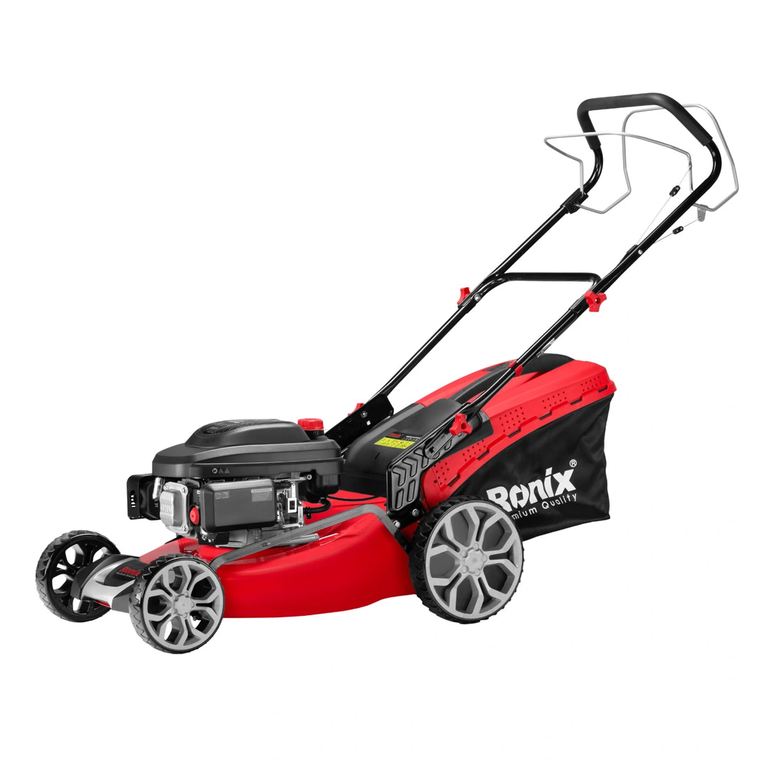
Image Source: ronixtools.com
Fathoming Lawn Mower Fuel Consumption
Figuring out how much petrol your lawn mower uses is a common question for homeowners. The amount of fuel a lawn mower consumes, often referred to as fuel consumption or lawn mower gas usage, isn’t a fixed number. It varies greatly based on several key elements. We’ll dive deep into these factors, helping you understand your mower’s mower fuel efficiency and how to potentially save money on fuel. We’ll also touch on how often to refuel, what gallon per acre really means, the impact of engine size and fuel, fuel tank capacity, and the specifics of small engine fuel use.
Factors Shaping Your Mower’s Thirst
Several aspects contribute to how much petrol your lawn mower drinks. Think of it like asking how much water a person drinks – it depends on their size, activity level, and the weather!
Engine Size and Fuel Needs
The heart of your lawn mower is its engine. Larger engines generally need more fuel than smaller ones to operate. This is a straightforward relationship: a bigger engine has to work harder to power the blades and move the mower.
- Engine Displacement: This is often measured in cubic centimeters (cc). A mower with a 150cc engine will typically use less fuel than one with a 200cc engine.
- Horsepower (HP): Similar to displacement, higher horsepower engines usually demand more fuel. They are designed for more demanding tasks or larger areas.
Mower Type and Design
The kind of lawn mower you own also plays a significant role in its fuel consumption.
- Push Mowers: These are generally the most fuel-efficient as they have smaller engines and are powered by your effort as well as the engine.
- Self-Propelled Mowers: These use more fuel than push mowers because the engine not only powers the blades but also moves the mower forward. The more assistance the mower provides, the more fuel it will burn.
- Riding Mowers and Garden Tractors: These have the largest engines and will consume the most petrol. Their fuel usage is measured differently, often in gallons per hour rather than per acre.
- Robotic Mowers: These are electric and use no petrol at all, offering a completely different approach to lawn care.
Lawn Conditions and Terrain
The grass and the ground you’re mowing significantly affect how hard your mower’s engine has to work, and therefore, its lawn mower gas usage.
- Grass Height and Density: Mowing tall, thick grass requires much more engine power than mowing short, sparse grass. If you let your grass grow too long between cuts, your mower will struggle, use more fuel, and you’ll be asking how often to refuel much sooner.
- Terrain: Mowing on a steep hill is harder work for the engine than mowing on a flat surface. The mower has to overcome gravity, increasing small engine fuel use.
- Dampness of Grass: Wet grass is heavier and can clog the mower deck more easily, forcing the engine to work harder and consume more fuel.
Mowing Techniques and Operator Habits
How you use your mower can also impact how much petrol it uses.
- Cutting Height: Cutting more grass at once (e.g., mowing every two weeks instead of weekly) means the engine works harder. It’s generally more fuel-efficient to mow more frequently and remove less grass each time.
- Mowing Speed: Trying to rush through the job by moving too fast can strain the engine and increase fuel consumption. It’s better to maintain a steady, moderate pace.
- Blade Condition: Dull blades don’t cut grass efficiently; they tear it. This makes the engine work harder. Keeping your mower blades sharp is crucial for both mower fuel efficiency and the health of your lawn.
- Carburetor Adjustment: An improperly adjusted carburetor can lead to a rich fuel mixture (too much fuel, not enough air), wasting petrol and reducing mower fuel efficiency.
Engine Maintenance
Regular maintenance is key to keeping your mower running smoothly and efficiently.
- Air Filter: A clogged air filter restricts airflow to the engine, forcing it to work harder and consume more fuel. Cleaning or replacing the air filter regularly improves small engine fuel use.
- Spark Plug: A fouled or worn spark plug can lead to incomplete combustion, resulting in wasted fuel and reduced power.
- Oil Level: Proper lubrication is essential. Low oil levels can cause increased friction and heat, impacting engine performance and fuel efficiency.
Quantifying Fuel Use: Gallons Per Hour and Gallons Per Acre
To get a better grasp of lawn mower gas usage, it’s helpful to look at common measurements.
Petrol Per Hour
For larger mowers like riding mowers and tractors, petrol per hour is a common metric. This tells you how much fuel the mower uses for every hour it’s running.
- Small Riding Mowers (10-15 HP): Might use around 0.5 to 1 gallon per hour.
- Larger Riding Mowers/Tractors (18-25 HP): Could use 1 to 1.5 gallons per hour or more.
This metric is useful if you know roughly how long it takes you to mow your lawn. If your mower uses 1 gallon per hour and it takes you 1.5 hours to mow, you’ll use 1.5 gallons.
Gallon Per Acre
For smaller walk-behind mowers, gallon per acre is a more relevant way to measure efficiency. This tells you how much fuel is used to cover a specific area of land.
- General Estimate: As mentioned, a common range is 0.25 to 1 gallon per acre.
- Factors Influencing This: This range is so wide because it accounts for all the variables discussed earlier – engine size, grass conditions, terrain, and operator habits.
Let’s break this down with an example:
If you have a half-acre lawn and your mower uses 0.5 gallons per acre, you would use 0.25 gallons to mow your entire lawn. If it uses 1 gallon per acre, you’d use 0.5 gallons.
Interpreting Fuel Tank Capacity and Refueling Frequency
Your mower’s fuel tank capacity directly relates to how often to refuel.
- Small Push Mower Tanks: Typically range from 0.5 to 1.5 gallons.
- Self-Propelled Mower Tanks: Might be similar, perhaps up to 2 gallons.
- Riding Mower Tanks: Can range from 2 gallons to 5 gallons or more.
If your mower has a 1-gallon tank and uses 0.5 gallons per hour, you’ll need to refuel after about 2 hours of continuous mowing. If your mowing session is longer, you’ll need to plan for refueling.
A common scenario is mowing a quarter-acre lawn. If your mower uses 0.5 gallons per acre, you’ll use 0.125 gallons. If your tank holds 1 gallon, you won’t need to refuel during that session. However, if you have a larger property or let the grass get very long, you might find yourself needing to refuel more often.
Deciphering Small Engine Fuel Use
The term small engine fuel use typically refers to the engines found in lawn mowers, leaf blowers, trimmers, and similar outdoor power equipment. These engines are designed to be lightweight and powerful for their size.
- Efficiency: While generally efficient for their purpose, they are not as efficient as larger, modern automotive engines.
- Fuel-to-Power Ratio: They are optimized for delivering power to spin blades or move machinery rather than for maximizing miles per gallon.
- Emissions and Fuel Economy Standards: Manufacturers are constantly working to improve mower fuel efficiency to meet stricter environmental regulations. Newer models often feature more advanced engine designs and fuel injection systems that can lead to better fuel economy.
Calculating Your Mower’s Actual Fuel Cost
To get a clearer picture of the mmazing fuel cost, you need to combine your mower’s usage with the price of petrol.
Formula:
Total Fuel Cost = (Area of Lawn in Acres) × (Fuel Consumption Rate in Gallons per Acre) × (Price of Petrol per Gallon)
Example:
Let’s say you have a 1-acre lawn, your mower uses 0.75 gallons per acre, and petrol costs $4.00 per gallon.
Total Fuel Cost per Mow = 1 acre × 0.75 gallons/acre × $4.00/gallon = $3.00
If you mow your lawn 20 times a year, your annual fuel cost would be 20 × $3.00 = $60.00.
Now, consider if your mower was less efficient and used 1 gallon per acre:
Total Fuel Cost per Mow = 1 acre × 1 gallon/acre × $4.00/gallon = $4.00
Annual fuel cost would be 20 × $4.00 = $80.00. This shows how a small difference in mower fuel efficiency can add up over time.
Tips for Improving Mower Fuel Efficiency
You can take several steps to make your lawn mower more fuel-efficient and reduce your mmazing fuel cost:
- Maintain Your Mower Regularly:
- Keep the air filter clean.
- Replace the spark plug as recommended.
- Ensure the oil is at the correct level and changed periodically.
- Sharpen or replace dull mower blades.
- Mow at the Right Time: Avoid mowing when the grass is wet.
- Don’t Let Grass Grow Too Tall: Mow more frequently to avoid overworking the engine.
- Adjust Cutting Height Appropriately: Avoid cutting too much grass at once.
- Keep Mower Deck Clean: Remove grass clippings from the underside of the deck to improve airflow.
- Operate at Optimal Speed: Don’t push or drive the mower too fast.
- Consider a More Efficient Mower: If your current mower is very old, a newer model may offer significantly better mower fuel efficiency. Electric or battery-powered mowers are also alternatives that eliminate fuel costs entirely.
Comparing Different Mower Types: A Rough Guide
To give you a clearer picture of the potential differences in fuel consumption, here’s a comparative look.
Walk-Behind Mowers (Petrol)
- Engine Size: Typically 3.5 HP to 6.5 HP (approx. 100cc to 200cc).
- Fuel Tank Capacity: 0.5 to 2 gallons.
- Estimated Usage: 0.25 to 1 gallon per acre.
- Best For: Smaller to medium-sized lawns (up to 0.5 acres).
Self-Propelled Walk-Behind Mowers
- Engine Size: Similar to walk-behind, but often slightly larger or designed for more power.
- Fuel Tank Capacity: 0.5 to 2 gallons.
- Estimated Usage: Slightly higher than basic walk-behind due to self-propulsion, perhaps 0.3 to 1.2 gallons per acre.
- Best For: Medium to larger lawns, or lawns with slopes.
Riding Mowers & Lawn Tractors
- Engine Size: Typically 10 HP to 25+ HP.
- Fuel Tank Capacity: 2 to 5+ gallons.
- Estimated Usage: 0.75 to 1.5+ gallons per hour.
- Best For: Larger lawns (0.5 acres and up).
To convert hourly usage to per-acre usage, you would need to estimate how many acres you can mow per hour with a riding mower. For example, a riding mower using 1 gallon per hour that can mow 0.5 acres per hour would have a consumption of 2 gallons per acre (1 gallon / 0.5 acres).
Frequently Asked Questions (FAQ)
Q1: How much petrol does a 5 HP lawn mower use?
A typical 5 HP lawn mower uses about 0.5 to 0.75 gallons of petrol per acre. For an average lawn, this might mean using less than half a gallon for a single mowing session.
Q2: What is the average fuel consumption of a riding mower?
A riding mower’s fuel consumption is usually measured in gallons per hour. Small to medium riding mowers consume around 0.75 to 1.25 gallons per hour, while larger ones can use 1.5 gallons or more per hour.
Q3: Can I use ethanol-free petrol in my lawn mower?
Yes, using ethanol-free petrol is often recommended for small engines like those in lawn mowers. Ethanol can absorb moisture and degrade rubber and plastic components over time, potentially causing engine problems. Ethanol-free fuel can improve mower fuel efficiency and engine longevity.
Q4: Why is my lawn mower using so much petrol?
Your lawn mower might be using too much petrol due to a clogged air filter, dull blades, improperly inflated tires (for riding mowers), mowing very tall or wet grass, or the engine needing maintenance. Ensure you are not over-choking the engine when starting it.
Q5: How often should I refuel my lawn mower?
This depends on your mower’s fuel tank capacity and how long you typically mow. For a push mower with a 1-gallon tank, you might need to refuel every 1.5 to 3 hours of mowing. For larger lawns and riding mowers, check your tank level before each use and refuel as needed. It’s good practice to refuel when the tank is about a quarter full to avoid running out of fuel mid-job.
Q6: What is the impact of engine size on fuel efficiency?
Larger engine size and fuel usage have a direct relationship. Bigger engines, often measured by horsepower or displacement (cc), require more fuel to operate because they generate more power. While they can cut more grass faster, they will consume more petrol per hour than smaller engines.
By keeping these factors in mind and performing regular maintenance, you can optimize your lawn mower’s performance and reduce your mmazing fuel cost.