
A lawn mower blade spins at speeds that can range from around 2,000 to 4,000 revolutions per minute (RPM). This incredible speed is crucial for efficiently cutting grass. But what exactly determines this speed, and why is it so important? Let’s dive deep into the world of mower blade rotation and cutting performance.
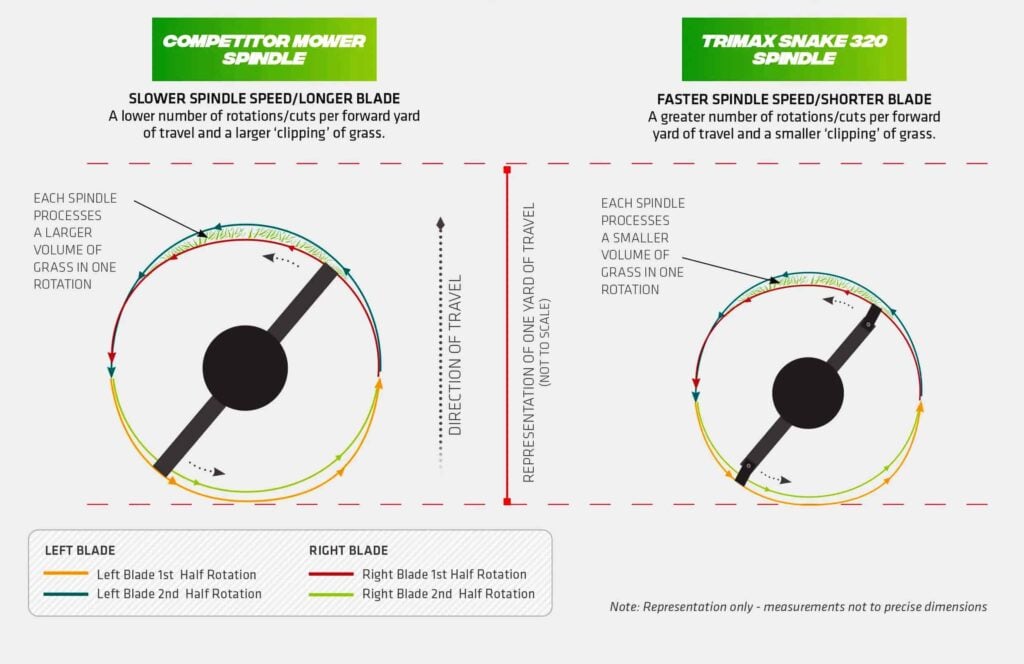
Image Source: trimaxmowers.com
Fathoming the Force: What Drives Blade Speed?
The RPM of a lawn mower blade isn’t just a random number; it’s a carefully engineered aspect of the machine’s design. Several factors contribute to how fast a blade spins.
Engine Power and Design
The heart of any lawn mower is its engine. The engine’s horsepower and the way it’s geared down to the blade spindle directly influence the blade’s rotational speed. A more powerful engine can often maintain a higher RPM, even when encountering tough grass or obstacles.
Blade Type and Size
Different types of mower blades are designed for specific tasks and grass conditions.
- Standard Rotary Blades: These are the most common, featuring a sharpened edge and often a slight upward curve at the ends to create airflow.
- High-Lift Blades: These have more aggressive curves, designed to create stronger airflow, lifting the grass for a cleaner cut and better discharge.
- Mulching Blades: These are often more curved and designed to chop grass into finer pieces.
The size and weight of the blade can also play a role. Larger or heavier blades might require more torque from the engine to reach and maintain optimal speed.
Drive System and Gearing
The transmission and gearing system between the engine and the blade spindle are critical. This system reduces the high RPM of the engine’s crankshaft to the more manageable, yet still rapid, lawn mower blade rotation speed that the blade itself achieves. Different mower designs will have different gear ratios to achieve optimal cutting performance.
The Mechanics of Cutting: How Fast Does a Mower Cut?
When we talk about “how fast does a mower cut,” we’re really talking about two things: the speed at which the machine moves forward and the speed at which the blade spins. While the forward speed is up to the operator, the blade speed is what does the actual work.
Blade Tip Speed: The Cutting Edge
The true cutting power of a lawn mower comes from the blade tip speed. This is the speed of the very edge of the blade as it spins. It’s calculated by multiplying the blade’s rotational speed (RPM) by the circumference of the circle it traces.
Blade Tip Speed (in feet per minute) = RPM × Circumference (in feet)
Or, more practically:
Blade Tip Speed (in feet per minute) = RPM × π × Blade Diameter (in feet)
A higher blade tip speed means the blade edge moves faster through the grass, resulting in a cleaner, more efficient cut.
Why Blade Tip Speed Matters
- Clean Cuts: A faster blade tip can slice through grass blades cleanly, rather than tearing them. Torn grass is more prone to disease and discoloration, leading to a less healthy, less attractive lawn.
- Efficiency: Higher speeds can cut through thicker or taller grass with less strain on the engine.
- Mulching Performance: For mulching mowers, the rapid action of the blade is essential for chopping grass clippings into fine pieces that decompose quickly.
- Overall Cutting Quality: The combination of adequate RPM and efficient blade design creates the optimal cutting speed of lawn mower blades.
Deciphering the Numbers: Typical Blade Speeds
The lawn mower blade speed can vary significantly between different types and models of mowers.
Rotary Mowers
For most standard walk-behind and riding rotary mowers, the RPM of lawn mower blade typically falls within the range of 2,000 to 3,500 RPM.
- Commercial Grade Mowers: These often operate at the higher end of this spectrum, sometimes exceeding 3,500 RPM, to handle demanding conditions and provide a superior cut.
- Residential Mowers: These can range from 2,000 to 3,000 RPM, providing good performance for typical lawn care.
Reel Mowers
Reel mowers work differently. Instead of a spinning blade, they use a series of rotating blades that form a cylinder which cuts against a stationary bedknife. The RPMs are generally much lower than rotary mowers, but the cutting action is different.
- Manual Reel Mowers: The speed is entirely dependent on how fast you push the mower.
- Powered Reel Mowers: These will have specific RPMs for their cutting cylinders, but they are still typically much lower than rotary mowers.
The Science Behind the Spin: Factors Affecting Mower Blade Velocity
The mower blade velocity is not constant and can be influenced by several operational and environmental factors.
Load on the Engine
- Tall or Thick Grass: When the mower encounters tall or dense grass, the engine has to work harder to maintain its speed. This can cause the lawn mower blade rotation speed to drop slightly.
- Damp or Wet Grass: Wet grass is heavier and can clump together, increasing the load on the blade and potentially reducing its speed.
- Obstacles: Hitting twigs, rocks, or other debris can momentarily slow down or even stop the blade, causing a sudden drop in mower blade velocity.
Blade Condition
- Sharpness: Dull blades require more force to cut. This increased resistance can slow down the blade. A sharp blade cuts efficiently with less effort.
- Balance: Imbalanced blades can cause vibrations and put extra stress on the spindle and engine, potentially affecting consistent speed.
Maintenance and Wear
- Spindle Bearings: Worn or poorly lubricated spindle bearings can create friction, slowing down the blade.
- Blade Mounts: Loose or damaged blade mounting hardware can also affect rotation.
Measuring the Speed: How to Measure Lawn Mower Blade Speed
While most users don’t need to measure their blade speed regularly, it’s an important metric for diagnostics and performance tuning.
Using a Mower Blade Tachometer
The most direct way to measure the RPM of lawn mower blade is with a specialized tool called a mower blade tachometer. These devices are designed to measure rotational speed accurately.
- Contact Tachometers: These have a tip that is placed directly on the spinning shaft or blade to measure rotation. However, this is dangerous with a spinning blade.
- Non-Contact (Optical) Tachometers: These are the safest and most common type for measuring mower blade speed. They use a beam of light (often a laser) that is reflected off a piece of reflective tape attached to the spinning blade or shaft. The tachometer counts the flashes of reflected light and converts it into RPM.
Steps for using a non-contact tachometer:
- Safety First: Ensure the mower is on a level surface, the parking brake is engaged, and you are wearing appropriate safety gear (gloves, eye protection).
- Prepare the Blade: Clean the blade and attach a small piece of reflective tape to the top surface of one of the blades.
- Aim the Tachometer: Point the tachometer’s sensor beam at the reflective tape from a safe distance.
- Start the Engine: Carefully start the mower engine and let it run at full throttle.
- Read the Display: The tachometer will display the blade revolutions per minute in real-time.
- Check Under Load: For the most accurate reading of how fast does a mower cut under normal operation, check the RPM while the mower is engaged and cutting grass.
Estimating Blade Speed
If you don’t have a tachometer, you can estimate the blade speed if you know the engine’s governed RPM and the mower’s gear ratio. However, this is less precise and doesn’t account for variations in speed due to load.
Optimizing for Performance: Achieving the Best Cut
Knowing how fast a blade spins allows us to optimize the mowing process for a healthier, better-looking lawn.
Matching Speed to Conditions
- Light Cutting: In dry, short grass, you might be able to use a slightly lower throttle setting, which will reduce the blade speed but still provide an adequate cut.
- Heavy Cutting: For thick, tall, or damp grass, always use the mower’s full throttle setting to ensure the blades are spinning at their optimal speed for efficient cutting. This is crucial for achieving the best cutting speed of lawn mower action.
Blade Maintenance is Key
- Sharpen Regularly: Dull blades tear grass, leading to browning and disease. Sharpening ensures the blade can cut cleanly at its intended speed.
- Balance Blades: Imbalanced blades cause vibrations and premature wear on engine and spindle components.
Choosing the Right Blade
Using the correct type of blade for your mower and lawn conditions can also improve cutting performance, even if the RPM of lawn mower blade remains the same. High-lift blades are great for bagging or mulching in certain conditions, while standard blades might be sufficient for general mowing.
Safety Considerations: A High-Speed Operation
The speed at which a mower blade spins is impressive, but it also highlights the inherent dangers associated with lawn mowers.
Always Follow Safety Guidelines
- Never put hands or feet near the deck while the engine is running.
- Turn off the engine and disconnect the spark plug wire before inspecting or working on the blades.
- Wear sturdy footwear and protective eyewear.
- Keep bystanders, especially children and pets, at a safe distance.
Understanding Stall Speed
When the load on the blade becomes too great (e.g., hitting a thick patch of grass or an obstruction), the engine’s power might not be enough to keep the blades spinning at their optimal speed. This is known as the blade stall speed. If the blade stalls frequently, it can indicate a need for maintenance, a dull blade, or that the mower is being pushed beyond its capabilities.
The Impact of Technology: Innovations in Mower Blades
Technology continues to advance, impacting even something as seemingly simple as a mower blade.
Advanced Blade Designs
Manufacturers are constantly developing new blade designs to improve cutting efficiency, reduce noise, and enhance mulching capabilities. These designs aim to optimize the mower blade velocity and airflow, even at similar RPMs.
Electric Mowers and Blade Speed
Electric mowers, both corded and battery-powered, are becoming increasingly popular. Their motor control systems often allow for precise management of the lawn mower blade speed.
- Consistent Speed: Electric motors can often maintain a more consistent RPM under load compared to some gasoline engines.
- Variable Speed Control: Some high-end electric mowers offer variable speed control, allowing the user to adjust the blade speed based on grass conditions. This is a direct way to manage the cutting speed of lawn mower operations.
Frequently Asked Questions (FAQ)
Q1: What is a typical RPM for a lawn mower blade?
A1: A typical lawn mower blade spins between 2,000 and 4,000 RPM.
Q2: How fast does a mower cut?
A2: The cutting speed is determined by the blade tip speed, which is a result of the blade’s RPM and diameter. Higher blade tip speeds lead to cleaner cuts.
Q3: Can I increase my lawn mower blade speed?
A3: You generally cannot directly increase the blade speed beyond what the engine and gearing are designed for. However, ensuring your engine is running at full throttle and maintaining sharp, balanced blades will help the blades achieve their designed optimal speed. Modifying the engine or gearing is complex and not recommended for the average user.
Q4: What is blade tip speed?
A4: Blade tip speed is the speed of the very edge of the mower blade as it rotates, calculated by its RPM and diameter. It’s the primary factor in how effectively the blade cuts grass.
Q5: How to measure lawn mower blade speed?
A5: You can measure lawn mower blade speed using a non-contact tachometer by attaching reflective tape to the blade and measuring the flashes of light as it spins.
Q6: Does a dull blade affect the RPM of the lawn mower blade?
A6: A dull blade doesn’t directly change the engine’s governed RPM. However, the increased resistance from a dull blade can cause the engine to work harder, potentially leading to a slight drop in actual blade speed under load compared to a sharp blade.
Q7: What is the cutting speed of lawn mower blades?
A7: The cutting speed refers to how quickly the blade edge moves through the grass, which is directly related to the blade tip speed. It’s crucial for a clean cut.
Q8: How do I know if my mower blade is spinning fast enough?
A8: If your mower is cutting cleanly and the engine isn’t bogging down excessively in normal grass conditions when at full throttle, the blades are likely spinning effectively. If you’re experiencing poor cut quality, tearing grass, or the engine struggles, it could indicate an issue affecting blade speed. Using a mower blade tachometer is the best way to confirm the exact RPM.
By understanding the intricate relationship between engine power, blade design, and rotational speed, you can better appreciate the engineering that goes into making your lawn look its best. Maintaining your mower and its blades is key to ensuring that lawn mower blade speed remains optimal for a healthy, beautifully cut lawn.