
When considering a lawn mower battery, the question of “how many amps” is crucial for understanding its power and runtime. While “amps” (amperes) represent the rate of electrical current flow, it’s the ampere-hour (Ah) rating that truly indicates a lawn mower battery’s capacity and how long it can deliver that current. A typical lawn mower battery, especially for electric models, will have an Ah rating that varies widely depending on the mower’s size, power, and intended use, often ranging from 2Ah to 50Ah or more for larger, professional-grade mowers.
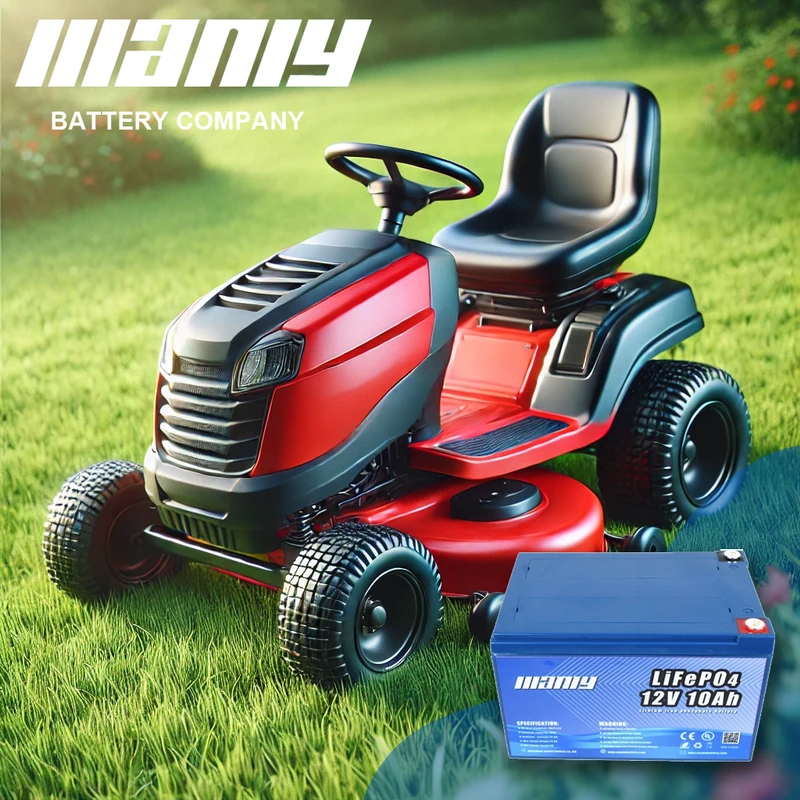
Image Source: manlybattery.com
Deciphering Lawn Mower Battery Amperage
The term “amps” in relation to a lawn mower battery can be a bit of a misnomer when people are actually trying to gauge its power or how long it will last. While amperage (A) is a measure of current, it’s the battery capacity lawn mower owners need to focus on, which is almost always expressed in ampere-hours (Ah). Think of Ah like the size of a fuel tank for your lawn mower. A higher Ah rating means the battery can store more energy and power your mower for a longer duration before needing a recharge.
Lawn Mower Battery Amperage vs. Ampere-Hours
It’s important to distinguish between amperage (A) and ampere-hours (Ah).
- Amperage (A): This refers to the instantaneous rate at which electrical current flows from the battery. When a lawn mower is running, it draws a certain amount of amperage from the battery to power its motor, blades, and any other features. This draw can fluctuate depending on the cutting conditions (e.g., thick grass requires more power).
- Ampere-Hours (Ah): This is the measure of a battery’s energy storage capacity. It tells you how many amps a battery can deliver for a certain number of hours. For example, a 5Ah battery can theoretically deliver 5 amps for one hour, or 1 amp for five hours, or 2.5 amps for two hours, and so on.
When you see “lawn mower battery amperage,” it’s often an indirect reference to the battery’s capacity, which is best understood through its Ah rating.
What Does Lawn Mower Battery Ah Rating Mean?
The Ah rating is the most critical specification for understanding how long your electric lawn mower battery will last.
- Higher Ah = Longer Runtime: A battery with a higher Ah rating will allow you to mow a larger area or tackle tougher grass for a longer period on a single charge.
- Lower Ah = Shorter Runtime: Conversely, a lower Ah rating means the battery will need to be recharged more frequently.
Example:
If you have two batteries for the same mower:
* Battery A: 4Ah
* Battery B: 8Ah
Battery B, with twice the Ah rating, should theoretically provide approximately twice the runtime of Battery A under similar operating conditions.
Typical Lawn Mower Battery Amps (Ah)
The “typical lawn mower battery amps” (meaning Ah) can vary significantly based on the type and power of the lawn mower.
Cordless Electric Lawn Mowers
These are the most common types of lawn mowers that utilize rechargeable batteries.
- Consumer-grade models (e.g., 18V, 20V, 40V systems): These mowers are designed for smaller to medium-sized lawns. Their batteries typically have Ah ratings ranging from 2Ah to 5Ah.
- A 2Ah battery might offer 20-30 minutes of runtime.
- A 4Ah battery might offer 40-60 minutes of runtime.
- A 5Ah battery could provide 60-75 minutes of runtime.
- Higher voltage and performance models (e.g., 60V, 80V systems): These are for larger lawns and offer more power, often comparable to gas mowers. Their batteries can have Ah ratings from 4Ah up to 10Ah or even higher.
- An 80V 6Ah battery could potentially offer over an hour of runtime for a demanding task.
Ride-On Lawn Mowers (Electric)
While less common than gas-powered ride-on mowers, electric versions do exist. These require much larger and more powerful battery systems, often involving multiple batteries or a single, high-capacity battery pack.
- The Ah ratings here can be substantial, often in the 30Ah to 100Ah+ range, depending on the voltage of the system (e.g., 24V, 36V, 48V). These are designed to power the mower for extended periods, covering large properties.
Traditional Lawn Mower Batteries (for starting gas mowers)
If you have a gas-powered lawn mower with an electric start, it uses a small 12-volt battery to crank the engine. These batteries are fundamentally different from the batteries that power the mower’s operation.
- Their capacity is measured in Cold Cranking Amps (CCA), which indicates their ability to start an engine in cold weather. They typically have Ah ratings in the 5Ah to 15Ah range, but their primary function is short bursts of high current, not sustained power.
Battery Capacity Lawn Mower: Factors Influencing Runtime
The stated Ah rating of your lawn mower battery is a good indicator, but the actual runtime you experience can be influenced by several factors:
1. Mower’s Power Consumption
- Motor Size/Voltage: Higher voltage and more powerful motors will naturally draw more current, reducing runtime. An 80V mower will consume power differently than a 40V mower.
- Cutting Deck Width: Wider decks often mean larger blades and potentially more strain on the motor.
- Features: Mowers with self-propulsion, headlights, or other powered accessories will use more battery power.
2. Grass Conditions
- Grass Thickness and Density: Cutting through thick, wet, or overgrown grass requires more power than mowing thin, dry grass. This increased demand will drain the battery faster.
- Grass Height: Mowing tall grass in one pass puts more strain on the motor than regular mowing of shorter grass.
3. Battery Age and Health
- Degradation: Like all rechargeable batteries, lithium-ion batteries degrade over time and with use. Their capacity to hold a charge will decrease, leading to shorter runtimes.
- Storage Conditions: Improper storage (e.g., in extreme temperatures) can also affect battery health.
4. Battery Voltage and Amps Relationship
- Voltage (V): This is the electrical “pressure” or potential difference.
- Amperage (A): This is the rate of current flow.
- Wattage (W): Power is calculated as Voltage × Amperage (W = V × A). A higher voltage battery can deliver the same power as a lower voltage battery using less current, or deliver more power if the current draw is similar.
- Energy (Watt-hours, Wh): Battery capacity is also often expressed in Watt-hours (Wh), which is Voltage × Ampere-Hours (Wh = V × Ah). This gives a more complete picture of the total energy stored. For instance, a 40V 5Ah battery has 200Wh of energy, while an 80V 5Ah battery has 400Wh of energy, meaning it stores twice the usable power.
5. Cutting Technique
- Mowing Speed: Moving the mower too quickly, especially through challenging grass, can increase strain.
- Overlap: Proper overlap of cutting passes ensures a clean cut without excessive load.
Lawn Mower Battery Size and Amps (Ah)
The physical size of a lawn mower battery is often related to its energy capacity (Ah) and voltage (V). Larger batteries generally contain more cells, allowing for higher Ah ratings or higher voltage configurations.
- Form Factor: Batteries come in various shapes and sizes to fit specific mower models. You’ll often see “slide-on” or “clip-in” battery designs.
- Weight: Higher capacity batteries are typically heavier due to the increased number of cells and casing materials.
- Interchangeability: Many manufacturers offer interchangeable batteries across their cordless tool and mower lines. This means a battery designed for a trimmer might also work with a mower, provided the voltage and connector are compatible. Always check your mower’s manual for compatible battery specifications.
Grasping Lawn Mower Battery Amps (Ah): What to Look For
When choosing a new battery or assessing your current one, consider these points:
Identifying the Best Lawn Mower Battery Amps (Ah)
The “best” Ah rating depends entirely on your lawn size and mowing needs.
- Small Lawns (up to 1/4 acre): A 40V 4Ah or 5Ah battery is often sufficient.
- Medium Lawns (1/4 to 1/2 acre): You might consider a higher voltage system (e.g., 60V or 80V) with a 5Ah or 6Ah battery, or having multiple 4Ah/5Ah batteries to swap out.
- Large Lawns (over 1/2 acre): High-voltage systems (80V+) with batteries of 6Ah, 8Ah, or even 10Ah are recommended. For very large properties, investing in a high-capacity battery pack or multiple batteries is essential.
Lawn Mower Battery Voltage and Amps (Ah) Synergy
It’s not just about Ah; voltage plays a crucial role in performance.
- Higher Voltage (e.g., 80V vs. 40V): Generally means more power and efficiency for demanding tasks.
- Higher Ampere-Hours (e.g., 5Ah vs. 2Ah): Generally means longer runtime.
A good balance is key. An 80V 4Ah battery might offer similar cutting power to a 40V 8Ah battery, but the 80V will likely be more efficient. However, the 40V 8Ah battery will provide longer runtime than a 40V 4Ah battery.
How to Check Lawn Mower Battery Amps (Ah)
Finding the Ah rating on your lawn mower battery is usually straightforward:
- Look at the Battery Label: The Ah rating is almost always printed directly on a label affixed to the battery itself. It will typically appear as “X Ah” (e.g., “5.0 Ah”).
- Check Your Owner’s Manual: The manual for your lawn mower or the battery itself will specify the Ah rating and other important technical details.
- Manufacturer’s Website: If you know the model number of your battery or mower, you can usually find the specifications on the manufacturer’s website.
- Battery Tester (for advanced users): Dedicated battery testers can provide more detailed information about a battery’s health and capacity, but for simply checking the rated Ah, the label is sufficient.
What to Do If Your Battery’s Ah Rating is Unclear
- Consult the Mower Manual: This is the best place to start.
- Identify the Battery Model Number: Look for a model number on the battery itself and search for it online.
- Contact the Manufacturer: If you can’t find the information, reach out to the customer support for your lawn mower brand.
Electric Lawn Mower Battery Amps: Considerations for Purchase
When you need to buy a new battery, keep these points in mind:
Compatibility is Key
- Voltage Match: Always ensure the new battery’s voltage matches your mower’s required voltage. Using a battery with a different voltage can damage the mower or the battery.
- Physical Fit and Connector: The battery must physically fit into the battery compartment and have the correct connector type.
- Brand Specificity: While some battery systems are interchangeable, it’s generally safest to use batteries from the same manufacturer as your lawn mower for guaranteed compatibility and performance.
Ah Rating for Future Needs
- Upgrade Option: If you’re finding your current battery doesn’t last long enough, consider purchasing a battery with a higher Ah rating when replacing it.
- Multiple Batteries: For larger properties, investing in a second battery (even if it’s the same Ah rating) allows you to swap it out and continue mowing without waiting for a recharge.
Battery Technology
- Lithium-ion (Li-ion): Most modern cordless lawn mower batteries use lithium-ion technology. They are lighter, hold a charge longer, and have a longer lifespan than older lead-acid batteries.
- Lead-Acid: Older electric start batteries for gas mowers or some very early electric mowers might use lead-acid. They are heavier and require more maintenance.
Frequently Asked Questions (FAQ)
Q1: Can I use a battery with a higher Ah rating than my current one?
A: Yes, generally you can use a battery with a higher Ah rating than your current one, provided it has the same voltage and fits your mower. A higher Ah battery will simply provide longer runtime.
Q2: Can I use a battery with a lower Ah rating?
A: You can use a battery with a lower Ah rating, but it will provide less runtime. It’s generally not advisable to downgrade your Ah rating unless it’s a temporary solution.
Q3: Does the number of “bars” on my battery indicator mean anything about its amps?
A: The battery indicator bars typically show the current charge level (e.g., 0-100%), not the battery’s capacity in Ah.
Q4: How do I know if my lawn mower battery is still good?
A: If your mower is running for significantly less time than it used to, or if the battery struggles to hold a charge, it might be time for a replacement. Some advanced battery chargers have diagnostic features.
Q5: How many amps does a lawn mower motor draw?
A: This varies greatly by mower. A typical 40V mower might draw between 20-40 amps while running under load. Higher voltage mowers will draw proportionally less amperage for the same power output. The Ah rating tells you how long the battery can supply that draw.
Q6: Is there a difference between “lawn mower battery amps” and “starter motor amps”?
A: Yes. For gas mowers with electric start, the “starter motor amps” refer to the high current draw needed to crank the engine. The battery’s CCA (Cold Cranking Amps) is the relevant spec here. For cordless electric mowers, the “amps” (meaning Ah) refers to the battery’s capacity to power the mower’s operation over time.
Q7: What is the best lawn mower battery amps (Ah) for a large yard?
A: For a large yard, you’ll want higher voltage (like 80V or more) and higher Ah ratings (6Ah, 8Ah, or 10Ah). Alternatively, having multiple batteries in the 4Ah-6Ah range for swapping is a practical solution.
Q8: How can I extend the life of my lawn mower battery?
A: Store batteries in a cool, dry place. Avoid fully draining the battery regularly. Don’t leave it on the charger indefinitely after it’s full. Clean the battery terminals if they become corroded.
By focusing on the Ampere-hour (Ah) rating, you can make informed decisions about your electric lawn mower’s power and runtime, ensuring you have the right battery for your needs.