
If your Toro lawn mower won’t crank, it’s likely due to a few common issues. Can you jump-start a Toro mower? Yes, similar to a car, you can attempt to jump-start it if the battery is the culprit, but it’s crucial to do so correctly. When your Toro mower is dead, or your Toro lawn mower won’t turn over, it can be frustrating, especially when you have a yard to maintain. This guide will help you diagnose and fix why your Toro mower isn’t starting. We’ll cover everything from battery checks to fuel system problems, providing step-by-step solutions for most common issues.
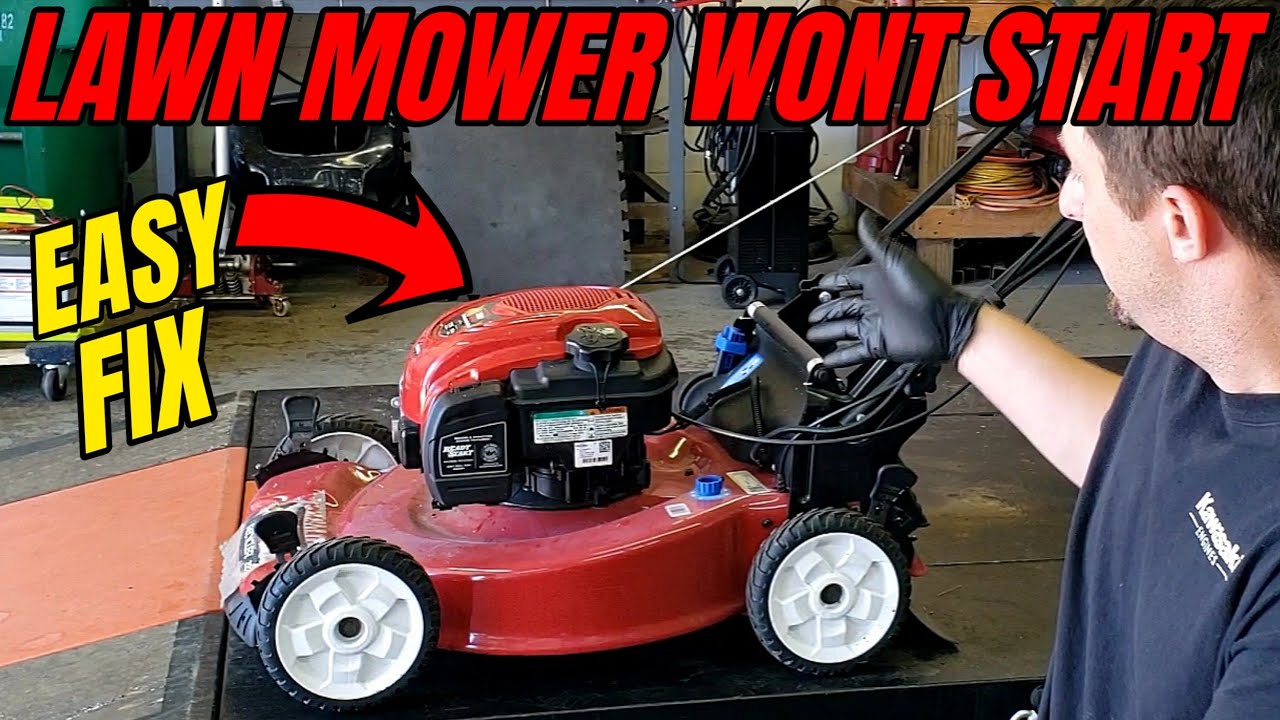
Image Source: i.ytimg.com
Is the Fuel Tank Empty?
The most basic reason a mower won’t start is simply running out of gas. It sounds obvious, but it’s a frequent oversight.
Checking Fuel Levels
- Visual Inspection: Lift the fuel cap and look inside the tank. If you can’t see any fuel, that’s your first clue.
- Fuel Gauge: If your Toro model has a fuel gauge, check its reading. These can sometimes be inaccurate if the mower is on an incline.
- Weight: Pick up the mower (safely!). A mower with no fuel will feel significantly lighter than one with a full tank.
Adding Fresh Fuel
- Type of Fuel: Always use fresh, unleaded gasoline. Check your owner’s manual for the recommended octane rating.
- Ethanol Content: Be mindful of ethanol blends. High ethanol content can degrade fuel lines and carburetors over time. If your mower has sat for a while with old fuel, it’s best to drain it and refill with fresh fuel.
- Fuel Stabilizer: If you anticipate the mower sitting for an extended period, add a fuel stabilizer to prevent fuel degradation.
Fuel System Issues: The Heart of the Problem
If your Toro mower won’t start and you’ve confirmed there’s fuel, the problem might lie within the fuel delivery system. This is a common area for Toro mower fuel issues.
Clogged Fuel Filter
The fuel filter prevents debris from reaching the carburetor. Over time, it can become clogged, restricting fuel flow.
Steps to Check and Replace:
- Locate the Fuel Filter: It’s usually a small, inline plastic or metal component in the fuel line between the tank and the carburetor.
- Shut Off Engine: Ensure the engine is completely cool and the ignition is off.
- Turn Off Fuel Valve: If your mower has a fuel shut-off valve, close it.
- Disconnect Lines: Carefully disconnect the fuel lines from the old filter. Be prepared for a small amount of fuel to spill; have rags ready.
- Install New Filter: Note the direction of fuel flow (usually indicated by an arrow on the filter). Install the new filter, ensuring the arrow points towards the carburetor.
- Reconnect Lines: Securely reattach the fuel lines.
- Open Fuel Valve: Turn the fuel shut-off valve back on.
- Check for Leaks: Start the engine and check for any fuel leaks around the filter and connections.
Dirty or Clogged Carburetor
The carburetor mixes fuel and air to create the combustible mixture. If it’s dirty or clogged, the engine won’t ignite. This is a frequent cause when the Toro mower engine won’t ignite.
Symptoms of a Clogged Carburetor:
- Engine sputters and dies.
- Engine runs rough or inconsistently.
- Engine won’t start at all.
- Black smoke from the exhaust (too much fuel).
- Engine misfires.
Troubleshooting and Cleaning:
- Safety First: Disconnect the spark plug wire before working on the carburetor.
- Access the Carburetor: You may need to remove the air filter and housing to get to it.
- Drain the Bowl: Some carburetors have a drain screw at the bottom of the fuel bowl. Unscrew it to drain any old fuel.
- Remove and Clean: If you’re comfortable, you can remove the carburetor for a thorough cleaning.
- Note the fuel line and any linkages attached.
- Use a carburetor cleaner spray and compressed air to clean out jets and passages.
- Ensure all small holes and passages are clear.
- Reassemble carefully.
- Carburetor Rebuild Kit: If cleaning doesn’t work or if parts are worn, a carburetor rebuild kit can be a cost-effective solution.
- Professional Cleaning: If you’re not mechanically inclined, a small engine repair shop can clean or rebuild your carburetor.
Fuel Pump Issues (If Equipped)
Some newer Toro mowers have an electric fuel pump. If this pump fails, fuel won’t reach the carburetor.
Diagnosis:
- Listen for a faint humming sound when you turn the ignition key (if electric start) or prime the engine. If you don’t hear it, the pump might not be working.
- Check for voltage at the pump terminals when the engine should be running.
Ignition System Problems: No Spark, No Start
If your Toro lawn mower won’t turn over or fails to ignite, the issue could be with the ignition system. This often means there’s a problem with the spark plug or related components.
Faulty Spark Plug
The spark plug ignites the fuel-air mixture. A fouled, worn, or improperly gapped spark plug will prevent starting.
Steps to Check and Replace:
- Locate Spark Plug: It’s usually on the side of the engine cylinder, with a thick wire (spark plug wire) connected to it.
- Disconnect Wire: Pull the spark plug wire off the spark plug.
- Remove Spark Plug: Use a spark plug socket wrench to unscrew the spark plug.
- Inspect:
- Fouling: Look for black, oily, or sooty deposits on the electrode. This indicates rich fuel mixture, oil burning, or incomplete combustion.
- Damage: Check for cracks in the porcelain insulator or a corroded electrode.
- Gap: Check the gap between the electrodes using a feeler gauge. Refer to your owner’s manual for the correct gap specification.
- Clean or Replace: If the plug is only slightly fouled, you can try cleaning it with a wire brush and carb cleaner. However, it’s often best to replace it with a new, correctly gapped plug, especially if it looks worn or damaged.
- Reconnect: Screw in the new spark plug hand-tight, then use the socket wrench to snug it up (don’t overtighten). Reattach the spark plug wire.
Issues with the Ignition Coil or Magneto
The ignition coil (or magneto) generates the high voltage needed to create a spark. If this component fails, you’ll have Toro mower no spark.
Diagnosis:
- Spark Tester: The most reliable way to check for spark is with a spark tester. Connect it between the spark plug and the spark plug wire. Crank the engine; if there’s no spark, the coil or magneto might be the problem.
- Visual Inspection: Look for any obvious damage to the coil or wires.
- Testing: Testing ignition coils often requires specialized tools or knowledge of electrical testing procedures. If you suspect this, it’s usually best to consult a professional or your owner’s manual for specific testing procedures.
Safety Switches
Many Toro mowers have safety interlock switches that prevent the engine from starting if certain conditions aren’t met (e.g., parking brake not engaged, blade engagement lever in the “on” position, seat not occupied).
Troubleshooting:
- Check All Levers and Pedals: Ensure the parking brake is fully engaged, the transmission is in neutral, and the blade clutch is disengaged.
- Inspect Switches: Locate the switches associated with these safety features. They might be under the seat, near the brake pedal, or by the mower deck engagement lever.
- Bypass (Temporarily and Carefully): Some mechanics will temporarily bypass a switch to see if the mower starts, but this should only be done by someone familiar with the process and with extreme caution, as it disables a safety feature. It’s safer to have a faulty switch replaced.
Toro Mower Won’t Crank: Electrical Problems
If your Toro mower won’t crank, it means the engine isn’t even trying to turn over. This points to a lack of electrical power or a problem with the starting system.
Toro Mower Battery Dead or Weak
A dead battery is a very common reason for a Toro mower not starting. If your Toro mower battery is dead, it won’t have enough power to engage the starter motor.
Diagnosis:
- No Sound: When you turn the key or press the start button, you hear absolutely nothing.
- Clicking Sound: You might hear a single click or rapid clicking sound, indicating low battery power struggling to engage the starter solenoid.
- Dim Lights: If your mower has headlights, they might be dim or not come on at all.
Troubleshooting and Charging:
- Check Battery Terminals: Ensure the battery terminals are clean and free of corrosion. Corroded terminals can prevent a good electrical connection.
- Cleaning: Disconnect the battery cables (negative first, then positive). Use a wire brush or battery terminal cleaner to remove any corrosion. Reconnect the cables (positive first, then negative).
- Test Battery Voltage: Use a multimeter to check the battery’s voltage. A fully charged 12-volt battery should read around 12.6 volts or higher when the engine is off. If it’s significantly lower, the battery may be dead or unable to hold a charge.
- Charge the Battery: Use a suitable battery charger for your mower’s battery type (usually a 12-volt lead-acid battery). Follow the charger’s instructions.
- Jump-Starting: As mentioned, you can jump-start your Toro mower, but do it correctly.
- Connect the positive (+) cable from the good battery to the positive (+) terminal of the dead battery.
- Connect the negative (-) cable from the good battery to an unpainted metal part of the Toro mower’s engine block, away from the battery.
- Start the good vehicle and let it run for a few minutes to charge the dead battery.
- Attempt to start the Toro mower.
- Once started, disconnect the cables in reverse order (negative first, then positive).
Starter Motor or Solenoid Issues
The starter motor is an electric motor that turns the engine over. The solenoid is an electrical switch that engages the starter motor when you turn the key. Toro mower starter problems can prevent cranking.
Diagnosis:
- Starter Solenoid: If you hear a single loud click when you try to start, the solenoid might be engaging but not sending power to the starter motor, or the starter motor itself is bad.
- Starter Motor: If the solenoid clicks but the engine doesn’t turn, the starter motor might be faulty or jammed.
- No Click, No Crank: If you hear nothing at all, it could be the ignition switch, a blown fuse, or a bad connection to the solenoid or starter.
Troubleshooting:
- Check Connections: Ensure the wires connecting to the starter motor and solenoid are clean, tight, and not damaged.
- Test Solenoid: You can test the solenoid by applying 12 volts directly to its activation terminal (usually a smaller post). If it clicks, it’s likely working, and the problem is elsewhere.
- Test Starter Motor: This is more complex and usually involves testing for voltage at the starter motor when the solenoid is activated. If voltage is present but the starter doesn’t turn, the starter motor itself is likely bad.
- Replacement: Starter motors and solenoids are replaceable parts. If you’re not comfortable with this, seek professional help.
Blown Fuse or Loose Wiring
A blown fuse or loose wiring can interrupt the electrical flow to the starting system.
Troubleshooting:
- Locate Fuse Box: Check your mower’s manual to find the fuse box.
- Inspect Fuses: Pull out fuses one by one and inspect them for a broken filament. Replace any blown fuses with ones of the same amperage.
- Check Wiring: Inspect all visible wiring for damage, fraying, or loose connections, especially around the battery, ignition switch, solenoid, and starter motor.
Toro Mower Engine Won’t Ignite: Combustion Issues
If your Toro mower cranks (the engine turns over) but the Toro mower engine won’t ignite and start, it means the engine is getting air and compression, but the spark or fuel delivery is still the problem.
Air Filter Blockage
A severely clogged air filter can restrict airflow to the engine, preventing proper combustion.
Steps to Check and Clean/Replace:
- Locate Air Filter: It’s usually housed in a black plastic or metal casing on the side of the engine.
- Remove Filter: Open the casing and remove the air filter.
- Inspect: Look for dirt, grass clippings, or debris.
- Clean or Replace:
- Paper Filters: Tap gently to remove loose debris. If heavily soiled, replace it. You can try blowing compressed air through it from the inside out, but replacement is often best.
- Foam Filters: Wash with mild soap and water, rinse thoroughly, and let it dry completely before reinstalling. You can lightly re-oil it with air filter oil if specified in your manual.
- Start Without Filter (Temporarily): You can try starting the mower briefly without the air filter to see if it makes a difference. Do not operate the mower for extended periods without a filter, as this can cause engine damage.
Low Compression
While less common for a sudden no-start, low compression can prevent an engine from igniting. This is often a sign of internal engine wear or damage.
Diagnosis:
- Compression Tester: A compression tester measures the pressure inside the cylinder. Low readings indicate a problem with the piston rings, valves, or head gasket.
- Engine Sounds: The engine might sound “weak” or “flabby” when it cranks if compression is low.
If Low Compression is Suspected:
This is usually a more significant repair, often requiring professional attention. It could involve:
- Worn piston rings.
- Burnt or sticking valves.
- A blown head gasket.
Other Troubleshooting Tips for Your Toro Mower
When tackling Toro mower troubleshooting, consider these additional points.
Engine Oil Level
While not typically a direct cause of a no-start, extremely low oil levels can trigger an oil sensor that prevents the engine from starting on some models, or it can lead to engine seizure if it did start.
Check and Top Up:
- Locate Dipstick: Find the oil dipstick.
- Ensure Level Surface: Park the mower on a flat, level surface.
- Pull Dipstick: Remove the dipstick, wipe it clean, reinsert it fully, and pull it out again.
- Check Level: The oil level should be between the “Add” and “Full” marks.
- Add Oil: If low, add the correct type and amount of oil as specified in your owner’s manual.
Check the Choke
The choke enriches the fuel-air mixture for starting a cold engine. If the choke is stuck open, a cold engine may not start.
Inspection:
- Manual Choke: Ensure the choke lever is moving freely and is in the correct position for starting (usually closed or partially closed for a cold start).
- Automatic Choke: If your mower has an automatic choke, check that the linkage isn’t binding or disconnected.
Toro Mower Won’t Crank: A Summary of Common Causes
When your Toro mower won’t crank, think about these primary culprits:
- Battery Issues: Dead battery, corroded terminals.
- Electrical Connections: Loose or damaged wiring to the starter, solenoid, or ignition switch.
- Ignition Switch: A faulty switch might not send power to the starter.
- Starter Motor/Solenoid: The starter motor itself or its activating solenoid has failed.
- Safety Interlocks: A safety switch is preventing the start sequence.
Toro Mower Dead: What to Do
If your Toro mower is dead (no lights, no sounds, no response), focus on the battery and main electrical connections first.
- Battery: Check for corrosion, charge it, or try jump-starting.
- Main Fuse: Locate and inspect the main fuse.
- Ignition Switch: Test the ignition switch for continuity.
- Wiring: Inspect all primary power wires from the battery.
Toro Mower Won’t Turn Over: When the Engine Doesn’t Spin
If your Toro mower won’t turn over, it means the starter system is likely getting power, but the engine isn’t being cranked.
- Starter Motor: Most likely the starter motor has failed.
- Solenoid: The solenoid might be faulty, not sending power to the starter.
- Seized Engine: In rare cases, the engine itself might be seized due to lack of oil or internal damage, preventing the starter from turning it. Try turning the blade by hand (with spark plug removed and safety precautions). If it doesn’t move, the engine may be seized.
Toro Mower No Spark: Focusing on Ignition
If you have Toro mower no spark, you need to investigate the ignition system.
- Spark Plug: Check, clean, or replace the spark plug and wire.
- Ignition Coil: Test or replace the ignition coil.
- Flywheel Key: A sheared flywheel key can cause incorrect ignition timing, sometimes resulting in no spark or intermittent spark.
- Kill Switch/Wire: Ensure the engine kill switch wire is not shorted to ground, as this will prevent spark.
Toro Mower Fuel Issues: The Flow of Gas
For Toro mower fuel issues, consider these steps:
- Fuel Level & Quality: Ensure fresh fuel is in the tank.
- Fuel Filter: Check for clogs.
- Fuel Lines: Look for kinks or blockages.
- Carburetor: Clean or rebuild the carburetor.
- Fuel Pump (if equipped): Test its operation.
Toro Mower Starter Problems: The Cranking Mechanism
If you suspect Toro mower starter problems, focus on:
- Battery: A weak battery won’t power the starter.
- Battery Connections: Corroded or loose connections.
- Starter Solenoid: Faulty solenoid not engaging the starter.
- Starter Motor: The motor itself is worn out or damaged.
- Wiring: Damaged wires to the starter components.
Toro Mower Engine Won’t Ignite: After Cranking
If the Toro mower engine won’t ignite after cranking, the problem is usually with the fuel or spark after the engine is being turned.
- Spark Plug: No spark or weak spark.
- Fuel Delivery: Clogged filter, carb issues, or no fuel reaching the cylinder.
- Timing: Incorrect ignition timing (less common unless work has been done).
- Compression: Low compression preventing ignition.
Toro Mower Ignition System: The Spark Generator
If you’re looking at the Toro mower ignition system, the key components are:
- Spark Plug: The final point of ignition.
- Spark Plug Wire: Carries the high voltage.
- Ignition Coil/Magneto: Generates the high voltage.
- Flywheel: Contains magnets that generate current for the coil.
- Ignition Switch: Controls the flow of electricity.
- Kill Switch: Grounds the ignition to stop the engine.
Toro Mower Troubleshooting: A Systematic Approach
Effective Toro mower troubleshooting involves a methodical process.
Step 1: Gather Information
- What happened just before it stopped working?
- Does it crank, or is it completely dead?
- Are there any unusual noises?
- When was the last time it ran well?
Step 2: Basic Checks
- Fuel level and freshness.
- Oil level.
- Spark plug wire connection.
- Safety interlock systems.
Step 3: Fuel System Checks
- Fuel filter.
- Fuel lines for kinks or obstructions.
- Carburetor bowl for water or debris.
Step 4: Ignition System Checks
- Spark plug condition and gap.
- Spark presence using a tester.
- Ignition coil (if you have the tools/knowledge).
Step 5: Electrical/Starting System Checks
- Battery voltage and terminal condition.
- Starter motor and solenoid connections.
- Fuses and wiring.
Step 6: Seek Professional Help
If you’ve gone through these steps and your Toro mower still won’t start, it may be time to consult a qualified small engine mechanic.
Frequently Asked Questions (FAQ)
Q1: My Toro mower won’t start, and it just clicks. What could be wrong?
A1: A clicking sound usually means the starter solenoid is engaging, but there’s not enough power to turn the starter motor, or the starter motor itself is bad. Check your battery charge and connections first. If the battery is good, the solenoid or starter motor may need replacement.
Q2: Can I clean the carburetor on my Toro mower myself?
A2: Yes, if you are comfortable with basic mechanical work. You’ll need carburetor cleaner spray, compressed air, and potentially a carburetor rebuild kit. Always disconnect the spark plug wire before working on the carburetor for safety.
Q3: My Toro mower has fuel, but it won’t crank over. What’s the issue?
A3: If it won’t crank at all, it’s likely an electrical issue. This could be a dead battery, loose battery cables, a faulty ignition switch, a blown fuse, or a problem with the starter motor or solenoid. Ensure all safety switches are engaged correctly.
Q4: Why would my Toro mower have no spark?
A4: No spark can be caused by a faulty spark plug, a bad spark plug wire, a failed ignition coil, or issues with the flywheel magnets or the engine’s kill switch wiring.
Q5: What kind of gas should I use in my Toro lawn mower?
A5: Use fresh, unleaded gasoline. Check your owner’s manual for the recommended octane rating, typically 87 or higher. Avoid using fuel that has been stored for too long, as it can degrade and cause starting problems. Using a fuel stabilizer is recommended for storage.
By systematically working through these troubleshooting steps, you can identify why your Toro lawn mower isn’t starting and get back to a well-manicured lawn.