
Spreading compost on a large lawn can be done easily with the right tools and techniques, ensuring your turf receives vital nutrients for lush, healthy growth.
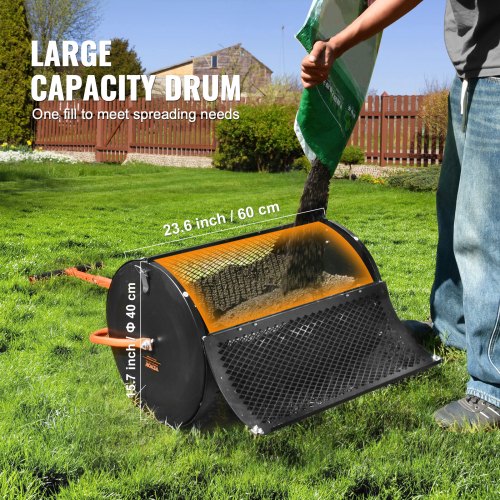
Image Source: img.vevorstatic.com
How To Spread Compost On A Large Lawn Easily
Transforming a large lawn from dull to vibrant is a rewarding endeavor, and at its heart lies effective soil management. One of the most beneficial practices for achieving this is the application of compost. But how do you tackle this on a grand scale without breaking your back? This guide will walk you through the process, making compost application on your expansive green space a manageable and even enjoyable task. We’ll explore the best methods, the essential tools, and the ideal timing to ensure your lawn soil health thrives.
Why Compost Your Large Lawn?
Compost is nature’s superfood for your lawn. It’s a rich, organic material that improves soil structure, enhances water retention, and provides a slow-release source of essential nutrients. For large lawns, the benefits are amplified, leading to a more resilient, greener, and healthier turf.
Key Benefits of Compost for Large Lawns:
- Improved Soil Structure: Compost loosens compacted soil, allowing better air and water penetration. This is especially crucial for large areas that can experience significant compaction from foot traffic or equipment.
- Enhanced Water Retention: Healthy soil acts like a sponge, and compost significantly boosts its ability to hold moisture. This means less frequent watering and a more drought-tolerant lawn.
- Nutrient Supply: Compost is packed with macronutrients (like nitrogen, phosphorus, and potassium) and micronutrients that your grass needs to grow strong and vibrant. This supports a robust root system and greener blades.
- Beneficial Microorganisms: Compost introduces a diverse ecosystem of bacteria, fungi, and other microbes that break down organic matter, making nutrients available to your grass roots and suppressing diseases.
- Buffering Soil pH: Compost can help moderate soil pH, creating a more favorable environment for nutrient uptake by your grass.
- Reduced Thatch Buildup: A healthy soil ecosystem, promoted by compost, can help break down thatch, the layer of dead and living organic matter on the surface of the soil.
Deciphering the Best Time to Compost Your Lawn
Timing is everything when it comes to compost application. Applying compost at the right time maximizes its benefits and minimizes potential drawbacks.
Ideal Times for Spreading Compost:
- Spring: After the last frost, as your lawn begins to actively grow, is an excellent time to apply compost. It provides a nutrient boost to kickstart growth and helps repair winter damage.
- Fall: Before the ground freezes, applying compost in the fall allows it to slowly break down over winter, enriching the soil and preparing it for spring growth. This is particularly beneficial for organic lawn care enthusiasts.
Considerations for Timing:
- Avoid Extreme Heat or Drought: Applying compost during very hot or dry periods can stress your lawn. Water thoroughly after application if conditions are dry.
- Before Seeding or Overseeding: If you plan to introduce new grass seed, compost is an ideal soil amendment to incorporate beforehand.
Tools of the Trade: Essential Equipment for Large Lawns
Spreading compost on a large lawn manually is a Herculean task. Thankfully, specialized equipment makes this job significantly easier.
The Power of the Compost Spreader
A compost spreader is your best friend when dealing with large areas. These machines are designed to evenly distribute granular or composted materials across your lawn. There are two primary types:
-
Broadcast Spreader (Rotary Spreader):
- How it Works: These spreaders have a hopper that holds the compost, and a spinning disc or impeller at the bottom that flings the material outwards in a wide arc.
- Pros: Excellent for covering large areas quickly and evenly. They are versatile and can be used for spreading grass seed, fertilizer, and granular pest control products.
- Cons: Can sometimes create uneven coverage if not operated carefully, leading to “streaks” of thicker or thinner material. Wind can also affect distribution.
- Types:
- Push Broadcast Spreaders: You push these units, powered by your own effort. They are ideal for medium to large lawns.
- Tow-Behind Broadcast Spreaders: These attach to lawn tractors or ATVs. They are perfect for very large properties or commercial applications.
-
Drop Spreader:
- How it Works: Drop spreaders have a hopper with openings that release material directly below the spreader’s wheels. The material falls straight down in a narrow band.
- Pros: Provides very precise and even coverage, as the material is dropped directly onto the lawn directly below the spreader. This minimizes overlapping and missed spots.
- Cons: Much slower to cover large areas because you need to walk in straight, parallel lines with minimal overlap. They are less effective at spreading larger compost particles.
Choosing the Right Spreader: For a large lawn, a broadcast spreader is generally the most efficient choice due to its speed and wider coverage pattern. A push broadcast spreader is suitable for most homeowners, while a tow-behind model is ideal for acreage.
Other Helpful Tools
- Wheelbarrow: Essential for transporting compost from your storage area to the spreader. Choose a sturdy, large-capacity wheelbarrow.
- Shovel or Scoop: For loading compost into the spreader hopper. A rounded-edge shovel is often easier to use.
- Rake (Optional but Recommended): A leaf rake or a sturdy garden rake can be useful for breaking up clumps of compost or for more finely distributing the material after spreading, especially if using a drop spreader or if your compost has larger particles.
- Hose or Sprinkler System: Crucial for watering the lawn after compost application, especially during dry periods.
The Process: Step-by-Step Compost Spreading on a Large Lawn
Achieving uniform compost application is key to reaping the full benefits. Follow these steps for an efficient and effective process.
Step 1: Prepare Your Compost
- Compost Quality: Ensure your compost is well-rotted and free of large, un-decomposed chunks. Finely screened compost spreads more easily and integrates better with the soil. If your compost is lumpy, you can run it through a compost screener or break up large clumps with a shovel.
- Moisture Content: The compost should be moist but not waterlogged. If it’s too dry, it might be dusty; if too wet, it can be heavy and clumpy.
Step 2: Prepare Your Lawn and Tools
- Mow the Lawn: Mow your grass to a normal height. This provides better access to the soil surface for the compost.
- Check Your Spreader: Ensure your compost spreader is clean and in good working order. Calibrate it according to the manufacturer’s instructions if you are using a new type of compost or fertilizer for the first time.
Step 3: Load the Spreader
- Safety First: Wear gloves and a dust mask, especially if your compost is dry and dusty.
- Loading Technique: Use your shovel or scoop to transfer compost from your wheelbarrow into the spreader hopper. Avoid overfilling the hopper, as this can strain the spreader and lead to uneven distribution.
Step 4: Calibrate Your Spreader
- Crucial for Evenness: This is arguably the most important step for achieving uniform coverage. Different types and densities of compost will require different settings on your spreader.
- Manufacturer’s Guide: Consult your spreader’s manual for recommended settings for various materials. If a setting for compost isn’t listed, start with a setting typically used for granular fertilizer and adjust as needed.
- Test Run: It’s a good idea to do a small test run in a less visible area to see how the compost is spreading.
Step 5: Spread the Compost
- Broadcast Spreader Technique:
- Start at the Edge: Begin spreading at the outer edge of your lawn.
- Overlap Passes: Walk or push in straight lines, overlapping each pass by about half the width of the spreader’s coverage pattern. This ensures no missed strips and prevents thicker bands of material.
- Consistent Speed: Maintain a consistent walking pace to ensure even application.
- Wind Awareness: Be mindful of wind. If it’s very windy, consider waiting for calmer conditions, or adjust your spreading technique to minimize drift. You might need to reduce the broadcast width or apply at a slightly slower pace.
- Drop Spreader Technique:
- Straight Lines: Walk in perfectly straight, parallel lines across your lawn.
- Edge Strips: Pay close attention to the edges to ensure they are adequately covered.
- Minimal Overlap: The goal is to have the material drop directly below the spreader’s path. Slight overlap is acceptable but avoid excessive overlap which can lead to uneven distribution.
Step 5.5: Consider Lawn Aeration
Before spreading compost, consider performing lawn aeration. Aeration creates small holes in the soil, allowing the compost to penetrate deeper into the root zone. This makes the compost even more effective as a soil amendment.
- Benefits of Aerating Before Composting:
- Improved compost penetration.
- Reduced soil compaction.
- Enhanced air and water movement to the roots.
- Better for soil health.
You can rent a core aerator for large lawns. Aerate in one direction, then cross-reference with another pass perpendicular to the first. Leave the soil cores on the lawn to break down.
Step 6: Rake and Water (Optional but Recommended)
- Break Up Clumps: If you notice any uneven patches or large clumps, use a rake to gently break them up and distribute the compost more evenly. This is particularly helpful if you are using a broadcast spreader and notice some inconsistency.
- Water Thoroughly: Water your lawn well after applying compost. This helps the compost settle into the soil and begin the decomposition process, making its nutrients available to the grass. It also washes any clinging compost off the grass blades, preventing potential scorching.
How Much Compost Should You Apply?
The ideal amount of compost depends on your soil’s condition and the quality of the compost itself.
- General Rule: For most lawns, a layer of top dressing lawn with about 1/4 to 1/2 inch of compost is sufficient. This typically translates to 1 cubic yard of compost per 100-200 square feet of lawn.
- Assessing Your Needs:
- Poor Soil: If your soil is heavily compacted, sandy, or generally unhealthy, you might benefit from a slightly thicker layer.
- Healthy Soil: If your soil is already in good condition, a thinner layer will suffice.
- Calculating Volume:
- Lawn Area (sq ft) x Desired Layer Thickness (ft) = Volume Needed (cu ft)
- To convert cubic feet to cubic yards, divide by 27.
- Example: A 10,000 sq ft lawn needing 1/4 inch (0.0208 ft) of compost: 10,000 sq ft * 0.0208 ft = 208 cu ft. 208 cu ft / 27 ≈ 7.7 cubic yards.
Table: Compost Application Rates
| Desired Thickness | Compost Needed per 100 sq ft | Compost Needed per 1000 sq ft |
|---|---|---|
| 1/4 inch | ~0.2 cubic yards | ~2.0 cubic yards |
| 1/2 inch | ~0.4 cubic yards | ~4.0 cubic yards |
| 1 inch | ~0.75 cubic yards | ~7.5 cubic yards |
Note: These are approximate figures. Actual amounts may vary based on compost density and how well it settles.
Compost Mulching vs. Top Dressing
When we talk about spreading compost on a lawn, we’re generally referring to top dressing lawn. This involves applying a thin layer of compost over the existing grass.
Compost Mulching typically refers to applying a thicker layer of compost around plants, trees, and shrubs. While it offers many benefits for those areas, it’s not the typical method for lawn care as a thick layer can smother the grass.
For lawn health, top dressing with compost is the preferred method. It enriches the top layer of soil where most grass roots are concentrated, providing immediate benefits.
Integrating Compost into Your Organic Lawn Care Routine
Compost is a cornerstone of organic lawn care. By regularly applying compost, you reduce or eliminate the need for synthetic fertilizers and pesticides.
- Long-Term Soil Improvement: Consistent compost application over time dramatically improves your soil’s structure and fertility, creating a self-sustaining ecosystem.
- Reduced Thatch: Healthy soil can better break down thatch, leading to a more resilient lawn.
- Disease Resistance: Stronger, healthier grass grown in nutrient-rich soil is more resistant to pests and diseases.
- Environmental Benefits: Using compost diverts waste from landfills and reduces your reliance on manufactured products, which often have a larger carbon footprint.
Troubleshooting Common Issues
- Uneven Spreading:
- Cause: Inconsistent walking speed, improper spreader calibration, wind, or clumpy compost.
- Solution: Calibrate your spreader carefully, overlap passes by about half the spreader’s width, maintain a steady pace, and consider spreading on a calm day. Rake out any heavy clumps.
- Compost Not Penetrating:
- Cause: Compacted soil or very dense, finely screened compost.
- Solution: Perform lawn aeration before applying compost. If the compost is extremely fine, a light raking after application can help it settle into the turf.
- Compost Dusty:
- Cause: Compost is too dry.
- Solution: Lightly moisten the compost before loading it into the spreader. Wear a dust mask during application. Water the lawn thoroughly afterward.
Frequently Asked Questions (FAQ)
Q1: Can I spread compost with a fertilizer spreader?
A1: Yes, most fertilizer spreaders, especially broadcast spreader models, can be used for spreading compost, provided the compost is relatively fine and free of large debris. Ensure your spreader is designed to handle the material’s texture and size.
Q2: How often should I spread compost on my large lawn?
A2: For optimal lawn soil health, applying compost once or twice a year (spring and/or fall) is generally recommended. The exact frequency can depend on your soil type, climate, and grass variety.
Q3: What kind of compost is best for my lawn?
A3: Well-rotted, finished compost is ideal. It should be dark, crumbly, and smell earthy. Avoid fresh compost or compost with large, un-decomposed materials, as these can be detrimental to your lawn. Finely screened compost spreads most easily.
Q4: Does spreading compost hurt my grass?
A4: When applied correctly at the recommended rates, spreading compost is beneficial for your grass. However, applying too thick a layer or using un-composted material can smother the grass and hinder growth.
Q5: How much compost do I need for my lawn?
A5: The amount needed depends on your lawn’s size and the desired thickness of the compost layer. A general guideline is 1/4 to 1/2 inch of compost. Calculate your lawn’s square footage and use the conversion factors provided in this article.
By following these guidelines and utilizing the right tools, you can efficiently spread compost on your large lawn, transforming it into a healthier, more vibrant, and resilient green space. This practice is a fundamental step towards achieving superior organic lawn care and enjoying the beauty of a truly thriving lawn.