
The width of a lawn mower, often referred to as the lawn mower deck width or cutting width of mower, is a crucial factor in determining how quickly and efficiently you can mow your lawn. A wider deck means fewer passes are needed to cover the same area, saving you time and effort.
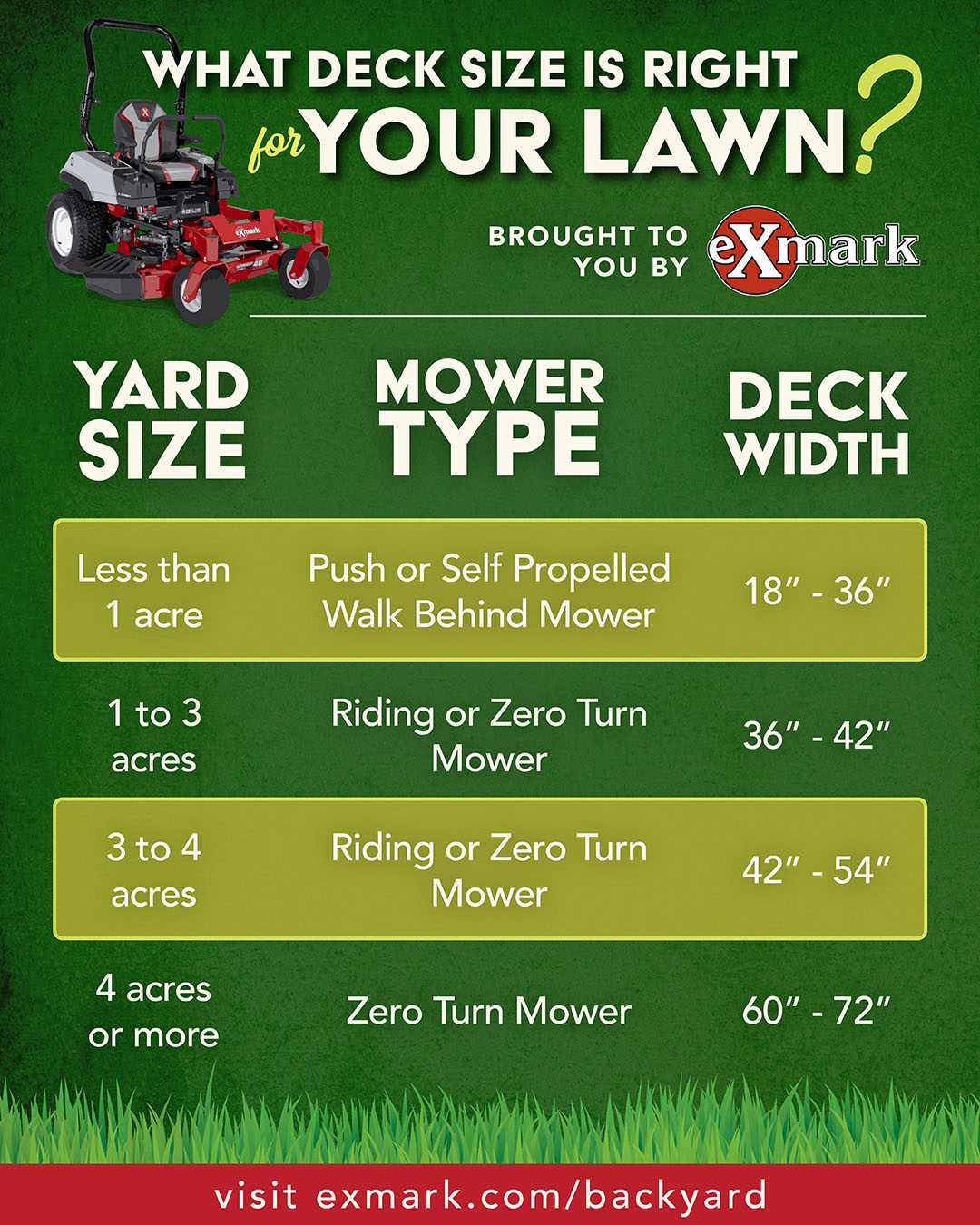
Image Source: backyard.exmark.com
Deciphering Mower Width by Type
Lawn mowers come in a variety of sizes and designs, each with a different typical width. Knowing these differences helps you choose the best mower for your yard.
Push Mower Width: The Compact Choice
Push mowers are the most common type of lawn mower and are generally smaller. They are best suited for smaller to medium-sized yards.
- Average Push Mower Width: The average lawn mower width for a push mower typically ranges from 18 to 22 inches.
- Smaller Push Mowers: Some very compact models, often electric or battery-powered, might have a cutting width of mower as small as 16 inches. These are ideal for very small yards, townhouses, or areas with many obstacles.
- Larger Push Mowers: Self-propelled push mowers, designed for slightly larger yards or for users who want a little help, can have cutting decks up to 30 inches. This wider mower cutting path width significantly speeds up mowing.
A narrow push mower width makes it easy to navigate tight corners and small garden beds. They are also lighter and easier to store.
Riding Mower Width: Tackling Larger Lawns
Riding mowers are designed for larger properties. Their wider decks allow for much faster mowing compared to push mowers.
- Riding Mower Width Range: The riding mower width can vary significantly, but common deck sizes are between 30 inches and 60 inches.
- Compact Riding Mowers: Smaller riding mowers, often called lawn tractors, might start around 30 inches. These are good for yards that are too large for a push mower but not massive estates.
- Mid-Size Riding Mowers: Many homeowners opt for models with 42-inch to 50-inch decks. These offer a good balance of speed and maneuverability.
- Large Riding Mowers: For very large properties, you can find riding mowers with 60-inch decks or even wider. These are designed for maximum efficiency.
The lawn mower deck width on a riding mower directly impacts how much ground you cover with each pass.
Zero Turn Mower Width: Speed and Agility
Zero turn mowers are known for their maneuverability and speed, especially around obstacles. Their deck widths are often comparable to or wider than traditional riding mowers.
- Zero Turn Mower Width: The zero turn mower width typically starts around 42 inches and can go up to 72 inches or more.
- Residential Zero Turns: For home use, you’ll commonly find zero turn mower widths of 48 inches, 52 inches, and 60 inches.
- Commercial Zero Turns: Commercial landscapers often use zero turn mowers with even wider decks, such as 60-inch, 72-inch, or larger, to cover vast areas quickly.
A wider mower cutting path width on a zero turn mower means fewer passes, but you still retain the agility to zip around trees and flower beds.
Commercial Mower Width: Professional Power
Commercial-grade mowers are built for durability and high performance, often featuring very wide cutting decks.
- Commercial Mower Width: These mowers can have lawn mower deck width ranging from 48 inches all the way up to 84 inches or more.
- Types of Commercial Mowers: This category includes wide-deck zero turns, stand-on mowers, and even large tractor-like machines.
- Efficiency Focus: The primary goal of a large commercial mower width is to maximize the amount of grass cut in the shortest amount of time.
When looking at a commercial mower width, think about large estates, athletic fields, golf courses, or any extensive green space that needs regular maintenance.
Factors Influencing Your Mower Choice
The ideal lawn mower deck width for you depends on several factors related to your yard and your needs.
Yard Size and Complexity
- Small Yards (Under 1/4 Acre): A 20-22 inch push mower width is usually sufficient. If your yard has many tight turns or obstacles, a narrower deck is better.
- Medium Yards (1/4 to 1/2 Acre): A self-propelled push mower with a 22-30 inch deck can speed things up. Alternatively, a compact riding mower with a 30-42 inch deck becomes a viable option.
- Large Yards (1/2 Acre to 1 Acre): A riding mower with a 42-50 inch deck is ideal. A zero turn mower with a 48-52 inch deck will offer excellent efficiency.
- Very Large Yards (Over 1 Acre): You’ll likely need a larger riding mower (50-60 inch deck) or a wide-deck zero turn mower (60+ inches).
The backyard mower size you choose should directly correlate with the size of the area you need to maintain.
Maneuverability Needs
If your yard has many trees, flower beds, or other landscaping features, a narrower deck might be more practical. Even with a wider deck, zero turn mowers excel at navigating these complex areas due to their steering capabilities.
Time Availability
The wider the cutting width of mower, the less time you will spend mowing. If time is a major concern, investing in a mower with a larger deck is a wise decision.
Storage Space
Wider mowers, especially riding mowers and larger zero turns, require more storage space in a garage or shed. Consider the physical dimensions of the mower, not just its cutting width.
Budget
Generally, mowers with wider decks are more expensive. While a wider deck saves time, ensure it fits within your budget.
Practical Considerations for Mower Width
Beyond the basic measurements, a few other points are worth considering when it comes to how wide is a lawn mower.
Turning Radius
While deck width is important for covering ground, the turning radius of the mower can affect how easily you can maneuver around obstacles. Zero turn mowers have a distinct advantage here.
Gateways and Storage
Make sure the mower can fit through any gates in your yard or fence. Also, check if it will fit through your garage or shed door. A mower with a 60-inch deck might be fantastic for mowing but useless if it can’t get into your storage space.
Terrain
For hilly or uneven terrain, a lighter, more maneuverable mower might be preferable, even if it means a slightly smaller cutting width. Stability is also a factor.
Grass Type and Length
While not directly related to width, the type and length of grass can influence the power required from the mower, which is often linked to larger, more powerful engines found on wider-deck machines.
Common Lawn Mower Widths at a Glance
To give you a clearer picture, here’s a table summarizing typical mower width by type:
| Mower Type | Typical Cutting Width Range | Best For |
|---|---|---|
| Push Mower | 18-22 inches | Small to medium yards, tight spaces |
| Self-Propelled | 22-30 inches | Medium yards, moderate obstacles |
| Riding Mower | 30-60 inches | Medium to large yards |
| Zero Turn Mower | 42-72+ inches | Medium to very large yards, obstacles |
| Commercial Mower | 48-84+ inches | Very large properties, professional use |
This table highlights how the average lawn mower width increases as you move from smaller, residential units to more powerful, commercial ones.
Measuring Your Lawn Mower’s Effectiveness
The lawn mower deck width is a primary indicator of efficiency, but other aspects contribute to how well your mower performs.
Engine Power
A wider deck often requires a more powerful engine to maintain optimal cutting performance. If you opt for a wide cutting width of mower, ensure the engine is robust enough to handle the load, especially in thick or wet grass.
Blade Configuration
Mowers with wider decks typically have multiple blades to ensure consistent cutting across the entire width. The way these blades overlap or are positioned impacts the quality of the cut.
Maneuverability vs. Coverage
There’s often a trade-off. A very wide zero turn mower width or commercial mower width might cover more ground per pass, but a narrower push mower width allows for greater precision around delicate landscaping. Choosing the right backyard mower size involves balancing these needs.
Frequently Asked Questions About Lawn Mower Width
Here are some common questions people have about how wide is a lawn mower:
Q1: What is the most common lawn mower width?
A1: For residential use, the most common push mower width is around 20-22 inches, and for riding mowers, it’s often in the 42-52 inch range for the cutting width of mower.
Q2: Will a wider lawn mower cut my lawn faster?
A2: Yes, generally, a wider lawn mower deck width means fewer passes are needed to cover the same area, thus reducing mowing time. This is true for all types, from push mower width to commercial mower width.
Q3: Can I fit a wider mower through my garden gate?
A3: You must measure your gates and doorways before purchasing. The physical width of the mower, not just the mower cutting path width, is critical for access. A 48-inch zero turn mower will be significantly wider than a 20-inch push mower.
Q4: How do I know what is the right backyard mower size for me?
A4: Consider the size of your yard, the amount of time you want to spend mowing, and the number of obstacles. For smaller yards, a narrower push mower width is fine. For larger yards, a wider riding mower width or zero turn mower width is more efficient.
Q5: Are commercial mowers always wider than residential mowers?
A5: Yes, typically, commercial mower width is significantly larger, often starting at 48 inches and going up to 84 inches or more. This is to maximize efficiency for professional use on large areas.
Q6: Does mower width affect the quality of the cut?
A6: While width primarily impacts speed, a well-designed deck with appropriate blades will provide a good cut regardless of size. However, very wide decks often feature more complex blade systems to ensure even coverage. The cutting width of mower should not be the sole factor in judging cut quality.
Q7: What is the average lawn mower width for a small yard?
A7: For a small yard, an average lawn mower width of 18-22 inches for a push mower is usually sufficient and provides good maneuverability.
Conclusion: Choosing the Right Width for Your Needs
Ultimately, determining how wide is a lawn mower for your specific situation involves a careful assessment of your yard’s characteristics and your personal preferences. Whether you’re looking for a compact push mower width to navigate a quaint garden or a wide commercial mower width to conquer acres, the lawn mower deck width is a key specification that directly influences efficiency and ease of use. By considering the mower cutting path width in relation to your yard’s size, complexity, and your available time, you can confidently select the perfect mower to keep your lawn looking its best. Remember to always check the physical dimensions for storage and access, ensuring your chosen backyard mower size truly fits your life.