
Determining how long to water your lawn each zone is crucial for a healthy, vibrant landscape. The general answer is that you should water each zone until the soil is moist about 4-6 inches deep, which typically takes between 15-30 minutes per zone, depending on your sprinkler system and soil type.
Watering your lawn correctly is more than just turning on the sprinklers; it’s about giving your grass the right amount of hydration at the right time. Too little water stresses your lawn, making it susceptible to disease and pests. Too much water can lead to shallow root growth, fungal issues, and wasted water. This guide will help you decipher the best watering schedule for grass and tailor it to your specific needs, ensuring optimal lawn health watering.
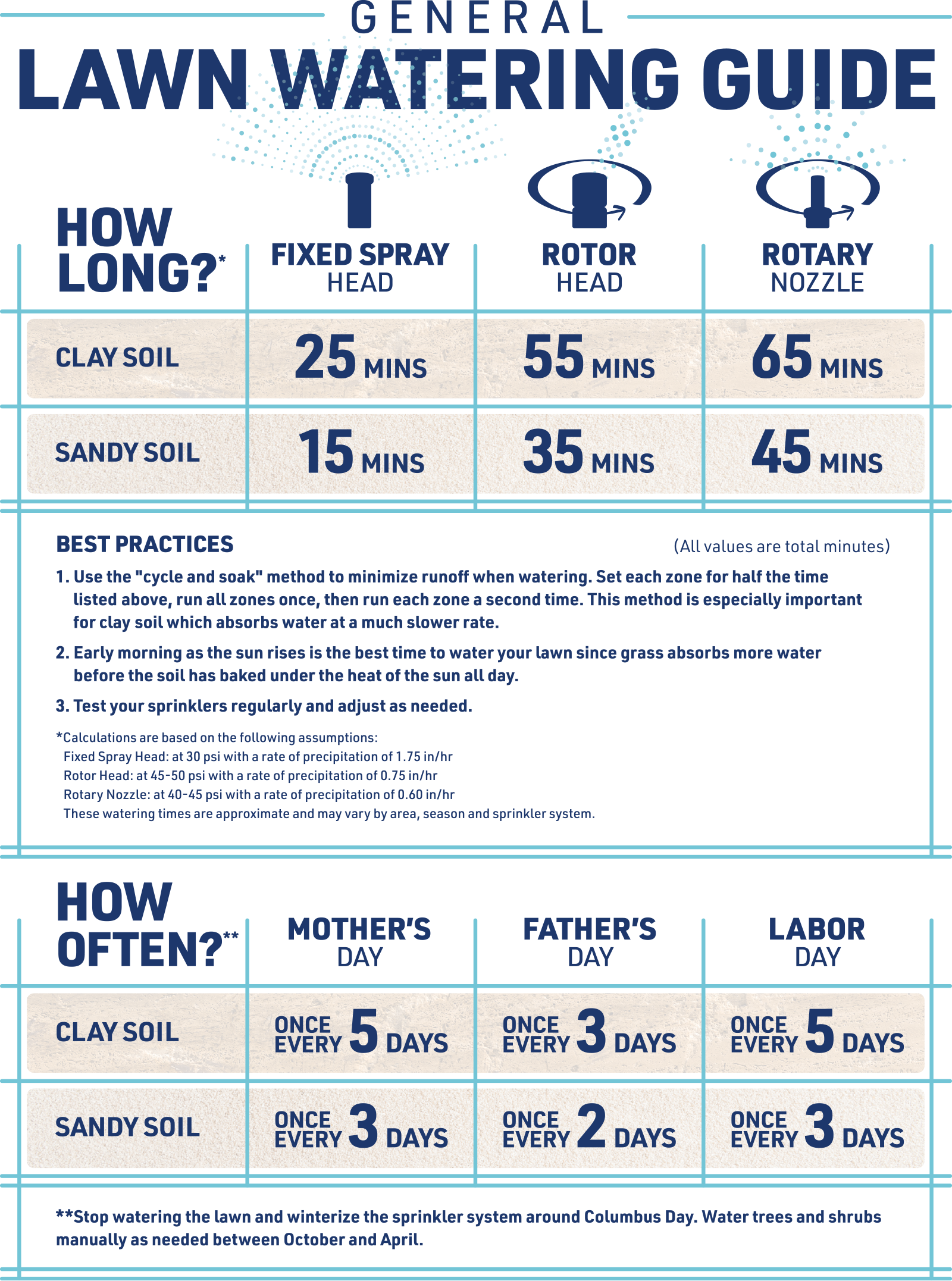
Image Source: grow.ifa.coop
Why Zoning Your Lawn Watering Matters
Your lawn isn’t a uniform entity. Different areas can have varying needs based on sunlight, soil type, slope, and even the types of grass present. This is where creating irrigation zone duration plans becomes essential. A good sprinkler system settings strategy means acknowledging these differences.
Sunlight Exposure
- Sunny areas: These spots receive direct sunlight for most of the day and will dry out faster. They will likely require more frequent or slightly longer watering sessions.
- Shady areas: These zones get less sun and retain moisture longer. They generally need less water and shorter watering durations.
Soil Types
Different soil types absorb and retain water differently.
- Sandy soil: Drains quickly. It may need more frequent, shorter watering sessions to prevent water from draining too deep too fast. This prevents shallow watering lawn practices.
- Clay soil: Drains slowly. It can become waterlogged if overwatered. It’s better to water less frequently but for longer durations to encourage deep watering lawn and allow water to soak in without runoff.
- Loam soil: A good balance, draining well but retaining moisture. It’s often the easiest to manage.
Slope and Drainage
- Sloping areas: Water tends to run off before it can soak in. You might need to use shorter, more frequent watering cycles on slopes or consider specialized sprinklers that apply water more slowly.
- Low-lying areas: These can collect water and may become waterlogged. Adjust your watering to avoid over-saturating these spots.
Grass Type
Different grass varieties have different water requirements. Cool-season grasses like fescue and ryegrass generally need more water in warmer months than warm-season grasses like Bermuda and Zoysia.
Determining the Right Watering Duration for Each Zone
The goal of deep watering lawn is to encourage roots to grow deeper into the soil. Deep roots make the grass more resilient to drought and heat. Shallow watering, on the other hand, promotes surface roots that are more vulnerable.
How to Gauge Soil Moisture
The most effective way to know if you’re watering enough is to check the soil moisture for grass.
The “Trowel Test” or “Screwdriver Test”
- After watering, wait for about an hour for the water to distribute.
- Use a garden trowel or a long screwdriver to probe the soil in different parts of the watered zone.
- If the soil is moist to a depth of 4-6 inches, you’ve likely watered enough. If it’s dry or only moist a couple of inches down, you need to water longer.
Using Soil Moisture Meters
These devices, available at garden centers, can give you a more precise reading of soil moisture levels at different depths. Insert the probe into the soil, and it will display the moisture content.
Typical Watering Durations (General Guidelines)
These are starting points and will need adjustment based on your observations.
| Zone Type (Based on Factors Above) | Typical Watering Duration (Minutes) | Notes |
|---|---|---|
| Sunny, Sandy Soil | 15-20 | Water more frequently if needed. |
| Sunny, Clay Soil | 25-30 | Water slower to prevent runoff. Consider cycle and soak. |
| Shady, Sandy Soil | 10-15 | Less frequent watering usually sufficient. |
| Shady, Clay Soil | 20-25 | Watch for waterlogged conditions. |
| Mixed/Average Soil, Moderate Sun | 20-25 | Good starting point, adjust based on soil moisture tests. |
| Sloping areas | 10-15 per cycle (multiple cycles) | Use cycle and soak method to prevent runoff. |
Important Note: These are general estimates. Your specific lawn water needs by zone will dictate the precise duration.
Optimizing Your Watering Schedule
Beyond duration, the lawn watering frequency and timing are critical.
Watering Frequency
The goal is to allow the soil to dry out slightly between watering sessions. This encourages roots to grow deeper in search of moisture.
- General Rule: Most established lawns benefit from watering 1-3 times per week, depending on weather conditions and grass type.
- Signs of Thirst: Look for your grass to change color to a dull bluish-green, or for the footprints you leave on the lawn to remain visible for a long time.
- Adjustments: During hot, dry spells, you might need to water more frequently. During cooler, rainy periods, you may need to water much less or not at all.
Best Watering Times for Lawn
The best time to water your lawn is typically in the early morning, between 4 AM and 10 AM.
-
Benefits of Morning Watering:
- Reduced Evaporation: Cooler temperatures and calmer air mean less water is lost to evaporation compared to watering in the heat of the day.
- Drying Time: Allows the grass blades to dry off during the day, reducing the risk of fungal diseases that thrive on prolonged moisture.
- Water Pressure: Water pressure is often higher in the early morning, ensuring your sprinklers operate more efficiently.
-
Why Avoid Other Times:
- Midday: High temperatures cause rapid evaporation, meaning much of the water applied won’t reach the roots. It’s inefficient and can scorch grass if water droplets magnify the sun’s rays.
- Evening/Night: While this time reduces evaporation, it leaves the grass wet overnight. This creates an ideal environment for fungal diseases to develop and spread.
Understanding Your Sprinkler System Settings
The efficiency and coverage of your sprinkler system significantly impact how long you need to water.
Types of Sprinklers and Their Application Rates
Different sprinkler heads apply water at different rates. This is measured in inches per hour.
- Rotor sprinklers: Typically apply water at a rate of 0.5 to 1 inch per hour. They cover larger areas with a rotating stream.
- Spray sprinklers: Usually apply water at a rate of 1 to 1.5 inches per hour. They cover smaller, more defined areas with a fan-like spray.
- Impact sprinklers: Similar to rotors, with a more forceful spray, often applying water at 0.5 to 1 inch per hour.
- Drip irrigation/soaker hoses: Apply water very slowly, directly to the soil, often at rates of less than 0.5 inches per hour.
To calculate how long to water:
-
Determine your sprinkler’s application rate:
- Place empty tuna cans or straight-sided containers at various points within a zone.
- Run the sprinkler for a set amount of time (e.g., 15 minutes).
- Measure the amount of water collected in the cans.
- Calculate the average depth of water collected.
- Multiply this by 4 to get the application rate in inches per hour (if you ran it for 15 minutes).
- Example: If you collected an average of 0.25 inches of water in 15 minutes, your sprinkler applies 0.25 inches * 4 = 1 inch of water per hour.
-
Calculate watering time for deep watering:
- If your target is to apply 1 inch of water, and your sprinkler applies 1 inch per hour, you’ll need to water for 1 hour.
- If your sprinkler applies 0.5 inches per hour, you’ll need to water for 2 hours to get 1 inch of water.
- If your sprinkler applies 1.5 inches per hour, you’ll need to water for about 40 minutes (1.5 inches/hour * 40 min = 1 inch).
Table: Sprinkler Application Rate and Watering Time for 1 Inch of Water
| Sprinkler Application Rate (Inches per Hour) | Watering Time to Apply 1 Inch (Minutes) |
|---|---|
| 0.5 | 120 |
| 0.75 | 80 |
| 1.0 | 60 |
| 1.25 | 48 |
| 1.5 | 40 |
Adjusting Sprinkler System Settings
- Head-to-head coverage: Ensure that the spray from one sprinkler head reaches the base of the next head. This creates an even watering pattern and prevents dry spots. You may need to adjust sprinkler heads or add more to achieve this.
- Nozzle types: Different nozzles on sprinkler heads can alter the spray pattern and radius, affecting coverage and application rate.
- Water pressure: Ensure your system is operating at the correct water pressure. Too low, and you won’t get adequate coverage. Too high, and you can cause misting and uneven application.
- Check for leaks and clogs: Regularly inspect your system for leaks or clogged nozzles, as these can significantly impact efficiency and your watering schedule.
Tailoring Watering to Specific Lawn Zones
Now, let’s bring it all together for your specific lawn water needs by zone.
Sunny Zones with Loamy Soil
- Sunlight: High
- Soil: Loam
- Likely Duration: 20-25 minutes per zone.
- Frequency: 2-3 times per week.
- Rationale: The sun will dry this area faster. Loam soil retains moisture well, so 20-25 minutes should promote deep watering lawn without oversaturation. Check soil moisture for grass to confirm.
Shady Zones with Clay Soil
- Sunlight: Low
- Soil: Clay
- Likely Duration: 15-20 minutes per zone.
- Frequency: 1-2 times per week.
- Rationale: Clay soil holds water for a long time. Shady areas also don’t dry out as quickly. Shorter, less frequent watering prevents waterlogging and fungal issues. This helps avoid shallow watering lawn by encouraging moisture to penetrate slowly.
Sloping Areas with Sandy Soil
- Sunlight: Varies
- Soil: Sandy
- Likely Duration: 10-15 minutes per cycle, with multiple cycles (cycle and soak).
- Frequency: As needed, potentially 2-3 times per week during dry periods.
- Rationale: Sandy soil drains rapidly, and slopes encourage runoff. The “cycle and soak” method involves watering for a short period (e.g., 10-15 minutes), letting the water soak in for an hour or more, and then watering again for a similar duration. This breaks up watering into smaller, manageable amounts that can be absorbed effectively, promoting lawn health watering even in challenging spots.
Areas Under Large Trees
- Sunlight: Low to moderate (can be reduced by tree canopy)
- Soil: Can vary, but often compacted and may compete with tree roots.
- Likely Duration: 15-20 minutes per zone.
- Frequency: 1-2 times per week.
- Rationale: Tree roots are aggressive water seekers. Watering these areas too deeply or too frequently can encourage grass roots to stay shallow and compete with the tree. Aim for moderate watering that doesn’t oversaturate.
Seasonal Adjustments to Your Watering Schedule
Your watering schedule for grass needs to adapt throughout the year.
Spring
- As temperatures warm and your lawn begins to actively grow, gradually increase watering.
- Focus on encouraging root development with deep watering.
- Initial lawn watering frequency might be once a week, increasing as temperatures rise.
Summer
- This is the most critical time for watering.
- Monitor your lawn closely for signs of thirst.
- You may need to increase irrigation zone duration and/or frequency, especially during heatwaves.
- Stick to early morning watering to minimize evaporation and disease risk.
Fall
- As temperatures cool and rainfall increases, reduce watering.
- Allow the lawn to go slightly dormant rather than overwatering.
- Deep watering before the first hard frost can help the lawn survive winter.
Winter
- Water only if there is a prolonged dry spell and no snow cover.
- Avoid watering when temperatures are expected to drop below freezing to prevent ice buildup that can damage grass.
Advanced Tips for Optimal Lawn Health Watering
- Rain Sensors: Install a rain sensor on your sprinkler system. It will automatically shut off the system when it rains, preventing unnecessary watering.
- Smart Controllers: Modern smart irrigation controllers can adjust watering schedules based on local weather data, soil type, and plant needs, ensuring efficient use of water.
- Aeration: Aerating your lawn creates small holes in the soil, improving water penetration and reducing runoff, especially beneficial for clay soils and compacted areas.
- Mowing Height: Mowing your grass at the higher end of the recommended range for your grass type helps shade the soil, keeping it cooler and reducing water evaporation.
- Mulching: Applying mulch around trees and in garden beds helps retain soil moisture.
Frequently Asked Questions (FAQ)
How do I know if I’m overwatering my lawn?
Signs of overwatering include a yellowing of the grass (which can mimic drought stress), increased fungal diseases (like brown patch or dollar spot), soggy soil that remains wet for days, and a spongy feel to the lawn.
Can I water my lawn every day?
For most established lawns, watering every day is not recommended. It promotes shallow root growth, making the grass less resilient. Watering deeply and less frequently encourages deeper root systems. Exceptions might be newly seeded or sodded areas, or during extreme drought conditions with very sandy soil.
What is “cycle and soak” watering?
Cycle and soak is a watering method where you break up a long watering session into shorter cycles with rest periods in between. For example, instead of watering for 60 minutes straight, you might water for 20 minutes, wait an hour, water for another 20 minutes, wait an hour, and then water for the final 20 minutes. This is particularly effective on slopes or with clay soils to prevent runoff and allow water to penetrate the soil more effectively.
How does the type of grass affect watering needs?
Different grass types have different root depths and water requirements. Cool-season grasses (like fescue, bluegrass, rye) generally need more consistent moisture, especially during warmer months. Warm-season grasses (like Bermuda, Zoysia, St. Augustine) are more drought-tolerant and can withstand drier conditions once established. Always research the specific needs of your grass type.
Should I water my lawn when it’s dormant?
Generally, no. Dormant lawns are in a natural resting state, often due to heat or cold, and do not require regular watering. If a dormant lawn goes extended periods without any moisture (e.g., a severe drought in winter), a light watering might be beneficial to prevent desiccation, but this is typically rare.
By paying close attention to your lawn’s specific needs, soil conditions, and the performance of your sprinkler system settings, you can create a watering plan that ensures a healthy, beautiful, and water-wise landscape. Remember that consistent observation and minor adjustments are key to achieving the best results.