
You can generally mow your lawn anytime between sunrise and sunset, but specific lawn mowing times are best to avoid bothering neighbors and to protect your grass.
Mowing your lawn is a vital part of maintaining a healthy and attractive yard. But when is the right time to fire up the mower? The question of “How late can I mow my lawn?” is a common one, often driven by busy schedules and the desire to get the chore done. While there isn’t a universal “late” cutoff, it’s crucial to consider several factors, including local noise ordinance lawn mowing regulations, the health of your grass, and maintaining good relationships with your neighbors. This in-depth guide will help you navigate the best times for residential lawn maintenance hours and ensure your mowing practices are both effective and considerate.
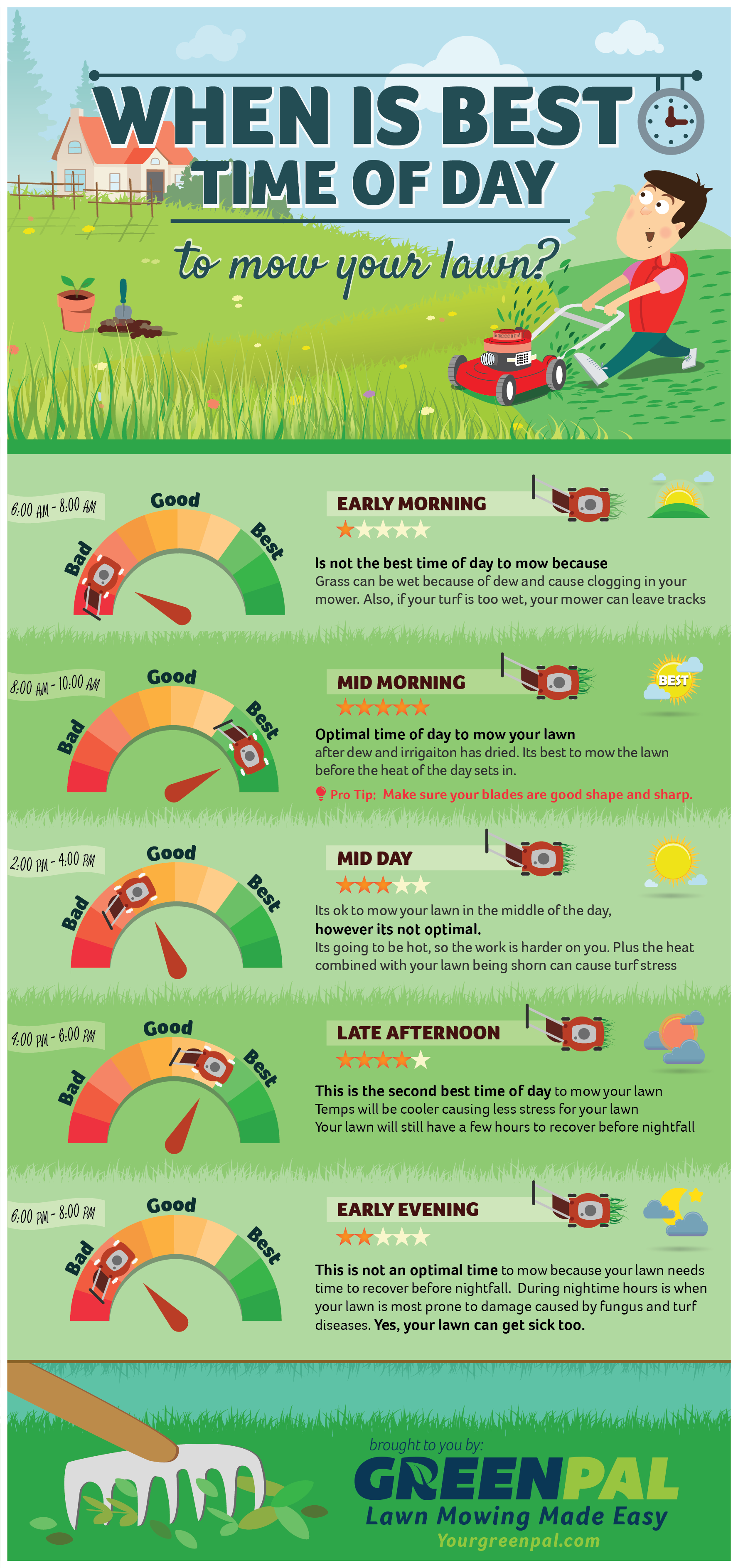
Image Source: coolinfographics.squarespace.com
Respectful Mowing Practices for a Harmonious Neighborhood
At its core, respectful mowing practices are about being a good neighbor. This means being mindful of when your actions might disrupt others. Loud machinery like lawnmowers can be particularly intrusive, especially during times when people are typically at rest or enjoying quiet activities. Understanding neighborhood noise rules is the first step in ensuring you’re not causing unnecessary disturbance.
Deciphering Local Noise Ordinances
Many communities have specific noise ordinance lawn mowing rules in place. These ordinances are designed to limit excessive noise, particularly during certain hours. They can vary significantly from one town or city to another, so it’s essential to know what applies in your area.
What are Common Quiet Hours?
Quiet hours lawn mowing typically fall into two main categories: early morning and late evening. While exact times differ, common quiet hours are often from 9 PM or 10 PM to 7 AM or 8 AM on weekdays, and sometimes extending later into the morning on weekends. Some ordinances might also have specific restrictions for Sundays or holidays.
How to Find Your Local Ordinances
- Check Your City or Town Website: Most municipal websites have a section dedicated to local ordinances or municipal codes. You can usually search for keywords like “noise,” “mowing,” or “lawn maintenance.”
- Contact Your Local Government Office: If you can’t find the information online, call your city hall or local government administrative office. They can direct you to the correct department or provide you with the relevant information.
- Ask Your Homeowners Association (HOA): If you live in a community with an HOA, they often have their own set of rules regarding lawn care and noise, which may be more stringent than local ordinances.
The Impact of Mowing Too Late
Mowing too late in the evening can lead to several negative consequences:
- Neighbor Complaints: The most immediate issue is likely to be complaints from neighbors who are trying to relax, have dinner, or put children to bed.
- Fines: If your local ordinances have specific time restrictions, you could face fines for violations.
- Stress and Conflict: Persistent complaints can create unnecessary stress and conflict within your neighborhood.
The Ideal Lawn Care Schedule: Balancing Time and Grass Health
Beyond neighborly consideration, the timing of your mowing also affects the health and appearance of your lawn. A well-timed mow contributes to a robust and resilient turf.
Early Morning Lawn Mowing: The Pros and Cons
Early morning lawn mowing can seem appealing for those who want to get a chore out of the way before the heat of the day or a busy schedule. However, there are important considerations:
Advantages of Early Morning Mowing
- Beat the Heat: Mowing in the cooler morning hours is more comfortable for you and less stressful for your grass.
- Productivity: It can be a great way to start your day and have the task completed early.
Disadvantages of Early Morning Mowing
- Dew on the Grass: Grass is often wet with dew in the early morning. Mowing wet grass can:
- Clog your mower: Wet clippings tend to clump and can clog the mower deck and discharge chute.
- Spread disease: If your lawn has any fungal diseases, mowing wet grass can spread spores to other areas of the lawn.
- Uneven cut: Wet grass blades don’t always cut cleanly, leading to a ragged appearance.
- Noise Disturbances: Even if it’s not technically against the quiet hours lawn mowing rules, very early mowing (e.g., before 7 AM) can still be disruptive to neighbors who are sleeping or enjoying a quiet start to their day.
Recommendation: If you choose to mow early, wait until the dew has evaporated, typically mid-morning.
Mid-Day Mowing: Considerations
Mowing in the middle of the day, especially during hot summer months, can be taxing on both you and your lawn.
Heat Stress on Grass
- Damage to Blades: Grass blades can get scorched or stressed when mowed during the hottest part of the day. This is because the cut ends of the blades are more exposed to the sun and heat.
- Reduced Growth: Stressed grass may not grow as vigorously.
Personal Comfort
- Dehydration and Heatstroke: Working in direct sunlight and high temperatures poses a risk of heat-related illnesses for the mower.
Recommendation: If you must mow during the hottest part of the day, ensure you stay hydrated and take breaks. It’s generally better to avoid this time if possible.
Late Afternoon/Early Evening Lawn Care: The “Sweet Spot”
For many, the late afternoon or early evening offers the best balance for mowing. This timeframe generally allows the grass to recover slightly from the day’s sun and avoids the peak noise disturbance hours.
Benefits of Late Afternoon/Early Evening Mowing
- Grass Recovery: The grass has had the day to photosynthesize and can better withstand the stress of mowing.
- Dew-Free: The grass is typically dry by this time.
- Considerate Timing: This often falls within acceptable mowing times before evening quiet hours begin.
Potential Drawbacks
- Reduced Visibility: As the sun sets, light levels can decrease, making it harder to see what you’re doing and potentially increasing the risk of hitting obstacles.
- Heat Lingering: While cooler than mid-day, temperatures can still be warm.
Recommendation: Aim to finish mowing at least an hour or two before sunset to ensure good visibility and to allow the grass to settle before nightfall.
Fathoming the Cut: Best Practices for a Healthy Lawn
The time of day is crucial, but how you mow also impacts your lawn. Following best practices ensures your mowing contributes to a healthier, more resilient turf.
Mowing Height Matters
- Don’t Cut Too Short: Mowing too low stresses the grass, making it susceptible to drought, weeds, and disease. Consult guidelines for your specific grass type.
- The One-Third Rule: Never remove more than one-third of the grass blade’s height in a single mowing. This means you may need to mow more frequently during peak growing seasons.
Blade Sharpness
- Clean Cuts: Dull mower blades tear grass blades, leaving them ragged and prone to browning and disease.
- Sharpen Regularly: Aim to sharpen your mower blades at least once a season, or more often if you have a large lawn or encounter tough grasses.
Mowing Pattern
- Vary Your Direction: Alternating your mowing pattern (e.g., north-south one week, east-west the next) helps prevent the grass blades from becoming permanently bent in one direction and promotes more upright growth.
Mulching vs. Bagging Clippings
- Mulching Benefits: Leaving grass clippings on the lawn (mulching) returns valuable nutrients to the soil, acting as a natural fertilizer. This is generally preferred unless the grass is excessively long and clumpy.
- Bagging When Necessary: If clippings are too long to break down properly or if you have a lawn disease, bagging them can be beneficial.
Creating Your Lawn Care Schedule: A Practical Approach
A good lawn care schedule considers your specific grass type, climate, and personal availability. Here’s a framework to help you build one:
Key Considerations for Scheduling
- Grass Type: Cool-season grasses (e.g., Fescue, Kentucky Bluegrass) have different growth patterns than warm-season grasses (e.g., Bermuda, Zoysia).
- Season: Growth is most vigorous in spring and fall for cool-season grasses, and during summer for warm-season grasses.
- Weather: Adjust mowing frequency based on rainfall and temperature. Your lawn will grow faster when conditions are ideal.
- Local Ordinances: Always refer back to your neighborhood noise rules.
Sample Lawn Care Schedule (Cool-Season Grass in a Temperate Climate)
| Season | Frequency (typical) | Best Time of Day | Notes |
|---|---|---|---|
| Spring | Weekly | Mid-morning to early evening | Mow before growth gets too tall. Avoid mowing wet grass. |
| Summer | Weekly or Bi-weekly | Mid-morning to early evening | Mow higher during heat stress. Water deeply and infrequently. |
| Fall | Weekly | Mid-morning to early evening | Mow to keep grass at a healthy height before winter dormancy. |
| Winter | As needed (rarely) | N/A | Minimal growth, usually no mowing required. |
Important Note: This is a general guide. Adjust based on your lawn’s specific needs and your local climate.
Early Morning Lawn Mowing: When is it Acceptable?
While early morning lawn mowing can be tempting, the key is to be considerate. Generally, mowing before 7:00 AM or 8:00 AM on weekdays is pushing the boundaries of acceptable mowing times, even if not explicitly forbidden by an ordinance. The noise can easily disturb early risers, families with young children, or those working from home who need quiet.
When is Early Morning Mowing Okay?
- Weekends and Holidays: Some ordinances might allow slightly earlier mowing on weekends, but it’s still courteous to wait until at least 8 AM or 9 AM.
- After the Dew Has Dried: As mentioned, mowing wet grass is problematic. Wait for the sun to do its work.
- If You Have a Very Quiet Mower: Electric or battery-powered mowers are significantly quieter than gas-powered ones. If you have one of these, you might have a bit more flexibility, but it’s still wise to check local rules.
How Late Can I Mow My Lawn? A Definitive Answer
So, how late can you actually mow? The most practical and widely accepted answer is: Mow your lawn during daylight hours, and stop at least one to two hours before sunset. This usually means finishing your mowing by 7 PM or 8 PM at the latest, depending on the season and your location.
Why This Cutoff?
- Visibility: As dusk approaches, light levels drop, making it unsafe to operate machinery.
- Noise: Mowing after sunset often falls into quiet hours lawn mowing territory, annoying neighbors.
- Grass Health: Allowing the grass to rest and recover from the day’s heat before nightfall is beneficial.
- Respect for Neighbors: This timing is generally considered the most courteous for late evening lawn care that doesn’t intrude on neighbors’ peace.
What If My Schedule Demands It?
If your schedule absolutely prevents you from mowing during traditional daylight hours, consider:
- Electric or Battery Mowers: These are much quieter and may allow for slightly later mowing without as much disturbance, but still be mindful of ordinances.
- Hiring a Professional: Lawn care services often have equipment and schedules that can accommodate various needs.
- Mowing on a Day Off: Even if it’s just an hour earlier or later than your typical weekday schedule, dedicating a weekend morning or afternoon can help.
Frequently Asked Questions (FAQ)
Q1: Can I mow my lawn at 9 PM?
Generally, no. Many noise ordinance lawn mowing rules prohibit mowing after 8 PM or 9 PM, especially on weekdays. It’s also getting dark, which is unsafe.
Q2: Is it okay to mow my lawn after sunset?
No, it’s not advisable. Aside from safety concerns due to poor visibility, it’s almost certainly outside acceptable mowing times and will likely disturb your neighbors.
Q3: My neighbor mows their lawn very early. What can I do?
First, politely speak to your neighbor about your concerns. If that doesn’t resolve the issue, consult your local noise ordinance lawn mowing rules and consider contacting your local authorities if the problem persists and violates ordinances.
Q4: Does mowing grass when it’s wet really hurt my lawn?
Yes, it can. Mowing wet grass can lead to an uneven cut, clog your mower, spread disease, and stress the grass blades, making them more susceptible to damage. It’s best to wait for the grass to dry.
Q5: What are the best times for late evening lawn care?
The best times for late evening lawn care are those that still allow for good visibility and don’t infringe upon quiet hours. Aim to finish mowing at least an hour or two before dusk, typically by 7 PM or 8 PM at the latest.
By following these guidelines, you can maintain a beautiful lawn while being a considerate member of your community. Remember, good lawn care schedule and respectful mowing practices contribute to a more pleasant living environment for everyone.