
How long to water a lawn with a hose? The answer is typically 15-30 minutes per zone, but this varies greatly based on grass type, soil, weather, and sprinkler output. How much water for grass generally means about one inch of water per week, applied deeply and infrequently.
Watering your lawn correctly is key to a healthy, vibrant green space. Many homeowners grapple with the question of how long to water lawn with hose, often falling into the trap of frequent, shallow watering. This can lead to weak root systems and a thirsty lawn, especially during dry spells. This guide will help you master the art of deep watering lawn, ensuring your grass gets the hydration it needs to thrive. We’ll cover everything from how to measure water output to the ideal times and frequencies for watering.
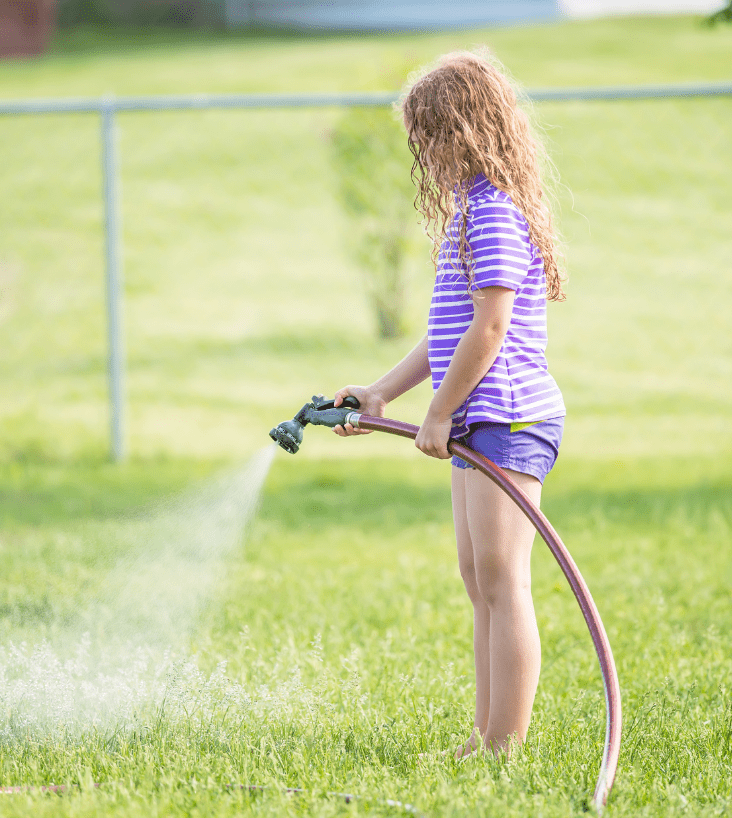
Image Source: lawnsavers.com
The Importance of Deep Watering
Why is deep watering lawn so crucial? Think of your grass like a plant in a pot. If you only ever give it a little bit of water each day, the roots stay shallow, right near the surface. When the sun beats down, that shallow water evaporates quickly, and the roots are left high and dry.
With deep watering, you’re essentially encouraging those roots to grow down, searching for moisture. This creates a much stronger, more resilient plant. A lawn that’s watered deeply:
- Develops stronger roots: Deeper roots can access moisture further down in the soil, making the grass more drought-tolerant.
- Is more resistant to pests and diseases: Healthy, well-hydrated grass is better equipped to fight off invaders.
- Stands up better to foot traffic and wear: Strong roots anchor the grass more effectively.
- Requires less frequent watering: Because the soil holds moisture longer, you won’t need to water as often.
This contrasts sharply with shallow watering, which promotes weak, shallow root systems.
How Much Water for Grass? Aiming for One Inch.
A common benchmark for effective watering is to provide about one inch of water per week. This doesn’t mean you should run your hose for an hour straight every day. Instead, this inch of water should be applied in one or two deep watering sessions.
How to measure how much water your lawn is receiving:
- Use a rain gauge or tuna can: Place several empty, straight-sided containers (like tuna cans or specific watering gauges) on your lawn.
- Run your hose: Water the area for a set amount of time (e.g., 15 minutes).
- Measure the depth: After watering, measure the depth of the water in each container. If you get an average of 0.5 inches in 15 minutes, you know that’s your lawn’s intake for that duration.
- Calculate total time: To reach one inch, you’d need to water for approximately 30 minutes.
This method is crucial for understanding your lawn watering duration. Remember, this is a guideline, and your specific grass type, soil, and local conditions will influence the exact amount needed.
Mastering Lawn Watering Duration with a Hose
Knowing how long to water lawn with hose requires some detective work and observation. It’s not a one-size-fits-all answer. Several factors influence the ideal lawn watering duration:
Factors Affecting Watering Time
- Grass Type: Different grass species have varying water requirements. Cool-season grasses (like fescue and bluegrass) often need more consistent moisture than warm-season grasses (like Bermuda and Zoysia), especially during hot weather.
- Soil Type:
- Sandy soil: Drains quickly. You’ll need shorter, more frequent watering sessions to prevent water from leaching away.
- Clay soil: Absorbs water slowly and holds it longer. You might need to water for longer periods, but less frequently, to allow water to penetrate without runoff. You may also need to water in cycles (e.g., water for 15 minutes, wait an hour, then water for another 15 minutes) to let the water soak in.
- Loam soil: A good balance of sand and clay, generally drains well and retains moisture effectively.
- Weather Conditions:
- Temperature: Higher temperatures increase evaporation, meaning you may need to water more frequently or for longer periods.
- Wind: Windy conditions can dry out the soil surface and cause water to be lost to evaporation before it can reach the roots.
- Rainfall: Obviously, if you’ve had significant rainfall, you can skip or reduce your watering.
- Sun Exposure: Areas that receive full sun will dry out faster than shaded areas and may require more attention.
- Slope: Sloped lawns are prone to runoff. Water in shorter intervals to allow better absorption.
Typical Watering Durations
As a general rule of thumb, for most established lawns, you’ll aim for:
- 15-30 minutes per watering session per zone.
This is a starting point. The goal is to wet the soil to a depth of 4-6 inches.
Hose Watering Lawn Tips for Duration:
- Divide your lawn into zones: If you have a large lawn or varying conditions (sunny vs. shady), it’s best to water different sections separately. This allows you to tailor the lawn watering duration to the needs of each area.
- Use a watering wand with a shut-off valve: This makes it easier to control the flow and time your watering precisely.
- Move the hose frequently: Don’t just let the water run in one spot for too long, especially if you’re not using a sprinkler. If you’re manually watering, move from one area to another, allowing each spot adequate time.
- Listen to your lawn: Signs of thirst include wilting, footprints remaining on the grass after you walk on it, and a dull, bluish-green color.
When to Water: Best Time to Water Lawn
Timing is as important as duration when it comes to keeping your lawn healthy. The best time to water lawn is generally in the early morning.
Why Early Morning is Best
- Reduces Evaporation: As the sun rises, temperatures increase, and so does evaporation. Watering in the early morning, before the heat of the day sets in, ensures that more water reaches the soil and roots.
- Minimizes Disease Risk: Watering when temperatures are cooler and there’s less wind means water has more time to soak into the soil. This also allows the grass blades to dry off relatively quickly as the day warms up. Wet grass blades left overnight can create an environment conducive to fungal diseases.
- Allows for Deeper Penetration: Cooler soil temperatures in the morning allow water to infiltrate more effectively before evaporation takes over.
Other Watering Times to Consider (and why they are less ideal)
- Midday: This is the least ideal time. The sun is at its strongest, leading to significant water loss through evaporation. Additionally, water droplets on grass blades can act like tiny magnifying glasses, potentially scorching the grass.
- Evening: While better than midday, watering in the evening can leave grass blades wet for extended periods overnight, increasing the risk of fungal diseases like dollar spot and brown patch. If you must water in the evening, try to do it early enough for the grass to dry before dusk.
The Ideal Watering Window:
Aim for between 4 AM and 10 AM. This provides ample time for the water to soak in and for the grass to dry off before the peak heat of the day.
Watering Lawn Frequency: How Often Should You Water?
The frequency of watering is closely linked to duration and the other factors mentioned. The general principle of watering lawn frequency is to water deeply and infrequently.
Understanding Watering Frequency Needs
- Avoid daily watering: Watering a little bit every day is detrimental. It encourages shallow root growth.
- Aim for 1-2 times per week: For most established lawns, watering deeply once or twice a week is sufficient during the growing season.
- Adjust for conditions: During prolonged heat waves or drought conditions, you might need to increase frequency slightly, but always prioritize deep watering. Conversely, during cooler, wetter periods, you may be able to water less often.
Signs Your Lawn Needs Watering
- Color Change: The grass may start to lose its vibrant green color and take on a dull, bluish-gray hue.
- Footprint Test: Step on the lawn. If your footprints remain visible for a long time, the grass blades lack the moisture to spring back, indicating a need for water.
- Wilting: Grass blades will start to curl or fold.
Adjusting Frequency Based on Season
- Spring: As growth begins, you might need to water once or twice a week, depending on rainfall.
- Summer: This is typically the most demanding season. If there’s no rain, you’ll likely need to water 1-3 times per week, focusing on deep watering sessions.
- Fall: As temperatures cool and rainfall becomes more common, you’ll gradually reduce watering frequency.
- Winter: In dormant periods, watering is usually not necessary unless there are extended dry spells with no snow cover.
The Art of Deep Watering Lawn with a Hose
Deep watering lawn is the cornerstone of a healthy landscape. It’s about saturating the soil to a depth of 4-6 inches, encouraging roots to grow down.
Techniques for Effective Deep Watering
- Hose Watering Lawn Tips for Depth:
- Use a soaker hose or a good quality oscillating sprinkler: These distribute water more evenly than a standard hose nozzle. If using a standard nozzle, you’ll need to move it frequently to ensure even coverage.
- Check soil penetration: After watering, use a screwdriver or soil probe to check how far the water has penetrated. If it only goes an inch or two, you need to water longer.
- Water in cycles for clay soil: If water starts to pool on the surface, turn off the hose and let it soak in for an hour before resuming. This prevents runoff and ensures deeper penetration.
- Be patient: Deep watering takes time. Don’t get discouraged if your lawn watering duration feels longer than you’re used to.
Sprinkler Watering Time vs. Hose Watering
While this guide focuses on hose watering, the principles of deep watering lawn apply to sprinklers too. Sprinkler watering time often requires calibration. You might need to run your sprinklers for a longer period than you think to achieve the same depth as a focused hose watering session. The tuna can test is invaluable for understanding your sprinkler’s output.
Common Watering Mistakes to Avoid
Many homeowners inadvertently harm their lawns through improper watering practices.
Mistakes and Their Consequences
- Shallow, Frequent Watering: Promotes shallow roots, making the lawn susceptible to drought, heat stress, and disease.
- Overwatering: Can lead to root rot, fungal diseases, and increased weed growth. It also wastes water and can leach essential nutrients from the soil.
- Watering During Peak Heat: Causes significant water loss through evaporation and can scorch grass blades.
- Ignoring Soil Type: Not adjusting watering practices for sandy versus clay soils leads to either underwatering or waterlogged conditions.
- Not Measuring Water Output: Guessing how much water for grass is received is a recipe for disaster.
Maintaining Lawn Hydration Needs
Understanding your lawn hydration needs is an ongoing process. It requires observation and adaptation.
Seasonal Adjustments
- Spring: Focus on encouraging root growth after winter. Watering deeply once a week might be sufficient, depending on rainfall.
- Summer: This is the critical time. Increase watering to 1-3 times per week, ensuring deep saturation. Watch for signs of stress.
- Fall: As temperatures cool, gradually reduce watering. The goal is to keep the soil moist going into winter.
- Winter: Minimal watering is needed, mainly during dry spells.
Adapting to Drought Conditions
During droughts, lawn hydration needs become even more critical.
- Water deeply: Even though it might be hot, prioritize deep watering to encourage roots to seek moisture.
- Water less frequently: Instead of watering a little every day, water as deeply as possible once or twice a week.
- Consider temporary dormancy: If drought is severe, it might be better to let your lawn go dormant. It will recover when conditions improve.
- Adjust mowing height: Raise your mower to a higher setting. Taller grass shades the soil, reducing evaporation and keeping roots cooler.
Frequently Asked Questions (FAQ)
Q1: How often should I water my lawn if I use a sprinkler system?
A1: The same principles of deep watering lawn apply. You’ll need to determine your sprinkler watering time to deliver about one inch of water per week. This might mean running sprinklers for 20-45 minutes per zone, 1-3 times per week, depending on the sprinkler type and output. Regularly check how much water is being applied using the tuna can test.
Q2: My lawn is on a slope. How does this affect watering?
A2: Sloping lawns are prone to runoff. To achieve deep watering lawn, you’ll likely need to water in cycles. For example, water for 10-15 minutes, let the water soak in for an hour, and then water for another 10-15 minutes. This prevents water from running off the surface before it can penetrate the soil.
Q3: Can I water my lawn at night?
A3: It’s generally not recommended. Watering at night leaves the grass blades wet for too long, increasing the risk of fungal diseases. If you must water at night, do so early in the evening so the grass has some time to dry before it gets dark. The best time to water lawn is in the early morning.
Q4: How do I know if I’m watering too much?
A4: Signs of overwatering include yellowing grass, a spongy feel to the lawn, increased fungal diseases, and a musty smell from the soil. If water is pooling on the surface for extended periods, you are likely watering too much or too quickly for your soil type.
Q5: Does watering frequency change if I have new sod or seed?
A5: Yes, significantly. New sod or seed requires much more frequent watering initially to help it establish. You’ll need to keep the top inch of soil consistently moist. This means watering lightly multiple times a day for the first week or two, gradually reducing frequency as the grass grows and establishes its root system.
By following these guidelines, you can transform your watering routine from a guessing game into a science, ensuring your lawn receives the right amount of hydration at the right time for optimal health and beauty.