
Can you apply Epsom salt to your lawn for greener grass? Yes, you can! Epsom salt, a natural mineral compound, can be a beneficial addition to your lawn care routine, helping to promote vibrant green growth and address certain soil deficiencies. This article will delve into the specifics of how to use Epsom salt for lawn care, its benefits, the proper application rates, and what to expect when incorporating this simple yet effective treatment into your lawn’s diet.
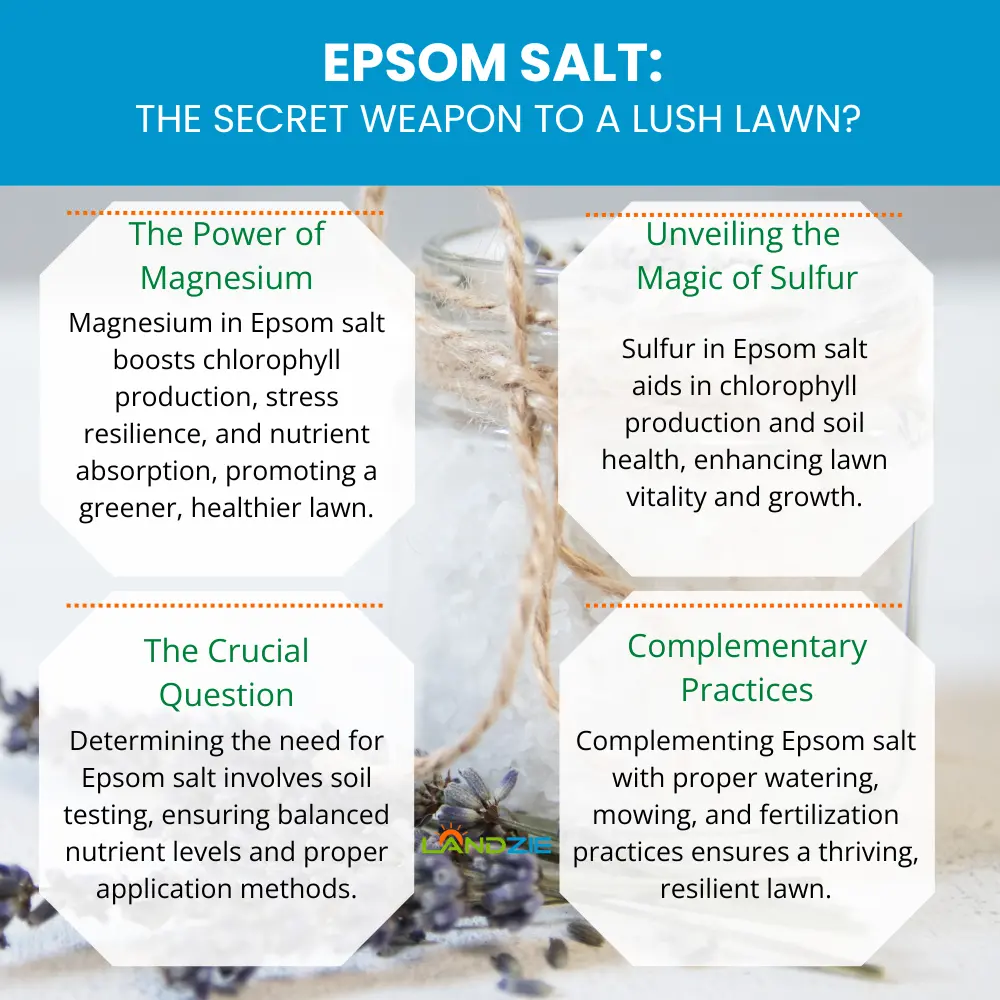
Image Source: landzie.com
The Magic of Magnesium: Why Epsom Salt Works for Lawns
Epsom salt, chemically known as magnesium sulfate (MgSO₄), is a mineral that offers several advantages for your lawn. It’s a readily available source of two essential nutrients: magnesium and sulfur.
- Magnesium: This is the central atom in chlorophyll, the pigment that gives plants their green color and is vital for photosynthesis. Adequate magnesium levels ensure your grass can effectively convert sunlight into energy, leading to a richer, greener appearance.
- Sulfur: This nutrient plays a crucial role in enzyme activity and protein synthesis within the plant. It also helps improve the uptake of other nutrients from the soil.
When your soil is lacking in magnesium or sulfur, your grass can appear pale, yellowish, or generally unhealthy. Applying Epsom salt can help correct these deficiencies, leading to a more vigorous and greener lawn.
Benefits of Epsom Salt for Lawn
Applying Epsom salt to your lawn offers a range of benefits that contribute to a healthier, more vibrant turf. These benefits go beyond just a superficial greening; they address underlying soil and plant health.
- Enhanced Greening: As mentioned, magnesium is a key component of chlorophyll. More chlorophyll means more efficient photosynthesis, resulting in a deeper, richer green color in your grass blades.
- Improved Nutrient Uptake: Magnesium aids in the absorption of other essential nutrients like phosphorus and nitrogen. This means that other fertilizers you use on your lawn may become more effective.
- Stronger Root Development: Magnesium is important for seed germination and the overall health of plant roots. Stronger roots help your grass absorb water and nutrients more efficiently, making it more resilient.
- Increased Resistance to Stress: A well-nourished lawn with adequate magnesium and sulfur is better equipped to handle environmental stresses such as drought, heat, and disease.
- Soil Amendment: Epsom salt can help to loosen compacted soils, improving drainage and aeration. This is especially beneficial for clay soils.
- Natural and Safe: Epsom salt is a natural mineral and is generally considered safe for lawns, pets, and children when used as directed. It’s a great alternative to harsh chemical treatments.
Epsom Salt for Brown Spots on Lawn
One common use for Epsom salt is addressing unsightly brown spots on your lawn. These spots can be caused by various factors, including nutrient deficiencies, particularly magnesium. By applying Epsom salt, you can directly provide the magnesium needed for the grass to recover and regain its green color. While Epsom salt won’t magically fix all brown spots (some might be due to disease or pests), it can certainly help if a magnesium deficiency is the culprit.
How to Apply Epsom Salt to Lawn: A Step-by-Step Guide
Applying Epsom salt to your lawn is a straightforward process. The key is to know how much Epsom salt for lawn is appropriate and the best method for application.
What You’ll Need:
- Epsom salt (make sure it’s pure magnesium sulfate, not scented or colored varieties)
- A garden spreader (broadcast or drop spreader)
- A watering can or hose with a sprayer attachment
- Water
Application Methods:
There are two primary ways to apply Epsom salt to your lawn:
1. Dry Application with a Spreader
This is the most common and efficient method for covering a large lawn area.
Steps:
- Measure Your Lawn: Determine the square footage of the area you intend to treat. This is crucial for calculating the correct application rate.
- Calculate the Amount of Epsom Salt: Refer to the section on application rates below to determine the precise amount of Epsom salt needed for your lawn’s size.
- Calibrate Your Spreader: Most spreaders have settings for different types of lawn products. If you don’t know the exact setting for Epsom salt, it’s best to do a small test run in an inconspicuous area to calibrate it.
- Apply Evenly: Load your spreader with the measured Epsom salt. Walk at a consistent pace across your lawn, ensuring an even distribution. Overlapping passes slightly can help ensure no spots are missed. Avoid concentrating the salt in one area.
- Water Thoroughly: Immediately after applying the dry Epsom salt, water your lawn thoroughly. This is a critical step to dissolve the salt and allow it to be absorbed by the soil and grass roots.
2. Liquid Application with a Sprayer or Watering Can
This method is ideal for smaller areas or for targeting specific spots. It also ensures quick absorption.
Steps:
- Determine the Mixture: Decide on the concentration of your Epsom salt solution. A common ratio is 1 to 2 tablespoons of Epsom salt per gallon of water.
- Dissolve the Salt: Pour the measured Epsom salt into your watering can or sprayer. Add a small amount of warm water and stir or shake until the salt is completely dissolved. Then, add the remaining water. Ensure there are no undissolved crystals.
- Apply to Lawn:
- Watering Can: Slowly pour the solution evenly over the grass.
- Sprayer: Attach the sprayer to your hose and spray the solution evenly across the lawn. Ensure good coverage.
- Epsom Salt Lawn Watering: After applying the liquid solution, you don’t necessarily need to water again immediately unless the weather is very hot and dry. The solution itself acts as a form of watering. However, if applied during the day, a light watering can help prevent leaf burn, especially on sunny days.
Epsom Salt Lawn Application Rate: Getting it Just Right
Determining the correct Epsom salt lawn application rate is vital to avoid over-application, which can harm your grass. The general recommendation for Epsom salt for lawn care is to use approximately 1 to 2 pounds of Epsom salt per 1,000 square feet of lawn.
Recommended Application Rates:
- General Maintenance: 1 pound of Epsom salt per 1,000 square feet.
- For Addressing Deficiencies or Stress: 2 pounds of Epsom salt per 1,000 square feet.
Important Considerations:
- Frequency: For general maintenance, you can apply Epsom salt 2-3 times per year, typically in spring and fall. If you are treating specific issues like brown spots, you might apply it more frequently (e.g., once a month for a short period), but always observe your lawn’s response.
- Timing: The best time to apply Epsom salt is when the grass is actively growing. Spring and early fall are ideal. Avoid applying during extreme heat or drought conditions, as this can stress the lawn further. Early morning or late evening is the best time of day.
- Dilution: If using the liquid method, never apply a highly concentrated solution. Stick to the recommended dilution rates (1-2 tablespoons per gallon).
How Much Epsom Salt for Lawn? A Practical Example
Let’s say you have a lawn that is 2,000 square feet.
- For general maintenance (1 lb per 1,000 sq ft): You would need 2 pounds of Epsom salt (2,000 sq ft / 1,000 sq ft * 1 lb).
- For addressing a deficiency (2 lbs per 1,000 sq ft): You would need 4 pounds of Epsom salt (2,000 sq ft / 1,000 sq ft * 2 lbs).
When using a spreader, ensure it’s set to distribute this amount evenly over your 2,000 square feet. If dissolving in water, you would mix 2 to 4 pounds of Epsom salt into a sufficient volume of water to cover the area, ensuring thorough saturation.
When to Apply Epsom Salt to Your Lawn
The timing of your Epsom salt lawn application can significantly impact its effectiveness.
Ideal Times for Application:
- Spring: As your grass begins to green up and grow actively. This is a great time to provide essential nutrients after the dormancy of winter.
- Fall: Before the ground freezes. This helps the grass store nutrients and prepare for the winter months, promoting a healthier start in the following spring.
Times to Avoid:
- Extreme Heat or Drought: Applying Epsom salt during hot, dry periods can exacerbate stress on your lawn.
- Frozen Ground: The grass cannot absorb nutrients when the ground is frozen.
- New Seed or Sod: Wait until the new grass has established itself (typically a few weeks after germination or laying sod) before applying any treatments.
When Will I See Results?
The speed at which you see results from an Epsom salt lawn treatment can vary. Generally, you might notice a deepening of the green color within 1-2 weeks after application and watering. Significant improvements in areas with deficiencies or brown spots may take longer, potentially 3-4 weeks or more, as the grass recovers and strengthens.
How Epsom Salt for Grass Interacts with Other Fertilizers
Epsom salt is not a complete fertilizer on its own, as it primarily provides magnesium and sulfur. It works best as a supplement to a balanced lawn fertilization program.
- Complements Other Fertilizers: The magnesium in Epsom salt can enhance the uptake of other essential nutrients like nitrogen and phosphorus, potentially making your regular lawn fertilizers more effective.
- Avoid Over-Fertilization: While Epsom salt can improve nutrient uptake, it’s still important not to over-fertilize your lawn with nitrogen or other nutrients, as this can lead to weak, disease-prone growth.
- Application Timing: It’s generally advisable to apply Epsom salt a week or two before or after applying a standard lawn fertilizer to allow for optimal nutrient absorption.
Important Considerations and Precautions for Epsom Salt Lawn Care
While Epsom salt is a natural and beneficial amendment, responsible application is key.
Potential Downsides of Incorrect Use:
- Leaf Burn: Applying dry Epsom salt directly onto wet grass, or applying a liquid solution on a hot, sunny day without subsequent watering, can potentially cause leaf burn. Always water thoroughly after dry application.
- Soil Salinity: Over-application of any salt, including Epsom salt, can increase the salt content in the soil, which can be detrimental to grass roots. Adhering to the recommended application rates is crucial.
- Not a Miracle Cure: Epsom salt addresses magnesium and sulfur deficiencies. It won’t fix issues caused by poor soil structure, pests, diseases, or over- or under-watering.
Tips for Successful Application:
- Use Pure Epsom Salt: Ensure you are using 100% pure magnesium sulfate (Epsom salt). Avoid products with added fragrances, dyes, or other chemicals.
- Test in a Small Area: If you’re unsure about how your lawn will react or how your spreader will perform, test the application on a small, inconspicuous patch of lawn first.
- Observe Your Lawn: Pay attention to how your grass responds. If you notice any negative reactions, discontinue use and consult with a local gardening expert.
- Consider Soil Testing: For the most accurate assessment of your lawn’s needs, consider getting a soil test. This will tell you the exact nutrient levels and pH, helping you tailor your lawn care program, including whether Epsom salt is truly needed.
Frequently Asked Questions About Epsom Salt for Lawns
Here are some common questions regarding the use of Epsom salt on lawns:
Q1: Can I use Epsom salt on all types of grass?
A1: Yes, Epsom salt is generally safe and beneficial for most common grass types, including Kentucky bluegrass, fescues, ryegrass, and Bermuda grass. However, always use it in moderation.
Q2: How often can I apply Epsom salt to my lawn?
A2: For maintenance, apply Epsom salt 2-3 times per year, typically in spring and fall. If treating specific issues, you might apply it monthly for a short period, but monitor your lawn closely.
Q3: Will Epsom salt harm my pets or children?
A3: Pure Epsom salt is non-toxic and is even used for medicinal purposes. However, it’s best to keep pets and children off the lawn for a short period after application, especially before watering, to allow the salt to dissolve and be absorbed.
Q4: Is Epsom salt a substitute for regular fertilizer?
A4: No, Epsom salt is not a complete fertilizer. It primarily provides magnesium and sulfur. It should be used to supplement a balanced lawn fertilization program, not replace it.
Q5: What is the best time of day to apply Epsom salt?
A5: The best time to apply Epsom salt is in the early morning or late evening when temperatures are cooler and the sun is less intense. This helps prevent leaf scorch.
Q6: Can Epsom salt help with moss in my lawn?
A6: While Epsom salt can help improve the overall health of your grass, making it more competitive against moss, it’s not a direct moss killer. Addressing the underlying causes of moss, such as poor drainage or lack of sunlight, is usually more effective.
Q7: How do I know if my lawn needs Epsom salt?
A7: Signs that your lawn might benefit from Epsom salt include a pale or yellowish green color, slow growth, or if you suspect a magnesium deficiency based on soil conditions or previous test results.
Q8: Can I mix Epsom salt with weed killer?
A8: It’s generally not recommended to mix Epsom salt with most weed killers. Many weed killers are designed for specific applications, and mixing them with other substances can reduce their effectiveness or potentially harm your lawn. Always read product labels and apply treatments separately if necessary.
Conclusion: A Greener Lawn Awaits
Incorporating Epsom salt into your lawn care routine is a simple, natural, and effective way to boost the health and appearance of your grass. By providing essential magnesium and sulfur, you can encourage deeper greening, improved nutrient uptake, and greater resilience. Remember to always follow the recommended Epsom salt lawn application rate, choose the right timing, and observe your lawn for the best results. With a little care and the right approach, your lawn can achieve that vibrant, lush green you’ve been dreaming of.