
Can you use Epsom salt on your lawn? Yes, you can. Epsom salt, also known as magnesium sulfate, can be a helpful addition to your lawn care routine. It provides essential nutrients that can lead to lusher, greener grass. This article will guide you through how to apply Epsom salt to your lawn effectively, covering its benefits, dosage, application methods, and important tips for optimal results.
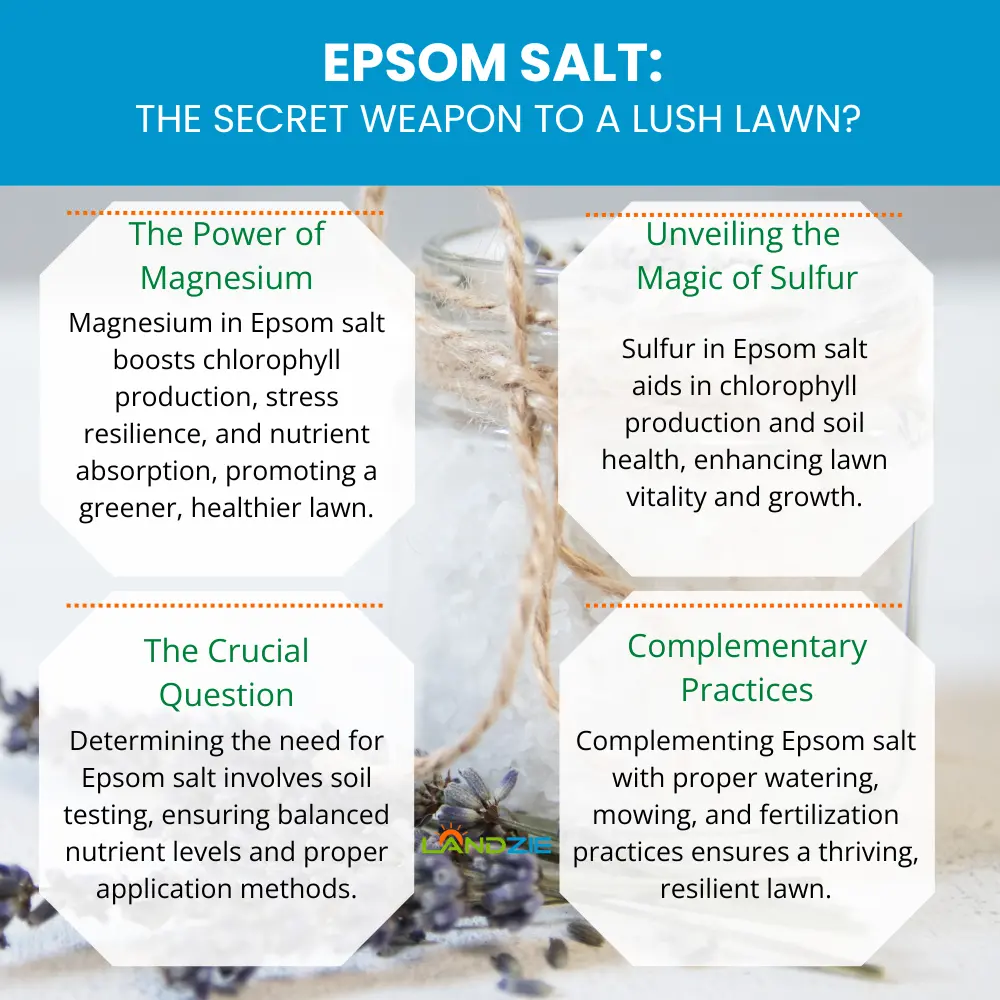
Image Source: landzie.com
The Magic of Magnesium: Epsom Salt Benefits Lawn
Your lawn needs more than just nitrogen to thrive. Magnesium is a crucial element for healthy plant growth. It’s a central component of chlorophyll, the pigment that gives plants their green color and is essential for photosynthesis. Photosynthesis is how plants make their food. When your soil lacks magnesium, your grass can turn yellow or pale, especially between the veins of the leaves. This is a clear sign that your lawn needs a boost.
Epsom salt lawn fertilizer works by supplying this vital nutrient directly to your soil. Beyond just color, magnesium plays a role in:
- Seed Germination: Magnesium helps seeds sprout and grow strong roots.
- Nutrient Uptake: It aids in the absorption of other essential nutrients, like phosphorus and nitrogen, from the soil.
- Enzyme Activation: It activates many enzymes in plants, which are like tiny helpers that speed up important processes.
- Water Regulation: Magnesium helps plants use water more efficiently.
When you use Epsom salt for grass health, you’re essentially giving your lawn a readily available source of magnesium and sulfur. Sulfur is another important nutrient that helps with chlorophyll production and improves the overall structure of the soil.
Epsom Salt for Green Grass: More Than Just Color
While the “green” in “Epsom salt for green grass” is a primary attraction, the benefits go deeper. A healthy magnesium level leads to:
- Vibrant Color: As mentioned, magnesium is key to chlorophyll. More chlorophyll means more photosynthesis and a richer green hue.
- Increased Density: Healthy grass grows thicker, creating a more dense turf that can better resist weeds and wear.
- Improved Stress Tolerance: Lawns with adequate magnesium are better equipped to handle environmental stresses like drought and extreme temperatures.
- Stronger Root Systems: Magnesium contributes to robust root development, allowing grass to access water and nutrients more effectively.
Why Your Lawn Might Need Magnesium
Several factors can lead to magnesium deficiency in your lawn:
- Rainfall: Heavy rain can leach magnesium from the soil over time.
- Soil Type: Sandy soils tend to lose magnesium more quickly than clay soils.
- Over-fertilization: Using high-nitrogen fertilizers without balanced nutrients can create deficiencies.
- Soil pH: If your soil is too acidic, your grass may struggle to absorb magnesium even if it’s present.
How to Apply Epsom Salt to Your Lawn: The Best Way
Knowing the best way to use Epsom salt on your lawn involves understanding the right methods and timing. Applying it incorrectly can be ineffective or even harmful.
Preparing for Application
Before you start, gather your supplies:
- Epsom Salt: Pure, unadulterated Epsom salt (magnesium sulfate) is best. Avoid products with added fragrances or colors.
- Watering Can or Sprayer: A hose-end sprayer or a granular spreader can also be used.
- Water Source: For dissolving and rinsing.
- Measuring Tools: For accurate dosage.
Methods of Application
There are two primary ways to apply Epsom salt to your lawn:
1. Dissolving in Water (Liquid Application)
This is often considered the best way to use Epsom salt on your lawn because it ensures even distribution and immediate absorption by the grass.
Steps:
- Measure: Determine the correct Epsom salt dosage for your lawn size (more on dosage below).
- Dissolve: Mix the measured Epsom salt with water in a watering can or sprayer. Stir thoroughly until the salt is completely dissolved. It’s important to ensure no granules remain, as these can burn the grass.
- Apply: Water your lawn evenly with the solution. Aim for a light, even coat.
- Rinse: After applying the Epsom salt solution, lightly water your lawn again with plain water. This helps wash any residual salt from the grass blades onto the soil, preventing potential leaf burn.
Pros:
- Even distribution.
- Quick absorption by grass roots and leaves.
- Less risk of concentrating salt in certain areas.
Cons:
- Requires more effort and time than granular application.
- May require multiple applications if dissolved in small volumes.
2. Granular Application
This method involves spreading dry Epsom salt directly onto the lawn. It’s simpler but requires careful attention to avoid uneven application.
Steps:
- Measure: Determine the correct Epsom salt dosage.
- Use a Spreader: A broadcast spreader or drop spreader works best for even distribution. Set the spreader according to the manufacturer’s recommendations for the amount of product you are applying.
- Apply: Walk at a steady pace, overlapping your passes slightly to ensure full coverage. Avoid dumping large amounts in one spot.
- Water: Water your lawn thoroughly immediately after application. This is crucial to dissolve the salt and move it into the soil, preventing it from sitting on the grass blades and causing burn.
Pros:
- Can be quicker for larger lawns.
- Uses readily available lawn spreaders.
Cons:
- Higher risk of uneven application, leading to burn spots.
- Salt needs to be dissolved by watering, which can take time.
- May not be as readily absorbed by the grass as liquid application.
Epsom Salt Dosage Lawn: Finding the Right Amount
This is a critical aspect of Epsom salt lawn application. Too much can harm your grass, while too little won’t provide benefits. The general recommendation for Epsom salt lawn fertilizer is 1 to 2 pounds of Epsom salt per 1,000 square feet of lawn.
Important Considerations for Epsom Salt Dosage Lawn:
- Start Low: If you’re new to using Epsom salt on your lawn, it’s always best to start with the lower end of the recommended dosage (1 pound per 1,000 sq ft). You can gradually increase it in subsequent applications if needed.
- Soil Test: For the most accurate guidance, consider getting a soil test. This will tell you the current magnesium levels in your soil and help you determine the precise amount of Epsom salt needed.
- Grass Type: While generally safe for most grass types, some very sensitive grasses might benefit from a more conservative approach.
- Frequency: Don’t overdo it. Applying Epsom salt once every 4-6 weeks during the growing season is usually sufficient.
Example Dosage Calculation:
Let’s say you have a lawn that is 2,000 square feet.
- Low end (1 lb per 1,000 sq ft): 1 lb/1,000 sq ft * 2,000 sq ft = 2 pounds of Epsom salt.
- High end (2 lbs per 1,000 sq ft): 2 lb/1,000 sq ft * 2,000 sq ft = 4 pounds of Epsom salt.
So, for a 2,000 sq ft lawn, you would use between 2 and 4 pounds of Epsom salt for a single application.
Epsom Salt Soil Amendment: Improving Soil Structure
Beyond providing nutrients, Epsom salt acts as a beneficial Epsom salt soil amendment. Magnesium sulfate can help improve soil structure, especially in clay soils that tend to compact.
- Dispersion of Clay Particles: Magnesium ions can help break apart the tightly bound particles in clay soil. This dispersion creates small pore spaces, improving aeration and drainage.
- Reduced Compaction: Better soil structure means less compaction, allowing roots to penetrate deeper and access water and nutrients more easily.
- Enhanced Water Infiltration: Well-structured soil absorbs water better, reducing runoff and making more water available to your grass.
When used as an Epsom salt soil amendment, it contributes to a healthier overall soil environment, which is the foundation of a thriving lawn.
Lawn Care with Epsom Salt: Best Practices
Integrating Epsom salt into your lawn care with Epsom salt routine is straightforward. Here are some best practices:
- Timing is Key: Apply Epsom salt during the active growing season for your grass. This is typically spring and early summer. Avoid applying it during periods of extreme heat or drought when the grass is already stressed. Applying in the early morning or late evening is ideal.
- Watering is Crucial: As emphasized, always water your lawn thoroughly after applying Epsom salt, especially if you use the granular method. This dissolves the salt and prevents it from damaging the grass.
- Consistency, Not Overuse: Stick to the recommended dosage and frequency. A light application every 4-6 weeks is more beneficial than a single heavy application.
- Observe Your Lawn: Pay attention to how your lawn responds. If you notice any signs of stress or burning, reduce the dosage or frequency in your next application.
- Combine with Other Nutrients (Wisely): Epsom salt is primarily a source of magnesium and sulfur. It doesn’t replace a balanced fertilizer. You can use it in conjunction with your regular lawn fertilizer, but be mindful of the overall nutrient load.
Epsom Salt for Weed Control: A Secondary Benefit?
Can Epsom salt kill weeds? While Epsom salt is not primarily a herbicide, some anecdotal evidence suggests it might have a minor effect on certain weeds due to its salt content. However, this is not its intended purpose, and over-application for weed control could easily damage your desirable grass.
- Salt’s Effect on Plants: High concentrations of salt can dehydrate plant tissues, potentially leading to wilting and death. This applies to both weeds and grass.
- Risk vs. Reward: The amount of Epsom salt needed to potentially affect weeds might be too much for your lawn’s health. It’s far more effective and safer to use targeted herbicides for weed control.
- Focus on Health: The primary way Epsom salt supports your lawn is by promoting robust growth, which makes the grass more competitive against weeds. A thick, healthy lawn naturally crowds out many common weeds.
Therefore, it’s best to rely on Epsom salt for its nutritional benefits and use dedicated products for effective Epsom salt weed control.
Epsom Salt Lawn Application Tips: Fine-Tuning Your Approach
To maximize the effectiveness of Epsom salt lawn application and minimize risks, consider these fine-tuning tips:
1. The Best Time to Apply
- Spring: A great time to give your lawn a nutrient boost as it emerges from winter dormancy.
- Early Summer: Helps maintain lushness and resilience during the peak growing season.
- Avoid Peak Heat: Never apply during the hottest part of the day, as this increases the risk of burn. Early morning or late evening is best.
- Mow First: Mow your lawn a day or two before applying Epsom salt. This removes excess foliage, allowing the salt to reach the soil more easily.
2. Watering Strategy
- Pre-watering (Optional): Some lawn care enthusiasts lightly water their lawn an hour or two before applying granular Epsom salt. This slightly moistens the soil, potentially aiding absorption.
- Post-watering is Essential: As mentioned, always water thoroughly after application. Aim for about 1/4 to 1/2 inch of water to ensure the salt is dissolved and moved into the root zone.
3. Spreader Calibration
- Know Your Spreader: Different spreaders have different calibration settings. Consult your spreader’s manual to ensure you’re applying the correct amount.
- Test Run: It’s often helpful to do a small test run in a contained area (like a driveway) to see how much product your spreader dispenses at a particular setting.
4. Combining with Other Treatments
- Fertilizer: You can apply Epsom salt around the same time as your regular lawn fertilizer, but ensure you’re not over-applying magnesium. Read the labels of both products carefully.
- Aeration: Applying Epsom salt after aeration can be very effective, as the holes created by aeration allow the dissolved salt to penetrate the soil more efficiently.
5. Addressing Specific Lawn Issues
- Yellowing Lawns: If your lawn is showing signs of yellowing due to magnesium deficiency, Epsom salt can provide a quick boost.
- Compacted Soil: As an Epsom salt soil amendment, it can help gradually improve drainage and aeration in compacted areas.
Summary Table of Application
| Method | Frequency | Dosage (per 1,000 sq ft) | Key Steps | Best For |
|---|---|---|---|---|
| Liquid Application | Every 4-6 weeks | 1-2 lbs | Dissolve in water, spray evenly, rinse with plain water. | Even distribution, quick absorption |
| Granular Application | Every 4-6 weeks | 1-2 lbs | Use a spreader for evenness, water thoroughly immediately after application. | Larger lawns, simpler application |
Frequently Asked Questions (FAQ)
Q1: How often should I apply Epsom salt to my lawn?
You should apply Epsom salt to your lawn every 4 to 6 weeks during the active growing season (spring through early summer). Avoid over-application, as too much can be detrimental.
Q2: Can Epsom salt burn my grass?
Yes, Epsom salt can burn your grass if applied in too high a concentration or if it’s not properly dissolved and rinsed into the soil. Always follow the recommended dosage and water thoroughly after application, especially with the granular method.
Q3: What is the best time of day to apply Epsom salt?
The best time of day to apply Epsom salt is in the early morning or late evening when temperatures are cooler. Avoid applying during the hottest part of the day to minimize the risk of leaf burn.
Q4: Can I mix Epsom salt with my regular lawn fertilizer?
Yes, you can generally mix Epsom salt with your regular lawn fertilizer. However, ensure you are not over-applying magnesium and other nutrients. Check the labels of both products and consider a soil test for precise nutrient needs.
Q5: What are the signs that my lawn needs Epsom salt?
Signs your lawn might benefit from Epsom salt include yellowing grass (especially between the veins of the leaves), slow growth, thin turf, and poor response to regular fertilization. These can indicate a magnesium deficiency.
Q6: Does Epsom salt help with moss or weeds?
While Epsom salt is not a primary weed or moss killer, promoting a healthier, denser lawn through proper nutrient balance can naturally help crowd out moss and some weeds. For direct control, use specific moss or weed treatments.
Q7: How much water should I use after applying Epsom salt?
After applying Epsom salt, water your lawn thoroughly. Aim for about 1/4 to 1/2 inch of water to ensure the salt dissolves and penetrates the soil.
By following these guidelines, you can effectively use Epsom salt to enhance your lawn’s health, leading to that coveted lush, green appearance. Remember, consistent, moderate application is key to success.