
Can you apply lawn fertilizer by hand? Yes, you can apply lawn fertilizer by hand, but it requires care to ensure even coverage and avoid burning your grass. This guide will walk you through the entire fertilizing lawn process for manual lawn fertilization, ensuring your lawn gets the nutrients it needs without damage.
Proper lawn care tips are essential for a healthy, vibrant lawn. One of the most critical aspects of lawn care tips is applying fertilizer correctly. While mechanical spreaders are common, hand application fertilizer is a viable and sometimes preferable method, especially for smaller areas or when you want very precise control. This detailed guide will cover everything you need to know about spreading lawn fertilizer by hand, from choosing the right fertilizer to the actual application.
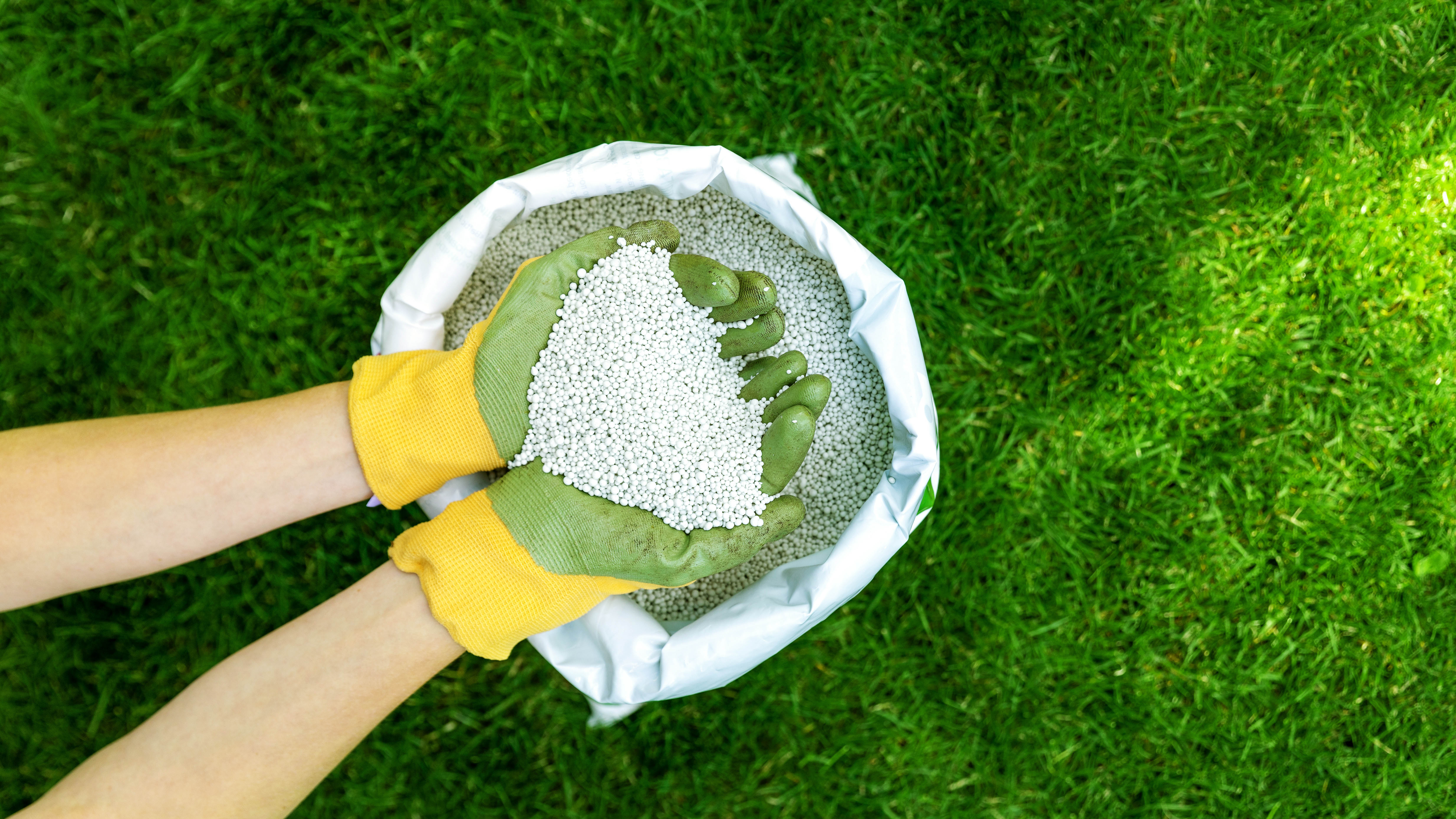
Image Source: cdn.mos.cms.futurecdn.net
Why Choose Hand Application Fertilizer?
There are several reasons why you might opt for hand application fertilizer:
- Precision: For small or oddly shaped lawns, or around delicate plants, hand application allows for greater control over where the fertilizer lands.
- Cost-Effectiveness: You might not need to invest in or rent a broadcast spreader if your lawn is small.
- Immediate Feedback: You can see exactly where you’re applying the product, helping to prevent missed spots or over-application.
- Specific Needs: If you’re spot-treating a nutrient deficiency or applying overseeding fertilizer in specific areas, hand application is ideal.
Deciphering Fertilizer Types for Hand Application
Not all fertilizers are created equal, especially when it comes to granular fertilizer application by hand.
Granular Fertilizers
Granular fertilizers are small pellets or granules. These are generally the easiest to apply by hand. They release nutrients slowly, which is good for consistent feeding.
- Slow-Release: These granules are coated or processed to release nutrients over several weeks or months. This reduces the risk of burning the lawn and provides a steady supply of food.
- Quick-Release: These dissolve faster and provide an immediate green-up. However, they pose a higher risk of burning the lawn if applied too heavily or unevenly by hand.
- Combined: Many lawn fertilizers offer a mix of slow and quick-release nutrients.
Liquid Fertilizers
Liquid fertilizers are applied using a hose-end sprayer. While not strictly “by hand” in the same way as granules, they are still a manual application process. They are absorbed quickly by the grass.
- Pros: Fast-acting, can be mixed with weed killers or other treatments.
- Cons: Can be harder to get even coverage with a hose-end sprayer without experience, and some can still cause burn if too concentrated.
For the purposes of this guide, we will focus primarily on granular fertilizer application by hand, as this is where the most careful technique is required.
Preparing for Manual Lawn Fertilization
Before you start spreading lawn fertilizer by hand, thorough preparation is key to a successful outcome.
1. Timing is Everything: The Best Time to Fertilize Lawn
The best time to fertilize lawn depends on your grass type and climate.
- Cool-Season Grasses (Kentucky Bluegrass, Fescue, Ryegrass):
- Spring: Early to mid-spring is excellent for initial growth and recovery from winter.
- Fall: This is the most crucial feeding time for cool-season grasses, promoting root development and helping the lawn survive winter. Aim for early to mid-fall.
- Late Spring/Early Summer: A lighter application might be needed if the grass shows signs of stress or slow growth, but avoid fertilizing during the hottest part of summer.
- Warm-Season Grasses (Bermuda, Zoysia, St. Augustine):
- Late Spring/Early Summer: Once the grass has fully greened up and is actively growing, usually in May or June.
- Late Summer: A second application can help the grass recover from summer stress and prepare for dormancy. Avoid fertilizing late in the fall, as it can stimulate tender growth that will be damaged by frost.
General Rule: Always fertilize when the grass is actively growing, but not under severe heat or drought stress.
2. Gather Your Supplies
You’ll need a few essential items for hand application fertilizer:
- Fertilizer: Choose a fertilizer formulated for lawns, paying attention to the N-P-K ratio (Nitrogen, Phosphorus, Potassium).
- Gloves: Protect your hands from the fertilizer.
- Eye Protection: Safety glasses are recommended.
- Measuring Cup or Scale: For accurate measurement of the fertilizer.
- Bucket or Container: To hold the fertilizer during application.
- Water Source: For watering the lawn after application.
- Optional: A small handheld spreader (sometimes called a scoop spreader or crank spreader) can aid in more even distribution than purely by hand.
3. Read the Fertilizer Bag Instructions Carefully
This is non-negotiable. The fertilizer spreader setting is designed for mechanical spreaders, but the bag will also provide recommended application rates per 1,000 square feet. You need to convert this to a manageable amount for your specific lawn size.
4. Calculate the Correct Amount of Fertilizer
- Determine Your Lawn Size: Measure the length and width of your lawn and multiply them to get the square footage.
- Check the Bag for Application Rate: It will usually say something like “Apply X pounds of product per 1,000 square feet.”
- Calculate Total Amount Needed:
- (Your Lawn Size in sq ft / 1,000) * (Recommended Rate per 1,000 sq ft) = Total Fertilizer Needed.
Example:
Your lawn is 5,000 sq ft.
The fertilizer bag recommends 1 lb of actual nitrogen per 1,000 sq ft.
The fertilizer product is 20-5-10 (meaning 20% nitrogen).
So, you need 1 lb of nitrogen per 1,000 sq ft.
To get 1 lb of nitrogen from a 20% nitrogen fertilizer, you need 1 lb / 0.20 = 5 lbs of the actual product per 1,000 sq ft.
For your 5,000 sq ft lawn: (5,000 / 1,000) * 5 lbs = 25 lbs of product.
5. Hydrate Your Lawn (Lightly)
Water your lawn lightly a day or two before applying fertilizer. A slightly damp lawn is good, but not saturated. Dry grass is more susceptible to burning from fertilizer.
The Step-by-Step Guide to Hand Application Fertilizer
Now for the core of the fertilizing lawn process: the actual hand application fertilizer.
Step 1: Divide Your Lawn into Sections
Mentally divide your lawn into manageable sections, perhaps 100-200 square foot areas. This makes the spreading lawn fertilizer process more systematic.
Step 2: Measure Out Fertilizer for Each Section
Use your measuring cup or scale to measure the appropriate amount of fertilizer for one section. For example, if your lawn is 5,000 sq ft and you’ve calculated you need 25 lbs total, you’ll put 5 lbs in your bucket for each of your five sections.
Step 3: The Application Technique – Even Coverage is Key!
This is where the “by hand” method requires the most attention. The goal is to achieve an even distribution to avoid stripes of dark green (too much fertilizer) or brown (too little fertilizer).
- Hold the Fertilizer Low: Keep the bucket or your hand low to the ground. This minimizes wind drift and allows for more control.
- Walk at a Consistent Pace: Imagine you’re walking at the same speed as a broadcast spreader would cover the area.
- Visualize a Pattern:
- Striping Method: Think of covering your lawn in parallel strips.
- Start at one edge of a section.
- As you walk, gently toss handfuls of fertilizer in an arc in front of you and slightly to the sides, aiming for a consistent spread as you move forward.
- Focus on getting an even dusting across the entire section.
- When you finish one strip, turn and start the next one, slightly overlapping the previous one to ensure no gaps.
- Fan Method: Some people find it easier to use a gentle side-to-side fanning motion with their hand as they walk.
- Striping Method: Think of covering your lawn in parallel strips.
- Concentrate on Consistency: The most critical factor is the consistency of your spread. Try to distribute the measured amount evenly across your section before moving to the next.
- Avoid Piling: Never dump a large amount of fertilizer in one spot.
Step 4: Overseeding Fertilizer Application
If you’re applying overseeding fertilizer, you might be applying it over existing grass or into bare patches. The same principles of even application apply. You want the fertilizer to reach the soil surface and the new seed. A light, even dusting is best.
Step 5: Check Your Work
Periodically stop and look at the coverage. Are there any obvious clumps or bare spots within the section you’re working on? Adjust your technique as needed.
Step 6: Rinse and Water In
This is a CRUCIAL step to prevent fertilizer burn.
- Water Thoroughly: Once you’ve finished applying fertilizer to the entire lawn, water it in immediately and deeply. This washes the fertilizer off the grass blades and into the soil, where it can be absorbed by the roots.
- Timing for Watering: The ideal time to water is typically a few hours after application, or first thing in the morning if you finished in the evening. Avoid watering if heavy rain is expected, as it might wash the fertilizer away.
Tips for Success with Manual Lawn Fertilization
Here are some extra lawn care tips to ensure your hand application fertilizer goes smoothly:
- Avoid Windy Days: Wind can blow the fertilizer off your lawn and onto sidewalks, driveways, or even into neighboring properties, causing damage. It also makes even application very difficult.
- Fertilize When Grass is Dry: As mentioned, dry grass is less susceptible to burning.
- Sweep Up Excess: If you see any fertilizer granules on hard surfaces (sidewalks, driveways), sweep them back onto the lawn immediately. Fertilizer can stain concrete and is harmful to waterways if washed away.
- Don’t Over-Fertilize: More is not better. Following the recommended rates on the bag is vital. Over-fertilization can lead to rapid, weak growth, increased disease susceptibility, and severe fertilizer burn.
- Fertilize Dormant Grass Carefully: If you’re fertilizing a lawn that is dormant or semi-dormant, be extremely cautious. The grass cannot absorb nutrients efficiently, increasing the risk of burn. Wait until it shows signs of greening up.
- Consider a Handheld Spreader: For slightly larger lawns or for those who find pure hand application too difficult to manage evenly, a small handheld spreader can be a worthwhile investment. It’s a step up from pure hand tossing but still offers good control.
Troubleshooting Common Issues
Even with the best intentions, you might encounter a few problems.
Fertilizer Burn
This is the most common issue with hand application fertilizer. It appears as brown or yellow patches of grass where too much fertilizer was concentrated.
- Prevention: Even application and thorough watering are the best defenses.
- Treatment: If you notice burn spots:
- Water Heavily: Water the affected area thoroughly and frequently to try and flush out excess salts.
- Rake the Area: Gently rake the burned areas to remove dead grass and improve air circulation.
- Reseed (if necessary): If the grass is completely dead, you may need to reseed the area once it has recovered.
Uneven Application (Striping)
This occurs when some areas receive more fertilizer than others.
- Prevention: Practice the striping method, overlap passes, and walk at a consistent pace.
- Treatment: If you notice significant striping:
- Water: Watering can sometimes help blend the areas slightly.
- Manual Correction: For severe cases, you might need to gently rake some of the over-fertilized areas to move granules, and then carefully apply a small amount to the under-fertilized areas. This is tricky and requires great care.
Companion Practices for a Healthy Lawn
Fertilizing is just one part of excellent lawn care tips.
Mowing Practices
- Mow High: Set your mower to the higher end of the recommended range for your grass type. Taller grass develops deeper roots and shades out weeds.
- Sharp Mower Blades: Dull blades tear grass, making it susceptible to disease and stress.
- Don’t Remove Too Much at Once: Never remove more than one-third of the grass blade’s height in a single mowing.
Watering Techniques
- Deep and Infrequent: Water deeply to encourage strong root growth, rather than frequent shallow watering.
- Water in the Morning: This reduces water loss through evaporation and allows grass blades to dry before nightfall, preventing fungal diseases.
Weed Control
- Identify Weeds: Knowing what weeds you have helps you choose the right control method.
- Manual Removal: For small infestations, pulling weeds by hand is effective.
- Integrated Pest Management: Combine cultural practices (like proper fertilization and watering) with targeted treatments when necessary.
Aeration and Dethatching
- Aeration: This process removes small plugs of soil, reducing compaction and allowing air, water, and nutrients to reach the roots.
- Dethatching: Thatch is a layer of dead grass stems and roots that can build up on the soil surface. Excessive thatch can prevent water and nutrients from reaching the soil.
Frequently Asked Questions (FAQ)
Here are some common questions about hand application fertilizer:
- Q1: Can I use a leaf blower to spread fertilizer?
A1: While some people experiment with this, it’s generally not recommended for hand application fertilizer or for achieving even coverage. It can easily blow fertilizer off your lawn and is very difficult to control for even distribution, significantly increasing the risk of burning or uneven growth. - Q2: What is the difference between fertilizer spreader setting for my lawn and hand application?
A2: A fertilizer spreader setting is calibrated for mechanical spreaders to distribute a specific amount of product over a given area (like 1,000 sq ft) as the spreader moves. With hand application fertilizer, you are manually replicating that distribution rate, which requires careful measurement and a consistent spreading technique to achieve a similar outcome. - Q3: How often should I fertilize my lawn by hand?
A3: The frequency depends on your grass type, climate, and the type of fertilizer you use. Generally, 2-4 times per year is common, with applications timed according to the best time to fertilize lawn for your region. Always follow the product label’s recommendations. - Q4: Can I fertilize when it’s raining?
A4: It’s best to avoid fertilizing when it’s raining heavily. The rain can wash the fertilizer away before it has a chance to be absorbed by the soil. However, a light drizzle might be acceptable if you plan to water it in thoroughly afterward. Dry conditions followed by watering are ideal. - Q5: What should I do with leftover fertilizer?
A5: Store the fertilizer in its original bag in a cool, dry place, away from children and pets. Ensure the bag is sealed tightly to prevent moisture from clumping it.
Applying fertilizer by hand can be a rewarding way to care for your lawn, offering control and a deeper connection to the process. By following these detailed steps and lawn care tips, you can ensure your manual lawn fertilization efforts result in a healthy, beautiful lawn. Remember, patience and precision are your best allies in spreading lawn fertilizer by hand.