
Image Source: www.milorganite.com
Smart Lawn Watering: How To Measure How Much Water Your Lawn Is Getting
Can I measure how much water my lawn is getting? Yes, you absolutely can! Measuring how much water your lawn receives is crucial for healthy growth and efficient water use. It helps you avoid overwatering, which can lead to root rot and fungal diseases, and underwatering, which causes wilting and stress. Knowing the precise amount ensures your lawn gets the right hydration without waste.
Why Measuring Your Lawn’s Water Intake Matters
Your lawn is a living ecosystem, and like any living thing, it needs the right amount of water to thrive. Too much water can drown the roots, invite diseases, and wash away essential nutrients. Too little, and the grass will struggle, turn brown, and become susceptible to pests. Smart lawn watering isn’t just about saving money; it’s about fostering a robust, healthy, and resilient lawn. This guide will walk you through the essential methods to accurately gauge your lawn’s water intake, transforming you into a lawn care expert.
Tools for Precise Water Measurement
Several straightforward tools and techniques can help you accurately measure the water your lawn receives. These are not complex scientific instruments but rather practical aids that provide valuable data.
The Humble Rain Gauge: Nature’s Watering Measure
A rain gauge is your first line of defense in measuring natural precipitation. It’s a simple cylinder that collects rainwater, allowing you to see exactly how much fell.
-
Types of Rain Gauges:
- Cylindrical Gauges: The most common type, with markings along the side.
- Tipping Bucket Gauges: These are more advanced and often connect to weather stations, automatically recording rainfall amounts.
-
How to Use a Rain Gauge:
- Placement: Position your rain gauge in an open area, away from trees, buildings, or any structures that might obstruct rainfall or create shade. The ground should be level.
- Regular Emptying: Check and empty your rain gauge after each rainfall event. The amount collected is your lawn’s natural watering for that period.
- Data Recording: Keep a log of rainfall amounts. This data is vital when creating your lawn watering schedule. If you receive 0.5 inches of rain, you can adjust your sprinkler run times accordingly.
Sprinkler Audit: Gauging Your Sprinkler System’s Output
A sprinkler audit is a systematic evaluation of your sprinkler system’s performance. It helps you determine how much water each sprinkler head is delivering and if the coverage is even.
-
Why Conduct a Sprinkler Audit?
- Identify broken or clogged sprinkler heads.
- Detect uneven watering patterns.
- Measure the actual water output of your sprinklers.
- Optimize your sprinkler system for efficiency.
-
Performing a DIY Sprinkler Audit:
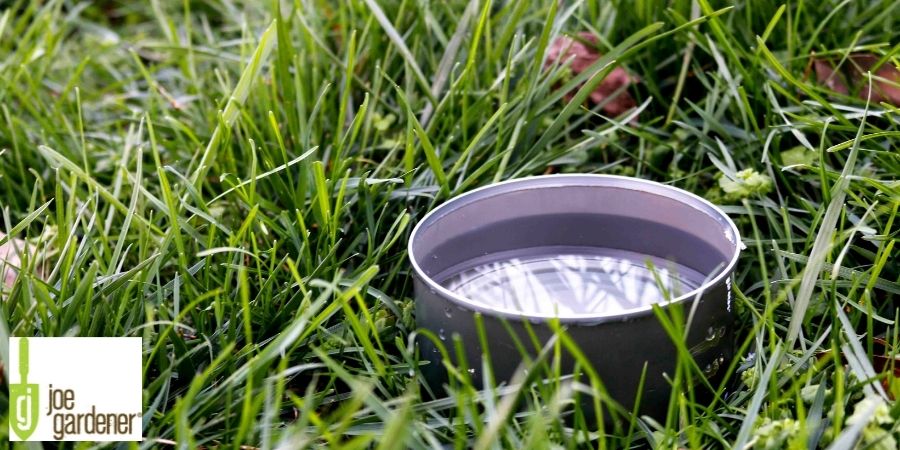
- Gather Your Tools: You’ll need empty tuna cans or similar straight-sided containers (like yogurt cups), a ruler or measuring tape, and a stopwatch or timer.
- Placement: Place the cans randomly throughout the zone you are testing. Distribute them across different areas, including under sprinklers and at the edges of the watering zone.
- Run the Sprinklers: Turn on the sprinkler system for a set period, for example, 15 minutes.
- Measure the Water: Turn off the sprinklers and carefully measure the depth of water collected in each can using a ruler.
- Calculate Average Output: Sum the water depth in all cans and divide by the number of cans to get an average. For example, if you have 10 cans and collect a total of 2 inches of water, your average is 0.2 inches.
- Determine Run Time: If your goal is to deliver 1 inch of water per week, and your sprinklers deliver 0.2 inches in 15 minutes, you’ll need to run the sprinklers for 1 hour and 15 minutes (60 minutes / 0.2 inches = 30 minutes per inch; 30 minutes x 1 inch = 30 minutes. Wait, that’s not right. Let’s recalculate: If 0.2 inches falls in 15 minutes, then 1 inch will fall in (1 / 0.2) * 15 minutes = 5 * 15 minutes = 75 minutes. So, 1 hour and 15 minutes.) to deliver 1 inch of water.
-
Interpreting the Results: A good sprinkler audit will reveal inconsistencies. Some cans might have much more water than others. This indicates areas that are overwatered and areas that are underwatered, prompting adjustments to sprinkler heads or watering times. You might discover that you are delivering significantly more or less water than you intended, impacting your desired inches of water per week.
Irrigation System Check: Ensuring Efficiency and Accuracy
An irrigation system check goes beyond just the sprinkler heads. It involves assessing the entire system for leaks, proper pressure, and overall functionality.
-
Key Components to Check:
- Valves: Ensure they open and close properly and don’t leak.
- Pipes: Look for any visible signs of leaks or damage.
- Timers/Controllers: Verify that they are programmed correctly and functioning as intended.
- Pressure Regulators: Make sure they are set to the correct pressure for your sprinkler heads.
-
Benefits of Regular Checks:
- Prevent water waste from leaks.
- Ensure uniform water distribution.
- Extend the lifespan of your irrigation system.
- Maintain consistent watering, critical for your lawn watering schedule.
Soil Moisture Meter: Direct Measurement at the Root Level
While rain gauges and sprinkler audits measure what falls on the lawn, a soil moisture meter tells you what the soil holds. This is invaluable for determining if your lawn actually needs more water.
-
Types of Soil Moisture Meters:
- Analog Probe Meters: These are the simplest and most affordable. They have a metal probe that you insert into the soil. A needle on a dial indicates the moisture level.
- Digital Meters: These offer more precise readings and can sometimes measure soil temperature and pH as well.
- Capacitance Meters: These are generally more accurate and less affected by soil salinity.
-
How to Use a Soil Moisture Meter:
- Choose Locations: Test different areas of your lawn, particularly in spots that tend to dry out quickly or stay damp longer.
- Insert the Probe: Push the probe several inches into the soil, reaching the root zone of your grass.
- Read the Meter: Follow the manufacturer’s instructions for interpreting the readings. Most meters will indicate a range from dry to wet.
- Frequency: Check the soil moisture daily or every few days, especially during hot or dry periods. If the meter indicates dry conditions in the root zone, it’s time to water.
-
Relating to Lawn Needs: A healthy lawn generally needs about 1 to 1.5 inches of water per week, including rainfall. If your soil moisture meter consistently reads dry, even after watering, it might indicate that your watering system isn’t delivering enough water, or the water is evaporating too quickly before it can penetrate the soil.
Advanced Concepts for Precision Watering
To truly master smart lawn watering, delve into these more advanced concepts.
Evapotranspiration (ET) Rate: The Lawn’s Thirst Factor
Evapotranspiration (ET) is the combined process of evaporation (water turning into vapor from soil and plant surfaces) and transpiration (water released from plants through their leaves). It’s essentially how much water your lawn “drinks” and loses to the atmosphere.
-
Factors Influencing ET:
- Temperature: Higher temperatures increase ET.
- Humidity: Lower humidity increases ET.
- Wind: Wind speeds up evaporation and transpiration.
- Sunlight: More sunlight increases ET.
- Plant Type and Health: Different grass types have different water needs. Healthy grass transpires more.
- Soil Type: Sandy soils drain faster, potentially increasing ET loss from the surface.
-
Finding ET Data:
- Local Weather Stations: Many university extension offices or agricultural departments publish daily ET rates for your region.
- Online Resources: Websites dedicated to horticulture and weather often provide ET data.
- Smart Controllers: Advanced irrigation controllers can often access ET data automatically and adjust watering schedules.
-
Applying ET Data:
- Calculate Water Needs: If the daily ET rate is 0.2 inches, your lawn needs approximately 0.2 inches of water that day to replace what was lost.
- Adjust Watering: Use your sprinkler audit data to determine how long to run your sprinklers to deliver this amount. If your sprinklers deliver 0.25 inches per hour, you’d need to run them for 48 minutes (0.2 inches / 0.25 inches/hour * 60 minutes/hour).
Preventing Water Runoff: Maximizing Water Absorption
Water runoff occurs when the ground cannot absorb water as quickly as it is applied. This is a common problem with overwatering or when watering on slopes.
-
Causes of Runoff:
- Too Much Water, Too Fast: Sprinklers applying water faster than the soil can absorb it.
- Compacted Soil: Reduces infiltration rates.
- Sloping Terrain: Gravity pulls water downhill before it can soak in.
- Water Repellent Soil: Sometimes, thatch or dry soil can become hydrophobic.
-
Strategies to Prevent Runoff:
- Cycle and Soak: Water in shorter intervals, allowing water to soak in between cycles. For example, water for 15 minutes, wait 30 minutes, then water for another 15 minutes.
- Adjust Sprinkler Heads: Ensure sprinkler heads are not spraying directly onto hard surfaces like driveways or sidewalks.
- Improve Soil Health: Aerate your lawn regularly to reduce compaction and improve infiltration.
- Use Low-Flow Sprinklers: These apply water more slowly.
- Water During Cooler Times: Early morning watering reduces evaporation and allows more time for absorption.
Creating Your Lawn Watering Schedule: A Practical Guide
A well-designed lawn watering schedule integrates all the information you gather from your measurements. It’s not a static plan but a dynamic one that adapts to weather and your lawn’s needs.
-
Steps to Build Your Schedule:
- Determine Weekly Water Needs: Aim for 1 to 1.5 inches of water per week for most lawns, adjusting for grass type and climate.
- Account for Rainfall: Use your rain gauge data. If you received 0.5 inches of rain, you only need to supplement with 0.5 to 1 inch.
- Calculate Sprinkler Output: Use your sprinkler audit results to know how long your sprinklers need to run to deliver a specific amount of water.
- Incorporate ET Data: If available, adjust your schedule based on daily ET rates.
- Monitor Soil Moisture: Use your soil moisture meter to confirm if your schedule is effectively hydrating the root zone.
- Adjust for Seasons: Water needs change throughout the year. Lawns require less water in cooler months and more in hot, dry periods.
-
Example Schedule Components:
- Monday: 0.5 inches of water applied via sprinklers (run time determined by audit).
- Wednesday: Check soil moisture. If dry, apply 0.5 inches.
- Friday: Check soil moisture. If dry, apply 0.5 inches.
- Rainfall: If 1 inch of rain falls on Tuesday, skip watering on Wednesday.
Hydrograph: Visualizing Your Lawn’s Water Input
A hydrograph is a graph that plots the amount of water received over time. While often used in hydrology for rivers, you can adapt this concept for your lawn.
- Creating a Lawn Hydrograph:
- Data Points: Record the amount of water applied by sprinklers and the amount of rainfall received on specific days.
- Plotting: Create a simple chart with days on the horizontal axis and inches of water on the vertical axis.
- Analysis: A hydrograph helps you visualize your watering patterns, identify gaps, and ensure consistent moisture levels. It’s a visual representation of your lawn watering schedule in action.
Water Conservation for Lawns: Smart Strategies
Water conservation for lawns is paramount, especially in drought-prone regions. Smart watering practices ensure your lawn stays healthy without depleting precious water resources.
- Key Conservation Tips:
- Water Deeply and Infrequently: This encourages deeper root growth, making the lawn more drought-tolerant. Instead of watering for 10 minutes every day, water for 30 minutes twice a week.
- Water in the Early Morning: This minimizes evaporation loss compared to midday watering.
- Choose Drought-Tolerant Grass Varieties: Some grass types naturally require less water.
- Reduce Lawn Area: Consider replacing some lawn with native plants, ground covers, or mulched beds that require less irrigation.
- Mow High: Taller grass shades the soil, reducing evaporation and suppressing weeds.
- Leave Grass Clippings: They act as a natural mulch, retaining soil moisture and returning nutrients.
- Calibrate Your System Regularly: Ensure your sprinklers are working efficiently and not wasting water.
Troubleshooting Common Watering Issues
Even with careful measurement, you might encounter problems.
-
Problem: Lawn is still brown and dry despite watering.
- Possible Causes:
- Your sprinklers aren’t delivering enough water (check audit results).
- Watering too frequently and shallowly, not reaching the root zone.
- Soil is compacted; consider aeration.
- Excessive heat or wind is causing rapid evaporation (adjust watering times or use ET data).
- Your soil moisture meter might be faulty or not placed correctly.
- Solutions: Increase watering duration, water less often but more deeply, aerate the soil, and consider watering in the early morning.
- Possible Causes:
-
Problem: Water is pooling or running off.
- Possible Causes:
- Watering too much water at once for the soil to absorb (see water runoff prevention).
- Sprinklers are applying water too quickly.
- Soil is compacted.
- The lawn has a slope.
- Solutions: Implement cycle-and-soak watering, adjust sprinkler output rate, aerate the soil, and ensure sprinklers aren’t aimed at hard surfaces.
- Possible Causes:
-
Problem: Some areas of the lawn are greener than others.
- Possible Causes:
- Uneven sprinkler coverage (results from sprinkler audit).
- Varying soil types across the lawn.
- Shade patterns from trees or structures.
- Solutions: Adjust sprinkler heads, check for blockages, and consider hand-watering or adjusting zone run times for different areas.
- Possible Causes:
Frequently Asked Questions (FAQ)
-
Q1: How often should I water my lawn?
A: This depends on your grass type, climate, and soil. A general guideline for most lawns is to water deeply 1-3 times per week, aiming for 1 to 1.5 inches of water total per week. Always check your soil moisture meter and local weather to adjust. -
Q2: Is it better to water my lawn in the morning or evening?
A: Watering in the early morning (between 4 AM and 10 AM) is generally best. This minimizes water loss due to evaporation and allows the grass blades to dry before nightfall, reducing the risk of fungal diseases. -
Q3: My sprinklers seem to water unevenly. What can I do?
A: This is a common issue that a sprinkler audit can help diagnose. You may need to adjust sprinkler head nozzles, replace worn-out heads, or reposition them for better overlap and coverage. Ensuring proper water pressure is also key. -
Q4: How do I know if my lawn is getting too much water?
A: Signs of overwatering include yellowing grass, fungal diseases (like brown patch or dollar spot), mushrooms growing in the lawn, and constantly soggy soil. Using a soil moisture meter is the best way to ensure you’re not overwatering. -
Q5: Can I use my smart home assistant to help with lawn watering?
A: Yes, some smart irrigation controllers can integrate with smart home systems, allowing you to control and monitor your watering schedule via voice commands or an app. Many also use weather data, including evapotranspiration (ET) rate, to automatically adjust watering, making water conservation for lawns easier.
By mastering these measurement techniques and applying the principles of smart watering, you can cultivate a beautiful, healthy lawn while being a responsible steward of our most precious resource: water. Your efforts will be rewarded with a vibrant landscape and peace of mind.