
Can I replace my lawn mower’s throttle cable myself? Yes, you absolutely can replace your lawn mower’s throttle cable yourself with a little patience and the right tools. This guide will walk you through the process step-by-step, making it an approachable DIY task.
Is your lawn mower’s speed acting up? Does the engine rev erratically, or do you struggle to set a consistent speed for your mowing? Often, these issues point to a problem with the lawn mower throttle cable. This crucial component controls the mower engine speed control, allowing you to adjust how fast or slow your mower runs. When it malfunctions, it can significantly impact your mowing experience, from making it frustratingly slow to dangerously fast.
This comprehensive guide will equip you with the knowledge and confidence to tackle a lawn mower throttle cable repair. We’ll cover everything from identifying the problem to the final adjustment. Whether you need to replace a worn-out cable or fix a frayed one, this throttle cable replacement guide will help you get your mower back in top working order.
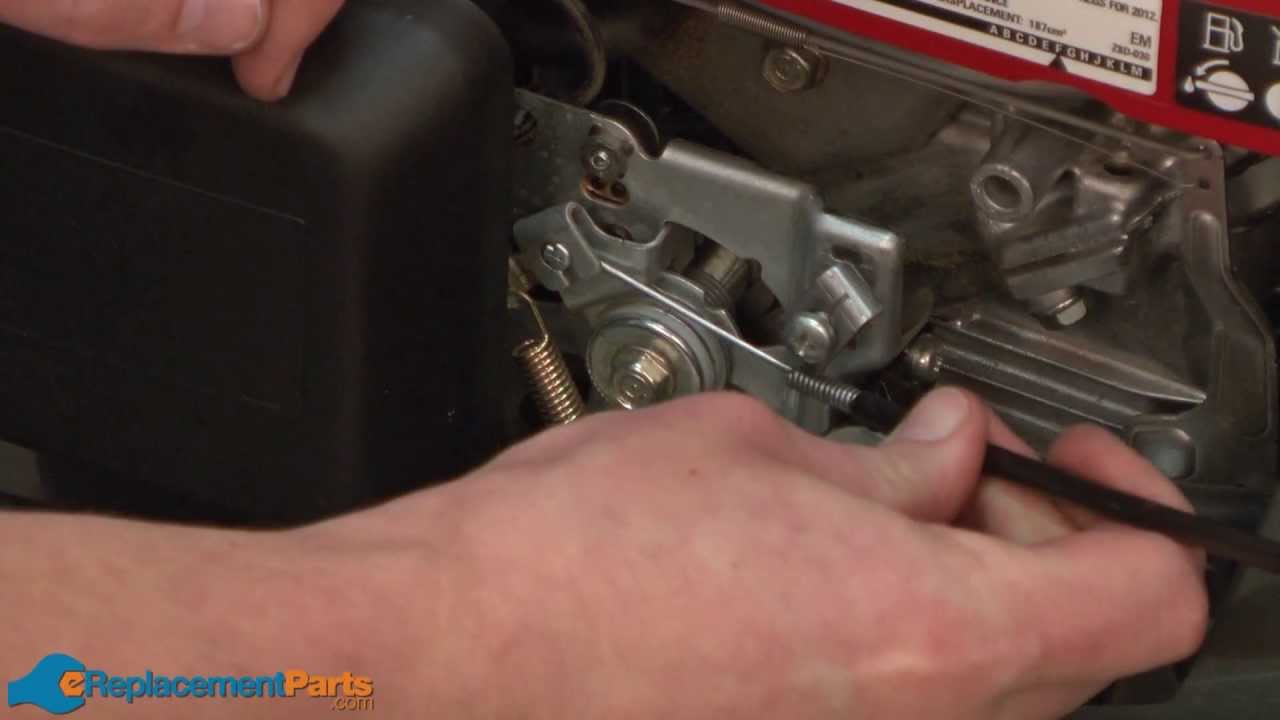
Image Source: i.ytimg.com
Identifying Throttle Cable Issues
Before you start, it’s important to confirm that the throttle cable is indeed the culprit. Common signs of a failing throttle cable include:
- Erratic Engine Speed: The engine revs up and down without you touching the throttle control.
- Inability to Set Speed: You can’t adjust the engine speed, or it stays stuck at one setting.
- Loose or Stiff Cable: The throttle lever feels loose, or the cable is difficult to move.
- Visible Damage: The cable itself, or its mower throttle cable housing, appears frayed, kinked, or broken.
- No Response to Throttle Lever: Moving the throttle lever has no effect on the engine speed.
If you experience any of these symptoms, a lawn mower throttle cable repair is likely in order.
Common Causes of Throttle Cable Failure
Over time, several factors can lead to a faulty throttle cable:
- Wear and Tear: Like any mechanical part, cables can wear out from constant use. Friction and movement can cause the internal wires to break or the housing to degrade.
- Corrosion: Exposure to moisture, dirt, and grass clippings can cause the metal components of the cable and its housing to corrode, leading to stiffness and eventual breakage.
- Damage: Accidental impacts, such as hitting a rock or debris, can damage the cable or its connections.
- Improper Installation: If the cable was not routed correctly or is too tight, it can put undue stress on the cable, leading to premature failure.
- Stretching: Over time, cables can stretch slightly, affecting the precision of the throttle cable adjustment.
Preparing for the Replacement
Safety first! Before you begin any work on your lawn mower, ensure it’s turned off and the spark plug wire is disconnected. This prevents accidental starting.
Tools and Supplies You’ll Need
Gathering the right tools and supplies beforehand will make the process much smoother. You’ll likely need:
- New Throttle Cable: Ensure you have the correct replacement cable for your specific lawn mower model. Sometimes a universal mower throttle cable can work, but it’s always best to get the exact part.
- Screwdrivers: Phillips head and flathead screwdrivers of various sizes.
- Wrenches and Socket Set: For removing bolts and nuts.
- Pliers: Needle-nose pliers are particularly useful for manipulating small parts.
- Wire Cutters or Snips: For trimming zip ties or securing wires.
- Gloves: To protect your hands from dirt and grease.
- Safety Glasses: To protect your eyes from debris.
- Lubricant (Optional): A spray lubricant like WD-40 can help with loosening stubborn parts or lubricating the new cable.
- Zip Ties: For securing the new cable.
- Owner’s Manual: Your mower’s manual is an invaluable resource for specific details about your model.
Obtaining the Correct Replacement Cable
This is a critical step. You need a throttle cable that is compatible with your lawn mower’s make and model.
- Check Your Owner’s Manual: This is your best bet. It will often list part numbers for common replacement parts.
- Examine the Old Cable: If you can, note any part numbers or identifying marks on the old cable.
- Contact the Manufacturer or a Dealer: If you’re unsure, contacting the manufacturer or a local authorized dealer with your mower’s model and serial number will help you find the correct part.
- Online Retailers: Many online parts suppliers allow you to search by mower model. Be sure to verify the part before ordering.
A lawn mower speed control cable needs to have the correct length and the right type of ends (fittings) to connect to the carburetor and the throttle control lever.
Step-by-Step: Replacing the Throttle Cable
This section will guide you through the physical replacement of the cable.
Step 1: Accessing the Old Cable
You’ll need to get to both ends of the throttle cable: the control lever on the handle and the connection point at the engine, usually near the carburetor and lawn mower governor linkage.
-
Handlebar Area:
- Remove any plastic shrouds or covers around the handlebars that obstruct access to the throttle lever mechanism. These are usually held in place by screws.
- Locate where the throttle cable connects to the lever assembly. There might be a small clip or retaining nut holding it in place. Gently detach the cable end.
-
Engine Area:
- You might need to remove the engine cover or air filter housing to gain access.
- Trace the throttle cable’s path from the handle to the engine. It’s often routed along the frame or under the mower deck.
- Identify the connection point at the carburetor. The cable end usually attaches to a lever arm that controls the throttle plate inside the carburetor. This is where the mower throttle cable housing will terminate.
- There will also be a securing point for the cable housing, often a clamp or bracket. Loosen or remove this to free the cable.
Step 2: Detaching the Old Cable
Once you have access to both ends, carefully detach the cable.
-
At the Handle:
- The cable end is usually a small metal ferrule or loop that hooks onto a pivot point on the throttle lever. Carefully unhook it. Sometimes, there’s a small screw holding it.
-
At the Engine/Carburetor:
- The cable end connects to a throttle arm on the carburetor. It’s often secured with a small spring and a retainer clip or a small nut.
- Gently pull the cable end off the throttle arm. Note how it was attached – you’ll need to replicate this for the new cable.
- There’s usually a bracket or clip that holds the mower throttle cable housing in place near the carburetor. Loosen or remove the screw holding this bracket. This allows the outer sheath to be pulled free.
-
Removing the Cable:
- Once both ends are detached and the housing is free from its securing points, you should be able to slide the old cable out from its routing path. It might be a tight fit, so gentle wiggling is key.
Step 3: Routing the New Cable
This is where careful attention to detail is important. The new cable must follow the exact path of the old one to ensure proper operation and prevent binding or kinks.
- Follow the Old Path: Use the old cable as a template. Route the new cable along the same path, making sure it doesn’t cross over any moving parts or sharp edges.
- Secure the Housing:
- As you route the new cable, secure the mower throttle cable housing at the same points where the old one was attached. This usually involves a clamp or bracket that screws into the mower frame. Make sure the housing is held securely but not pinched.
- Pay attention to any clips or zip ties that held the old cable in place. Reinstall new zip ties if necessary to keep the cable neatly routed. This is part of proper lawn mower throttle cable repair.
Step 4: Connecting the New Cable
Now, connect the new cable to the throttle controls.
-
At the Engine/Carburetor:
- Attach the cable end to the throttle arm on the carburetor, mirroring how the old one was connected. Reinstall any springs, clips, or nuts that secure it. Ensure the throttle arm can move freely when the cable is pulled.
-
At the Handle:
- Connect the other end of the cable to the throttle lever mechanism on the handlebar. Again, ensure it’s attached in the same way as the original cable.
Step 5: Initial Throttle Cable Adjustment
Before fully reassembling, you need to make an initial throttle cable adjustment.
- Check for Free Movement: Ensure the throttle lever on the handle moves smoothly and that the corresponding arm on the carburetor moves in sync.
- Cable Slack: The cable should have a small amount of slack. If it’s too tight, the engine might idle high or not return to idle properly. If it’s too loose, you might not get full throttle. There’s usually a barrel adjuster or a screw mechanism near the carburetor or the control lever to fine-tune this.
- Connect the Spark Plug Wire: Reconnect the spark plug wire.
Step 6: Testing the New Cable
Start the engine and test the new cable.
- Start the Mower: Start the engine and let it idle.
- Test Speed Control: Gently move the throttle lever to increase and decrease the engine speed.
- Observe Operation: Listen to the engine. Does it respond smoothly? Does it reach full throttle? Does it return to idle when the lever is released?
- Fine-tune Adjustment: If the response isn’t right, turn off the engine and make further throttle cable adjustment using the adjuster screws or barrel adjusters. You’re aiming for a smooth transition between idle and full throttle without any sticking or hesitation.
Step 7: Reassembly
Once you’re satisfied with the performance, reassemble any covers or shrouds you removed.
- Secure All Components: Ensure all screws, bolts, and covers are tightened securely.
- Final Check: Give the throttle lever one last test to confirm everything is working as it should.
Troubleshooting Common Throttle Cable Issues
Even with careful work, you might encounter minor problems. Here’s how to address them:
Engine Idles Too High or Won’t Return to Idle
- Cause: Cable is too tight, or the throttle return spring is faulty or missing.
- Solution: Slightly loosen the throttle cable at the carburetor end. Check that the throttle return spring (if present) is properly attached and has tension.
Engine Doesn’t Reach Full Throttle
- Cause: Cable is too loose, or the housing is binding.
- Solution: Tighten the throttle cable at the carburetor end. Ensure the mower throttle cable housing isn’t pinched or kinked anywhere along its route.
Throttle Lever is Stiff or Jams
- Cause: Cable housing is damaged, kinked, or corroded, or the routing is incorrect.
- Solution: Check the entire length of the mower throttle cable housing for damage. Ensure it’s routed smoothly without sharp bends. If the housing itself is damaged, it may need replacement. Lubricating the cable can sometimes help, but a damaged housing often requires replacement.
How to Fix Mower Throttle Issues Related to Linkage
Sometimes the problem isn’t the cable itself, but the linkage at the carburetor or governor.
- Cleaning and Lubrication: The throttle arm on the carburetor and the connection points can get gummed up with dirt and debris. Carefully clean these parts with a degreaser and a brush. Apply a small amount of lubricant to the pivot points.
- Inspect the Governor Linkage: The lawn mower governor linkage is a system of rods and springs that helps maintain a consistent engine speed under varying loads. If these linkages are bent, loose, or disconnected, it can affect throttle response. Carefully inspect these connections and ensure they are secure and free to move. You might need to make a throttle cable adjustment specifically to account for slight variations in linkage positions.
- Replace Worn Parts: If any part of the linkage is visibly worn or damaged, it may need to be replaced.
Advanced Adjustments and Maintenance
Once your throttle cable is replaced, you might need to fine-tune its performance.
Fine-Tuning the Throttle Cable Adjustment
Achieving the perfect throttle cable adjustment is key for smooth operation.
- Start Engine: Run the mower at idle.
- Adjust for Idle Speed: If the idle is too high or too low, use the adjuster screw (usually near the carburetor) to make small adjustments. Turning the adjuster can increase or decrease the cable tension.
- Test Full Throttle: Move the throttle lever to its highest position. Does the engine reach its maximum RPMs? If not, you may need to increase cable tension slightly.
- Test Return to Idle: Release the throttle lever. Does the engine immediately drop back to a smooth idle? If it lingers at a higher speed, the cable might be too tight or the return spring is weak.
A well-adjusted throttle cable ensures your mower engine speed control is precise and responsive.
Maintaining Your Throttle Cable and Linkage
Regular maintenance can prevent future issues and extend the life of your throttle cable.
- Cleanliness: Keep the area around the carburetor and throttle controls clean. Brush away grass clippings, dirt, and debris after each use.
- Lubrication: Periodically apply a light lubricant to the throttle lever pivot and the cable connection points.
- Inspect for Damage: Regularly check the cable and its housing for any signs of fraying, kinks, or corrosion. Early detection of damage can prevent a breakdown.
- Check Linkages: Ensure the lawn mower governor linkage remains secure and is free to move.
Frequently Asked Questions (FAQ)
Q1: How often should I replace my lawn mower throttle cable?
A1: There’s no fixed schedule. You should replace it when you notice symptoms of wear or failure, such as erratic speed control, stiffness, or visible damage. With good maintenance, a throttle cable can last for many years.
Q2: Can I use a generic or universal mower throttle cable if I can’t find the exact one?
A2: Sometimes, a universal mower throttle cable can be a suitable replacement, but it’s crucial to ensure it has the correct length and the right end fittings to connect to your carburetor and throttle control. Incorrect fittings can lead to improper tension or prevent a secure connection, requiring modifications that might not be ideal. Always try to find the specific part for your mower first.
Q3: What does the lawn mower governor linkage do?
A3: The lawn mower governor linkage is a mechanical system that automatically adjusts the engine speed to maintain a consistent RPM under varying loads (like cutting thick grass). It works in conjunction with the throttle cable to ensure optimal engine performance and prevent stalling.
Q4: My throttle cable is sticky. What’s the easiest way to fix it?
A4: The easiest fix is often to try lubricating the cable. Spray a lubricant like WD-40 into the mower throttle cable housing at both ends and work the throttle lever back and forth. If lubrication doesn’t help, the housing might be kinked or corroded internally, and you may need to replace the cable.
Q5: What’s the difference between throttle cable adjustment and replacement?
A5: Throttle cable adjustment involves fine-tuning the tension of an existing cable using adjuster screws to ensure it operates correctly. Replacement means removing the old, faulty cable and installing a new one. This guide focuses on the replacement process, which may include adjustments afterward.
By following this detailed guide, you can confidently tackle the task of replacing your lawn mower’s throttle cable. A properly functioning throttle cable is essential for efficient and safe lawn care, giving you precise control over your mower’s performance.