
Image Source: sodlawn.com
How To Reseed Bermuda Lawn: Your Step-by-Step Guide
Can you reseed a Bermuda lawn? Yes, you can reseed a Bermuda lawn, and it’s a great way to revive a thinning or damaged turf. This comprehensive guide will walk you through the entire process, from preparing your soil to enjoying a lush, green carpet. We’ll cover when to do it, what you’ll need, and the best techniques for success, ensuring your Bermuda grass establishment is robust.
When is the Best Time to Reseed Bermuda?
Figuring out the best time to reseed Bermuda grass is crucial for its successful establishment. Bermuda grass is a warm-season grass, meaning it thrives in hot weather and goes dormant in the cold. Therefore, the ideal time to reseed is when temperatures are consistently warm, and there’s enough time for the new grass to establish before cooler weather arrives.
- Late Spring to Early Summer: This is generally the prime window. Aim for when daytime temperatures are reliably in the 70s and 80s Fahrenheit (21-30°C), and nighttime lows are above 60°F (15.5°C). This provides the heat Bermuda needs to germinate and grow vigorously.
- Avoid Peak Summer Heat: While Bermuda loves heat, extreme temperatures above 95°F (35°C) can stress young seedlings, making it harder for them to establish. If you must reseed in summer, be extra vigilant with watering.
- Avoid Fall: Seeding in the fall is not recommended for Bermuda grass. The grass needs sustained warmth for germination and root development. As temperatures drop, the seedlings won’t have enough time to mature before winter dormancy sets in, leading to poor germination and potential winter kill.
Why Reseed Your Bermuda Lawn?
Several reasons might prompt you to reseed your Bermuda lawn. It’s a common practice for homeowners looking to enhance their turf’s appearance and health.
- Repairing Bare Spots: Over time, lawns can develop bare patches due to heavy traffic, pet urine, insect damage, or disease. Reseeding is an efficient way to fill these unsightly gaps.
- Thickening Bermuda Grass: If your lawn is thinning, reseeding can introduce new grass plants, leading to a denser, more uniform appearance. This also helps crowd out weeds.
- Bermuda Lawn Renovation: After a harsh winter or significant damage, a full renovation might be necessary. Reseeding is a key component of this process.
- Improving Overall Appearance: Even a healthy lawn can benefit from reseeding to enhance its color and density, giving it that sought-after lush look.
Comprehending Bermuda Grass Seed Mix
When you decide to reseed, selecting the right Bermuda grass seed mix is vital. Not all Bermuda grass seeds are created equal, and the variety you choose will impact your lawn’s characteristics.
- Common Bermuda Grass Varieties: For seeding, you’ll typically find seeded varieties of common Bermuda grass. These are generally more cold-hardy and adaptable than some of the newer hybrid varieties, which are usually propagated through sod or plugs.
- Seed Quality: Always opt for high-quality seed from a reputable supplier. Look for seeds with a high germination rate and low weed seed content.
- Considerations for Your Climate: While Bermuda is a warm-season grass, some seeded varieties offer slightly better cold tolerance than others. Research varieties suited to your specific region.
- Mixtures for Resilience: Sometimes, a Bermuda grass seed mix might include other complementary, drought-tolerant grasses to improve resilience and coverage. However, pure Bermuda seed is also readily available and often preferred for a classic Bermuda look.
Step-by-Step Guide to Reseeding Your Bermuda Lawn
Now that you know when and why, let’s dive into the actual process. This detailed guide will ensure your Bermuda grass establishment is successful.
Step 1: Prepare the Soil
Proper soil preparation is the foundation for any successful reseeding project. This step is critical for thickening Bermuda grass and ensuring new seeds have a healthy environment to sprout.
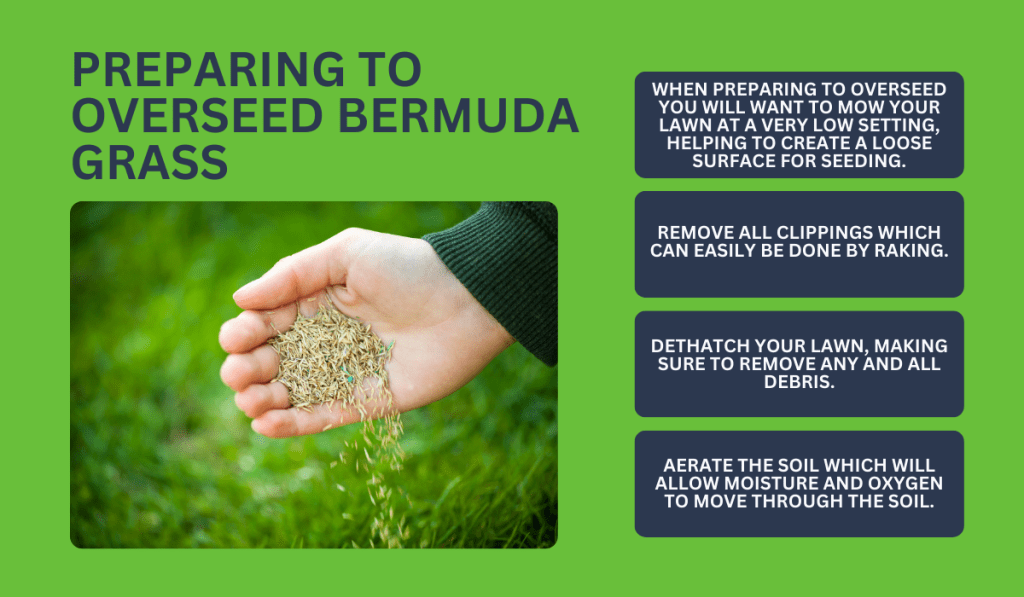
- Mow Low: Before you begin, mow your existing Bermuda grass as short as possible. This allows the new seeds to reach the soil surface and receive sunlight.
- Remove Debris: Rake the lawn thoroughly to remove any dead grass, thatch, rocks, or other debris. This exposes the soil and allows for good seed-to-soil contact.
- Loosen the Soil: For bare or compacted areas, lightly loosen the soil surface with a rake or a dethatching machine. This helps the seeds penetrate the soil and encourages root growth. Avoid deep tilling, which can bring weed seeds to the surface.
- Test Soil pH: If you haven’t done so recently, consider a soil test. Bermuda grass prefers a slightly acidic to neutral pH, ideally between 6.0 and 7.0. Adjustments can be made with lime (to raise pH) or sulfur (to lower pH) based on test results.
- Fertilize (Optional but Recommended): A light application of a starter fertilizer, formulated with phosphorus, can give your new seedlings a strong start. Follow the product’s instructions carefully, as too much fertilizer can burn young grass.
Step 2: Select Your Bermuda Grass Seed
As discussed earlier, choosing the right seed is paramount.
- Pure Seed vs. Mix: Decide if you want pure Bermuda seed or a mix. For most homeowners looking to revitalize an existing Bermuda lawn, pure Bermuda seed is often the best choice.
- Read Seed Labels: Pay attention to the germination rate and the purity of the seed. Higher percentages mean a better chance of successful growth.
Step 3: Apply the Seed
Proper seeding technique ensures an even distribution and good seed-to-soil contact.
- Use a Spreader: A broadcast spreader or a drop spreader is the most effective way to apply seed evenly.
- Follow Seeding Rates: Check the seed bag for recommended seeding rates. Over-seeding at too high a rate can lead to competition between seedlings, resulting in weaker grass. For overseeding an existing lawn, you might use a slightly lower rate than for establishing a new lawn.
- Apply in Two Directions: To ensure even coverage, apply half the seed going in one direction (e.g., north-south) and the other half going in the perpendicular direction (e.g., east-west).
- Lightly Rake Seed In: After spreading, lightly rake the seeded areas. This is crucial to ensure good seed-to-soil contact, which is essential for germination. The goal is to lightly cover the seeds with about 1/8 to 1/4 inch of soil.
Step 4: Water Consistently
Watering is arguably the most critical factor for successful Bermuda grass seed germination and Bermuda grass establishment.
- Keep Seedbed Moist: The most important thing is to keep the seedbed consistently moist, but not waterlogged. This means light, frequent watering.
- Watering Schedule: Plan to water at least once or twice a day, depending on your climate and soil type. The goal is to keep the top layer of soil moist where the seeds are.
- Avoid Washing Away Seed: Use a fine spray from your hose or sprinkler to avoid washing the seeds away.
- Adjust as Seed Germinates: Once you start seeing germination (which typically takes 7-21 days for Bermuda grass), you can gradually reduce the frequency of watering but increase the amount. Allow the soil to dry slightly between waterings to encourage deeper root growth.
Step 5: Fertilize New Seedlings
Proper fertilization supports the growth of your new Bermuda grass.
- Starter Fertilizer: If you didn’t apply starter fertilizer during soil preparation, now is the time. Apply a fertilizer that is balanced or slightly higher in phosphorus.
- Timing: Wait until the seedlings have emerged and have been mowed once or twice before applying fertilizer. Applying too early can burn the delicate new grass.
- Follow Instructions: Always adhere to the recommended application rates on the fertilizer packaging.
Step 6: Mow at the Right Time and Height
Mowing your newly seeded lawn correctly is essential for its development.
- First Mowing: Wait until the new grass reaches about 3 inches in height before the first mowing.
- Mow High: For the first few mows, set your mower to a higher cutting height than you normally would for a mature Bermuda lawn. This allows the young grass blades to develop strength and a better root system.
- Sharp Mower Blades: Always use a sharp mower blade. Dull blades can tear the delicate grass, making it susceptible to disease.
- Never Remove More Than One-Third: As a general rule for all mowing, never remove more than one-third of the grass blade’s height at any single mowing.
Step 7: Ongoing Bermuda Lawn Care
Once your Bermuda grass has established, continue with good Bermuda lawn care guide practices to maintain its health and density.
- Watering: As Bermuda grass matures, it becomes more drought-tolerant. Water deeply and infrequently to encourage deep root growth. Aim for about 1 inch of water per week, either from rainfall or irrigation.
- Mowing: Gradually lower the mowing height as the grass matures, eventually returning to your preferred height for Bermuda grass (typically between 0.5 to 1.5 inches).
- Fertilizing: Bermuda grass is a heavy feeder. Fertilize regularly during the growing season (spring through early fall) with a nitrogen-rich fertilizer to promote lush growth and vibrant color.
- Weed Control: A healthy, dense lawn is the best defense against weeds. If weeds persist, spot-treat them or use a pre-emergent herbicide in the spring before weeds begin to germinate.
- Aeration and Dethatching: Periodically aerate and dethatch your lawn to improve air, water, and nutrient penetration to the root zone. This is particularly helpful in thickening Bermuda grass and improving overall turf health.
Repairing Bare Spots Bermuda: A Targeted Approach
Sometimes, you don’t need to reseed the entire lawn, just address specific issues. Repairing bare spots Bermuda requires a focused effort.
- Identify the Cause: Before you start, try to figure out why the spot is bare. Is it pet damage, insect infestation, disease, or just wear and tear? Addressing the underlying cause is crucial to prevent recurrence.
- Prepare the Area: Remove any dead grass and loosen the soil in the bare spot, just as you would for broader reseeding.
- Apply Seed: Sprinkle a small amount of Bermuda grass seed directly into the prepared soil. Ensure good seed-to-soil contact.
- Cover Lightly: Gently rake a thin layer of compost or topsoil over the seed.
- Water Carefully: Keep the area consistently moist until the seed germinates and the new grass begins to establish.
- Patience: It may take a few weeks for the bare spot to fill in completely.
When is Bermuda Grass Dormancy a Factor?
Bermuda grass dormancy is a natural cycle for this warm-season grass. Understanding dormancy helps you time your reseeding and manage your lawn effectively.
- What is Dormancy? When temperatures drop significantly and consistent frost occurs, Bermuda grass turns brown and appears dead. This is not death; it’s dormancy. The grass has gone into a resting state to survive the cold.
- Reseeding and Dormancy: You cannot reseed Bermuda grass when it is dormant in the fall or winter. The cold temperatures will prevent germination and kill any newly sprouted seeds.
- Spring Revival: As temperatures warm up in the spring, dormant Bermuda grass will typically green up and start growing again.
Bermuda Grass Sodding vs. Seeding
While seeding is a common method, Bermuda grass sodding is another option for establishing or renovating a lawn.
- Sodding: Sodding involves laying down pre-grown turfgrass that is already established on a mat of soil.
- Pros: Immediate results, quicker establishment, excellent for erosion control.
- Cons: Much more expensive than seeding, requires careful installation and immediate watering.
- Seeding: Seeding involves planting individual grass seeds that then germinate and grow.
- Pros: Much more affordable, allows for a wider variety of seed choices, can be done over larger areas more economically.
- Cons: Takes longer to establish, requires consistent watering during germination, more susceptible to damage during establishment.
For a Bermuda lawn renovation where budget is a concern, seeding is usually the preferred method. If you need instant results and have the budget, sodding is a viable alternative.
Troubleshooting Common Reseeding Issues
Even with the best preparation, sometimes things don’t go perfectly. Here are a few common issues and how to address them:
- Poor Germination:
- Cause: Inadequate seed-to-soil contact, insufficient moisture, extreme temperatures, old seed.
- Solution: Rake seed in more thoroughly, increase watering frequency, ensure proper temperature range, purchase fresh seed.
- Uneven Growth:
- Cause: Uneven seed distribution, varying soil moisture levels.
- Solution: Use a spreader for even application, ensure consistent watering across the entire area.
- Weed Competition:
- Cause: Weeds germinating before or along with grass seed.
- Solution: Ensure good soil preparation to reduce weed seed germination, consider a pre-emergent herbicide (but be careful not to apply when seeding), and mow at the correct height to shade out weeds.
FAQ: Your Bermuda Reseeding Questions Answered
Q1: Can I reseed Bermuda grass over dormant grass in the fall?
A1: No, it is not recommended to reseed Bermuda grass in the fall. Bermuda grass needs warm temperatures to germinate and establish. Fall seeding will likely result in poor germination or the new seedlings dying off over winter.
Q2: How much seed do I need for my lawn?
A2: The amount of seed needed depends on the size of your lawn and the specific Bermuda grass variety. Always check the recommended seeding rate on the seed bag and calculate based on your square footage. For example, a common recommendation is about 1-2 pounds of seed per 1,000 square feet for overseeding.
Q3: Will reseeding help thicken my Bermuda grass?
A3: Yes, reseeding is an excellent method for thickening Bermuda grass by introducing new grass plants into existing turf, creating a denser, more uniform appearance.
Q4: How long does it take for Bermuda grass seed to germinate?
A4: Bermuda grass seed typically takes 7 to 21 days to germinate under optimal conditions of warmth and moisture.
Q5: Is it okay to walk on newly seeded Bermuda grass?
A5: It’s best to avoid walking on newly seeded areas as much as possible. Foot traffic can disturb the seeds and the delicate new seedlings, hindering Bermuda grass establishment.
By following these steps and providing consistent care, you can successfully reseed your Bermuda lawn and enjoy a beautiful, healthy turf for years to come. Remember that patience and consistent attention to watering are key to achieving the best results in your Bermuda lawn renovation project.