
Determining how much grass seed you need per acre for your lawn is crucial for successful lawn establishment. A common question is, How much grass seed per acre lawn? The answer varies based on the type of grass seed and whether you are seeding a new lawn or overseeding an existing one, but a good starting point for most common grass types is between 5 to 10 pounds of seed per 1,000 square feet. This general guideline helps ensure proper grass seed density for a lush, healthy turf.
When embarking on a lawn renovation or creation project, precision in your seeding rate is key. Too little seed can result in thin, patchy areas susceptible to weeds, while too much seed can lead to competition among seedlings, weak growth, and wasted resources. This guide will help you navigate the intricacies of calculating your grass seed coverage needs, ensuring you have the right amount for a beautiful lawn.
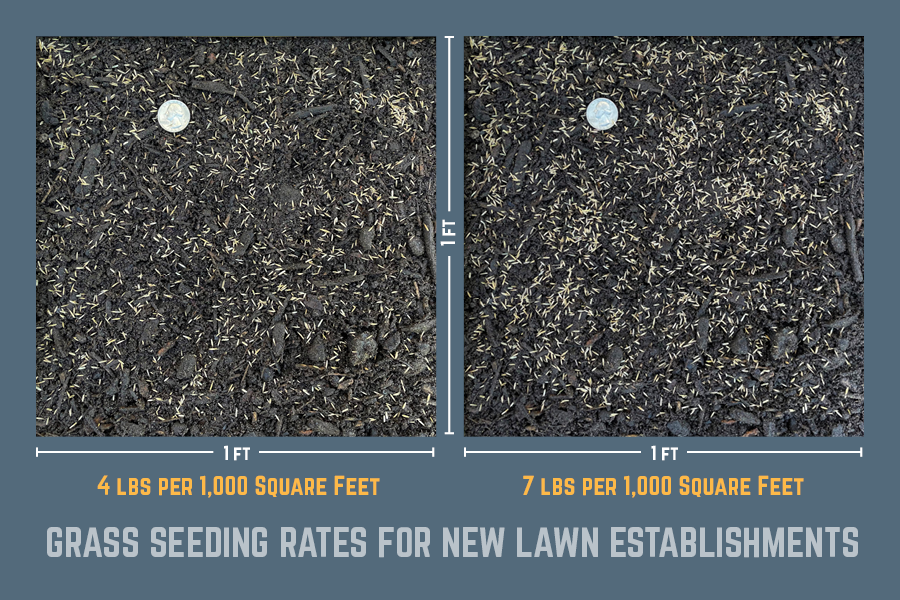
Image Source: alseed.com
Factors Influencing Grass Seed Requirements
Several variables play a significant role in determining the optimal amount of grass seed for your specific lawn project. Ignoring these can lead to under or over-seeding, both of which have negative consequences.
Grass Type and Seed Variety
Different grass species have distinct germination rates, growth habits, and ideal planting densities. For instance, fine fescues often require a higher seeding rate than ryegrass to achieve good coverage due to their finer texture and slower establishment. Cool-season grasses like Kentucky bluegrass might need a different approach than warm-season grasses like Bermuda grass. Always check the seed packaging for specific recommendations for the variety you’ve chosen.
New Lawn Seeding vs. Overseeding
Establishing a new lawn from scratch demands a different seeding rate than overseeding an existing lawn.
- New Lawn Seeding: This requires a higher rate to ensure a dense stand of grass from the outset. You’re aiming for complete coverage where no soil is visible once the grass has grown in.
- Overseeding: This process aims to thicken an existing lawn, fill in bare patches, and improve overall appearance. The seeding rate for overseeding is typically lower than for new lawns, as you’re supplementing existing grass rather than starting from scratch.
Soil Conditions and Preparation
The quality of your soil significantly impacts germination and lawn establishment.
- Soil Fertility: Well-nourished soil supports robust seedling growth, potentially allowing for a slightly lower seeding rate.
- Soil Compaction: Compacted soil hinders root development and water penetration. You may need to adjust your seeding rate or prioritize aeration before seeding.
- Soil pH: Grasses thrive within specific pH ranges. Testing your soil and amending it if necessary is a critical step that influences how well your seed will germinate and grow.
Time of Year and Climate
The best time to overseed or plant a new lawn depends heavily on your climate and the type of grass. Cool-season grasses (like fescue, bluegrass, and ryegrass) are best sown in the fall or early spring when temperatures are moderate and moisture is abundant. Warm-season grasses (like Bermuda, Zoysia, and St. Augustine) thrive when planted in late spring or early summer. Planting during the correct season maximizes germination success and reduces stress on young seedlings.
Calculating Your Grass Seed Needs: A Step-by-Step Approach
Now, let’s get into the practical aspects of calculating how much seed you need.
Step 1: Measure Your Lawn Area
The first and most vital step is accurately measuring the square footage of your lawn.
- Rectangular or Square Lawns: Multiply the length by the width.
- Example: A lawn that is 50 feet long and 30 feet wide has an area of 50 ft * 30 ft = 1,500 square feet.
- Irregularly Shaped Lawns: Break down the lawn into smaller, manageable geometric shapes (rectangles, squares, triangles). Calculate the area of each shape and then sum them up. For curved areas, you can approximate them with polygons or use online mapping tools.
- Tip: A simple method for irregular shapes is to use a measuring wheel or a roll of measuring tape. Alternatively, many online mapping tools and apps allow you to draw on an aerial image to calculate the area.
Step 2: Determine Your Target Seeding Rate
This is where you’ll refer to the specific recommendations for your chosen grass seed. The seeding rate is usually provided in pounds per 1,000 square feet (lbs/1000 sq ft) or sometimes as a percentage of the total lawn area.
Common Seeding Rates (for New Lawns):
| Grass Type | Seed Coverage (lbs/1000 sq ft) |
|---|---|
| Kentucky Bluegrass | 1-3 |
| Perennial Ryegrass | 5-10 |
| Fine Fescues | 4-8 |
| Tall Fescue | 6-10 |
| Bentgrass | 0.5-1 (very fine) |
| Zoysia Grass | 2-5 (for plugs/sod, higher for seed) |
| Bermuda Grass | 1-2 (for seed, much higher for sod) |
Important Note: These are general guidelines. Always consult the specific seed blend packaging for the most accurate recommendations. Overseeding rates are typically 50-75% of the new lawn seeding rates.
A common query is, how much seed for 1000 sq ft. As you can see from the table, this will vary, but a good average is between 2-5 lbs for many popular grass types for new lawns.
Step 3: Calculate the Total Amount of Seed Needed
Once you have your lawn’s square footage and the target seeding rate, you can calculate the total seed required.
Formula:
Total Seed Needed (lbs) = (Lawn Area in sq ft / 1000 sq ft) * Seeding Rate (lbs/1000 sq ft)
Let’s use an example:
Suppose you have a lawn that is 5,000 square feet, and your chosen grass seed has a recommended seeding rate of 7 lbs per 1,000 square feet for a new lawn.
Total Seed Needed = (5000 sq ft / 1000 sq ft) * 7 lbs/1000 sq ft
Total Seed Needed = 5 * 7 lbs
Total Seed Needed = 35 lbs
This means you would need 35 pounds of grass seed for your 5,000 square foot lawn.
Step 4: Consider Seed Purity and Germination Rate
Seed bags often state the purity percentage and germination rate.
- Purity: This indicates the percentage of the bag that is actually the desired grass seed, excluding inert matter, weed seeds, or other crop seeds.
- Germination Rate: This is the percentage of seeds that are expected to sprout under optimal conditions.
If your seed has a lower germination rate (e.g., 70%), you might need to slightly increase your seeding rate to compensate for the seeds that won’t sprout. Some experts suggest adding an extra 10-20% to your calculated amount if the germination rate is significantly below 90%.
Using a Lawn Seeding Calculator
To simplify the process, many online resources offer a lawn seeding calculator. You input your lawn’s dimensions, and the calculator automatically computes the required amount of seed based on standard seeding rates. These calculators are excellent tools for quickly estimating your needs, but it’s always wise to cross-reference with the seed manufacturer’s recommendations.
Preparing Your Soil for Seeding
Successful lawn establishment hinges on proper soil preparation. This is as important as getting the right seeding rate.
Improving Soil Structure
- Aeration: If your soil is compacted, aerating it will create small holes, allowing air, water, and nutrients to penetrate the root zone. This is especially important for existing lawns before overseeding.
- Dethatching: Remove any thick layer of thatch (dead grass stems and roots) that can prevent seed-to-soil contact and moisture from reaching the soil.
Fertilization for Seeding
The right fertilizer ratio for seeding promotes strong root development and healthy seedling growth. Look for a starter fertilizer, which is typically higher in phosphorus (the middle number in the N-P-K ratio). Phosphorus is vital for root formation.
- N-P-K Ratio: A common starter fertilizer might have a ratio like 10-20-10 or 18-24-12.
- Application Timing: Apply fertilizer according to the product instructions, usually before or at the time of seeding. This provides essential nutrients for the germinating seeds and young grass.
Soil pH Adjustment
As mentioned earlier, testing your soil’s pH is crucial.
- Low pH (Acidic Soil): Add lime to raise the pH.
- High pH (Alkaline Soil): Add sulfur to lower the pH.
Adjustments should be made several weeks or months before seeding for best results.
Sod vs. Seed: A Quick Comparison
While this guide focuses on seed, it’s worth noting the alternative: sod.
- Sod: Instant lawn. You lay down pre-grown grass sections. It’s faster but significantly more expensive and labor-intensive upfront.
- Seed: Takes longer to establish, requires more initial care (watering, mowing), but is far more economical and allows for a wider variety of grass types.
For most homeowners looking to establish or improve their lawn, using seed is the more cost-effective and versatile option.
Achieving Optimal Grass Seed Density
The goal of a proper seeding rate is to achieve good grass seed density. This means having enough individual grass plants per square foot to create a thick, lush canopy.
- Too Low Density: Results in sparse grass, allowing weeds to easily establish and making the lawn look thin.
- Too High Density: Leads to overcrowding. Grass seedlings compete intensely for sunlight, water, and nutrients, resulting in weak, spindly plants that are more susceptible to disease and stress.
The recommended seeding rate on the seed packaging is calibrated to achieve this ideal density for that specific grass type.
Best Time to Overseed Your Lawn
Knowing the best time to overseed is critical for success, especially in regions with distinct seasons.
- For Cool-Season Grasses:
- Fall (Early to Mid-Fall): This is generally considered the best time. Soil temperatures are still warm enough for germination, but air temperatures are cooling, which favors growth and reduces weed competition. Lawns have time to establish before winter dormancy.
- Early Spring: Another viable option, but you’ll face more competition from crabgrass and other summer annual weeds that germinate in warmer soil. The young grass will also be under more stress as summer heat arrives.
- For Warm-Season Grasses:
- Late Spring to Early Summer: When soil temperatures consistently reach the 70s and 80s Fahrenheit, warm-season grasses will germinate and grow vigorously.
Frequently Asked Questions (FAQ)
Q1: How much grass seed do I need for a quarter acre?
A quarter acre is 10,890 square feet (43,560 sq ft / 4). To calculate your seed needs, multiply 10,890 by your desired seeding rate per 1,000 sq ft. For example, if the rate is 7 lbs/1000 sq ft, you’ll need (10,890 / 1000) * 7 = 76.23 lbs.
Q2: Can I just throw grass seed on my lawn?
No, simply throwing seed onto an unprepared lawn will likely result in poor germination and lawn establishment. Proper soil preparation, including loosening the soil and ensuring good seed-to-soil contact, is essential.
Q3: What is a good fertilizer ratio for seeding?
A starter fertilizer with a higher phosphorus content (the middle number in N-P-K) is recommended. Look for ratios like 10-20-10 or 18-24-12 to promote strong root development.
Q4: How much seed for 1000 sq ft of bare ground?
For bare ground, you’ll use the full seeding rate recommended for your chosen grass type. This is typically between 2-10 lbs per 1,000 sq ft, depending on the grass species.
Q5: What is grass seed coverage?
Grass seed coverage refers to how much area a certain weight of seed is intended to cover, as specified by the manufacturer. It’s directly related to the seeding rate.
Q6: Is it better to seed or use sod?
Sod vs seed is a common dilemma. Seed is significantly cheaper and offers more variety but takes longer to establish. Sod provides an instant lawn but is more expensive and labor-intensive to install. The choice depends on your budget, timeline, and desired immediate result.
By following these guidelines and accurately calculating your seeding rate, you’ll be well on your way to a beautiful, healthy, and dense lawn. Remember to always refer to the specific recommendations on your grass seed packaging for the best results.