
Wondering how long to charge a lawn mower battery at 10 amps? The charging time depends on the battery’s capacity (measured in amp-hours) and its current state of charge. As a general rule, you can estimate charging time by dividing the battery’s capacity by the charger’s amperage. For example, a 50 amp-hour battery would take approximately 5 hours to charge at 10 amps if it were completely depleted. However, this is a simplified calculation, and actual charging duration can vary due to several factors.
Maintaining your electric mower’s battery is key to ensuring it performs at its best. A well-charged battery means more power for mowing and a longer lifespan for the battery itself. When you’re looking at charging your lawn tractor battery, especially a 12-volt lawn mower battery, understanding the role of the charger amperage is crucial. This guide will break down how long it takes to charge your lawn mower battery using a 10-amp charger, considering various factors that influence battery charge time.
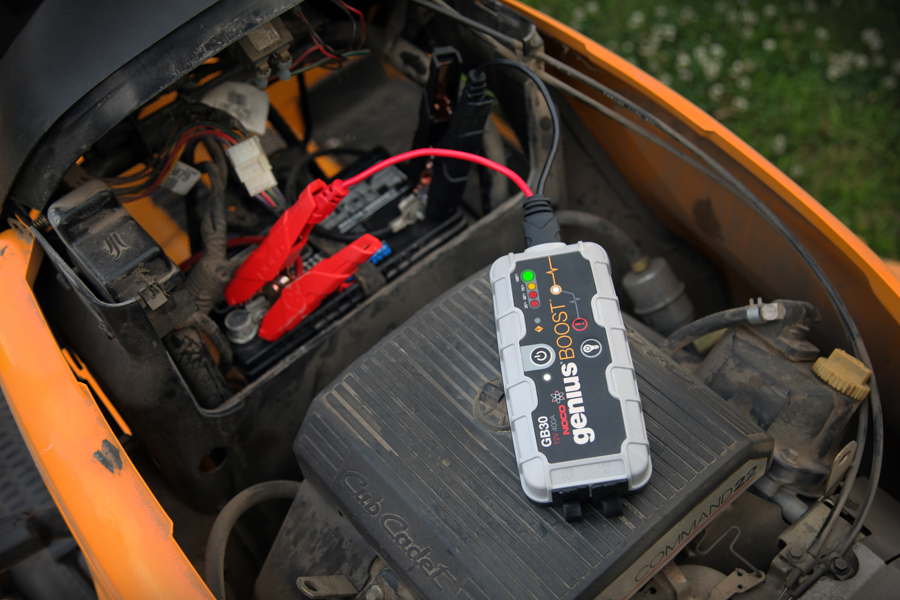
Image Source: azblogsingle.wpengine.com
Fathoming Your Battery’s Needs
Before we dive into specific charging times, let’s get acquainted with the essential details of your lawn mower battery.
Battery Capacity: The Heart of the Matter
The most critical piece of information you need is your battery’s capacity, typically measured in Amp-hours (Ah). This figure tells you how many amps the battery can deliver for a specific amount of time. For instance, a battery rated at 50 Ah can theoretically supply 5 amps for 10 hours, or 10 amps for 5 hours.
- Where to find it: This information is usually printed directly on the battery casing. Look for a label that says “Ah” or “Amp-hours.”
- Why it matters: A higher amp-hour rating means a larger battery that can store more energy, leading to longer run times and longer charging times.
Mower Battery Voltage: The Power Standard
Most lawn mower batteries are 12-volt systems. This is a standard for many types of batteries, including those used in automotive applications and smaller electric vehicles. The voltage determines the electrical potential of the battery.
- Consistency is key: While voltage might seem straightforward, ensuring your charger is compatible with your mower battery voltage is essential to avoid damage. A 10-amp charger designed for 12-volt systems is generally safe.
Charger Amperage: The Speed of Power
The charger amperage refers to the rate at which the charger delivers electrical current to the battery. A higher amperage charger can charge a battery faster. In this case, we’re focusing on a 10-amp charger.
- The 10-Amp Advantage: A 10-amp charger is a moderately fast charger for most lawn mower batteries. It offers a good balance between charging speed and the potential for battery overheating or damage if not managed correctly.
Calculating Charging Duration: A Practical Approach
Let’s break down how to estimate the charging duration for your lawn mower battery with a 10-amp charger.
The Basic Formula: A Starting Point
The simplest way to estimate charging time is using this formula:
Estimated Charging Time (Hours) = Battery Capacity (Ah) / Charger Amperage (A)
So, for a 50 Ah battery with a 10-amp charger:
50 Ah / 10 A = 5 hours
Important Caveat: This calculation assumes a completely discharged battery and a charger that consistently delivers 10 amps until the battery is full. In reality, battery charging is more complex.
Factors Influencing Actual Charging Time
Several real-world factors can affect the actual battery charge time:
- State of Charge (SoC): If your battery isn’t completely dead, it will take less time to charge. Most chargers have intelligent circuitry that slows down the charging rate as the battery approaches full capacity.
- Battery Age and Health: Older batteries or those with reduced capacity will not hold a charge as effectively and might take longer to reach their (reduced) maximum charge.
- Temperature: Batteries charge most efficiently within a specific temperature range. Charging a very cold or very hot battery can slow down the process and potentially damage it. Most smart chargers will adjust the charging rate based on temperature.
- Charger Type:
- Manual Chargers: These are simpler and might deliver a constant amperage. You’ll need to monitor them closely to avoid overcharging.
- Smart/Automatic Chargers: These are more common now. They monitor the battery’s voltage and adjust the charging rate automatically, often tapering off as the battery gets full. This is safer and more efficient for deep cycle battery charging.
- Battery Chemistry: While most lawn mower batteries are lead-acid (including AGM battery charging), different chemistries can have slightly different charging profiles.
Example Scenarios with a 10-Amp Charger
Let’s explore how charging time can vary:
Scenario 1: Fully Discharged 50 Ah Battery
- Calculation: 50 Ah / 10 A = 5 hours.
- Actual expectation: With a smart charger, it might take slightly longer than 5 hours as the charger might start at 10 amps but then taper off.
Scenario 2: Partially Discharged 50 Ah Battery (25% depleted)
- This means the battery has roughly 75% of its capacity remaining (approx. 37.5 Ah).
- Calculation: 37.5 Ah / 10 A = 3.75 hours.
- Actual expectation: Likely around 3 to 4 hours, depending on how the smart charger manages the final stages of charging.
Scenario 3: Deep Cycle Battery Charging (e.g., 100 Ah)
- Calculation: 100 Ah / 10 A = 10 hours.
- Actual expectation: This is a significant charge. A 10-amp charger is a relatively slow charger for a large deep cycle battery. It might take longer than 10 hours, especially as the charger slows down. For large deep cycle batteries, higher amperage chargers (e.g., 20-30 amps) are often recommended to reduce charging time.
The “Rule of Thumb” for 10 Amps
Generally, for a 12-volt lawn mower battery, you can estimate:
- For every 10 Amp-hours of battery capacity, expect about 1 hour of charging at 10 amps (when completely discharged).
So, a 40 Ah battery might take around 4 hours, and a 60 Ah battery might take around 6 hours. Always add a buffer for the tapering charge at the end.
Types of Lawn Mower Batteries and Their Charging Needs
The type of battery in your electric mower charging system significantly impacts its charging characteristics.
Lead-Acid Batteries
These are the most common type for traditional lawn mowers and lawn tractors. They are robust but can be sensitive to improper charging.
- Flooded Lead-Acid: These require periodic topping up with distilled water. Charging can produce gasses, so good ventilation is a must.
- AGM (Absorbent Glass Mat) Battery Charging: AGM batteries are a type of sealed lead-acid battery. They are maintenance-free and more resistant to vibration. They generally prefer a controlled charging process, making smart chargers ideal. Overcharging can still damage them.
- Gel Batteries: Another sealed lead-acid type, gel batteries use a gelled electrolyte. They are sensitive to overcharging and high charging currents. A 10-amp charger is usually suitable, but always check the manufacturer’s recommendations.
Lithium-Ion Batteries
Some newer, high-performance electric mowers use lithium-ion batteries. These are much lighter and can charge significantly faster.
- Built-in Battery Management Systems (BMS): Lithium-ion batteries have sophisticated BMS that protect them from overcharging, over-discharging, and temperature extremes.
- Dedicated Chargers: Always use the charger specifically designed for your lithium-ion mower battery. These chargers are calibrated to the exact voltage and chemistry of the battery.
- Charging Speed: Lithium-ion batteries typically charge much faster than lead-acid. A 10-amp charger is usually not applicable in the same way; these batteries often come with their own specific charging adapters that manage the process.
Best Practices for Charging Your Lawn Mower Battery
To ensure your battery charges safely and efficiently, follow these guidelines:
1. Consult Your Owner’s Manual
This is the golden rule. Your mower’s manufacturer will provide specific instructions on battery care and charging. This includes the recommended charger type, charging voltage, and any specific procedures to follow.
2. Use the Right Charger
- Amperage Compatibility: Ensure your 10-amp charger is designed for your mower battery’s voltage (usually 12-volt).
- Smart vs. Manual: A smart charger is always preferred for lead-acid batteries. It prevents overcharging and prolongs battery life. If you have a manual charger, you’ll need to be diligent about unplugging it once the battery is charged.
- Lithium-Ion: As mentioned, only use the charger supplied with or recommended for your lithium-ion mower battery.
3. Charge in a Suitable Environment
- Temperature: Charge your battery in a cool, dry place, away from direct sunlight or extreme cold. Ideal charging temperatures are typically between 50°F and 80°F (10°C and 27°C).
- Ventilation: For flooded lead-acid batteries, ensure the charging area is well-ventilated, as they can release hydrogen gas during charging.
4. Monitor the Charging Process (Especially with Manual Chargers)
- Check for Overheating: Feel the battery and charger. If they become excessively hot, disconnect the charger immediately.
- Avoid Overcharging: Leave a manual charger connected for too long, and you risk damaging the battery. Smart chargers eliminate this risk.
5. Perform Occasional Deep Cleans (of the battery terminals)
Corrosion on battery terminals can impede the flow of electricity, affecting charging efficiency. Periodically clean the terminals with a wire brush or a specialized battery terminal cleaner.
6. Regular Maintenance for Lead-Acid Batteries
If you have a flooded lead-acid battery, check the electrolyte levels every few months. If the level is low, top it up with distilled water. Never overfill.
Advanced Considerations for Battery Charge Time
For those who want to delve deeper into the nuances of battery charging.
Battery Charge Time & The Efficiency Factor
No charger is 100% efficient. Some energy is lost as heat during the charging process. This means you might need to supply slightly more than the actual battery capacity in watt-hours (Wh) to fully charge it. However, when calculating using amp-hours and volts, this efficiency is often indirectly accounted for in typical estimations.
Bulk, Absorption, and Float Stages
Smart chargers for lead-acid batteries typically go through different charging stages:
- Bulk Stage: The charger delivers current at its maximum rate (e.g., 10 amps) until the battery reaches a certain voltage. This is the fastest part of the charging cycle.
- Absorption Stage: The charger maintains a constant voltage while the current gradually decreases as the battery reaches full charge. This stage is crucial for safely topping off the battery.
- Float Stage: Once fully charged, the charger reduces the output to a much lower voltage and amperage to maintain the battery’s charge without overcharging. This is ideal for keeping a battery on a trickle charge.
A 10-amp charger will spend most of its time in the bulk stage, with a gradual transition to absorption. The duration of the absorption stage is harder to predict and depends on the battery’s internal resistance and condition.
Deep Cycle Battery Charging Techniques
Deep cycle batteries, often found in larger riding mowers or even as secondary power sources, are designed to be discharged more deeply than starting batteries.
- Slower is Often Better: While a 10-amp charger might seem slow for a large deep cycle battery (e.g., 100 Ah), it can be gentler on the battery.
- Multi-Stage Charging: For optimal deep cycle battery charging, a charger that offers a multi-stage charging profile (bulk, absorption, float) is highly recommended. This helps prevent sulfation, a condition that degrades lead-acid batteries.
Troubleshooting Common Charging Issues
- Battery Not Charging:
- Check all connections are secure and clean.
- Ensure the charger is plugged in and functional.
- Verify the charger is compatible with the battery voltage.
- The battery might be deeply discharged and unable to accept a charge, or it might be beyond its lifespan.
- Charger Overheating:
- This can indicate a faulty charger or a battery that is drawing excessive current, possibly due to internal damage. Disconnect and seek professional advice.
- Battery Not Holding Charge:
- This often means the battery has reached the end of its life. Repeated deep discharges or age can degrade its capacity.
Frequently Asked Questions (FAQ)
Q1: Can I charge my lawn mower battery at 10 amps if the manual says 5 amps?
A1: It’s generally not recommended to use a charger with a significantly higher amperage than the battery is rated for, especially for manual chargers. While a 10-amp charger might be suitable for some batteries, using a charger that’s too powerful can overheat the battery, reduce its lifespan, or even cause damage. Always stick to the manufacturer’s recommendations.
Q2: How often should I charge my lawn mower battery?
A2: If you use your mower regularly, charge the battery after each use. If you store the mower for extended periods (e.g., during winter), charge the battery fully before storage and consider using a smart charger on a maintenance or float setting to keep it topped up. Avoid letting lead-acid batteries sit in a discharged state for long periods.
Q3: What is a good charger amperage for a 12-volt lawn mower battery?
A3: For most standard 12-volt lawn mower batteries with capacities between 30-60 Ah, a 4-10 amp charger is generally suitable. For larger deep cycle batteries, a higher amperage charger might be more efficient, but always check the battery’s specifications.
Q4: Is it okay to leave my lawn mower battery on the charger overnight?
A4: If you are using a modern smart charger, it is usually safe to leave the battery connected. These chargers will switch to a float charge mode to maintain the battery’s state without overcharging. However, if you are using an older manual charger, it is best to monitor the charging process and disconnect it once the battery is fully charged to prevent damage.
Q5: My lawn mower battery is an AGM battery. Does this change how long it takes to charge at 10 amps?
A5: AGM battery charging is similar to other lead-acid batteries, but they are more sensitive to charging voltage and current. A 10-amp charger is often suitable for AGM batteries, but it’s crucial that it’s a smart charger that can manage the charging stages correctly. The general calculation of capacity divided by amperage still applies as a starting point, but the intelligent tapering of the charge is even more important for AGM performance and longevity.
By keeping these guidelines and estimations in mind, you can ensure your lawn mower battery receives the proper charge, leading to reliable performance and extended operational life for your electric mower.