
A lawn mower is a significant investment for any homeowner. Knowing how much lawn mower usage is “a lot” helps you maintain it well and know when it might be nearing the end of its life. Generally, a well-maintained gas-powered lawn mower can last between 10 and 20 years, which translates to hundreds, if not thousands, of hours of operation. The exact lifespan depends on various factors, including the mower’s quality, how it’s used, and how diligently it’s cared for.
The concept of “a lot” for a lawn mower is relative. It’s not just about the raw number of hours, but also the mowing frequency, the size of the area being mowed, and the type of mower itself. Understanding these elements will help you gauge the workload your mower is handling and how to best care for it.
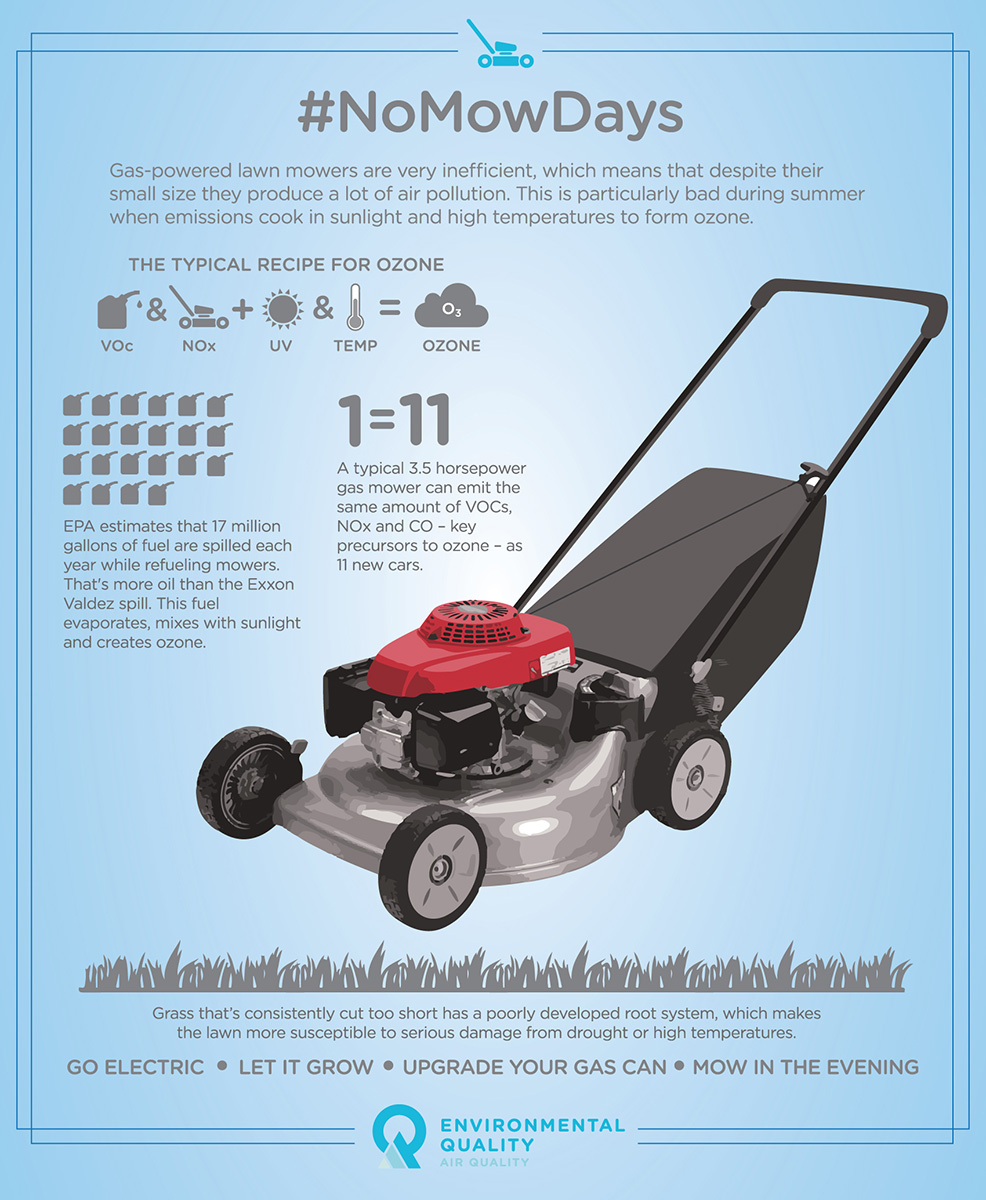
Image Source: deq.utah.gov
Deciphering Lawn Mower Lifespan
Think of your lawn mower like a car. Regular maintenance, proper use, and high-quality parts all contribute to a longer, more reliable life. The same applies to your grass-cutting companion.
Factors Influencing How Many Hours Is A Lot
Several key factors determine how many hours is a lot for your specific lawn mower:
-
Engine Type:
- Gas Engines: Typically have a longer lifespan than electric motors, often rated for 500-1000 hours of operation, but this can vary greatly with maintenance.
- Electric (Corded): These motors are generally simpler and can last a very long time, often outlasting the mower’s chassis. The limitation is more about the cord and the mower’s build.
- Electric (Battery-Powered): The lifespan of battery-powered mowers is heavily influenced by the battery’s life. Batteries typically degrade over time and require replacement, usually after 5-10 years of regular use, regardless of motor hours. The motor itself can still last a long time.
-
Build Quality and Brand:
Higher-quality mowers are built with more robust components, leading to greater durability and a longer lifespan. Reputable brands often invest more in engineering and materials. -
Maintenance Routine:
This is perhaps the most critical factor. Regular oil changes, air filter cleaning or replacement, spark plug checks, and blade sharpening significantly extend a mower’s life. Neglecting these can drastically shorten it. -
Operating Conditions:
- Terrain: Mowing on hilly or uneven terrain puts more strain on the engine and mower deck than mowing on flat, smooth surfaces.
- Grass Type and Density: Cutting thick, tall, or wet grass requires more effort from the mower.
- Environmental Factors: Storing the mower in a dry, protected area prolongs its life compared to leaving it exposed to the elements.
-
Lawn Size and Mowing Frequency:
A larger property size mowing requires more lawn mowing time, accumulating hours faster. Frequent mowing, even on smaller lawns, also contributes to wear and tear.
What Does “A Lot” of Hours Mean?
Let’s break down what constitutes “a lot” in terms of lawn mower run time.
Typical Lawn Mower Lifespans in Hours
| Mower Type | Average Lifespan (Hours) | Notes |
|---|---|---|
| Basic Gas Push Mower | 300 – 600 | Requires regular maintenance. Lifespan can be shorter if neglected or used in demanding conditions. |
| Mid-Range Gas Push Mower | 500 – 800 | Generally better built than basic models. Lifespan is highly dependent on maintenance. |
| High-End Gas Push Mower | 700 – 1000+ | Robust engines and components. Can exceed 1000 hours with excellent care. |
| Gas Riding Mower | 1000 – 2000 | Larger engines designed for heavier work. Lifespan varies significantly with usage (towing, hilly terrain) and maintenance. |
| Zero-Turn Mower | 1500 – 3000 | Often built with commercial-grade components. Designed for durability and high lawn care hours. |
| Electric (Corded) | Very High (Motor) | Motor itself can last indefinitely with proper use. Limitations come from the cord, housing, and other components. |
| Electric (Battery) | 5 – 10 Years (Battery) | The motor can last a long time, but battery replacement is a key factor. Total usage hours will vary based on battery capacity and how often it’s recharged/replaced. |
Interpreting These Numbers
- Under 300 Hours: If your mower is a gas model and you’ve accumulated fewer than 300 hours, and it’s showing significant wear or problems, it might be due to poor maintenance or a low-quality unit.
- 300 – 700 Hours: This is a common range for many residential gas push mowers. If you’re in this range and your mower is performing well with regular maintenance, you’re likely getting good service from it.
- 700 – 1500 Hours: For higher-quality push mowers or average riding mowers, this is a substantial amount of grass cutting time. At this point, you might start seeing wear on components like belts, bearings, or even the engine itself.
- 1500+ Hours: For most residential mowers, reaching this point is a sign of a very well-built machine that has been meticulously maintained. This is a significant amount of lawn mower usage that might indicate it’s time for a replacement or a major overhaul.
How to Track Your Lawn Mower’s Usage
You might be wondering, “How do I even know how many hours my mower has run?” For many residential mowers, especially older or simpler models, there isn’t a built-in hour meter.
Methods for Tracking Hours
- Built-in Hour Meters: Many modern riding mowers, zero-turn mowers, and even some higher-end walk-behind mowers come equipped with an hour meter. This is the most accurate way to track lawn mower run time. Check your mower’s dashboard or console.
- Aftermarket Hour Meters: These can be purchased and installed on virtually any engine, including lawn mowers. They are typically small, battery-powered devices that attach to the spark plug wire or ignition coil. They record engine run time whenever the engine is on. This is an excellent solution for older or simpler mowers.
- Manual Logbook: The simplest, albeit least precise, method is to keep a logbook. Each time you mow, note the date and estimate the mowing duration. If you mow your lawn every week, you can estimate your weekly usage. For example, if your lawn takes 45 minutes to mow, that’s 0.75 hours per week. This method helps you track your weekly lawn maintenance effort.
- App-Based Tracking: Some smart lawn care equipment can connect to smartphone apps, which may automatically log usage.
Factors That Increase Lawn Mower Usage Hours
Certain activities and lawn conditions naturally lead to more lawn mower run time.
Elements Affecting How Many Hours Is A Lot
- Property Size and Complexity: A larger property size mowing naturally requires more time. If your property has many obstacles, turns, or complex landscaping features, the total grass cutting time will increase due to less efficient movement.
- Mowing Frequency: How often you mow impacts how quickly your mower accumulates hours. More frequent mowing means more wear, even if each session is short. This is key for understanding your mowing frequency impact.
- Clipping Management:
- Bagging: If you bag your clippings, it can sometimes add a slight amount of time as you need to stop and empty the bag.
- Mulching: Mulching typically doesn’t add time, and in some cases, can be faster.
- Side-Discharging: Similar to mulching, usually doesn’t add significant time.
- Condition of the Grass: Mowing very tall, thick, or wet grass takes longer and puts more strain on the mower than cutting shorter, drier grass. This impacts your lawn care hours.
- Operator Skill and Efficiency: Experienced operators might be able to mow a lawn faster and more efficiently than beginners, reducing mowing duration per session.
Gauging When “A Lot” Becomes “Too Much”
So, when do those hours become a concern? It’s when performance starts to decline or repair costs become prohibitive.
Signs Your Mower Might Be Reaching Its Limit
- Decreased Power or Performance: If your mower struggles to cut through grass it used to handle easily, even after basic maintenance, the engine might be wearing out.
- Frequent Breakdowns or Expensive Repairs: Consistently needing repairs that cost a significant portion of a new mower’s price is a clear indicator.
- Excessive Smoke or Unusual Noises: Blue smoke often indicates burning oil (worn piston rings or valves), while knocking or grinding noises suggest internal engine damage or bearing failure.
- Fuel Inefficiency: If your mower suddenly starts consuming much more fuel than usual, it could be a sign of internal wear.
- Age of Components: Even if the engine is strong, other parts like the transmission, cutting deck, or wheels can wear out. For riding mowers, the hydrostatic transmission is a key component that can wear out.
Strategies for Maximizing Lawn Mower Lifespan
To get the most lawn mower run time out of your machine, consistent care is essential.
Proactive Care for Longevity
- Read the Manual: This is the first and most important step. Your owner’s manual will have specific maintenance schedules and recommendations for your model.
- Regular Oil Changes: Change the engine oil at the intervals recommended in your manual (usually every 25-50 operating hours, or annually). Use the correct type and viscosity of oil.
- Air Filter Maintenance: Clean or replace the air filter regularly, especially if you mow in dusty conditions. A clogged air filter reduces engine efficiency and can lead to premature wear.
- Spark Plug Replacement: Replace the spark plug annually or as recommended. A clean spark plug ensures efficient combustion.
- Blade Sharpening and Balancing: Keep your mower blades sharp. Dull blades tear grass, leading to brown tips and making the engine work harder. Balanced blades also reduce vibration, which can cause wear on other components.
- Fuel System Care:
- Fuel Stabilizer: Use a fuel stabilizer if you store your mower for more than a month. This prevents fuel from degrading and gumming up the carburetor.
- Fresh Fuel: Always use fresh fuel. Old fuel loses its octane and can cause starting problems and poor performance.
- Cleaning: After each use, clean grass clippings and debris from the mower deck, engine cooling fins, and exterior. This prevents rust and ensures proper cooling.
- Proper Storage: Store your mower in a dry, protected place, like a garage or shed. For winter storage, follow the manual’s instructions for preparing the mower, which often includes draining the fuel or using a stabilizer, and changing the oil.
- Listen and Observe: Pay attention to any unusual sounds, smells, or performance changes. Addressing small issues early can prevent them from becoming major, expensive problems.
How Hours Relate to Your Lawn Care Routine
The number of hours your mower accumulates is directly tied to your lawn care hours.
Connecting Usage to Your Routine
- Small Lawn, Frequent Mowing: If you have a small lawn and mow it weekly (say, 0.5 hours per week), you’ll accumulate about 26 hours per year. In 10 years, that’s 260 hours. This is relatively low lawn mower usage for a gas mower’s potential lifespan.
- Large Lawn, Less Frequent Mowing: If you have a large lawn (say, 2 hours per mowing session) and mow bi-weekly (1 hour per week on average), you’ll accumulate about 52 hours per year. In 10 years, that’s 520 hours. This is a more significant accumulation.
- Commercial Use: A landscaper using a commercial-grade mower for 30 hours a week will rack up over 1500 hours in a single year, highlighting the difference in lawn mower usage between residential and professional applications.
Calculating Your Annual Usage
To get a better sense of your own lawn mowing time, try this simple calculation:
- Estimate your average mowing time per session: How long does it take you to mow your entire lawn?
- Determine your average mowing frequency: How often do you mow (e.g., weekly, bi-weekly)?
- Calculate weekly hours: Mowing time per session / number of weeks between mowing.
- Calculate annual hours: Weekly hours * 52 weeks.
Example:
* Average mowing time: 1 hour
* Mowing frequency: Weekly
* Weekly hours: 1 hour / 1 week = 1 hour
* Annual hours: 1 hour * 52 weeks = 52 hours
If your mower accumulates 50-75 hours per year, it’s typical for a homeowner with an average-sized lawn. Reaching 500 hours on a residential push mower would likely take around 7-10 years with this kind of usage, which aligns with expected lifespans.
When It’s Time to Consider a New Mower
Deciding when to replace a lawn mower isn’t just about the hour count; it’s a holistic decision.
Making the Replacement Decision
- Cost of Repairs vs. New Mower: If the cumulative cost of repairs in a season or two approaches the cost of a new, comparable mower, it’s often more economical to replace it.
- Reliability: If your mower has become unreliable and you can’t trust it to start or finish the job, it’s time for a change.
- Technological Advancements: Newer mowers often offer improvements in fuel efficiency (for gas models), battery technology (for electric models), ease of use, and cutting performance.
- Changing Needs: Perhaps your property size has increased, or you’re looking for a mower with different features (e.g., electric start, self-propel, mulching capabilities).
Frequently Asked Questions (FAQ)
Q1: Can I use my lawn mower for more hours than recommended?
A1: While a well-maintained mower can often exceed its average lifespan, pushing it far beyond its intended hours of operation without proper maintenance will significantly shorten its life and likely lead to costly repairs or complete failure.
Q2: How does the type of grass affect lawn mower run time?
A2: Cutting very thick, tall, or wet grass requires more engine power and can increase mowing duration per session, thus accumulating lawn mower usage hours faster. It also puts more strain on the engine and blades.
Q3: What’s the most important maintenance task for extending my mower’s life?
A3: Regular oil changes and keeping the air filter clean are arguably the most critical maintenance tasks for a gas mower’s engine longevity. For all mowers, keeping the cutting deck clean of grass buildup is vital.
Q4: Are electric mowers more durable than gas mowers in terms of hours?
A4: Electric mowers (both corded and battery) often have simpler motors with fewer moving parts than gas engines, which can translate to longer motor life. However, battery-powered mowers have a finite battery lifespan that needs to be factored in. The overall lifespan of the mower depends on the quality of its construction, not just the motor.
Q5: If I don’t have an hour meter, how can I estimate my lawn mower’s total hours?
A5: You can keep a log of each mowing session, noting the date and the estimated mowing duration. Based on your mowing frequency and property size mowing, you can then calculate approximate annual lawn care hours and project total usage over the years. Installing an aftermarket hour meter is the most accurate way to track usage.
By paying attention to your lawn mower’s usage and adhering to a consistent maintenance schedule, you can ensure it serves your property for many seasons, making the most of your lawn mowing time and investment.