
Does your car’s engine sound like a noisy lawn mower? This common issue, often described as an engine sputtering, rough idle, or an unusual combustion noise, can be a sign of several underlying problems. Identifying the cause is crucial for maintaining your vehicle’s health and preventing more serious damage.
The sound of an engine resembling a lawn mower typically stems from irregular combustion, insufficient fuel delivery, ignition misfires, or mechanical issues within the engine itself. Addressing these problems promptly can save you significant repair costs down the line.
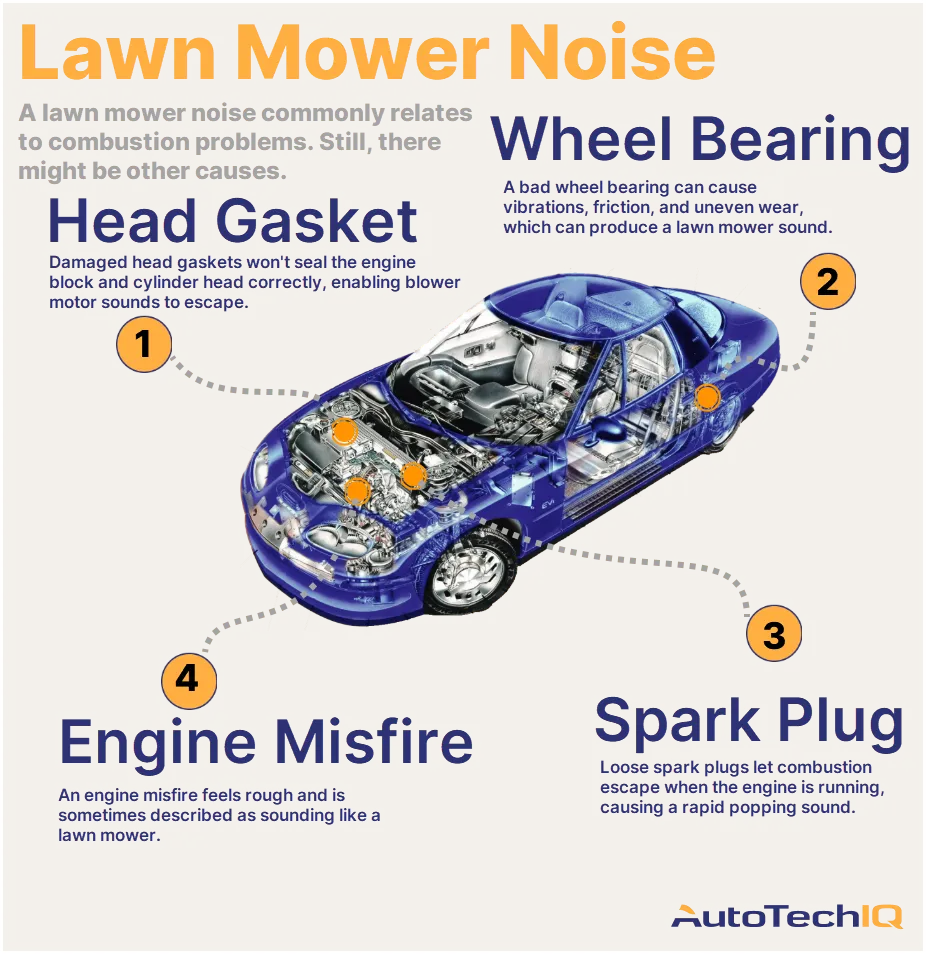
Image Source: www.autotechiq.com
Deciphering the Rhythmic Rattle: What Causes That Lawn Mower Sound?
When your engine starts making a sound akin to a lawn mower, it’s usually not a good sign. This distinctive noise is often a symptom of an engine not running smoothly. It could be the result of engine sputtering, where fuel isn’t burning evenly, leading to jerking movements and that characteristic choppy sound. Another common culprit is a rough idle, meaning the engine’s RPMs are fluctuating wildly when you’re stopped, creating an uneven beat that can sound like a struggling mower.
These sounds are direct audible cues that something is amiss in the complex symphony of your engine’s operation. The process of converting fuel into power relies on a precise sequence of events involving fuel, air, and a spark. When this sequence is disrupted, you get the noise.
Fathoming the Flaws: Key Reasons for a Lawn Mower Engine Sound
Let’s dive deeper into the specific reasons why your engine might be making that unwelcome lawn mower noise.
1. Fuel System Issues: The Heartbeat of the Engine
A healthy engine needs a consistent and correctly atomized supply of fuel. When the fuel system isn’t working as it should, it can lead to the rough sounds you’re hearing.
Fuel Injector Problems
- Clogged Injectors: Over time, dirt and deposits can build up inside fuel injectors, restricting the amount of fuel that sprays into the combustion chamber. This uneven fuel delivery causes the engine to stumble and sputter.
- Leaking Injectors: A leaking injector can spray too much fuel, leading to a rich air-fuel mixture problems. This can cause poor combustion and rough running.
- Faulty Injectors: If an injector fails entirely, the corresponding cylinder won’t receive any fuel, resulting in a complete misfire and a very noticeable disruption in the engine’s sound.
Fuel Pump and Filter Woes
- Weak Fuel Pump: A fuel pump that’s losing pressure won’t deliver enough fuel to the injectors, especially under load. This starvation can cause engine sputtering and a lack of power.
- Clogged Fuel Filter: Similar to clogged injectors, a dirty fuel filter restricts fuel flow, leading to the same symptoms of fuel starvation and rough operation.
2. Ignition Problems: The Spark of Life
The ignition system is responsible for providing the spark that ignites the fuel-air mixture. Any issues here will directly impact combustion.
Spark Plug Irregularities
- Worn Spark Plugs: Over time, spark plugs wear down. This can lead to a weaker spark or a gap that’s too wide, resulting in incomplete combustion and engine sputtering.
- Fouled Spark Plugs: Oil, carbon, or fuel deposits can coat the spark plug tip, preventing a strong spark from jumping across the gap.
- Incorrectly Gapped Spark Plugs: If the gap between the spark plug electrodes is not set to the manufacturer’s specification, it can affect the spark’s strength and the timing of ignition.
Coil and Wire Malfunctions
- Bad Ignition Coils: Modern cars often use individual ignition coils for each spark plug. A failing coil can cause a misfire in its cylinder, contributing to that uneven engine sound.
- Damaged Spark Plug Wires: In older vehicles, worn or damaged spark plug wires can leak electrical current, leading to a weak spark or no spark at all.
3. Air Intake and Exhaust System Leaks: Breathing Problems
The engine needs the right amount of air to mix with fuel for efficient combustion. Leaks in either the intake or exhaust system can disrupt this balance.
Intake Leaks
- Vacuum Leaks: A common issue is a leak in the vacuum hoses or intake manifold gasket. This allows unmetered air to enter the engine after the mass airflow sensor. This extra air leans out the air-fuel mixture problems, causing rough idling and engine sputtering.
Exhaust Leaks
- Exhaust Manifold Leaks: A crack or leak in the exhaust manifold, or a faulty gasket between the manifold and the engine head, can allow exhaust gases to escape before they reach the muffler. This can create a ticking or puffing sound that might be mistaken for a lawn mower. It can also affect exhaust gas recirculation (EGR) systems and oxygen sensor readings, leading to further drivability issues.
- Leaky Muffler or Pipes: While usually causing a louder, more distinct exhaust noise, significant leaks further up the exhaust system can contribute to an overall rougher sound.
4. Mechanical Engine Issues: The Internal Grinders
Sometimes, the lawn mower sound points to more serious internal problems within the engine.
Valve Train Noise
- Worn Lifters or Rocker Arms: The valve train opens and closes the engine’s valves to allow air and fuel in and exhaust out. If components like lifters or rocker arms are worn, they can become noisy. This often manifests as a tapping or ticking sound that can become more pronounced when the engine is cold or at rough idle.
- Improper Valve Adjustment: In engines that require periodic valve adjustment, if this maintenance is neglected, valves can become too loose or too tight, leading to noise and poor performance.
Timing Belt/Chain Issues
- Stretched Timing Belt/Chain: The timing belt or chain synchronizes the rotation of the crankshaft and camshaft. If it stretches or jumps a tooth, the valve timing and ignition timing will be off. This can lead to engine sputtering, loss of power, and a distinct uneven sound.
- Worn Tensioners or Guides: These components keep the timing belt or chain taut. If they wear out, the belt/chain can become slack, leading to incorrect timing and potential noise.
Piston Slap and Bearing Knock
- Piston Slap: This occurs when there’s too much clearance between the piston and the cylinder wall. As the piston moves up and down, it can “slap” against the cylinder, creating a knocking or rattling sound, particularly noticeable when the engine is cold.
- Rod Knock: This is a more serious issue caused by worn connecting rod bearings. It creates a deep knocking sound that typically gets louder with engine speed and is a clear sign of imminent engine failure.
5. Engine Knocking (Detonation/Pre-ignition): The Unwanted Bangs
Engine knocking, also known as detonation or pre-ignition, is a significant problem where the fuel-air mixture in the cylinder ignites prematurely or in uncontrolled bursts. This creates sharp, metallic sounds that can definitely be likened to a loud, irregular engine.
- Incorrect Octane Fuel: Using gasoline with a lower octane rating than recommended for your vehicle can lead to knocking, as lower octane fuel is more prone to premature ignition under pressure and heat.
- Overheating Engine: An engine that is running too hot can cause the fuel mixture to ignite too soon.
- Carbon Buildup: Deposits in the combustion chamber can create hot spots that ignite the fuel mixture before the spark plug fires.
- Faulty Knock Sensor: This sensor is designed to detect knocking and signal the engine control unit (ECU) to adjust ignition timing to prevent it. If the knock sensor is faulty, it can’t perform this vital function.
Diagnosing the Dissonance: Steps to Pinpoint the Problem
To figure out exactly why your engine sounds like a lawn mower, a systematic approach is key.
Initial Checks: The Simple Stuff First
Before you panic or head straight to a mechanic, a few simple checks can sometimes reveal obvious issues.
- Check Engine Light: Is your Check Engine light illuminated? If so, getting the diagnostic trouble codes (DTCs) read is the first step. These codes can provide valuable clues about specific system failures.
- Fluid Levels: Ensure your engine oil, coolant, and power steering fluid are at the correct levels. Low fluids can sometimes contribute to unusual noises.
- Visual Inspection: Look for any obvious signs of damage, loose hoses, or frayed wires around the engine bay.
Advanced Diagnostics: Tools of the Trade
When simple checks aren’t enough, more involved diagnostics are necessary.
Listening Devices and Techniques
- Mechanic’s Stethoscope: This tool allows a mechanic to listen to specific components like injectors, spark plugs, or bearings to isolate the source of the noise.
- Listening Stick: Similar to a stethoscope, a long metal rod can be placed against various parts of the engine to amplify sounds.
Diagnostic Tools
- OBD-II Scanner: As mentioned, this is essential for retrieving DTCs. Beyond that, live data can be monitored to see how sensors and actuators are performing in real-time.
- Fuel Pressure Gauge: Used to test the pressure of the fuel system.
- Vacuum Gauge: Measures the vacuum in the intake manifold, which can indicate leaks.
- Compression Tester: Checks the health of the cylinders by measuring their ability to hold compression.
- Leak-Down Tester: Identifies where compression is being lost (e.g., valves, piston rings).
Common Diagnostic Scenarios: Mapping the Sounds
Here’s a breakdown of how specific symptoms might lead you to a diagnosis:
| Sound Description | Potential Cause(s) | Diagnostic Steps |
|---|---|---|
| Engine sputtering / Hesitation | Fuel system issues, ignition problems, vacuum leaks | Check fuel pressure, inspect spark plugs, scan for codes, check for vacuum leaks |
| Rough idle / Shaking | Misfires, vacuum leaks, idle air control issues | Check spark plugs and coils, scan for misfire codes, test for vacuum leaks |
| Ticking or tapping noise | Valve train issues, exhaust leak, low oil | Listen with a stethoscope, check oil level, inspect exhaust manifold |
| Knocking or pinging sound | Engine knocking (detonation), carbon buildup | Check fuel octane, check engine temperature, scan for knock sensor codes |
| Backfiring / Popping sound | Air-fuel mixture problems, timing issues | Check exhaust system, scan for codes, inspect ignition timing |
Resolving the Racket: Repairing Your Engine
Once the cause is identified, the repair process can begin. The complexity and cost of repairs will vary greatly depending on the issue.
Replacing Worn Parts
- Spark Plugs and Coils: Relatively inexpensive and often a DIY job.
- Fuel Injectors: Can range from moderate to expensive, depending on the vehicle and the number of injectors replaced.
- Fuel Pump/Filter: Moderate cost, often requiring dropping the fuel tank.
- Vacuum Hoses: Usually inexpensive parts, but labor can add up if many are replaced.
- Valve Train Components: Can be costly, requiring significant engine disassembly.
- Timing Belt/Chain: One of the more expensive maintenance items, often requiring specialized tools and considerable labor.
Addressing Leaks
- Exhaust Manifold Gasket: Moderate cost, involves removing and replacing the gasket, sometimes requiring manifold replacement.
- Vacuum Leaks: Can range from cheap (replacing a hose) to expensive (replacing intake manifold gasket or other seals).
Tuning and Adjustments
- Fuel System Cleaning: Can sometimes resolve issues with clogged injectors without replacement.
- Ignition Timing Adjustment: Less common on modern vehicles, as timing is usually ECU-controlled.
Prevention is Key: Keeping Your Engine Smooth
To avoid that lawn mower sound in the first place, regular maintenance is crucial.
Regular Maintenance Schedule
- Oil Changes: Follow your manufacturer’s recommended oil change intervals.
- Spark Plug Replacement: Replace spark plugs according to the service schedule.
- Fuel Filter Replacement: Ensure your fuel filter is changed at recommended intervals.
- Air Filter Replacement: A clean air filter is vital for proper air-fuel mixture problems.
Driving Habits
- Avoid Lugging the Engine: Don’t drive in too high a gear at too low an engine speed, as this can cause stress and knocking.
- Use Recommended Fuel Octane: Always use the octane rating recommended in your owner’s manual.
Frequently Asked Questions (FAQ)
Q1: Can I drive my car if it sounds like a lawn mower?
While you might be able to drive short distances, it’s generally not recommended. Continuing to drive with an engine making unusual noises can exacerbate the problem, potentially leading to more severe and costly damage. It’s best to have it diagnosed and repaired as soon as possible.
Q2: How much does it cost to fix an engine that sounds like a lawn mower?
The cost can vary significantly. A simple fix like replacing a spark plug might cost under $100, while a more complex issue like a timing belt replacement or internal engine repair could cost hundreds or even thousands of dollars.
Q3: Is a lawn mower sound the same as engine knocking?
While both are abnormal engine sounds, engine knocking specifically refers to the sharp, metallic pinging or rattling caused by premature ignition or detonation of the fuel-air mixture. The “lawn mower” sound is a more general description that can encompass sputtering, rough idling, and other uneven combustion noises, which may or may not include knocking.
Q4: Can a bad catalytic converter cause this noise?
A clogged catalytic converter typically causes a loss of power and a hissing or rattling sound from the exhaust, but it’s less likely to directly produce a “lawn mower” sound. However, if the underlying issue causing poor combustion (like misfires) also leads to an inefficient catalytic converter, you might experience a combination of symptoms.
Q5: Do I need a mechanic, or can I fix this myself?
Many basic issues, such as replacing spark plugs or air filters, can be done by a DIYer with basic tools and knowledge. However, diagnosing and repairing complex fuel system issues, ignition problems, or internal mechanical problems often requires specialized tools and expertise. If you’re not comfortable working on your engine, it’s always best to consult a professional mechanic.
By paying attention to the subtle (or not-so-subtle) sounds your engine makes, you can catch problems early and keep your car running smoothly, avoiding the unwelcome chorus of a sputtering, lawn mower-like engine.