
Can you get rid of Ajuga permanently from your lawn? Yes, you can, but it requires a persistent and multi-faceted approach. Simply killing the visible plants is not enough; you need to address the root system and prevent regrowth.
Ajuga, also known as bugleweed or carpet bugleweed, is a low-growing perennial that’s often favored for its attractive foliage and purple flowers. However, when it escapes its intended garden beds and invades your lawn, it quickly becomes an unwelcome weed. This aggressive spreader can choke out desirable turfgrass, creating bare patches and an uneven mowing experience. Tackling invasive ajuga in lawn areas demands a strategic plan, often involving a combination of manual removal, chemical treatments, and diligent lawn care practices to ensure its permanent eradication.
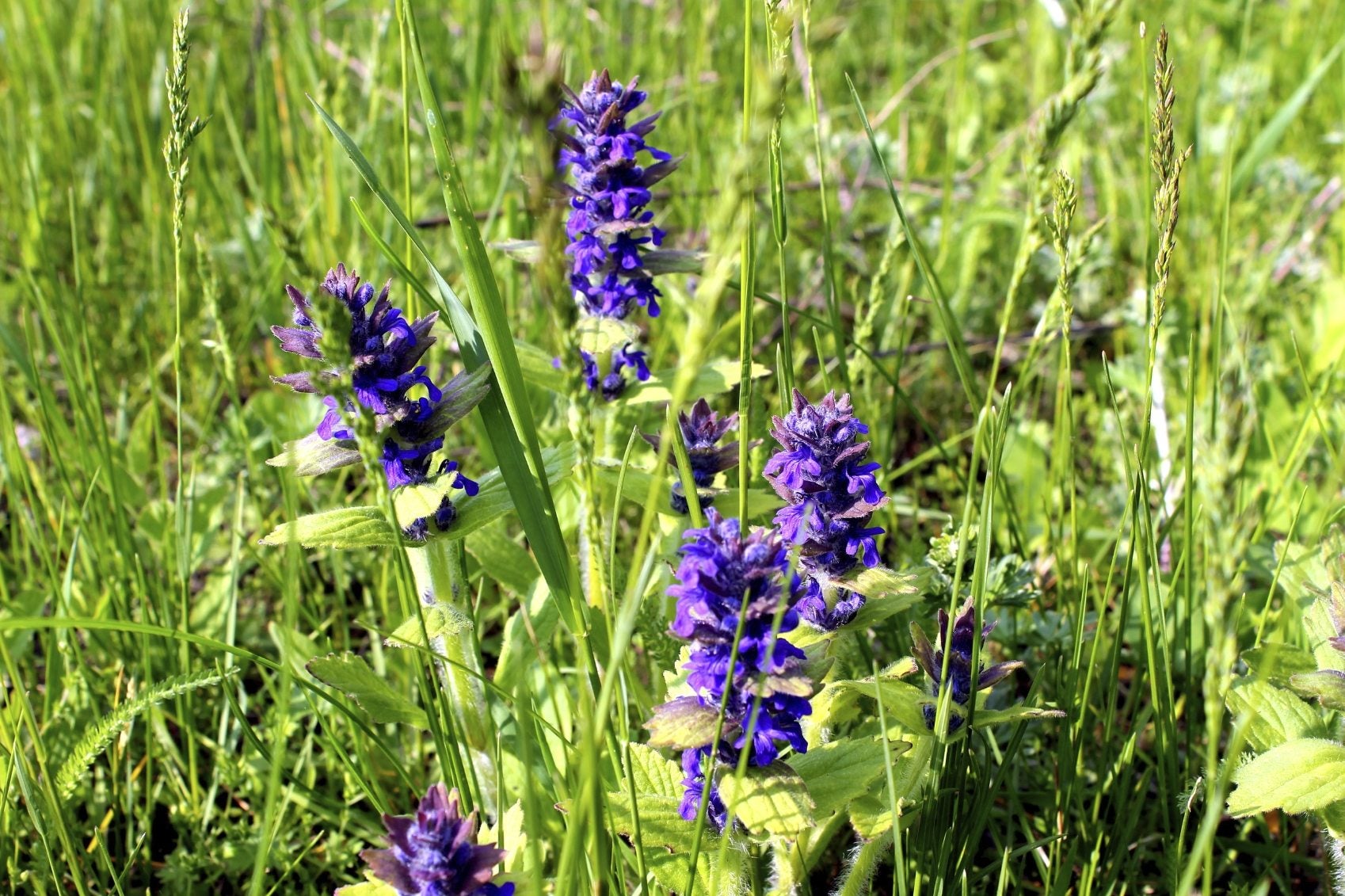
Image Source: cdn.mos.cms.futurecdn.net
Deciphering Ajuga’s Spread
Ajuga’s success in invading lawns stems from its efficient propagation methods. It spreads primarily through runners, also called stolons. These are modified stems that grow horizontally along the soil surface. At nodes along these runners, new plantlets emerge, forming dense mats of vegetation. This rapid horizontal growth allows ajuga to quickly cover ground and outcompete slower-growing lawn grasses.
Runners: The Silent Invaders
The key to Ajuga removal from grass lies in understanding these runners. They are the lifeblood of the plant’s invasion. Each runner is capable of rooting and forming a new plant, meaning a single Ajuga plant can quickly colonize a significant area. These runners can also be fragmented by mowing or foot traffic, with each fragment potentially capable of establishing a new colony. This makes them the primary target for any carpet bugleweed lawn control strategy.
Seed Production: A Secondary Threat
While runners are the primary mode of spread, Ajuga also produces seeds. These seeds are dispersed by wind, water, and even by animals. Seed germination can lead to new Ajuga plants appearing in areas not directly connected to existing colonies, further complicating ** Ajuga weed killer lawn** efforts.
Methods for Ajuga Lawn Control
Getting rid of ajuga permanently requires a robust strategy. Relying on a single method is often insufficient. A successful approach typically involves a combination of physical removal, chemical intervention, and fostering a healthy lawn environment that resists weed invasion.
Manual Removal: The First Line of Defense
For smaller infestations, manual removal can be effective. This method is best suited for early detection and containment.
Steps for Manual Ajuga Removal
- Timing is Key: Perform manual removal when the soil is moist, as this makes it easier to pull the entire plant, including its root system.
- Tools of the Trade: Use a garden trowel, a weeding knife, or a specialized weeding tool to loosen the soil around the Ajuga plants.
- Pulling Strategy: Grasp the Ajuga plant firmly at its base. Pull steadily and consistently upwards. Aim to remove the entire root ball. If the runners are extensive, you may need to follow them to ensure you are getting as much of the plant as possible.
- Disposal: Bag all removed Ajuga material, including the roots and runners. Do not compost this material unless you have a very hot compost pile, as it can resprout and spread further.
Manual removal is labor-intensive, especially for larger areas. However, it’s a crucial step in eliminating ground ivy from lawn areas where chemical use is undesirable or for initial cleanup before other methods.
Chemical Treatments: Targeted Solutions
When manual removal is not feasible or sufficient, chemical treatments become a necessary component of Ajuga invasive plant control. The effectiveness of herbicides depends on their formulation and application.
Selective Herbicides for Ajuga
Selective herbicides are designed to kill specific types of plants while leaving others unharmed. For Ajuga, finding a herbicide that effectively targets broadleaf weeds without damaging your turfgrass is essential.
- Commonly Effective Ingredients: Herbicides containing dicamba, 2,4-D, MCPP (mecoprop), and triclopyr are often effective against broadleaf weeds like Ajuga.
- Product Selection: Always read product labels carefully. Look for herbicides specifically labeled for controlling broadleaf weeds in lawns. Some products are formulated for specific grass types, so ensure compatibility.
- Application Timing: Apply herbicides when Ajuga is actively growing and before it sets seed. This is typically in the spring or early fall. Avoid applying during drought conditions or when temperatures are extremely high, as this can stress your lawn and reduce herbicide efficacy.
- Application Technique:
- Spot Treatment: For scattered Ajuga patches, spot treatment with a spray bottle or backpack sprayer is the most efficient method.
- Even Coverage: Ensure thorough coverage of the Ajuga leaves and stems. Avoid overspray onto desirable plants or hard surfaces.
- Repeat Applications: Ajuga is resilient. You may need to apply the herbicide multiple times, with intervals recommended on the product label, to achieve complete killing ajuga in lawn.
Non-Selective Herbicides: A Last Resort
Non-selective herbicides, like glyphosate, will kill any plant they come into contact with, including your lawn grass. These should only be used with extreme caution for spot treatment in areas where you are willing to reseed or replace the turf.
Important Note on Herbicide Use: Always follow label instructions precisely. Wear appropriate personal protective equipment (PPE) such as gloves, long sleeves, and eye protection. Be mindful of wind drift and the potential impact on nearby non-target plants.
Natural Ajuga Lawn Treatment: Eco-Friendly Options
For those seeking natural ajuga lawn treatment, several methods can be employed, although they may require more patience and persistence.
Vinegar-Based Treatments
Horticultural vinegar (acetic acid with a higher concentration than household vinegar) can act as a contact herbicide.
- How it Works: The acetic acid burns the foliage of the Ajuga plant.
- Application: Spray directly onto the Ajuga leaves on a sunny, dry day.
- Limitations: Horticultural vinegar is non-selective. It will also damage or kill any grass it contacts. Multiple applications are usually necessary, and it primarily affects the top growth, not always the deep root system.
Boiling Water
A simple, yet effective, method for small patches.
- Application: Carefully pour boiling water directly onto the Ajuga plants.
- Effectiveness: This kills the plant on contact. However, like vinegar, it’s non-selective and can harm your lawn grass. It’s best for isolated patches and requires repeated applications.
Corn Gluten Meal
This is more of a pre-emergent, preventing seeds from germinating.
- How it Works: Corn gluten meal releases a natural protein that inhibits root formation in germinating seeds.
- Application: Apply in early spring, before Ajuga seeds have a chance to sprout.
- Limitations: It does not kill existing Ajuga plants. Its effectiveness can be variable, and it requires proper timing and application.
Fostering a Healthy Lawn: The Long-Term Solution
The most effective way to permanently get rid of Ajuga and prevent its return is to cultivate a dense, healthy lawn. Strong, healthy turfgrass naturally outcompetes weeds.
Proper Mowing Practices
- Mow High: Set your mower to a higher setting (typically 3-4 inches for most cool-season grasses). Taller grass shades the soil, discouraging weed seed germination and promoting deeper root growth in your turf.
- Sharp Mower Blades: Ensure your mower blades are sharp. Dull blades tear grass, making it susceptible to disease and stress, which weeds can exploit.
Consistent Watering
- Deep and Infrequent: Water your lawn deeply but infrequently. This encourages grass roots to grow deeper into the soil, making the turf more drought-tolerant and resilient. Shallow, frequent watering promotes shallow roots that are more vulnerable to competition.
- Water in the Morning: Watering in the morning allows the grass blades to dry before nightfall, reducing the risk of fungal diseases.
Regular Fertilization
- Soil Testing: Get a soil test to determine your lawn’s specific nutrient needs.
- Balanced Feeding: Fertilize your lawn according to soil test recommendations and the specific needs of your grass type. Proper fertilization promotes vigorous growth and a dense turf that can resist weed encroachment.
Aeration and Dethatching
- Aeration: Over time, soil can become compacted, hindering root growth and water penetration. Aerating your lawn creates small holes, allowing air, water, and nutrients to reach the root zone. This is particularly helpful in breaking up the dense mat Ajuga can form.
- Dethatching: A thick layer of thatch (dead grass stems and roots) can suffocate the lawn and create an ideal environment for weeds. Dethatching removes this layer, allowing for better air and water exchange.
These practices are crucial for Ajuga ground cover removal by creating an environment where turfgrass thrives and naturally suppresses weed growth.
Addressing Persistent Ajuga Challenges
Some Ajuga infestations are particularly stubborn. This is where understanding the different aspects of Ajuga removal from grass becomes critical.
Combination Strategies for Tough Cases
For severe infestations of invasive ajuga in lawn, a combination approach is often the most effective.
- Initial Cleanup: Manually remove as much of the visible Ajuga as possible, focusing on getting the roots and runners.
- Selective Herbicide Application: Follow up with a targeted application of a selective herbicide to kill any remaining or newly emerging Ajuga.
- Lawn Renovation: In very heavily infested areas, it might be necessary to renovate the lawn. This could involve killing the entire area with a non-selective herbicide, followed by soil preparation and reseeding with a dense, vigorous turfgrass variety.
Timing and Persistence
- Spring and Fall Focus: The best times to tackle Ajuga are spring and fall, when the plant is actively growing but before it sets seed.
- Patience is Virtuous: Remember that killing ajuga in lawn permanently is a marathon, not a sprint. It may take several seasons of consistent effort to achieve complete control.
Table: Ajuga Control Methods at a Glance
| Method | Pros | Cons | Best For |
|---|---|---|---|
| Manual Removal | Environmentally friendly, no chemicals, good for small areas. | Labor-intensive, can miss roots, not practical for large infestations. | Early detection, small patches, organic methods |
| Selective Herbicide | Targets weeds specifically, effective on established plants. | Requires careful application, may need repeat treatments, potential for drift. | Moderate to large infestations, broadleaf weed control |
| Non-Selective Herbicide | Very effective at killing all vegetation. | Kills desirable plants, requires careful spot treatment and reseeding. | Complete renovation, isolated stubborn patches |
| Natural Treatments (Vinegar, Boiling Water) | Chemical-free, readily available. | Non-selective, requires multiple applications, may not kill roots. | Very small, isolated patches, organic focus |
| Healthy Lawn Practices | Prevents recurrence, improves overall lawn health, sustainable. | Long-term commitment, doesn’t kill existing weeds immediately. | Long-term Ajuga invasive plant control |
Frequently Asked Questions About Ajuga Control
Q1: Is Ajuga hard to get rid of?
A1: Yes, Ajuga can be challenging to get rid of permanently because it spreads aggressively via runners and seeds. It requires consistent effort and often a combination of methods.
Q2: Can I use a weed killer on Ajuga in my lawn?
A2: Yes, you can use a weed killer. Look for selective herbicides labeled for broadleaf weed control in lawns. Always follow the product instructions carefully.
Q3: Will corn gluten meal kill Ajuga?
A3: Corn gluten meal is a pre-emergent and can help prevent Ajuga seeds from germinating. It will not kill existing Ajuga plants.
Q4: How can I prevent Ajuga from coming back after I remove it?
A4: The best prevention is to maintain a dense, healthy lawn through proper mowing, watering, and fertilization. Aeration and dethatching also help improve turf health and discourage weeds.
Q5: Is Ajuga considered an invasive species?
A5: In many regions, Ajuga is considered an invasive or noxious weed due to its aggressive spreading habits that can outcompete native plants and desirable turfgrasses. This is why Ajuga ground cover removal is often necessary.
By implementing a comprehensive strategy that combines diligent manual removal, targeted chemical applications when necessary, and a commitment to nurturing a robust lawn, you can effectively achieve permanent Ajuga removal from grass and enjoy a weed-free lawn.