
What is the best way to measure lawn size? The best way to measure lawn size depends on its shape, but generally involves breaking down complex areas into simpler geometric shapes and using basic measuring tools.
Knowing your lawn’s exact size is crucial for many outdoor projects, from buying enough grass seed to ordering the right amount of sod or mulch. It also helps when planning landscaping, installing sprinklers, or even getting an accurate quote for lawn care services. This comprehensive guide will walk you through various lawn measurement techniques and help you calculate lawn area with confidence. We’ll cover everything from the basic tools you’ll need to estimating lawn size for tricky, irregular shapes.
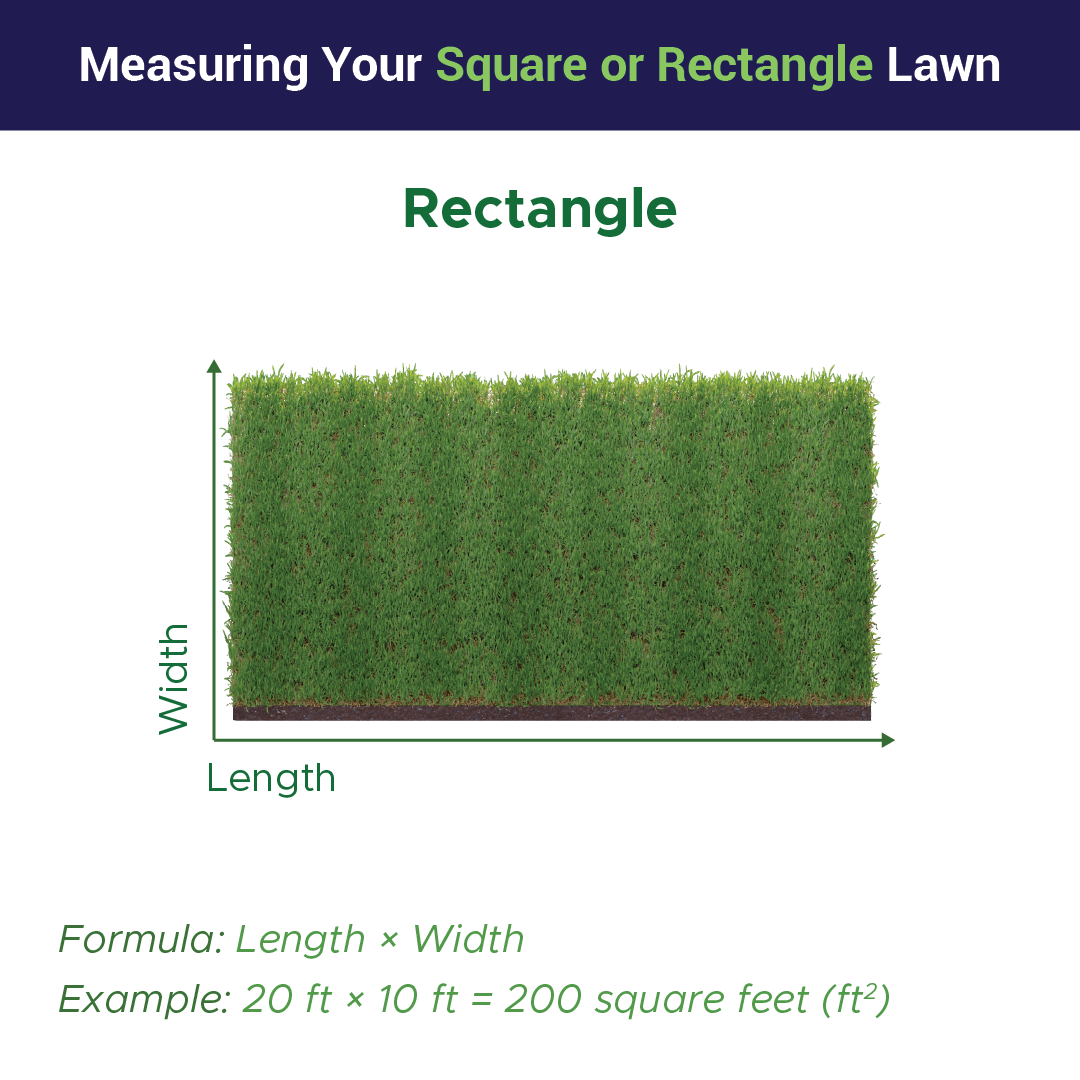
Image Source: lawntolakemidwest.org
Why Measuring Your Lawn Matters
Before diving into the “how,” let’s briefly touch on the “why.” Accurately determining your square footage of lawn is more than just a number; it’s the foundation for informed decisions.
- Purchasing Supplies: Whether it’s grass seed, fertilizer, weed killer, or mulch, knowing the exact area prevents over-buying (wasteful and costly) or under-buying (leading to incomplete projects and repeat trips).
- Landscaping Projects: Designing a new garden bed, installing a patio, or adding a sprinkler system all require precise measurements for materials and labor.
- Lawn Care Services: Companies often quote prices based on the size of your lawn. Having your own measurement allows you to compare quotes and ensure fairness.
- Watering and Fertilizing: Understanding your lawn’s area helps you apply water and nutrients at the correct rates, promoting healthier growth and preventing over-application, which can harm your lawn and the environment.
Essential Tools for Measuring Lawn
You don’t need expensive equipment to measure your lawn. Here are some of the most useful tools for measuring lawn:
- Measuring Tape: A long tape measure (50-100 feet) is indispensable. A metal tape measure is often more durable.
- Measuring Wheel (or Surveyor’s Wheel): This is excellent for covering long distances quickly and accurately, especially for larger or more irregularly shaped lawns.
- Stakes or Markers: Small flags, stakes, or even rocks can be used to mark corners or key points of your lawn as you measure.
- Notebook and Pen/Pencil: To record your measurements as you go.
- Calculator: For performing calculations, especially when dealing with complex shapes.
- Smartphone Apps: Many apps are available that use GPS or your phone’s camera to help measure areas. While convenient, their accuracy can vary, especially in areas with poor GPS signal or around obstacles.
Measuring Rectangular and Square Lawns
The most straightforward lawn measurement techniques apply to simple geometric shapes.
Measuring a Rectangular Lawn
This is the easiest scenario. You’ll need to determine the length and width of your lawn.
Steps:
- Identify the Corners: Locate the four corners of your rectangular lawn.
- Measure the Length: Place the end of your measuring tape at one corner and extend it straight along one of the longer sides to the opposite corner. Record this measurement.
- Measure the Width: Repeat the process for one of the shorter sides, measuring from one corner to the adjacent corner. Record this measurement.
-
Calculate the Area: To calculate lawn area, multiply the length by the width.
-
Formula: Area = Length × Width
-
Example: If your lawn is 50 feet long and 30 feet wide:
Area = 50 ft × 30 ft = 1500 square feet.
-
Measuring a Square Lawn
A square is a special type of rectangle where all sides are equal.
Steps:
- Identify the Corners: Locate the four corners of your square lawn.
- Measure One Side: Since all sides are equal, measure just one side from corner to corner. Record this measurement.
-
Calculate the Area: Square the length of the side.
-
Formula: Area = Side × Side (or Side²)
-
Example: If your lawn is 40 feet on each side:
Area = 40 ft × 40 ft = 1600 square feet.
-
Measuring L-Shaped and Other Polygon Lawns
Many lawns aren’t perfect rectangles or squares. They might have corners that jut out or recede, creating more complex shapes like L-shapes or polygons. The key here is to break down the complex shape into simpler, manageable geometric figures.
Breaking Down Complex Shapes
The general strategy for estimating lawn size for non-rectangular areas is to divide the entire area into a series of rectangles, squares, or triangles.
Measuring an L-Shaped Lawn
An L-shaped lawn can be divided into two rectangles in two ways.
Method 1: Divide into Two Rectangles (Horizontal Split)
- Visualize the Split: Imagine drawing a line across the lawn to create two separate rectangular areas.
- Measure Rectangle 1: Measure the length and width of the first rectangular section.
- Measure Rectangle 2: Measure the length and width of the second rectangular section.
- Calculate Areas: Calculate the area of each rectangle using Area = Length × Width.
- Sum the Areas: Add the areas of the two rectangles together to get the total lawn area.
Method 2: Divide into Two Rectangles (Vertical Split)
- Visualize the Split: Imagine drawing a line down the lawn to create two separate rectangular areas.
- Measure Rectangle 1: Measure the length and width of the first rectangular section.
- Measure Rectangle 2: Measure the length and width of the second rectangular section.
- Calculate Areas: Calculate the area of each rectangle.
- Sum the Areas: Add the areas of the two rectangles together.
Table: Example L-Shaped Lawn Measurement
Let’s say your L-shaped lawn looks like this:
| Section | Length (ft) | Width (ft) | Area (sq ft) |
|---|---|---|---|
| Main Body | 60 | 20 | 1200 |
| Extended Arm | 30 | 15 | 450 |
| Total | 1650 |
Note: Ensure that when you measure, you are measuring the exterior dimensions to ensure you capture the entire area. If you measure internal sections, be careful not to double-count or miss any parts.
Measuring Other Polygon Shapes
For lawns with more than four sides (pentagons, hexagons, etc.), you’ll use the same principle of breaking them down into simpler shapes like rectangles, squares, and triangles.
Steps:
- Sketch Your Lawn: Draw a rough sketch of your lawn on paper.
- Divide into Triangles and Rectangles: Use your sketch to plan how to divide the lawn into smaller, recognizable shapes. You can often use stakes to mark where you’ll make your imaginary divisions.
- Measure Each Section: Carefully measure the dimensions of each created rectangle, square, or triangle.
- Rectangles/Squares: Length × Width
- Triangles: (Base × Height) / 2. You might need to measure a diagonal to find the base and then measure perpendicular to that base to find the height.
- Calculate Area of Each Section: Calculate the area for each individual shape.
- Sum All Areas: Add up the areas of all the small shapes to get your total lawn area.
Measuring Irregularly Shaped Lawns
The most challenging but common scenario is a lawn with curves, bays, or no straight lines at all. Here are effective lawn measurement techniques for measuring irregular lawn areas.
Using a Measuring Wheel for Curves
A measuring wheel is particularly useful for following curved boundaries.
Steps:
- Start at a Point: Place the wheel at a starting point along the edge of your lawn.
- Follow the Curve: Slowly roll the wheel along the edge of the lawn, keeping the wheel as close to the boundary as possible. If the boundary is very complex, you might need to make small adjustments to keep the wheel on track.
- Record Distance: Note the total distance the wheel travels along the entire perimeter.
- Estimate Width: This is where it gets tricky. For very irregular shapes, you’ll need to approximate an average width. You can do this by taking several measurements of the width at different points across the lawn and averaging them.
- Calculate Area: For a rough estimate, you can multiply the perimeter by the average width, but this isn’t very accurate. A better approach is to subdivide the irregular shape.
Subdividing Irregular Shapes into Simpler Sections
This is often the most accurate method for measuring irregular lawn areas.
- Sketch and Divide: Draw a sketch of your lawn. Imagine or use stakes to mark out sections that can be approximated as rectangles, triangles, or even trapezoids (four-sided figures with two parallel sides).
- Measure Each Section:
- Rectangular/Square Sections: Measure length and width.
- Triangular Sections: Measure base and perpendicular height.
- Trapezoidal Sections: Measure the lengths of the two parallel sides (a and b) and the perpendicular distance between them (height, h). The area of a trapezoid is ((a + b) / 2) × h.
- Calculate and Sum: Calculate the area of each section and add them all together.
Tip for Curved Edges: For sections with curved edges, you can approximate them by using a series of short, straight lines, creating small triangles or trapezoids. The more lines you use, the more accurate your measurement will be.
Using Online Tools and Apps
There are many online lawn area calculator tools and smartphone apps that can assist you.
- Google Earth Pro: This desktop application (free) allows you to draw polygons on satellite imagery. You can trace the outline of your lawn and it will automatically calculate the area. Ensure you are using a recent image and be as precise as possible when tracing.
- Smartphone Apps: Search your app store for “lawn measurement app” or “area calculator.” Many allow you to walk the perimeter of your lawn while the app records your GPS path and calculates the area.
- Pros: Convenient, can be quick.
- Cons: Accuracy can be affected by tree cover, buildings, and GPS signal strength. It’s best to use these as a starting point or for a general estimate and verify with manual measurements if precision is critical.
Determining Lawn Dimensions and Calculating Area: A Systematic Approach
Let’s consolidate the process into a clear, step-by-step approach that works for most situations.
Step 1: Preparation
- Gather your tools: Measuring tape, measuring wheel, stakes, notebook, pen, and calculator.
- Clear obstacles: If possible, remove garden furniture, toys, or debris that might obstruct your measurements.
- Walk the perimeter: Get a feel for the shape and boundaries of your lawn.
Step 2: Sketch Your Lawn
- Draw a rough outline of your lawn on paper. Don’t worry about perfect scale, just the general shape.
- Identify any straight lines, curves, or distinct features.
Step 3: Divide and Conquer (for Complex Shapes)
- On your sketch, plan how you will divide the lawn into simpler geometric shapes (rectangles, squares, triangles, trapezoids).
- Mark these divisions on the ground with stakes if it helps you visualize.
Step 4: Measure Each Section
- For Rectangles/Squares: Measure the length and width.
- For Triangles: Measure the base and the perpendicular height.
- For Trapezoids: Measure the two parallel sides and the perpendicular height.
- For Curves:
- If using a measuring wheel, follow the curve precisely.
- If subdividing, approximate curves with a series of short straight lines, forming many small triangles or trapezoids. Measure each of these segments.
Step 5: Record All Measurements
- Write down every measurement clearly in your notebook, indicating which section it belongs to.
- Note the units (e.g., feet, yards).
Step 6: Calculate the Area of Each Section
- Use the appropriate area formulas:
- Rectangle/Square:
Area = Length × Width - Triangle:
Area = (Base × Height) / 2 - Trapezoid:
Area = ((Side A + Side B) / 2) × Height
- Rectangle/Square:
Step 7: Sum the Areas
- Add up the areas of all the individual sections to calculate lawn area. This gives you the total square footage of lawn.
Step 8: Convert Units (If Necessary)
- If your project requires measurements in square yards (common for sod) or acres, perform the necessary conversions:
- 1 square yard = 9 square feet
- 1 acre = 43,560 square feet
Converting Between Units
It’s important to be aware of the units you are using and how to convert them.
| Unit | Conversion Factor |
|---|---|
| Square Foot | 1 sq ft |
| Square Yard | 9 sq ft (1 sq yd = 3 ft x 3 ft) |
| Acre | 43,560 sq ft |
Example Conversion: If your lawn measures 1650 square feet and you need to buy sod, which is sold by the square yard:
- Square Yards = 1650 sq ft / 9 sq ft/sq yd = 183.33 square yards.
You would likely round up to 184 square yards to account for any slight inaccuracies or waste.
Estimating Lawn Size When Precision Isn’t Paramount
Sometimes, you just need a rough idea of your lawn’s size for a quick estimate.
- Estimate Overall Dimensions: Take a quick look at the overall length and width of your property.
- Approximate Shape: Consider if it’s roughly rectangular or more irregular.
- Quick Calculation:
- For a roughly rectangular lawn:
Length × Width. - For an irregular lawn: Break it into a few larger sections and estimate their shapes and sizes. For instance, if you have a large front yard and a smaller backyard, estimate each separately.
- For a roughly rectangular lawn:
- Add a Buffer: When estimating lawn size, it’s wise to add a little extra percentage (e.g., 10-15%) to your estimate to account for any missed areas or complexities.
While these methods are less precise, they can be sufficient for initial budgeting or getting ballpark figures from lawn care professionals.
Frequently Asked Questions (FAQ)
Q: How do I measure a lawn with many trees and flower beds?
A: You’ll need to measure around these obstacles. Treat the areas occupied by trees or flower beds as separate shapes (often circles or irregular polygons). Calculate their areas and subtract them from the total area of the property if you want the grass-only area. If you’re measuring the entire plot for landscaping, include these areas in your overall subdivision.
Q: Can I measure my lawn with my phone’s GPS?
A: Yes, many apps use GPS to measure areas. However, accuracy can vary significantly due to signal interference from buildings, trees, and even weather conditions. It’s a good tool for a quick estimate, but for precise measurements, manual methods are generally more reliable.
Q: What is the best way to measure a perfectly circular lawn?
A: To calculate lawn area for a circle, you need to measure its radius (the distance from the center to the edge). Measure from the center to several points on the edge and average them for the radius (r). The formula is Area = π * r², where π (pi) is approximately 3.14159.
Q: My property has a slope. Does that affect lawn measurement?
A: For the purpose of calculating square footage of lawn, the slope does not typically affect the measurement itself, as you are measuring the surface area. However, it can impact how much seed, sod, or mulch you might need due to water runoff and soil settling. When measuring, ensure your tape measure follows the contour of the ground as closely as possible.
Q: Do I need to measure in feet or yards?
A: It depends on what you’re buying or planning. Grass seed and fertilizers are often sold by weight or coverage area in square feet. Sod is frequently sold by the square yard. Knowing how to convert between square feet and square yards (1 sq yd = 9 sq ft) is essential.
Q: What if my lawn has a curved boundary along a fence or property line?
A: Follow the curve as closely as possible with your measuring tape or measuring wheel. If the curve is smooth, you can approximate it with a series of short, straight measurements. For a more accurate calculation, you can break the curved section into small triangles or trapezoids and sum their areas.
By following these lawn measurement techniques, you’ll be well-equipped to accurately determine your lawn’s size, making any future projects or purchases much simpler and more cost-effective. Knowing your lawn dimensions is the first step to a beautiful and well-maintained yard.