
How much sand do I need to level my lawn? To figure this out, you’ll need to measure the area of your lawn and the depth of the low spots you want to fill. For example, a 100 square foot area with a 1-inch low spot requires about 0.8 cubic feet of sand.
Achieving a perfectly flat lawn can make a big difference. It’s not just about looks; a level lawn drains better, prevents puddles, and makes mowing easier. But how do you get there? Often, the answer involves adding sand. This guide will walk you through everything you need to know about using sand for lawn leveling, from calculating the amount you need to choosing the right type of sand.
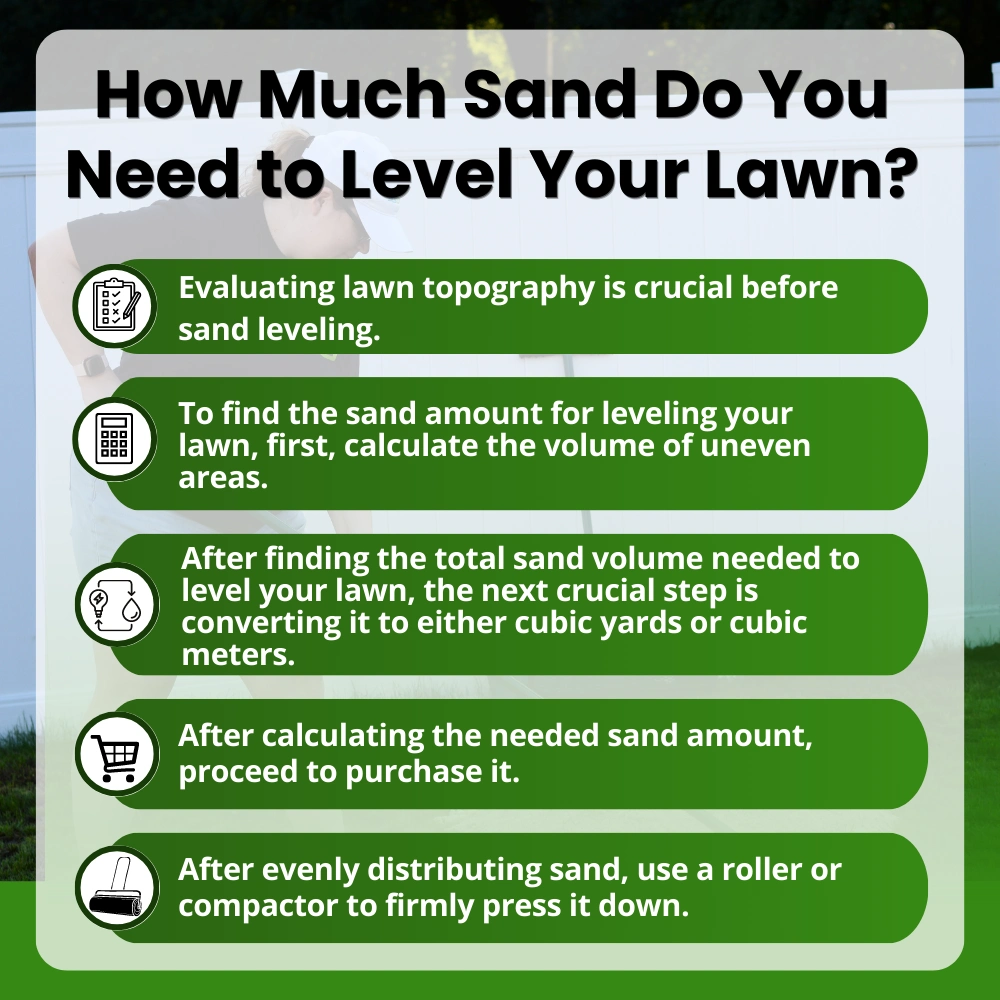
Image Source: landzie.com
Why Level Your Lawn with Sand?
Uneven lawns can be frustrating. They collect water, creating mosquito breeding grounds and harming grass. They can also be tripping hazards. Sand is a popular lawn leveling material because it’s readily available, relatively inexpensive, and helps improve drainage. When you’re looking at lawn renovation soil options, sand often plays a key role in creating a smooth, healthy surface.
Benefits of a Level Lawn:
- Improved Drainage: Water flows away from the surface, preventing waterlogged areas and root rot.
- Easier Mowing: A flat surface allows your mower to cut evenly, promoting healthier grass growth.
- Reduced Tripping Hazards: Safety is important, especially if children or pets use your yard.
- Better Aesthetic Appeal: A smooth, even lawn looks much more attractive.
- Healthier Grass Growth: Even moisture distribution encourages stronger root systems.
Deciphering Your Lawn’s Needs: Measuring the Low Spots
Before you buy any sand to fill low spots, you need to know how much you actually need. This involves a bit of measuring and simple math. You’ll be looking at the square footage of the area you need to level and the average depth of the depressions.
Tools You’ll Need:
- Measuring tape
- Stakes or markers
- A long, straight board or level
- A notepad and pen for recording measurements
Steps to Measure:
- Identify Low Spots: Walk your lawn and identify the areas that consistently collect water or are noticeably lower than the surrounding grass.
- Mark the Area: Use stakes or markers to outline the specific sections you intend to level. You might be leveling the entire lawn or just a few problematic areas.
- Measure the Area: Measure the length and width of each marked section. Multiply these numbers to get the square footage for each low spot. If you’re leveling the whole lawn, measure its total length and width.
- Determine Depth: Place a long, straight board or level across the low spot, resting on the higher ground on either side. Use a ruler or measuring tape to determine the depth of the low spot at several points.
- Calculate Average Depth: If the low spot isn’t uniform, take multiple depth measurements and calculate an average. For example, if you measure 1 inch, 2 inches, and 1 inch in three spots, the average depth is (1+2+1)/3 = 1.33 inches.
This process helps you estimate your topsoil depth needs, even if you’re primarily using sand.
Calculating the Amount of Sand Needed
Once you have your measurements, you can start calculating. This is where a lawn soil calculator or some basic math comes in handy. The key is to convert your measurements into cubic feet or cubic yards, which is how sand is typically sold.
Understanding Volume Calculation:
Volume is measured in three dimensions: length, width, and depth. The formula is:
Volume = Length × Width × Depth
Converting Units:
- Inches to Feet: Since measurements are often in inches but sand is sold in cubic feet or yards, you’ll need to convert. There are 12 inches in a foot. So, to convert inches to feet, divide by 12.
- Example: 1 inch = 1/12 feet ≈ 0.083 feet
- Example: 2 inches = 2/12 feet ≈ 0.167 feet
- Cubic Feet to Cubic Yards: There are 27 cubic feet in 1 cubic yard. To convert cubic feet to cubic yards, divide by 27.
Estimating Topsoil Needs (or Sand Needs):
Let’s say you have a low spot that is 10 feet long and 5 feet wide, and it needs to be filled to an average depth of 1 inch.
- Area: 10 feet × 5 feet = 50 square feet
- Depth in Feet: 1 inch / 12 inches/foot = 0.083 feet
- Volume in Cubic Feet: 50 sq ft × 0.083 ft = 4.15 cubic feet
So, you’ll need approximately 4.15 cubic feet of sand for this specific low spot.
If you need to level a larger area, you’ll repeat this for each section or for the total lawn area if you’re doing a general top dressing.
How Much Soil Per Square Foot?
A common guideline for top dressing or leveling with sand is to apply it at a rate of about 1 cubic foot per 100 square feet for a light application (around 1/8 inch). For leveling low spots, you’ll need more.
Using a Table for Quick Estimates:
Here’s a handy table to help you estimate how much soil per square foot (or sand) you need for a 1-inch layer:
| Area (sq ft) | Depth (inches) | Volume (Cubic Feet) | Volume (Cubic Yards) |
|---|---|---|---|
| 100 | 1 | 8.33 | 0.31 |
| 200 | 1 | 16.67 | 0.62 |
| 500 | 1 | 41.67 | 1.54 |
| 1000 | 1 | 83.33 | 3.09 |
Note: These are approximate figures. It’s always good to buy a little extra.
For a 2-inch depth, simply double the cubic feet and cubic yards listed.
Choosing the Right Sand for Your Lawn
Not all sand is created equal when it comes to lawn care. The best soil for leveling is often a specific type of sand that mixes well with your existing soil and promotes good drainage without becoming compacted.
Types of Sand to Consider:
- Coarse Sand (Horticultural Sand): This is generally the best choice. It has larger grains, which prevents compaction and allows for good aeration and drainage. It’s often screened to remove fine particles.
- Builder’s Sand or Play Sand: While these can be used, they are often finer than horticultural sand. Finer sand can compact more easily, potentially hindering drainage if applied too thickly or if the existing soil is clay-heavy. If using these, try to find options that are washed and screened.
- Avoid Sharp Sand or Gritty Sand: These can be too abrasive and may not break down or mix well with your soil.
What to Avoid:
- Salt Sand: This is treated with chemicals for de-icing and will harm your grass.
- Sand with Too Many Fines: Very fine sand particles can clog soil pores, leading to poor drainage and aeration, the opposite of what you want.
The Process: Step-by-Step Leveling
Applying sand to your lawn is a process that requires some effort but yields rewarding results. Proper application is key to success.
Step-by-Step Guide:
- Prepare the Area: Mow your lawn to a shorter height than usual. This makes it easier to work with the soil and for the sand to settle. Rake the area to remove any debris, thatch, or loose grass. For deeper low spots, you might need to scrape away some existing grass before adding sand.
- Apply the Sand:
- For Small Low Spots: Use a shovel to spread the calculated amount of sand into the depressions.
- For Larger Areas: You can use a wheelbarrow and a rake to distribute the sand evenly. Consider using a spreader if you’re doing a light top dressing over a large area.
- Level the Sand: Use a rake or a leveling board (a long, straight piece of wood) to spread the sand evenly across the low spot. Ensure the sand is blended with the existing soil surface, creating a smooth transition. Aim to fill the low spot so it’s flush with the surrounding lawn.
- Incorporate the Sand:
- Light Layer: For thin layers (1/4 inch or less), you can often just water the area thoroughly, and the sand will start to settle.
- Thicker Layers (more than 1/2 inch): It’s best to gently rake the sand into the top inch or two of the existing soil. This helps prevent the sand from forming a layer that sheds water or hinders root growth. You can also use a garden fork to lightly aerate the soil before adding and raking the sand.
- Overseed (Optional but Recommended): After leveling and incorporating the sand, especially in deeper fills, it’s a good idea to overseed the leveled areas. The sand provides a good seedbed. Rake the seeds in lightly.
- Water Thoroughly: Water the newly leveled and seeded areas gently but thoroughly. Keep the soil consistently moist until the grass is established.
- Ongoing Maintenance: Continue to water, mow, and fertilize as usual.
Sand vs. Topsoil for Leveling: When to Use Which
While sand is excellent for filling low spots and improving drainage, it’s not always the sole solution for lawn renovation soil. Often, a combination of sand and topsoil depth management is best.
When to Use Sand:
- Filling Shallow Depressions: Sand is ideal for filling minor dips that collect water.
- Improving Drainage: If your soil is heavy clay, adding a layer of sand can help break it up and improve water infiltration.
- Top Dressing: A light layer of sand mixed with compost can improve soil structure and drainage across the entire lawn.
When to Use Topsoil:
- Significant Grade Changes: If you have very large dips or significant slopes that need reshaping, you might need more topsoil than sand.
- Building New Soil Layers: Topsoil provides essential nutrients and organic matter that sand lacks.
- When Mixing with Sand: A common and effective soil amendment calculation involves mixing sand with compost or good quality topsoil. This blend offers the benefits of drainage and aeration from sand, plus the nutrients and structure from organic matter. A common mix is 70-80% sand and 20-30% compost.
Soil Amendment Calculation:
If you decide to mix sand with compost, you’ll adjust your calculations accordingly. For example, if you need 10 cubic feet of material to fill a low spot and want a 70/30 sand-to-compost mix:
- Sand needed: 10 cubic feet × 0.70 = 7 cubic feet
- Compost needed: 10 cubic feet × 0.30 = 3 cubic feet
This approach provides a more balanced lawn renovation soil amendment.
Estimating Topsoil Needs and Lawn Leveling Materials
When you’re embarking on a large-scale lawn renovation soil project, accurately estimating your needs is crucial. You don’t want to run out of materials halfway through, nor do you want to be left with excess.
Factors Influencing Material Needs:
- Size of the Area: Larger lawns naturally require more material.
- Severity of Unevenness: Deep potholes require more fill than minor dips.
- Type of Material: Sand has a different density and volume-to-weight ratio than topsoil or compost.
- Desired Outcome: A light top dressing is different from filling deep ruts.
Tools and Resources:
- Online Lawn Soil Calculators: Many gardening websites offer lawn soil calculators that can help you estimate material needs based on your lawn’s dimensions and the desired application rate.
- Local Garden Centers: Staff at your local garden center or landscape supply yard can offer advice and help you estimate quantities based on the products they sell.
- Bulk Delivery vs. Bags: For larger projects, buying sand and soil in bulk from a landscape supplier is usually more cost-effective than buying bags.
When purchasing, ensure you are buying lawn leveling materials suitable for your climate and soil type.
Common Mistakes to Avoid
Even with the best intentions, leveling a lawn can sometimes go wrong. Here are a few common pitfalls to steer clear of:
- Using the Wrong Type of Sand: As mentioned, fine sand can lead to compaction.
- Applying Sand Too Thickly: Covering healthy grass with more than 1/2 inch of sand at a time can suffocate it. If you need to add more, do it in stages over several weeks or months.
- Not Raking or Incorporating: Simply dumping sand on top of a low spot can create a “bowl” effect, where water pools on top of the sand layer.
- Forgetting to Overseed: Leveling can disturb existing grass, so overseeding helps fill in any bare patches.
- Ignoring Drainage: If your lawn has persistent drainage problems, leveling with sand might be a temporary fix. You might need to address underlying drainage issues as well.
- Over-leveling: Aim for a smooth surface, not a perfectly flat, sterile tabletop. Some gentle contours are natural and beneficial.
Frequently Asked Questions (FAQ)
Q1: Can I level my entire lawn with sand?
Yes, you can do a light top dressing with sand (mixed with compost) over the entire lawn. This helps improve soil structure and drainage. However, for significant leveling of large areas or to fill deep depressions across the whole lawn, you’ll likely need a combination of sand and topsoil, or focus on specific problem areas. Applying more than 1/2 inch of sand at once can harm your existing grass.
Q2: How often should I level my lawn?
Leveling is typically done as needed. If you notice persistent puddles or uneven areas, it’s time to address them. A light top dressing of sand and compost can be done annually or bi-annually to maintain soil health and a smoother surface.
Q3: Will leveling my lawn kill my grass?
If done correctly, leveling should not kill your grass. Applying sand in thin layers (1/4 to 1/2 inch) and gently raking it into the soil is usually safe. If you are filling very deep spots, you might need to remove the existing sod in that area first, add your leveling material, and then reseed or sod.
Q4: What is the best time of year to level my lawn?
The best times to level your lawn are typically in the early spring or early fall, when temperatures are mild and there’s adequate moisture for grass growth. This allows the grass to recover and establish itself in the newly leveled areas.
Q5: How much does it cost to level a lawn with sand?
The cost varies depending on the size of your lawn, the amount of sand needed, and whether you buy in bulk or bags. Sand can range from $3-$10 per bag (0.5 cubic feet) to $20-$50 per cubic yard when purchased in bulk. Labor costs can add significantly if you hire a professional.
Conclusion
Levelling your lawn can transform its appearance and health. By carefully measuring your low spots, calculating your soil amendment calculation, and choosing the right lawn leveling materials, you can achieve a smooth, well-draining, and attractive yard. Remember, patience and proper technique are key, and a little planning goes a long way in making your lawn renovation soil project a success. Whether you’re using sand to fill low spots or incorporating it as part of a broader lawn soil calculator-driven approach, a level lawn is within your reach.