
What is lawn striping? Lawn striping is the art of creating patterns and designs on your lawn by mowing. These patterns are made by bending the grass blades in different directions, which reflects light differently. This creates alternating bands of light and dark, giving your lawn a polished, professional look. Can I create these patterns on any lawn? Yes, you can create lawn patterns on most lawns with healthy grass, but the effect is most dramatic on well-maintained turf with even growth. Who is lawn striping for? Lawn striping is for anyone who wants to enhance the visual appeal of their yard, from homeowners looking to impress neighbors to sports field managers aiming for pristine playing surfaces.
Achieving perfect stripes on your lawn is a rewarding endeavor that transforms an ordinary yard into a visually stunning masterpiece. It’s more than just cutting grass; it’s about using your mower to create beautiful, eye-catching designs. This guide will delve into the techniques, tools, and tips needed to master lawn striping and achieve those coveted professional lawn stripes.
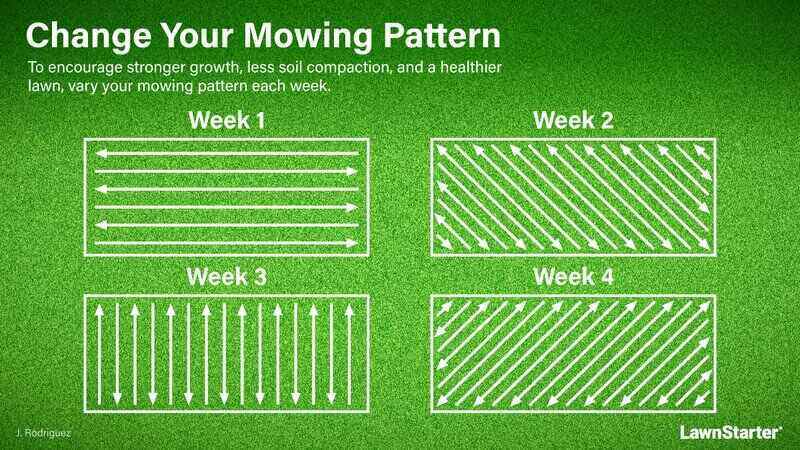
Image Source: www.lawnstarter.com
The Magic Behind Mower Stripes
The captivating visual of mower stripes isn’t an illusion created by different colored grass. Instead, it’s a clever play of light and shadow on your grass blades. When you mow, the mower’s roller (or the bending action of the grass itself) pushes the grass blades down.
- Light Stripes: Grass blades bent away from your viewing angle reflect light back towards you, appearing lighter.
- Dark Stripes: Grass blades bent towards your viewing angle absorb more light and appear darker.
The key to achieving distinct stripes is to consistently bend the grass blades in opposite directions in adjacent passes. This creates a sharp contrast that defines your patterns.
Mastering Basic Lawn Striping Techniques
The foundation of beautiful lawn patterns lies in the simple technique of alternating direction mowing. This is the most fundamental approach to creating stripes and is accessible to any lawn owner.
The Checkerboard Pattern
The checkerboard is perhaps the most popular and easiest geometric lawn pattern to achieve. It involves creating a grid of alternating light and dark stripes across your lawn.
Steps to a Checkerboard Lawn:
- Prepare Your Mower: Ensure your mower has a roller. If not, you might consider attaching a roller or using a specialized striping kit.
- Start at the Edge: Begin mowing along one edge of your lawn. Mow in a straight line, pushing the mower all the way to the end.
- Turn and Reverse: When you reach the end of the row, lift the mower deck slightly (if your mower allows) and reverse the mower back to the starting edge. Do not mow backward; this can create uneven stripes.
- Next Pass – Opposite Direction: Turn your mower and mow the next strip parallel to the first, but in the opposite direction. This ensures the grass blades are bent away from the previous stripe.
- Continue Alternating: Repeat this process, alternating direction with each pass. You are essentially creating alternating bands of grass bent away from you (light) and towards you (dark).
- Refine Edges: Pay attention to the edges of your lawn and any obstacles. You may need to use a walk-behind mower for tight areas or around landscaping.
Tips for Perfect Checkerboard Stripes:
- Mow When the Grass is Dry: Wet grass clumps and doesn’t bend as cleanly, leading to fuzzy stripes.
- Mow at the Right Height: Cutting too short can damage the grass. Consult the recommended mowing height for your grass type.
- Sharp Mower Blades: Dull blades tear the grass, leading to browning and uneven stripes. Sharpen your blades regularly.
- Consistent Speed: Mow at a steady pace to ensure consistent bending of the grass blades.
The Diagonal Stripe
For a more dynamic look, consider diagonal stripes. This adds a sophisticated flair to your lawn.
Steps to Diagonal Stripes:
- Choose Your Angle: Decide on the angle you want your stripes to run. This could be from corner to corner or at a specific angle across the lawn.
- First Pass: Start at one corner and mow in a straight diagonal line.
- Subsequent Passes: For the next pass, turn your mower and mow parallel to the first stripe, but in the opposite direction. This means you’ll be backing up the mower to get into position for the next strip, similar to the checkerboard technique.
- Follow the Pattern: Continue mowing parallel passes, alternating direction, until the entire lawn is covered.
- Edge Work: Use a string trimmer to neaten the edges where the diagonal stripes meet boundaries or sidewalks.
The Concentric Circles and Spirals
These patterns are more advanced and require careful maneuvering of your mower. They create a stunning focal point, especially in the center of the lawn.
Steps to Concentric Circles:
- Start from the Center: Identify the center of your lawn or the point from which you want the circles to radiate.
- First Circle: Mow a perfect circle around this central point. This is the most challenging part and requires a smooth, consistent turning radius.
- Subsequent Circles: After completing the first circle, turn your mower and mow another circle just outside the first one, but in the opposite direction.
- Continue Outward: Work your way outward, maintaining consistent spacing and direction changes between each pass.
- Maneuvering: This technique is best achieved with a zero-turn mower, which offers greater maneuverability.
Tips for Circles and Spirals:
- Practice Makes Perfect: Don’t expect perfection on your first try. Practice on a small section of your lawn.
- Mark Your Center: Use a stake and string to help guide your initial circle.
- Be Patient: These patterns take time and precision.
Creating Advanced Lawn Patterns
Once you’ve mastered the basics, you can explore more intricate creative lawn mowing designs, drawing inspiration from professional sports fields and formal gardens.
Baseball Field Patterns
Baseball field patterns are a classic example of elaborate lawn striping. These often involve a combination of straight lines, arcs, and sometimes even starbursts.
Key Elements of Baseball Field Patterns:
- Outfield Stripes: Typically run parallel to the foul lines, creating a uniform look.
- Infield Circle: The pitcher’s mound area often has a distinct, perfectly circular stripe pattern.
- Home Plate Area: May feature radiating lines or a specific directional mowing approach.
To replicate these, you’ll need to master precise turning and straight-line mowing. The ability to mow backwards accurately and with a consistent turning radius is crucial for the curved elements.
Bowling Green Patterns
Bowling green patterns are known for their uniformity and precision. They often feature tightly spaced, perfectly straight stripes that create a mesmerizing visual effect.
Achieving Bowling Green Precision:
- Extremely Sharp Blades: Essential for a clean cut.
- Roller Attachments: Most bowling greens use specialized mowers with heavy rollers for maximum grass blade bending.
- Even Terrain: A level lawn is critical for achieving the uniform stripes seen on bowling greens.
- Consistent Mowing Schedule: Regular mowing at the same height and in the same pattern is key.
Geometric Lawn Patterns
Beyond the checkerboard, consider other geometric lawn patterns like diamonds, chevrons, or even custom logos.
- Diamonds: These can be achieved by mowing diagonals in both directions and then filling in the diamond shapes with alternating directional passes.
- Chevrons: Similar to diagonals, but the direction changes more frequently, creating a V-shaped pattern.
These more complex designs often require a combination of techniques and careful planning.
Essential Equipment for Striping
While you can achieve basic stripes with a standard rotary mower, certain equipment can significantly improve your results and make the process easier.
Mower Rollers and Striping Kits
A roller is the most important accessory for creating prominent stripes. It gently presses the grass blades down, enhancing the light reflection.
- Integrated Rollers: Some high-end mowers have rollers built into the deck.
- Aftermarket Rollers: These can be attached to the rear of most walk-behind or riding mowers. They are typically filled with water or sand for added weight.
- Striping Kits: These kits usually include a roller and sometimes a brush that helps lift and condition the grass before it’s bent.
Mower Type
- Reel Mowers: Traditionally, reel mowers are favored for their ability to create very sharp, clean stripes because they scissor-cut the grass and have a built-in roller. They are excellent for fescue and ryegrass.
- Rotary Mowers with Rollers/Kits: Modern rotary mowers, when equipped with a roller or striping kit, can produce excellent results, especially on most common turfgrasses like Kentucky bluegrass, Bermuda, and Zoysia.
- Zero-Turn Mowers: Their maneuverability makes them ideal for complex patterns and circles.
Other Helpful Tools
- String Trimmer: For neatly edging your lawn and creating clean lines against sidewalks, patios, and garden beds.
- Measuring Tape: To ensure consistent spacing between stripes.
- Chalk Line or Landscape Paint: For marking out complex patterns before mowing.
Factors Influencing Stripe Quality
Several environmental and maintenance factors play a significant role in how well your lawn care patterns turn out.
Grass Type
Some grass types hold their bend better than others, leading to more defined stripes.
| Grass Type | Stripe Quality | Best For |
|---|---|---|
| Kentucky Bluegrass | Excellent | Cool-season lawns, moderate climates |
| Perennial Ryegrass | Good | Cool-season lawns, quick establishment |
| Fine Fescues | Good | Cool-season lawns, shade tolerant |
| Tall Fescue | Fair | Cool-season lawns, heat/drought tolerant |
| Bermuda Grass | Excellent | Warm-season lawns, hot climates |
| Zoysia Grass | Excellent | Warm-season lawns, moderate to hot climates |
| Centipede Grass | Fair | Warm-season lawns, low maintenance |
| St. Augustine Grass | Poor | Warm-season lawns, shade tolerant |
Note: Even with grass types that are rated “fair” or “poor” for striping, using a good roller and proper technique can still yield noticeable results.
Mowing Height
The mowing height directly affects how much the grass can be bent. Taller grass generally produces more pronounced stripes. Cutting too short can make stripes disappear.
Grass Health and Density
A healthy, dense lawn will stripe better than a thin, weak one. Ensure your lawn receives adequate water, sunlight, and nutrients. Aeration and dethatching can also improve turf health and striping.
Soil Compaction
Overly compacted soil can lead to shallow root systems and weaker grass, hindering stripe formation. Aeration helps alleviate compaction.
Watering Practices
Consistent watering promotes healthy, upright grass growth, which bends more effectively. Avoid overwatering, which can lead to disease and shallow roots.
Advanced Patterning and Creative Lawn Mowing
Once you’ve mastered the basics, you can experiment with more intricate patterned mowing techniques to create truly unique designs.
Combining Patterns
You can create visually stunning effects by combining different stripe directions. For example, you might have a checkerboard pattern on one section of the lawn and diagonal stripes on another.
Incorporating Curves and Angles
Creating curves or angled borders requires precision and practice. This might involve using a walk-behind mower for tight turns or a zero-turn mower for smoother arcs.
Using Different Mowing Heights
While not directly a striping technique, varying mowing heights can create subtle visual textures that complement stripes. For instance, mowing borders slightly shorter than the main lawn can enhance the definition of your patterns.
Lawn Care Patterns for Special Occasions
You can even create custom patterns for holidays or special events. Imagine a star pattern for the Fourth of July or a heart for Valentine’s Day. These require significant planning and possibly marking your lawn beforehand.
Maintaining Your Striped Lawn
The beauty of lawn striping is temporary. To maintain those perfect stripes, regular mowing and care are essential.
Consistent Mowing Schedule
Mow your lawn regularly, ideally every 5-7 days during the growing season. This ensures the grass doesn’t get too long, which can make striping more difficult and less defined.
Re-Mowing for Definition
If your stripes have faded due to rain or heavy foot traffic, a quick pass in the opposite direction can often restore them.
Fertilization and Watering
A healthy lawn is a striped lawn. Continue with a proper fertilization and watering schedule tailored to your grass type to ensure lush, dense growth.
Aeration and Dethatching
Periodically aerating and dethatching your lawn will improve soil health and grass vitality, leading to better stripe quality and overall lawn appearance.
Troubleshooting Common Striping Issues
Even with careful planning, you might encounter some challenges. Here are solutions to common problems:
Faint or Non-Existent Stripes
- Problem: Grass blades aren’t bending enough.
- Solution: Ensure your mower has a roller or striping kit. Mow when grass is dry. Check if your mower blades are sharp. Consider raising your mowing height slightly.
Fuzzy or Uneven Stripes
- Problem: Grass is being torn, not bent cleanly.
- Solution: Sharpen your mower blades. Ensure your mower is set to the correct height. Mow at a consistent speed.
Stripes Disappearing After Rain
- Problem: Rain can flatten the grass blades, reducing the light reflection contrast.
- Solution: Wait for the grass to dry completely before mowing. A quick re-mow in the opposite direction can often restore the stripes.
Difficulty with Circles and Curves
- Problem: Maneuvering a mower for smooth curves can be tricky.
- Solution: Practice with a zero-turn mower. Use a stake and string as a guide for initial circles. Don’t be afraid to experiment on a smaller area first.
Frequently Asked Questions (FAQ)
Q1: How often should I mow to maintain lawn stripes?
A1: For the best results, mow your lawn at least once a week, or more often if your grass grows quickly. This keeps the grass at an optimal height for striping and helps maintain the pattern.
Q2: Can I stripe my lawn with a mulching mower?
A2: Yes, you can stripe with a mulching mower, but it’s crucial that the mower has a roller or a striping kit attached. The mulching function itself doesn’t affect the striping ability, but the roller is key.
Q3: What is the best time of day to mow for striping?
A3: The best time to mow for striping is when the grass is dry. This is typically mid-morning after the dew has evaporated, or in the late afternoon. Avoid mowing when the grass is wet, as this can lead to clumping and poor stripe definition.
Q4: My stripes don’t look as sharp as those on TV. What am I doing wrong?
A4: Several factors can affect stripe sharpness: the grass type, the health and density of your turf, the type of mower and roller you use, and your mowing technique. Ensure your mower blades are sharp, your grass is healthy, and you’re using a roller. Experiment with different mowing heights and speeds.
Q5: How do I achieve those really intricate baseball field patterns?
A5: Baseball field patterns require advanced techniques. You’ll need a mower with excellent maneuverability (like a zero-turn) and potentially a striping kit. Practice straight-line mowing and precise turning. For curved patterns, consider using landscape paint to lightly mark your intended path before mowing. It also helps to mow in alternating directions on adjacent passes.
Q6: Can I stripe my lawn in the fall or winter?
A6: Lawn striping is most effective when the grass is actively growing and healthy. During dormancy in fall and winter, the grass blades are less pliable, and the stripes will be much less noticeable or non-existent. Focus on winterizing your lawn and wait for spring growth to resume striping.
By following these detailed guidelines, you can transform your lawn into a work of art, showcasing beautiful mower stripes and impressive geometric lawn patterns. Happy mowing!