
So, you’ve just applied fertilizer to your lawn, and you’re eager to see those lush, green results. How long does it take for lawn fertilizer to work? Generally, you can expect to see initial signs of improvement within 24 to 72 hours, with more significant changes visible within one to two weeks, depending on the type of fertilizer, the grass’s condition, and environmental factors.
This article delves deep into the timeline of lawn fertilizer effectiveness, exploring lawn fertilizer absorption time, the fertilizer activation period, and how quickly does fertilizer feed grass. We’ll also cover fertilizer visible effects timeline, the best time to fertilize lawn for fast results, when to water after fertilizing, fertilizer breakdown rate, signs of fertilizer working, duration of fertilizer benefits, and the crucial factors affecting fertilizer speed.
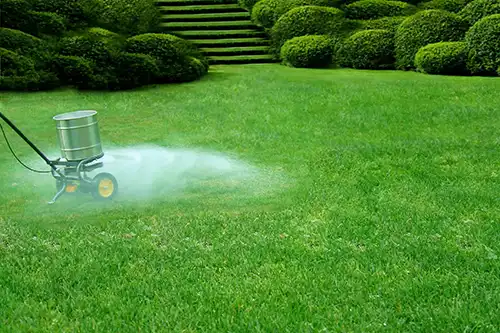
Image Source: www.flapest.com
The Science Behind Fertilizer Action
Fertilizer isn’t magic. It’s a carefully formulated mix of nutrients that grass plants need to grow strong and healthy. The primary nutrients, often listed as N-P-K on the packaging, stand for Nitrogen, Phosphorus, and Potassium.
- Nitrogen (N): This is the workhorse for leafy green growth. It’s essential for chlorophyll production, which is what makes grass green and allows it to capture sunlight for energy.
- Phosphorus (P): This nutrient is vital for root development, seedling growth, and flowering (though lawns aren’t typically grown for flowers, strong roots are key).
- Potassium (K): Potassium helps the grass withstand stress, such as drought, heat, and disease. It also plays a role in overall plant health and vigor.
Once applied, these nutrients need to be available to the grass roots. This is where the science of lawn fertilizer absorption time and the fertilizer activation period comes into play.
How Quickly Does Fertilizer Feed Grass?
The speed at which fertilizer “feeds” your grass depends heavily on its formulation. There are two main types:
- Quick-Release Fertilizers: These are typically synthetic fertilizers. The nutrients are readily available for absorption by the grass roots immediately after application and watering. You’ll see results faster with these, often within a few days. However, they can also be more prone to burning the lawn if over-applied and their benefits are generally shorter-lived.
- Slow-Release Fertilizers: These are designed to release nutrients gradually over a period of weeks or even months. They can be either coated synthetic fertilizers or organic fertilizers. This gradual release prevents nutrient spikes, reduces the risk of burning, and provides a more consistent feeding schedule. The initial effects might be slower to appear, but the overall duration of benefits is longer.
The rate at which your grass can absorb these nutrients is also a significant factor. Healthy, actively growing grass will absorb nutrients more efficiently than stressed or dormant grass.
The Fertilizer Visible Effects Timeline
Patience is a virtue when it comes to lawn care. While you might be looking for immediate changes, the transformation is a process.
Initial Signs of Life: Within 24-72 Hours
After applying fertilizer and watering it in, you might start noticing subtle changes within the first day or two. These are often the first indications that the nutrients are being absorbed.
- Greener Hue: The most common initial sign is a slight deepening of the grass’s green color. This is primarily due to the nitrogen starting to boost chlorophyll production.
- Increased Vigor: You might perceive the grass blades as looking a little more upright and robust.
These are subtle changes, and it’s important not to expect a dramatic transformation overnight.
Noticeable Improvement: 1-2 Weeks
By the end of the first week or into the second, the effects of the fertilizer should become much more apparent.
- Enhanced Greenness: The green color will likely become richer and more uniform across the lawn.
- Faster Growth: You’ll probably notice that your grass is growing faster and might need mowing more frequently.
- Thicker Appearance: With increased growth, the lawn will start to appear denser and thicker, helping to crowd out weeds.
This is the stage where most homeowners see the tangible results they were hoping for.
Peak Performance: 2-4 Weeks
The lawn will reach its peak performance and visual appeal within about two to four weeks of application, especially with quick-release fertilizers.
- Vibrant, Deep Green Color: The lawn will look its absolute best, with a rich, healthy green.
- Dense, Lush Growth: The turf will be thick and resilient.
- Improved Resilience: The grass will be better equipped to handle environmental stresses.
Duration of Fertilizer Benefits
The longevity of fertilizer benefits varies significantly based on the type of fertilizer used.
- Quick-Release Fertilizers: The benefits typically last for 4 to 6 weeks. After this period, the nutrients are depleted, and the grass will start to show signs of needing another feeding.
- Slow-Release Fertilizers: Depending on the coating or organic source, the benefits can last from 6 weeks to 3 months (or even longer). This makes them a popular choice for sustained lawn health and reduces the frequency of application.
Factors Affecting Fertilizer Speed
Several elements influence how quickly and effectively your lawn fertilizer works.
Lawn Fertilizer Absorption Time
The lawn fertilizer absorption time is influenced by:
- Root Development: Lawns with well-established, healthy root systems will absorb nutrients much faster than those with weak or shallow roots.
- Soil Moisture: Nutrients must be dissolved in water to be absorbed by the roots. If the soil is dry, absorption will be slow.
- Soil Temperature: Grass roots are most active and receptive to nutrient uptake within a specific temperature range, typically between 50°F and 80°F (10°C to 27°C). If temperatures are too cold or too hot, root activity and nutrient absorption can be significantly slowed.
Fertilizer Activation Period
The fertilizer activation period refers to the time it takes for the applied nutrients to become available to the plant roots.
- Solubility: Water-soluble fertilizers activate almost immediately upon contact with soil moisture.
- Coated Fertilizers: These rely on moisture and soil microbes to break down the coating, releasing nutrients over time. The activation period is delayed but controlled.
- Organic Fertilizers: These require microbial activity in the soil to break them down into forms that plants can absorb. This process can take longer, but it also improves soil health.
Soil Conditions
- Soil pH: The pH of your soil affects nutrient availability. If the pH is too high or too low, certain nutrients may be “locked up” in the soil and unavailable to the grass, regardless of how much fertilizer you apply.
- Soil Compaction: Compacted soil restricts root growth and air and water penetration, hindering nutrient uptake.
- Soil Microbes: A healthy population of soil microbes is crucial, especially for organic fertilizers, to break down nutrients.
Grass Type and Health
- Grass Species: Different grass species have varying nutrient requirements and growth rates. Cool-season grasses (like fescue and bluegrass) and warm-season grasses (like Bermuda and zoysia) have different optimal growing periods and nutrient needs.
- Grass Health: Stressed or diseased grass will not absorb nutrients as efficiently as healthy, vigorous grass. Pre-existing conditions need to be addressed for fertilizer to work optimally.
Weather Conditions
- Rainfall: Gentle, consistent rainfall helps dissolve fertilizer and carry it to the root zone. Excessive rainfall can lead to nutrient leaching, washing the fertilizer away before it can be absorbed.
- Temperature: As mentioned, soil and air temperatures significantly impact root activity and nutrient uptake.
- Sunlight: Sunlight is essential for photosynthesis, the process by which grass uses nutrients to grow. Adequate sunlight will enhance the fertilizer’s effects.
Optimizing Fertilizer Application for Fast Results
If you’re aiming for the quickest visible improvements, consider these strategies for the best time to fertilize lawn for fast results:
Timing is Everything
- Peak Growing Seasons: Apply fertilizer during your lawn’s active growing seasons.
- Cool-Season Grasses: Spring and Fall are ideal.
- Warm-Season Grasses: Late Spring and Summer are best.
- Avoid Extreme Weather: Do not fertilize during heatwaves, droughts, or when the grass is dormant. Fertilizer can stress already struggling grass.
Choosing the Right Fertilizer
- High Nitrogen Content: For quick green-up, look for fertilizers with a higher percentage of nitrogen. Quick-release nitrogen sources will provide the fastest results.
- Liquid Fertilizers: These are absorbed by the grass blades and roots very quickly, often leading to visible greening within 24-48 hours. However, they also tend to be short-lived and require more frequent application.
Proper Application and Watering
- Even Distribution: Use a spreader to ensure the fertilizer is applied evenly. Overlapping or missing spots will lead to uneven growth and color.
- When to Water After Fertilizing: This is critical!
- Immediately after application: Water your lawn thoroughly. This helps to dissolve the fertilizer granules and move them into the soil, where the roots can access them. It also washes any fertilizer off the grass blades, which can prevent burning.
- Avoid watering too much: You don’t want to saturate the soil to the point where nutrients are leached away. A good, deep watering is usually sufficient.
- Consider Dew: If your lawn has heavy dew in the morning, it might be enough to start dissolving the fertilizer. However, a light watering is still recommended to ensure proper uptake.
Signs of Fertilizer Working
Recognizing the signs of fertilizer working allows you to gauge its effectiveness and adjust your lawn care practices.
Positive Indicators:
- Increased Greenness: As mentioned, a richer, more uniform green is a primary sign.
- Faster Growth Rate: You’ll notice your grass growing more vigorously and requiring more frequent mowing.
- Improved Density: The turf will become thicker, with less bare ground visible.
- Greater Resilience: Your lawn will appear more robust and better able to withstand foot traffic or minor stress.
Negative Indicators (Over-fertilization):
It’s important to be aware of signs that you might have over-fertilized, which can be detrimental.
- “Burning” or Yellowing: If the grass blades turn yellow or brown, especially in patches, it could be a sign of fertilizer burn. This happens when the fertilizer salts draw moisture out of the grass roots.
- Excessive Thatch Buildup: While some thatch is normal, an overabundance of nitrogen can lead to rapid growth that outpaces the decomposition of grass clippings, creating an excessive thatch layer.
- Weak, Leggy Growth: Sometimes, too much nitrogen can cause the grass to grow too quickly without developing strong roots, leading to a weak, lanky appearance.
- Increased Susceptibility to Disease: Ironically, over-fertilizing can sometimes make grass more prone to certain fungal diseases.
If you notice any signs of over-fertilization, water the lawn thoroughly to help dilute and wash away the excess fertilizer.
Fertilizer Breakdown Rate
The fertilizer breakdown rate is a key determinant of how long its effects will last.
- Quick-Release Fertilizers: These break down rapidly. The chemical bonds holding the nutrients are easily dissolved by water, making them immediately available. Their lifespan in the soil is short, typically measured in weeks.
- Slow-Release Fertilizers: These are engineered to break down gradually.
- Coated Fertilizers: The coating acts as a barrier. Factors like temperature, moisture, and microbial activity determine how quickly the coating degrades, releasing nutrients. This allows for a predictable, extended release.
- Organic Fertilizers: Their breakdown rate is highly dependent on soil temperature, moisture, and the population of beneficial soil microbes. In ideal conditions, breakdown can be steady, but it can be slower in cooler or drier soils.
Factors Influencing Fertilizer Speed in Detail
Let’s break down the factors affecting fertilizer speed even further.
Soil Microbiome
The unsung heroes of your lawn are the trillions of microorganisms living in the soil. These microbes are essential for nutrient cycling.
- Nutrient Conversion: Especially for organic fertilizers, microbes are responsible for converting complex organic compounds into simpler forms that grass roots can absorb.
- Soil Structure: Healthy microbial populations contribute to good soil structure, improving aeration and water infiltration, which aids nutrient uptake.
- Impact on Speed: A thriving soil microbiome will accelerate the breakdown and availability of nutrients, leading to faster results. Conversely, degraded soils with low microbial activity will result in slower fertilizer action.
Application Methods
- Granular vs. Liquid: Granular fertilizers need to be dissolved in water and moved into the root zone. Liquid fertilizers are absorbed more quickly through both the roots and the leaves (foliar feeding).
- Spreader Calibration: An improperly calibrated spreader can lead to over or under-application, impacting the speed and uniformity of results.
Previous Lawn Treatments
- Herbicides: If you’ve recently applied herbicides, be mindful of the label instructions. Some herbicides can temporarily inhibit grass growth, which might affect how quickly it responds to fertilizer.
- Aeration: Aerating your lawn before fertilizing can significantly improve nutrient uptake by creating channels for fertilizer and water to reach the root zone.
Environmental Stress
- Drought: During a drought, grass enters a semi-dormant state to conserve water. Its metabolic processes slow down, including nutrient absorption. Fertilizer applied during a drought will work much slower and can even cause damage.
- Extreme Heat/Cold: Similarly, very high or very low temperatures can significantly reduce root activity and, consequently, the speed at which fertilizer is utilized.
Maintaining Long-Term Lawn Health
While seeing fast results is rewarding, sustainable lawn health is the ultimate goal.
- Regular Soil Testing: Periodically testing your soil (every 1-3 years) is crucial. It tells you your soil’s pH and nutrient levels, allowing you to choose the right fertilizer and avoid over or under-application.
- Consistent Feeding Schedule: Following a consistent feeding schedule tailored to your grass type and climate will provide the best long-term results. This often means applying fertilizer 2-4 times per year.
- Proper Mowing and Watering: Healthy mowing practices (mowing at the correct height, keeping blades sharp) and consistent, deep watering contribute to strong root systems, which in turn enhance fertilizer efficiency.
- Overseeding: For thinning lawns, overseeding with appropriate grass seed can help thicken the turf and improve its overall health and nutrient uptake.
Frequently Asked Questions (FAQ)
Q1: Can I fertilize my lawn when it’s dry?
A: It’s best to water your lawn before applying granular fertilizer, or apply it when rain is expected. If you apply to dry turf, water immediately after application to prevent burning and ensure absorption.
Q2: What happens if I fertilize too much?
A: Over-fertilizing can burn the grass, causing yellow or brown patches. It can also lead to excessive thatch buildup, weak growth, and make the lawn more susceptible to disease and pests.
Q3: How often should I fertilize my lawn?
A: The frequency depends on your grass type, climate, and the type of fertilizer used. Generally, 2-4 times a year is recommended during the active growing seasons. Slow-release fertilizers allow for less frequent applications.
Q4: Will fertilizer make my grass grow faster?
A: Yes, fertilizer provides the essential nutrients that grass needs for growth. Nitrogen, in particular, promotes leafy green growth. However, excessive growth can be detrimental if not managed properly.
Q5: Is it okay to fertilize when it’s very hot?
A: It’s generally not recommended to fertilize when temperatures are consistently above 85-90°F (30-32°C), especially for cool-season grasses. Fertilizer can stress the lawn in extreme heat.
Q6: How does watering affect fertilizer speed?
A: Watering is essential for activating and absorbing fertilizer. It dissolves the granules and moves them to the root zone. Without adequate moisture, the fertilizer will not work effectively and can even damage the grass.
Conclusion
The question of how long does lawn fertilizer take to work doesn’t have a single, simple answer. It’s a dynamic process influenced by a confluence of factors, from the fertilizer’s composition to the health of your soil and grass, and the prevailing weather conditions. While you can typically see initial signs of improvement within a few days and more substantial changes within a couple of weeks, understanding the underlying mechanisms of lawn fertilizer absorption time, fertilizer activation period, and the fertilizer breakdown rate empowers you to make informed decisions. By choosing the right fertilizer, applying it correctly, and providing optimal growing conditions, you can ensure your lawn receives the nutrients it needs to thrive, leading to a lush, vibrant, and healthy green carpet.