
How long should you water your lawn in Florida? Generally, you should water your lawn for about 1 to 1.5 inches of water per week, broken into a few watering sessions. This guide will help you figure out the best way to do that for a healthy, beautiful lawn in the Sunshine State.
Florida’s climate presents unique challenges for lawn care. The intense heat, high humidity, and sporadic rainfall can make it tricky to know exactly how much and how often to water your grass. Too little water, and your lawn can turn brown and stressed. Too much, and you risk fungal diseases, shallow roots, and wasted water. This guide aims to provide you with a comprehensive understanding of Florida lawn watering schedule, watering frequency Florida, deep watering lawns Florida, and other essential aspects to keep your lawn thriving.
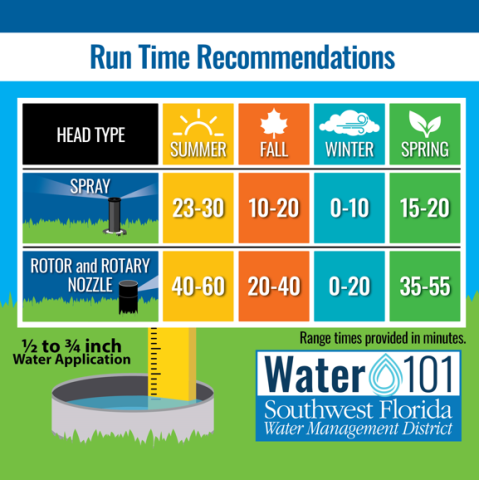
Image Source: www.swfwmd.state.fl.us
Fathoming Florida’s Watering Needs
Florida lawns require a specific approach to watering due to the state’s subtropical and tropical climate. This means understanding the interplay between temperature, rainfall, soil type, and grass species. The goal is to encourage deep root growth, which makes your lawn more resilient to drought and disease.
The Science Behind Watering Duration
Watering your lawn is not just about wetting the surface. It’s about delivering enough moisture to reach the root zone. For most grass types in Florida, the roots can extend 4-6 inches into the soil.
- Shallow watering: This encourages shallow roots, making the grass more susceptible to heat and drought stress.
- Deep watering: This promotes deeper root growth, allowing the grass to access moisture further down in the soil. This is key for deep watering lawns Florida.
To achieve deep watering, you need to apply enough water to moisten the soil to a depth of 4-6 inches.
How to Measure Water Application
A simple way to measure how much water your sprinkler system is applying is by using a rain gauge or a tuna can.
- Place gauges: Scatter several empty tuna cans or rain gauges across your lawn in different watering zones.
- Run sprinklers: Run your sprinklers for a set amount of time (e.g., 15 minutes).
- Measure: Measure the depth of water collected in the cans.
- Calculate: Average the measurements from all the cans. This will tell you how much water your sprinklers apply in that specific time.
Once you know this, you can adjust your sprinkler run times to deliver the desired amount of water per watering session. For instance, if your sprinklers apply 0.5 inches of water in 15 minutes, you’ll need to run them for 30 minutes to apply a full inch.
Deciphering Your Florida Lawn Watering Schedule
Creating the right Florida lawn watering schedule is crucial. It involves more than just turning on the sprinklers; it’s about smart watering practices.
Watering Frequency Florida: Less is Often More
When it comes to watering frequency Florida, the general advice is to water less often but more deeply. This encourages the roots to grow deeper.
- Established lawns: Typically need watering once or twice a week, depending on weather conditions and rainfall.
- New sod: Requires more frequent watering initially.
Why infrequent watering is better:
- Deeper roots: Allows soil to dry slightly between watering, prompting roots to seek moisture deeper down.
- Disease prevention: Helps prevent fungal diseases that thrive in constantly wet conditions.
- Water conservation: Reduces overall water usage.
Best Time to Water Lawn Florida
The best time to water lawn Florida is typically in the early morning, between 4 AM and 10 AM.
Reasons for early morning watering:
- Reduced evaporation: Less water is lost to evaporation when temperatures are cooler and the sun is not at its strongest.
- Plant absorption: Allows water to soak into the soil and be absorbed by the grass before the heat of the day.
- Disease prevention: Watering in the morning gives the grass blades time to dry off before nightfall, reducing the risk of fungal diseases.
Times to avoid:
- Midday: High temperatures lead to significant water loss through evaporation.
- Evening/Night: Wet grass overnight can create an ideal environment for fungal growth.
Watering Grass in Summer Florida
Watering grass in summer Florida presents specific challenges due to high temperatures and potential for thunderstorms.
- Increased frequency: You might need to water more often during the hottest months, but still aim for deep watering sessions.
- Monitor conditions: Watch for signs of drought stress, such as wilting or discolored grass.
- Rainfall adjustment: Always adjust your watering schedule based on natural rainfall. If you receive a good soaking rain, skip a scheduled watering.
Watering Established Lawns Florida
Watering established lawns Florida is about maintaining health and resilience.
- The 1-1.5 inch rule: Aim to apply 1 to 1.5 inches of water per week in total.
- Split applications: This amount can be split into one or two watering sessions per week.
- Observation is key: Pay attention to how your lawn looks and feels. If it’s dry and footprints remain visible after walking on it, it might be time to water.
Rainfall Impact on Watering Florida
The rainfall impact on watering Florida cannot be overstated. Florida experiences significant rainfall, especially during hurricane season.
- Rain sensors: Install a rain sensor on your irrigation system to automatically shut it off when it rains.
- Manual checks: Even with a sensor, it’s wise to manually check your soil moisture after a significant rain event.
- Adjust schedule: If you’ve had an inch of rain, you can likely skip your next scheduled watering.
Watering New Sod Florida
Watering new sod Florida requires a different approach than established lawns. New sod is essentially a transplant and needs consistent moisture to establish its root system.
- Initial days: Water lightly several times a day for the first few days to keep the soil beneath the sod moist.
- First week: Water once or twice daily, ensuring the soil is moist down to 2-3 inches.
- Subsequent weeks: Gradually reduce the frequency, increasing the duration of each watering. By the end of the second or third week, you should be able to transition to a schedule similar to established lawns, but continue to monitor closely.
- Check for adhesion: Gently lift a corner of the sod. If the roots have started to adhere to the soil below, you can reduce watering.
Factors Influencing Your Watering Needs
Several factors influence how long and how often you should water your lawn. Tailoring your approach to these factors ensures optimal results.
Grass Type Matters
Different grass types have varying water requirements.
-
Warm-season grasses (common in Florida):
- Bahia grass: Relatively drought-tolerant once established.
- Bermuda grass: Can be very drought-tolerant, especially improved varieties.
- Centipede grass: Moderate drought tolerance; prefers consistent moisture but dislikes soggy conditions.
- St. Augustine grass: Moderate to low drought tolerance; requires more water than Bermuda or Bahia.
- Zoysia grass: Good drought tolerance once established.
-
Cool-season grasses (less common in Florida, often used for overseeding in winter): These will generally require more water than warm-season grasses during hot periods.
Soil Type’s Role
The type of soil in your yard significantly impacts how quickly it dries out.
- Sandy soils (common in Florida): Drain quickly, meaning they dry out faster. You might need to water more frequently, but still deeply.
- Clay soils: Retain moisture longer, so you can water less often but ensure each watering penetrates deeply.
Weather Conditions
Florida’s weather is dynamic.
- Temperature: Higher temperatures increase evaporation and the grass’s need for water.
- Wind: Windy conditions also increase evaporation.
- Humidity: High humidity can sometimes reduce the rate of evaporation, but it also contributes to disease potential.
Seasonality
Your watering needs change throughout the year.
- Spring: Moderate watering as temperatures rise.
- Summer: Most critical period for watering due to intense heat. Monitor closely for signs of stress.
- Fall: Reduce watering as temperatures cool and rainfall may increase.
- Winter: Minimal watering, often only needed during dry spells.
Navigating Florida’s Watering Restrictions
Florida has specific watering restrictions Florida in place to conserve water. These vary by local municipality and county.
Common Restrictions
- Days of the week: Many areas limit lawn watering to specific days, often based on your address (e.g., odd-numbered addresses on Tuesdays and Saturdays, even-numbered addresses on Wednesdays and Sundays).
- Time of day: Restrictions often specify when you can water, typically reinforcing the early morning best practice.
- Amount of water: Some restrictions might limit the total amount of water you can use for your lawn.
- New sod/seed: Exemptions may apply for new plantings, allowing more frequent watering for a limited period. Always check local ordinances.
Checking Local Ordinances
It is vital to check with your local water management district or city/county government for the most current and specific watering restrictions Florida. Non-compliance can result in fines.
Cultivating Drought Tolerant Lawns Florida
Creating drought tolerant lawns Florida is a smart strategy for water conservation and a more resilient landscape.
Choosing the Right Grass
As mentioned, some grass varieties are naturally more drought-tolerant. Consider these if you are establishing a new lawn or overseeding.
- Bermuda grass
- Bahia grass
- Zoysia grass
Lawn Maintenance Practices for Drought Tolerance
- Mow high: Set your mower to a higher setting. Taller grass shades the soil, reducing evaporation and keeping roots cooler. Aim for 3-4 inches for most Florida grasses.
- Mulch mowing: Leave grass clippings on the lawn. They act as a natural fertilizer and help retain soil moisture.
- Aerate: Aerating your lawn helps water and air penetrate the soil more effectively, reaching the root zone.
- Fertilize wisely: Over-fertilizing can promote excessive top growth that requires more water. Follow recommended fertilization schedules for your grass type.
- Soil amendment: Adding compost to sandy soils can improve their water-holding capacity.
Watering Systems and Efficiency
The type of irrigation system you use can greatly impact water efficiency.
Sprinkler System Types
- Rotor sprinklers: Typically cover larger areas and apply water more slowly, which is good for sandy soils.
- Spray sprinklers: Cover smaller areas and apply water more quickly. They can be less efficient in windy conditions due to misting.
- Drip irrigation: Excellent for garden beds and shrubs, but not typically used for lawns.
Improving Efficiency
- Regular maintenance: Check for leaks, broken sprinkler heads, or clogged nozzles.
- Zone management: Ensure your sprinkler system is zoned appropriately for different areas of your lawn, accounting for variations in sun exposure, soil type, and grass species.
- Smart controllers: Consider installing a smart irrigation controller that adjusts watering based on weather data and soil moisture sensors.
Signs Your Lawn Needs Water
Even with a schedule, it’s important to observe your lawn for signs of thirst.
Visual Cues
- Color change: Grass may turn a bluish-gray or dull green color.
- Footprint test: Walk across your lawn. If your footprints remain visible for an extended period, the grass blades are losing their resilience and need water.
- Leaf wilting: Grass blades may start to curl or fold.
Soil Moisture Check
- Probe test: Use a screwdriver or soil probe. If it’s difficult to push into the soil, it’s likely dry.
- Digging: Dig a small hole to check the moisture level a few inches down.
Common Watering Mistakes in Florida
Avoid these common errors to keep your lawn healthy and conserve water.
- Watering too often: Leads to shallow roots and fungal diseases.
- Watering too shallowly: Does not encourage deep root growth.
- Watering during the hottest part of the day: Wastes water through evaporation.
- Not adjusting for rainfall: Overwatering after rain.
- Ignoring local watering restrictions: Can lead to fines.
- Using inefficient sprinkler heads: Leading to uneven coverage and water waste.
Frequently Asked Questions (FAQ)
How often should I water my lawn in Florida?
For established lawns, watering once or twice a week is typically sufficient, provided you are watering deeply (1 to 1.5 inches of water per session). Adjust frequency based on weather, grass type, and soil.
What is the best time of day to water my lawn in Florida?
The best time is early morning, between 4 AM and 10 AM, to minimize evaporation and reduce disease risk.
How long should I run my sprinklers?
This depends on your sprinkler system’s output. Use a rain gauge or tuna cans to measure how much water your sprinklers apply in a given time. Aim to apply 1 to 1.5 inches of water per week, broken into your watering sessions. For example, if your sprinklers apply 0.5 inches in 15 minutes, you’ll need to run them for 30 minutes for a 1-inch application.
Can I water my lawn every day in Florida?
Generally, no. Watering every day, especially for established lawns, can lead to shallow root systems and increase the risk of fungal diseases. Deep, infrequent watering is more beneficial.
How do I know if I’m watering my lawn too much?
Signs of overwatering include yellowing grass, the presence of mushrooms, a spongy feel underfoot, and increased weed or disease problems.
What are the water restrictions in Florida?
Watering restrictions vary by location. Most areas have specific days and times when lawn watering is permitted. Always check with your local water management district or city/county for the latest rules.
How does rainfall impact my watering schedule?
If you receive a significant amount of rain (e.g., 0.5 to 1 inch), you can skip or reduce your next scheduled watering. Installing a rain sensor on your irrigation system is highly recommended.
What are the best grass types for drought tolerance in Florida?
Bermuda grass, Bahia grass, and Zoysia grass are good choices for drought tolerant lawns Florida.
By following these guidelines, you can ensure your Florida lawn receives the right amount of water, promoting a healthy, vibrant landscape while conserving this precious resource. Remember to observe your lawn, understand its needs, and adjust your watering practices accordingly.