
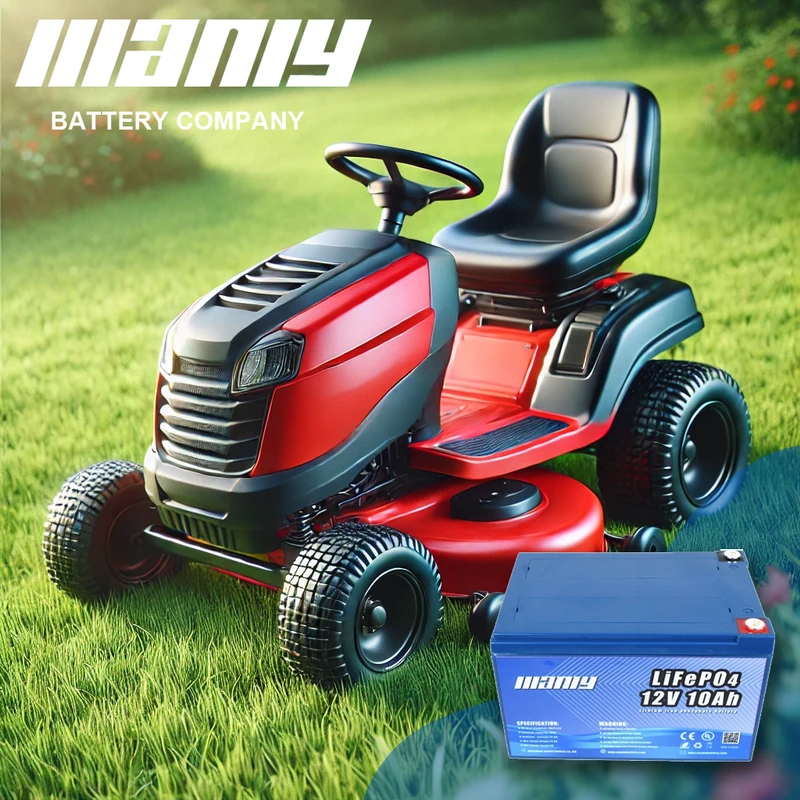
Image Source: manlybattery.com
How Many Amps Does Your Lawn Mower Battery Need?
The amperage of a lawn mower battery directly impacts its power and how long it can run. For push lawn mowers, a battery with 12 to 20 amp-hours (Ah) is typically sufficient for most home lawns. Riding mowers and zero-turn mowers generally require batteries with higher capacities, often 30 to 50 Ah or more, to handle their larger engines and longer operational times.
When you’re looking to buy a new battery for your lawn mower, one of the most crucial specifications you’ll encounter is its amperage rating. But what does that number really mean, and how do you know what your mower needs? This guide will break down everything you need to know about lawn mower battery amps, helping you make the right choice for a powerful and reliable cut.
Deciphering Lawn Mower Battery Amps: More Than Just a Number
The term “amps” in a battery context usually refers to amp-hours (Ah). Amp-hours are a measure of a battery’s capacity – how much electrical charge it can deliver over time. Think of it like the size of a fuel tank in a gas-powered mower. A higher amp-hour rating means the battery can store more energy and therefore run your mower for a longer period or power a more demanding engine.
It’s important to distinguish between amperage and amp-hours. Amperage (A) refers to the rate of electrical current flow at any given moment. For example, a mower’s starter motor might draw 50 amps when it cranks the engine. Amp-hours (Ah), on the other hand, tell you about the battery’s total stored energy. A 20 Ah battery can theoretically deliver 1 amp for 20 hours, or 2 amps for 10 hours, and so on.
Why Battery Amperage Matters for Your Mower
The lawn mower battery amperage is directly linked to your mower’s performance and runtime. Here’s why it’s so important:
- Powering the Mower: Electric mowers, whether they are push mowers, riding mowers, or zero-turn mowers, rely entirely on their batteries for power. The battery provides the energy to turn the motor that spins the blades, propels the mower (in self-propelled or ride-on models), and powers any onboard lights or accessories.
- Runtime: A higher Ah rating means a longer runtime. If you have a large yard or need to mow for extended periods, a battery with a greater capacity is essential. A small battery will quickly deplete, leaving you with a half-mowed lawn and a dead mower.
- Starting Power: While not as critical as with gasoline engines that use a starter motor, the battery’s ability to deliver sufficient amperage for a brief period is still important for electric mowers. It needs to supply enough current to get the motor spinning quickly from a standstill.
- Blade Speed Consistency: For electric mowers, especially those with powerful motors, a battery with adequate amperage ensures that the blade speed remains consistent even under load. This means a cleaner, more efficient cut, even in thicker grass.
Types of Lawn Mowers and Their Battery Amperage Needs
The lawn mower battery amp rating varies significantly depending on the type and size of the mower.
Push Lawn Mowers (Cordless Electric)
- Battery Voltage: Most cordless electric push mowers operate on 40V, 56V, or 80V systems. Higher voltage often means more power and efficiency.
- Battery Capacity (Ah): For push mowers, you’ll typically find batteries ranging from 2.0 Ah to 5.0 Ah or even higher.
- 2.0 Ah – 3.0 Ah: Suitable for smaller to medium-sized lawns (up to 1/4 acre). You might need to swap batteries for larger yards.
- 4.0 Ah – 5.0 Ah: Ideal for medium to larger lawns (1/4 acre to 1/2 acre). Offers a good balance of power and runtime.
- 6.0 Ah+: Best for larger properties or those with tough grass. Provides extended runtime.
Riding Mower Battery Amp Rating
Riding lawn mowers are a significant step up in power and size. They typically use 12V batteries, similar to car batteries, but with a focus on deep cycling rather than just starting power.
- Battery Voltage: Almost universally 12V.
- Battery Capacity (Ah): This is where you’ll see much higher numbers. You’ll commonly find batteries in the 30 Ah to 50 Ah range. Some heavy-duty models might even use batteries exceeding 60 Ah.
- 30 Ah – 40 Ah: Sufficient for smaller riding mowers or those with less demanding cutting decks.
- 40 Ah – 50 Ah: A good standard for most residential riding mowers, offering ample power and runtime for typical lawns.
- 50 Ah+: Recommended for larger properties, mowing on slopes, or if you use attachments that draw extra power.
Zero Turn Mower Battery Amps
Zero-turn mowers are designed for efficiency and maneuverability, often featuring more powerful engines and wider cutting decks, especially in commercial or semi-commercial models. Electric zero-turn mowers are also becoming increasingly popular.
- Battery Voltage: Electric zero-turn mowers can vary greatly in voltage, often ranging from 48V to 72V or even higher. This higher voltage contributes to their power.
- Battery Capacity (Ah):
- For Electric Zero-Turns: Due to their high power demands, electric zero-turn mowers often use battery packs with capacities ranging from 50 Ah to 100 Ah or more. These are typically lithium-ion battery packs composed of multiple cells to achieve the required voltage and capacity.
- For Gas Zero-Turns (Starting Battery): While the engine is powered by gasoline, a 12V battery is still needed to start the engine and power accessories. These batteries might have a Reserve Capacity (RC) rating (minutes the battery can deliver 25A) which is more important than pure Ah for starting. However, for general battery health and powering any electric components, a 35 Ah to 50 Ah 12V battery is common.
Fathoming Battery Voltage and Amps in Lawn Mowers
It’s crucial to grasp the relationship between battery voltage amps lawn mower. Voltage (V) is the electrical “pressure,” while amperage (A), or more commonly amp-hours (Ah), is the “amount” of charge.
- Voltage (V): Determines the power output. Higher voltage allows for more powerful motors and more efficient operation. A 40V mower will generally have more torque than a 12V mower of similar design.
- Amp-Hours (Ah): Determines the runtime. A battery with more amp-hours will last longer.
You can’t simply substitute a battery with a different voltage. A mower designed for a 40V battery will not work with a 12V battery, and vice versa. It could damage the mower or the battery. However, within the same voltage system, you can often use batteries with different Ah ratings. For example, if your mower uses a 40V battery, you can usually use a 4.0 Ah 40V battery or a 5.0 Ah 40V battery. The 5.0 Ah battery will simply provide longer runtime.
Determining Your Lawn Mower Battery Amps Requirements
So, how do you figure out what your mower needs?
- Check Your Owner’s Manual: This is always the first and best step. Your owner’s manual will specify the exact voltage and recommended Ah range for your mower’s battery. It might also list specific battery part numbers.
- Examine Your Old Battery: The specifications are usually printed directly on the battery. Look for the voltage (V) and amp-hour (Ah) ratings.
- Consider Your Lawn Size and Conditions:
- Small Lawn (under 1/4 acre): Lower Ah batteries might be sufficient.
- Medium Lawn (1/4 – 1/2 acre): Mid-range Ah batteries are a good choice.
- Large Lawn (over 1/2 acre): Higher Ah batteries are essential for completing the job without recharging or swapping.
- Thick/Tough Grass: If you frequently mow tall or dense grass, this puts more strain on the motor. A higher Ah battery can help maintain consistent power and reduce battery drain.
- Slopes and Hills: Mowing on slopes requires more power to move the mower, increasing battery consumption. Opt for a higher Ah battery if you have inclines.
- Brand Compatibility (Especially for Cordless Electric): Many cordless electric mower brands have proprietary battery systems. You generally need to use batteries designed for that specific brand and voltage. Using a battery from a different manufacturer, even if the voltage and Ah match, might not work due to different connector types or battery management systems.
What Amp Hour for Lawn Mower Battery is “Enough”?
The question of what amp hour for lawn mower battery is “enough” is subjective and depends heavily on your individual needs.
- For a standard electric push mower: A 4.0 Ah battery is often a sweet spot for many homeowners, offering a good balance of runtime and weight. If you have a smaller lawn or only need to mow for 20-30 minutes at a time, a 2.0 Ah or 3.0 Ah might be fine. For larger lawns or tougher grass, stepping up to 5.0 Ah or 6.0 Ah is a wise investment.
- For a riding mower or zero-turn: The starting point is generally higher. For a 12V riding mower battery, 35-40 Ah is a reasonable minimum, with 45-50 Ah providing more comfortable runtime for most users. For electric zero-turns, you’re looking at much larger battery packs with total capacities in the 50-100+ Ah range, often measured in Watt-hours (Wh) as well, which combines voltage and amp-hours (Wh = V * Ah).
Exploring Lawn Mower Battery Capacity in Ah
Lawn mower battery capacity amps is often expressed as Ah. However, some manufacturers also use Watt-hours (Wh). This is a more comprehensive measure because it accounts for both voltage and amp-hours:
- Watt-hours (Wh) = Voltage (V) × Amp-hours (Ah)
For example, a 40V battery with 5.0 Ah has a capacity of 200 Wh (40V * 5.0 Ah = 200 Wh). A 56V battery with 4.0 Ah has a capacity of 224 Wh (56V * 4.0 Ah = 224 Wh). In this comparison, the 56V 4.0 Ah battery actually stores slightly more energy, even though it has fewer amp-hours. This is why it’s important to consider Wh if available, especially when comparing batteries across different voltage systems or brands.
Frequently Asked Questions About Lawn Mower Battery Amps
Q1: Can I use a battery with a higher Ah rating than my current one?
A1: Yes, generally, if the voltage matches and the battery is from the same manufacturer or designed to be compatible. Using a higher Ah battery will provide longer runtime but will not increase the mower’s power output beyond what the motor is designed for. It might be slightly heavier and potentially more expensive.
Q2: Can I use a battery with a lower Ah rating?
A2: You can, but it’s not recommended for extended use. A lower Ah battery will offer less runtime, meaning you’ll have to recharge or swap batteries more frequently. For some light tasks or very small lawns, it might suffice, but it’s usually best to stick to the manufacturer’s recommendations or higher.
Q3: What is Reserve Capacity (RC) for lawn mower batteries?
A3: Reserve Capacity is a rating primarily found on 12V batteries used for starting gasoline engines (like those in riding mowers). It indicates how many minutes a fully charged battery can deliver 25 amps at 80°F (27°C) while maintaining a voltage above 10.5V. A higher RC rating generally means better starting power and endurance.
Q4: How do I charge my lawn mower battery?
A4: Most electric lawn mowers come with a dedicated charger. Always use the charger provided by the manufacturer or a compatible replacement. Charging times vary significantly depending on the battery’s Ah rating and the charger’s output. Follow the instructions in your owner’s manual for best results and battery longevity.
Q5: How long should my lawn mower battery last?
A5: The lifespan of a lawn mower battery depends on several factors, including the type of battery (lithium-ion generally lasts longer than lead-acid), how often it’s used, how it’s charged and stored, and the depth of discharge. Typically, a good quality lithium-ion battery pack for an electric mower might last 5-10 years or more with proper care. Lead-acid batteries for riding mowers might last 3-5 years.
Conclusion: Matching the Amps to Your Mowing Needs
Determining lawn mower battery amps is a key step in ensuring your mower performs optimally. Whether you’re dealing with a lightweight electric push mower or a powerful zero-turn, the battery’s capacity directly influences how much lawn you can cover and how efficiently you can do it.
Always prioritize checking your owner’s manual for the precise lawn mower battery amp requirements. Then, consider your lawn’s size, terrain, and grass type to select a battery with the appropriate lawn mower battery capacity amps. By carefully matching the battery’s specifications to your mower and your mowing habits, you’ll enjoy a more productive and less frustrating lawn care experience. Remember, the right electric mower battery amps means more power, longer runtime, and a beautifully manicured lawn.