
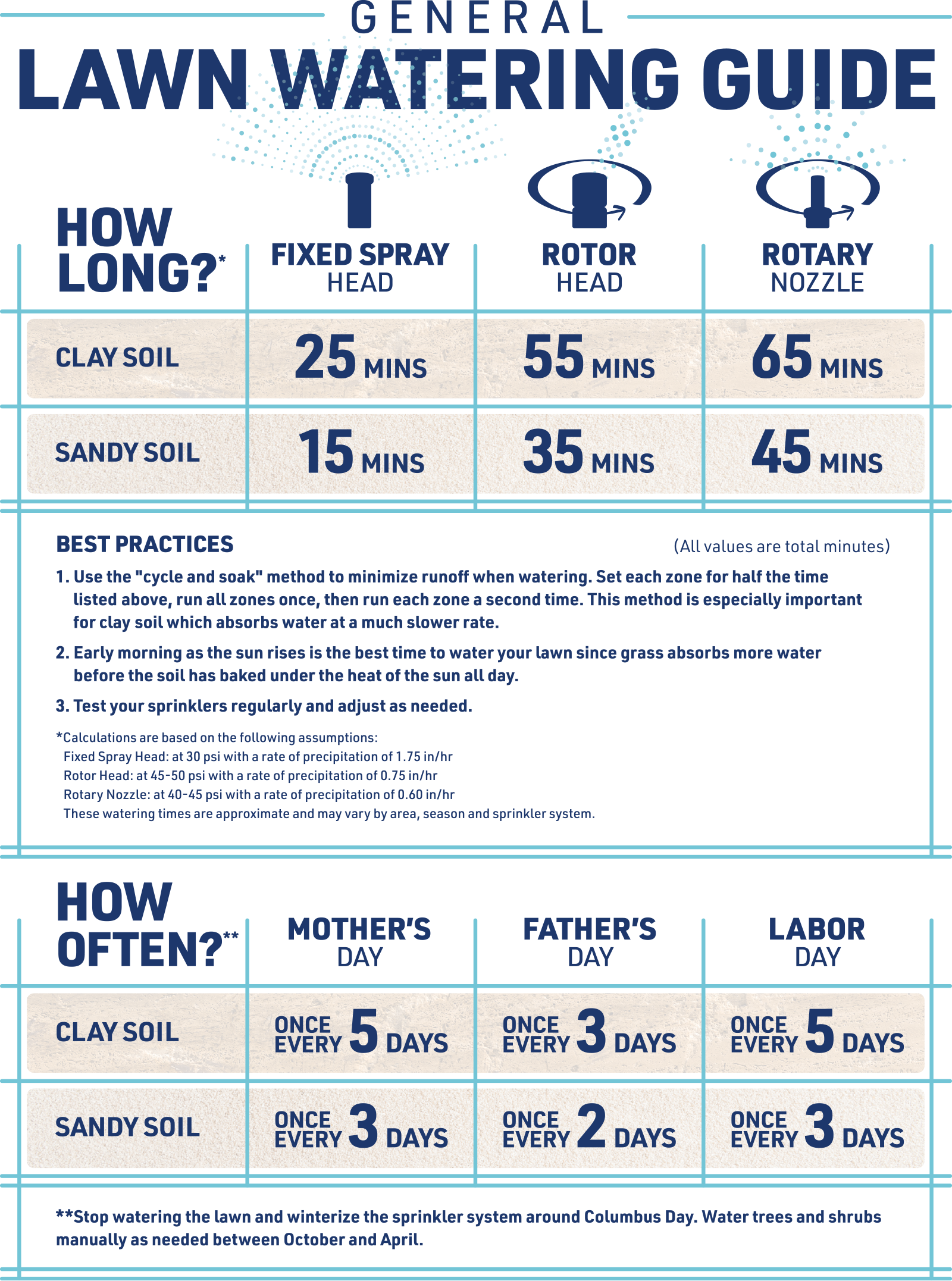
Image Source: grow.ifa.coop
Proper Lawn Watering: How Long Should You Water Each Zone of Your Lawn?
Determining the correct lawn watering duration for each zone of your lawn is crucial for a healthy, vibrant turf. Generally, most lawn zones require about 1 to 1.5 inches of water per week, delivered in longer, less frequent sessions to encourage deep root growth. This often translates to a sprinkler run time per zone of 15-30 minutes, two to three times a week, but this is a guideline that needs significant adjustment based on various factors.
Factors Shaping Your Watering Schedule Zones
Creating an effective watering schedule zones requires more than just a timer. Your lawn is not a uniform entity; different areas have unique needs. This variability is why a one-size-fits-all approach to lawn irrigation zone duration simply won’t yield the best results. Let’s delve into the key elements that influence how much water per lawn zone your grass truly needs.
Soil Type: The Foundation of Watering
The type of soil in each zone is a primary determinant of how long you should water. Different soil textures hold moisture differently, impacting absorption rates and drainage.
- Sandy Soil: This soil drains quickly. It has large particles and large pore spaces, allowing water to pass through rapidly.
- Watering Implication: Sandy soils need more frequent watering but for shorter durations to prevent runoff. Applying water too fast will lead to most of it draining below the root zone before the grass can use it.
- Optimal Zone Watering Time: You might need to water more often, but aim for shorter, more frequent applications, perhaps 10-15 minutes per zone, checked against the infiltration rate.
- Clay Soil: Clay soil has very small particles and pore spaces, which means it holds water tightly and drains slowly.
- Watering Implication: Clay soils can become waterlogged if overwatered. Water needs to be applied slowly to allow it to penetrate without pooling on the surface.
- Best Watering Duration for Lawn Zones: Longer watering sessions are generally better, but with a slower application rate. Aim for 20-30 minutes, but monitor for runoff. You might need to use an “cycle and soak” method, where you water for a shorter period, let it soak in, and then water again.
- Loam Soil: This is often considered the ideal soil type, being a balanced mix of sand, silt, and clay.
- Watering Implication: Loam soils have good drainage and moisture retention. They are more forgiving with watering schedules.
- How Long to Water Different Lawn Areas: Loam soils generally benefit from the standard 15-30 minutes of watering per zone, adjusted for other factors.
Grass Type: Different Thirsts for Different Blades
Just like people, different grass species have varying water requirements. Cool-season grasses and warm-season grasses have distinct growth cycles and water needs.
- Cool-Season Grasses (e.g., Kentucky Bluegrass, Fescue, Ryegrass): These grasses thrive in cooler temperatures and often require more consistent moisture, especially during hot, dry spells. They tend to go dormant in extreme heat if not adequately watered.
- Watering Requirements by Zone: During active growth in spring and fall, they may need about 1 to 1.5 inches of water per week. In the summer, this can increase.
- Lawn Zone Watering Frequency: Might need watering 2-3 times per week.
- Warm-Season Grasses (e.g., Bermuda, Zoysia, St. Augustine): These grasses grow most actively in warm temperatures and are generally more drought-tolerant once established. They can go dormant during cooler months or prolonged dry periods.
- Watering Requirements by Zone: They typically need about 1 inch of water per week, often less than cool-season grasses, especially during their active growing season.
- Lawn Zone Watering Frequency: May only need watering once a week, or even less in periods of rainfall.
Sunlight Exposure: The Sun’s Impact on Thirst
The amount of sunlight each zone receives directly impacts evaporation rates. Areas that get full sun will dry out much faster than shaded areas.
- Full Sun Areas: These zones experience higher temperatures and more direct solar radiation, leading to increased evaporation from the soil surface and transpiration from the grass blades.
- Sprinkler Run Time per Zone: These areas will likely require longer watering durations or more frequent watering sessions to compensate for the rapid moisture loss.
- Optimal Zone Watering Time: Consider increasing your watering duration by 5-10 minutes or adding an extra watering day for these zones.
- Shaded Areas: Zones receiving less direct sunlight will retain moisture longer. They are less prone to rapid drying and typically require less water.
- Best Watering Duration for Lawn Zones: You might need to reduce the watering duration by 5-10 minutes for these areas to prevent overwatering and potential disease issues.
- Watering Requirements by Zone: Less frequent watering might be sufficient.
Slope and Drainage: Water Flow Matters
The topography of your lawn plays a significant role in how water is distributed and retained.
- Sloped Areas: Water tends to run off uphill areas more quickly than it soaks in.
- Watering Implication: For sloped zones, shorter, more frequent watering cycles (cycle and soak) are often necessary. This allows water to penetrate the soil gradually, reducing runoff.
- How Long to Water Different Lawn Areas: Instead of one long watering session, split it into multiple shorter sessions throughout the day. For example, water for 10 minutes, wait an hour, water for another 10 minutes.
- Low-Lying Areas: These areas might receive more runoff from higher ground and can become saturated, leading to root rot or fungal diseases.
- Watering Implication: Monitor these areas carefully. They may require less water than other parts of the lawn, or even no supplemental watering if they receive enough runoff.
- Watering Requirements by Zone: Adjust lawn zone watering frequency to be less frequent or shorter in duration.
Seasonal Changes: Adapting to the Year
Your lawn’s watering needs change throughout the year, influenced by temperature, rainfall, and the grass’s growth cycle.
- Spring: As temperatures warm and growth begins, moderate watering is needed.
- Watering Schedule Zones: Focus on establishing a good watering pattern.
- Summer: This is typically the period of highest water demand due to heat and increased evaporation.
- Lawn Irrigation Zone Duration: You may need to increase watering duration or frequency. Water early in the morning to minimize evaporation and reduce the risk of fungal diseases.
- Fall: As temperatures cool, grass growth slows, and watering needs decrease.
- How Much Water Per Lawn Zone: Gradually reduce watering to prepare the lawn for winter dormancy (if applicable to your grass type).
- Winter: Most lawns, especially cool-season grasses, require little to no supplemental watering during winter months, assuming adequate rainfall or snow cover.
Determining How Much Water Your Lawn Needs: The Catch Can Test
To accurately gauge how much water per lawn zone your sprinklers are delivering, the catch can test is an invaluable tool. This simple yet effective method helps you understand your sprinkler system’s efficiency and calibrate your sprinkler run time per zone.
Steps for Performing a Catch Can Test:
- Gather Your Tools: You’ll need several identical rain gauges or shallow, straight-sided containers (like tuna cans or cat food cans). Avoid containers with irregular shapes or narrow openings, as they can distort the results.
- Placement is Key: Strategically place your catch cans throughout each sprinkler zone. Distribute them evenly, including areas near the sprinkler heads, in the middle of the spray, and at the edges of the zone. This helps measure variations in water distribution.
- Run Your Sprinklers: Turn on the sprinklers for a specific amount of time, for example, 15 minutes. Record the exact start and end times.
- Measure the Water: After the sprinklers have run, carefully collect all the catch cans. Measure the depth of water in each can using a ruler.
- Calculate the Average: Add up the water depth from all the cans in a single zone and divide by the number of cans used in that zone. This gives you the average amount of water applied to that zone in the set time.
-
Calculate Application Rate: To determine the application rate in inches per hour, use this formula:
(Average Water Depth in Inches) x (60 Minutes / Sprinkler Run Time in Minutes) = Application Rate (Inches per Hour)
Example: If your cans collected an average of 0.25 inches of water after 15 minutes of watering, your application rate is: 0.25 inches * (60 minutes / 15 minutes) = 1 inch per hour.
-
Adjust Your Watering Schedule: Based on your grass type and soil needs, you can now determine the best watering duration for lawn zones. If your goal is to apply 1 inch of water per week and your application rate is 1 inch per hour, you’ll need to run that zone for approximately 1 hour per week. If you prefer to water twice a week, you’d run it for 30 minutes each time.
Optimizing Your Watering Schedule Zones for Peak Lawn Health
Once you have a baseline from your catch can tests, you can fine-tune your watering schedule zones for maximum efficiency and lawn health.
Understanding Soil Moisture Levels
- Visual Cues: Wilting grass blades, a bluish-grey tint to the lawn, or footprints remaining visible on the grass after walking on it are all signs your lawn needs water.
- Soil Probe: A simple soil probe can tell you how deep the moisture has penetrated. Insert it a few inches into the soil. If it’s difficult to push, the soil is likely moist. If it goes in easily and feels dry, it’s time to water.
Implementing the “Cycle and Soak” Method
As mentioned, this is particularly useful for clay soils or sloped areas. Instead of watering continuously, you break up the total watering time into shorter cycles with rest periods in between.
- How it Works: Water for a short duration (e.g., 10-15 minutes). Allow the water to soak into the soil for an hour or more. Then, run the sprinklers again for another short duration. Repeat as needed to reach your desired total watering time.
- Benefits: This method allows water to penetrate deeper into the soil profile without causing surface runoff, ensuring more of the water is available to the plant roots.
Avoiding Overwatering
Overwatering can be just as detrimental as underwatering. It can lead to:
- Shallow Root Development: Roots will stay near the surface where water is readily available, making the lawn more susceptible to drought stress.
- Fungal Diseases: Continuously wet conditions create an ideal environment for fungal growth.
- Nutrient Leaching: Excess water can wash away essential nutrients from the soil.
- Increased Pest Activity: Some pests thrive in damp conditions.
Best Practices for Lawn Zone Watering Frequency
- Water Deeply, Less Often: This is the golden rule. Encourage deep root growth by watering thoroughly when needed, rather than shallowly every day.
- Water in the Morning: The best time to water is typically between 4 AM and 10 AM. This minimizes water loss due to evaporation from heat and wind, and allows the grass blades to dry off during the day, reducing the risk of disease.
- Consider Local Rainfall: Utilize rain sensors or smart controllers that can adjust your watering schedule based on actual rainfall. Don’t water if your lawn has already received sufficient moisture from rain.
- Observe Your Lawn: Pay attention to the signs your grass is giving you. The catch can test provides a scientific baseline, but your lawn’s appearance is the ultimate indicator.
Matching Watering Duration to Specific Lawn Areas
Let’s consolidate the advice into practical guidance for how long to water different lawn areas within your property, keeping in mind the factors discussed. These are general estimates and should be refined by your catch can tests and observations.
Table: Estimated Sprinkler Run Time Per Zone (per watering session)
| Zone Description | Soil Type | Grass Type | Sunlight Exposure | Estimated Run Time (minutes) | Notes |
|---|---|---|---|---|---|
| Front Lawn (Sunny) | Loam | Cool-Season | Full Sun | 20-30 | May need more frequent watering in peak summer. |
| Backyard (Part Shade) | Clay | Warm-Season | Partial Shade | 15-20 | Use cycle and soak if drainage is slow. Observe for water pooling. |
| Side Yard (Dripline) | Sandy | Cool-Season | Full Sun | 10-15 | Dries out quickly. Needs more frequent watering but shorter durations per session. |
| Shady Bed Edges | Loam | Any | Shade | 10-15 | Water only when soil feels dry to the touch several inches down. Overwatering is a risk. |
| Newly Seeded Area | Any | Any | Varies | 5-10 (frequent) | Keep soil consistently moist, not waterlogged. Water multiple times a day for short durations. |
| Established Trees/Shrubs | Varies | N/A | Varies | 30-60+ | These zones have deeper root systems and different watering needs, often requiring longer durations, possibly less frequently. Consult specific plant needs. |
| High Traffic Area | Loam | Cool-Season | Full Sun | 25-35 | May require slightly more water due to soil compaction and wear, which can reduce infiltration. |
| Slope | Clay/Loam | Any | Varies | 10-15 (multiple cycles) | Crucial to use cycle and soak to prevent runoff. Total watering time might be similar to flat areas but delivered in stages. |
Important Note: These are starting points. Always perform catch can tests for your specific sprinkler heads and zone configurations.
Advanced Watering Techniques for Optimal Zone Watering Time
Beyond the basics, there are more sophisticated ways to ensure your lawn receives precisely the right amount of water.
Smart Irrigation Controllers
These controllers use local weather data, soil moisture sensors, and even historical data to automatically adjust your watering schedule. They can significantly reduce water waste by skipping watering cycles when sufficient rain has fallen or when temperatures are cool.
Soil Moisture Sensors
Placing soil moisture sensors in different zones provides direct feedback on the actual moisture levels. This data can be used to override or adjust your irrigation controller, ensuring you only water when and where it’s truly needed.
Water Audits
A professional water audit can identify inefficiencies in your irrigation system, such as leaky pipes, clogged sprinkler heads, or poor spray patterns. Addressing these issues ensures that water is applied effectively and not wasted.
FAQ: Addressing Common Lawn Watering Questions
Q1: How often should I water my lawn?
The frequency depends on your grass type, soil, weather, and season. Generally, watering 1-3 times per week is common, but deep watering less often is better than shallow watering every day.
Q2: Can I water my lawn in the middle of the day?
It’s best to avoid watering during the hottest part of the day (usually 10 AM to 4 PM). High temperatures lead to significant water loss through evaporation, and water droplets on the grass can act like tiny magnifying glasses, potentially scorching the blades. Early morning is ideal.
Q3: My sprinklers seem to spray water unevenly. What can I do?
This is where catch can testing is crucial. You might have heads that are clogged, damaged, or improperly adjusted. Ensure your sprinkler heads are spraying in the correct pattern and that the precipitation rate is consistent across the zone. Rotating sprinkler heads often provide better coverage than fixed spray heads for larger areas.
Q4: How do I know if my lawn is getting enough water?
Look for signs like wilting or a dull, bluish-grey color. A simple test is to step on the grass. If your footprints remain visible for an extended period, the grass blades lack the moisture needed to spring back. You can also use a soil probe to check the moisture depth.
Q5: What is “cycle and soak” watering?
It’s a method where you break a long watering period into several shorter cycles, with rest periods in between. This allows water to soak into the soil more effectively, especially in clay soils or on slopes, preventing runoff and ensuring deeper penetration.
Q6: How long should I water my newly seeded lawn?
Newly seeded lawns need consistent moisture to germinate. Water them lightly but frequently, perhaps 2-3 times a day for short durations (5-10 minutes), keeping the top inch of soil consistently moist but not saturated. As the grass grows, you can gradually transition to less frequent, deeper watering.
By carefully considering these factors and employing the right techniques, you can develop a precise watering schedule zones that keeps your lawn healthy, reduces water consumption, and contributes to a beautiful outdoor space. Consistent observation and adaptation are key to mastering proper lawn watering.