
To determine how many pounds of grass seed per acre you need for your lawn, a general guideline is between 5 to 10 pounds of seed for every 1,000 square feet. This translates to approximately 200 to 400 pounds of seed per acre, depending on the grass type, seeding purpose (new lawn vs. overseeding), and desired lawn density.
Starting a new lawn or revitalizing an existing one requires careful planning, and a crucial part of that plan is knowing exactly how much grass seed to use. Applying too little seed results in a thin, patchy lawn susceptible to weeds and disease. Conversely, using too much seed is wasteful and can lead to a lawn that struggles to establish due to overcrowding. This guide will help you navigate the complexities of estimating grass seed needs and achieving optimal grass seed application for a beautiful, healthy lawn.
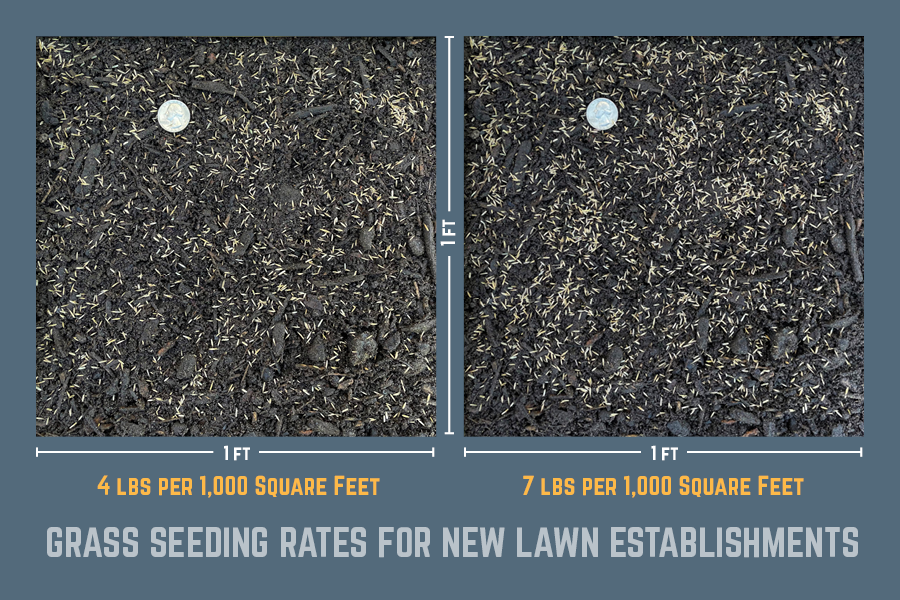
Image Source: alseed.com
Deciphering Grass Seed Coverage Rates
Every bag of grass seed comes with a recommended coverage rate. This rate is typically expressed as pounds of seed per 1,000 square feet. It’s essential to pay close attention to this information as it’s the primary tool for calculating seeding rate. Different grass species have different germination rates and growth habits, which directly influence how much seed is needed to achieve a thick stand.
For example, a premium blend of fescue might have a higher coverage rate than a more aggressive, fast-spreading grass like ryegrass. These rates are usually determined through extensive testing to ensure they provide the best balance between establishment and density.
Common Coverage Rates for Popular Grass Types:
- Kentucky Bluegrass: Typically requires 1-2 pounds per 1,000 sq ft for new lawns and 0.5-1 pound per 1,000 sq ft for overseeding.
- Perennial Ryegrass: Often seeded at 3-5 pounds per 1,000 sq ft for new lawns and 2-3 pounds per 1,000 sq ft for overseeding.
- Fine Fescues (Creeping Red, Chewings, Hard): Generally seeded at 3-4 pounds per 1,000 sq ft for new lawns and 1.5-2 pounds per 1,000 sq ft for overseeding.
- Tall Fescue: Needs 6-8 pounds per 1,000 sq ft for new lawns and 3-4 pounds per 1,000 sq ft for overseeding.
- Bermudagrass (Seed): While often established from sod or plugs, seed can be used at 0.5-1 pound per 1,000 sq ft.
- Zoysiagrass (Seed): Similar to Bermudagrass, seed is less common but would be around 0.25-0.5 pounds per 1,000 sq ft.
It’s important to remember that these are general guidelines, and the specific product’s recommendation should always take precedence.
The Importance of Lawn Seeding Density
Lawn seeding density refers to the number of grass plants per unit area. A well-established lawn has a high seeding density, meaning the grass is thick and closely packed. This density is crucial for a healthy lawn for several reasons:
- Weed Suppression: Dense turf outcompetes weeds for sunlight, water, and nutrients, making it harder for them to establish.
- Disease Resistance: Healthy, dense grass is generally more resilient to common lawn diseases.
- Aesthetic Appeal: A thick, uniform lawn is visually appealing and creates a lush appearance.
- Erosion Control: The root system of dense turf helps bind the soil, preventing erosion.
Achieving the correct density starts with the initial seeding. If you apply too few seeds, the grass will be sparse, leaving ample space for weeds to invade. If you apply too many, the young grass plants will compete excessively for resources, leading to weaker growth and potentially stunting.
Conversion Factors for Acreage:
Since most seed coverage rates are given per 1,000 square feet, you’ll need to convert your total acreage to square feet to accurately calculate your needs.
- 1 Acre = 43,560 square feet
To find out how many 1,000 square foot units are in an acre:
- 43,560 sq ft / 1,000 sq ft = 43.56 units of 1,000 sq ft per acre
So, if a seed bag states it covers 5,000 sq ft, one bag would cover approximately 5,000 / 43,560 = 0.11 acres.
Calculating Seeding Rate: Pounds of Seed Per Acre
Now, let’s put it all together. We’ll use a step-by-step process to arrive at the pounds of seed per acre for your specific needs.
Step 1: Determine the Square Footage of Your Lawn.
If you don’t know the exact size of your property, you can measure it. For irregularly shaped areas, break them down into simpler shapes like rectangles and triangles and add their areas together.
Step 2: Find the Recommended Seeding Rate per 1,000 Square Feet.
Refer to the grass seed packaging. This is your primary source of information for grass seed coverage rates.
Step 3: Calculate the Total Amount of Seed Needed.
- Formula:
(Total square footage of your lawn / 1,000 sq ft) * (Recommended seeding rate per 1,000 sq ft) = Total pounds of seed needed.
Example Calculation for a New Lawn:
Let’s say you have a 1-acre lawn (43,560 sq ft) and you’re planting Tall Fescue, which has a recommended seeding rate of 8 pounds per 1,000 sq ft for a new lawn.
- Calculate total pounds needed:
(43,560 sq ft / 1,000 sq ft) * 8 lbs/1,000 sq ft = 43.56 * 8 lbs = 348.48 pounds of seed.
So, for a 1-acre Tall Fescue lawn being established from seed, you would need approximately 348.5 pounds of seed.
Example Calculation for Overseeding:
Now, let’s say you’re overseeding that same 1-acre lawn with Kentucky Bluegrass, and the recommended overseeding rate is 1 pound per 1,000 sq ft.
- Calculate total pounds needed:
(43,560 sq ft / 1,000 sq ft) * 1 lb/1,000 sq ft = 43.56 * 1 lb = 43.56 pounds of seed.
This shows a significant difference between establishing a new lawn and simply thickening an existing one.
Factors Affecting Seed Coverage
Several factors affecting seed coverage can influence the actual amount of seed you’ll need and the success of your seeding project. It’s not just about the number on the bag.
Grass Type and Seed Quality
As we’ve seen, different grass types have different seeding rates for turfgrass. Beyond the species, the quality of the seed is paramount. Higher quality seed will have a higher germination rate and fewer weed seeds or inert materials, meaning you might get better results with slightly less seed if it’s a premium product. Always look for seed with a high germination percentage and a low percentage of inert matter.
New Lawn Establishment vs. Overseeding
The primary difference in seed requirements lies between establishing a new lawn from scratch and overseeding an existing lawn.
- New Lawn Establishment: This requires a higher lawn seeding density from the outset to ensure a thick, competitive turf. You are essentially starting from bare soil and need enough seed to create a dense carpet.
- Overseeding: This process aims to fill in thin areas and improve the overall density of an existing lawn. You’re supplementing the existing turf, so you generally need less seed than for a new lawn. The goal is to introduce new seedlings without overwhelming the established grass.
Soil Preparation
Proper soil preparation is critical for seed germination and establishment. Compacted soil, poor drainage, or nutrient-deficient soil can hinder germination and early growth, potentially requiring you to use more seed to compensate for losses. Aeration, dethatching, and proper fertilization before seeding can improve success rates.
Application Method
The method you use to apply the seed can also impact how evenly it’s distributed.
- Broadcast Spreaders: These are good for covering large areas but can sometimes lead to uneven application if not used carefully. Overlapping passes help ensure even coverage.
- Drop Spreaders: These are more precise and drop seed in a straight line, making them ideal for accurate application, especially along borders.
Regardless of the spreader type, calibrating it correctly according to the seed manufacturer’s recommendations is essential for optimal grass seed application.
Climate and Environmental Conditions
The time of year you seed and the prevailing weather conditions play a significant role.
- Temperature: Each grass type has optimal temperature ranges for germination. Seeding outside these windows can lead to poor germination and seedling survival.
- Moisture: Consistent moisture is vital for germination. If you live in a dry climate or are seeding during a dry spell, you may need to water more frequently, and seedling loss due to drought can occur, potentially requiring reseeding.
- Sunlight: Some grasses tolerate shade, while others require full sun. Seeding in areas with inadequate or excessive sun for the chosen grass type can impact establishment.
Seeding Mixtures Per Acre
Many commercially available grass seed products are not single species but rather seeding mixtures per acre. These mixtures are designed to combine the strengths of different grass types, creating a more resilient and adaptable lawn.
Benefits of Seed Mixtures:
- Improved Pest and Disease Resistance: If one grass variety is susceptible to a particular disease, others in the mix may be resistant, protecting the overall lawn.
- Adaptability to Varying Conditions: A mix can include grasses that perform well in both sunny and shady areas, or those that tolerate drought better than others.
- Faster Establishment: Often, mixtures include a fast-germinating grass like ryegrass to provide quick cover while slower-germinating but more persistent grasses like fescue or bluegrass establish.
- Enhanced Color and Texture: Different grasses can contribute to a more uniform and aesthetically pleasing appearance.
When using a mixture, the grass seed coverage rates on the bag will typically be for the entire blend. You’ll still follow the same calculation steps as outlined above, using the recommended rate for the mixture.
Common Seed Mixture Components:
-
Cool-Season Grasses (for Northern climates):
- Kentucky Bluegrass: Excellent cold-season durability, good self-repairing ability, but slow to establish and prefers sun.
- Perennial Ryegrass: Quick to germinate and establish, good wear tolerance, but can be susceptible to some diseases in hot, humid conditions.
- Fine Fescues: Tolerate shade and drought well, low maintenance, but can have finer texture.
- Tall Fescue: Deep root system, drought tolerant, good wear tolerance, but can have a coarser texture and may go dormant in extreme heat or drought.
-
Warm-Season Grasses (for Southern climates):
- Bermudagrass: Very drought tolerant, good wear tolerance, aggressive spreader, but goes dormant and turns brown in winter.
- Zoysiagrass: Dense, attractive turf, drought tolerant, slow to establish, but good wear tolerance and handles heat well.
- Centipedegrass: Low maintenance, good for sandy soils, but less tolerant of wear and drought than Bermuda or Zoysia.
- St. Augustinegrass: Shade tolerant, good for coastal areas, but not as cold-hardy or drought tolerant as others.
When choosing a seed mixture, consider your climate, soil type, sun exposure, and intended use of the lawn.
Best Seeding Practices for Success
Beyond knowing how many pounds of grass seed per acre to use, employing best seeding practices will significantly increase your chances of a successful lawn.
Timing is Everything
- Cool-Season Grasses: Fall is generally the best time to seed cool-season grasses. The soil is still warm enough for germination, and the cooler air temperatures and increased rainfall provide ideal growing conditions. Late summer seeding is also an option if adequate moisture can be maintained.
- Warm-Season Grasses: Spring or early summer is the optimal time for seeding warm-season grasses, once the soil temperature has warmed up sufficiently and the danger of frost has passed.
Prepare the Soil
- Remove Debris: Clear the area of rocks, sticks, weeds, and any other debris.
- Test Your Soil: A soil test can reveal nutrient deficiencies or pH imbalances that need correction before seeding.
- Loosen the Soil: For new lawns, till or loosen the top 4-6 inches of soil. For overseeding, lightly aerate or dethatch the existing lawn to improve seed-to-soil contact.
- Rake Smooth: Create a smooth, level seedbed.
- Fertilize: Apply a starter fertilizer recommended for new lawns. This provides essential nutrients for early growth.
Apply the Seed Evenly
- Calibrate Your Spreader: Ensure your spreader is set correctly to apply the seed at the recommended rate.
- Divide and Conquer: Divide your seed into two equal portions. Spread the first half walking in one direction (e.g., north-south) and the second half walking perpendicular to the first (e.g., east-west). This ensures more even distribution.
- Light Raking: Gently rake the seeded area to lightly cover the seed with about 1/8 to 1/4 inch of soil. This improves seed-to-soil contact.
Watering is Crucial
- Keep Seed Moist: The most critical aspect of post-seeding care is consistent moisture. The soil surface should remain moist but not waterlogged.
- Light, Frequent Watering: Water lightly two to three times a day for the first 1-2 weeks, or until the grass seedlings are well established (about 2-3 inches tall).
- Deep Watering: Once the grass is established, transition to less frequent but deeper watering to encourage strong root development.
Mowing and Maintenance
- Mow High: When mowing newly seeded grass for the first time, set your mower to the highest setting.
- Sharp Blades: Always use sharp mower blades to avoid tearing the delicate grass blades.
- Don’t Mow Too Soon: Wait until the grass reaches its mature height before the first mowing. Avoid mowing when the grass is wet.
Estimating Grass Seed Needs for Different Scenarios
The general pounds of seed per square foot for an acre can be quite large. However, your needs might vary significantly depending on your specific situation.
New Lawn Installation
For a brand new lawn, you’ll want to use the higher end of the recommended seeding rates for turfgrass. This is to ensure a dense stand from the beginning, which will help prevent weeds and create a visually appealing lawn. If the bag recommends 5 lbs per 1,000 sq ft for a new lawn, and you have a half-acre lot (21,780 sq ft):
- Total seed needed = (21,780 sq ft / 1,000 sq ft) * 5 lbs/1,000 sq ft = 21.78 * 5 lbs = 108.9 pounds.
Overseeding an Existing Lawn
When overseeding, you’re supplementing existing grass. You can use a lower grass seed coverage rate. If the bag recommends 3 lbs per 1,000 sq ft for overseeding, and you have the same half-acre lot:
- Total seed needed = (21,780 sq ft / 1,000 sq ft) * 3 lbs/1,000 sq ft = 21.78 * 3 lbs = 65.34 pounds.
This clearly demonstrates the difference in seed quantity.
Repairing Patchy Areas
For small, patchy areas, you don’t need to calculate for the entire acreage. Focus on the specific problem spots. You can often simply sprinkle seed by hand in these areas, ensuring good seed-to-soil contact, and keep them consistently moist. While precise estimating grass seed needs is important for large areas, for small repairs, a small handful applied directly to the bare patch is sufficient.
Frequently Asked Questions (FAQ)
Q1: Can I use more seed than recommended to ensure a thicker lawn?
A1: While it might seem like more seed means a better lawn, using too much seed can actually be detrimental. Overcrowding leads to competition for sunlight, water, and nutrients, resulting in weaker grass plants that are more susceptible to disease and stress. It can also lead to a lawn that thins out more quickly over time. It’s best to stick to the recommended rates and focus on other factors like soil health and proper watering.
Q2: What does “percentage germination” on a seed bag mean?
A2: The percentage germination tells you how many of the seeds in the bag are expected to sprout under ideal conditions. For example, if a bag says 85% germination, it means that out of 100 seeds, approximately 85 are viable. This is an important factor when calculating seeding rate, as you may need to adjust slightly to account for the non-viable seeds. Always choose seed with a high germination rate.
Q3: How do I convert pounds of seed per acre to pounds of seed per square foot?
A3: To convert pounds per acre to pounds per square foot, you divide the pounds per acre by the number of square feet in an acre (43,560).
* Formula: Pounds per square foot = (Pounds per acre) / 43,560.
For example, if a rate is 200 pounds per acre:
200 lbs / 43,560 sq ft ≈ 0.0046 lbs per sq ft.
This can be tricky to measure accurately for small areas. It’s generally easier to work with the per 1,000 sq ft recommendations.
Q4: What if my lawn is sloped?
A4: On slopes, you might want to increase your seeding rate slightly (perhaps by 10-15%) to compensate for potential seed wash-off during heavy rains. Using a seed mulch or tackifier can also help hold the seed in place. Ensure good seed-to-soil contact by lightly pressing the seed into the soil.
Q5: How do I choose the right grass seed for my area?
A5: Consider your climate (cool-season or warm-season grass region), the amount of sunlight your lawn receives (full sun, partial shade, full shade), your soil type, and how you plan to use the lawn (high traffic, low maintenance). Local extension offices or reputable garden centers can provide guidance on the best grass types and varieties for your specific region.
By carefully considering these factors and following the guidance in this post, you can confidently estimate your grass seed needs and achieve a beautiful, thriving lawn. Remember, quality seed, proper preparation, and consistent care are the cornerstones of successful lawn seeding.