
How much does it cost to service a lawn mower? The cost to service a lawn mower can vary widely, but you can generally expect to pay between $75 and $200 for a standard tune-up. More complex repairs or specialized services can increase this price.
Regular maintenance is key to keeping your lawn mower running smoothly and extending its lifespan. Ignoring simple upkeep can lead to costly repairs down the line. This guide will break down the typical lawn mower maintenance cost and help you budget for essential services. We’ll explore what goes into a lawn mower tune-up price, the factors influencing the cost of lawn mower repair, and how professional lawn mower service pricing is determined.
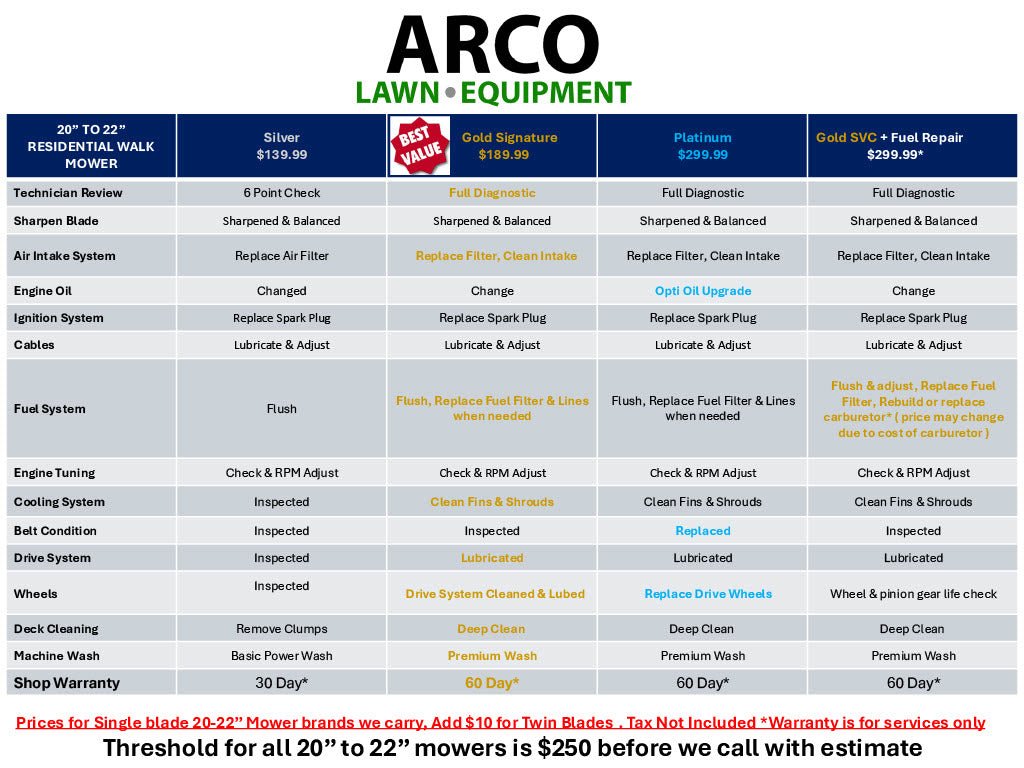
Image Source: www.arcolawn.com
Deciphering Lawn Mower Service Costs
When your trusty mower starts sputtering or simply isn’t cutting as well as it used to, it’s time for some attention. The average lawn mower service cost depends on several factors, including the type of mower, the services required, and where you get it serviced.
Common Services and Their Price Ranges
Here’s a look at the typical services your lawn mower might need and their associated costs:
- Oil Change: This is a fundamental part of lawn mower engine service cost. Most shops charge between $20 and $40 for an oil change, including the cost of the oil and filter. Some people opt to do this themselves, saving on labor.
- Blade Sharpening and Balancing: Dull blades chew grass, leading to an uneven cut and stressing the lawn. Sharpening and balancing your mower blades typically costs between $10 and $25. This is a crucial part of lawn mower blade sharpening cost.
- Air Filter Replacement: A clean air filter ensures the engine gets enough air to run efficiently. This service usually costs between $15 and $30, including the filter.
- Spark Plug Replacement: A new spark plug provides a strong spark for easy starting and smooth running. Expect to pay $15 to $30 for this service.
- Fuel System Cleaning: Over time, fuel can go stale and clog the carburetor. A fuel system cleaning can range from $50 to $100.
- Carburetor Rebuild/Replacement: This is a more involved cost of small engine repair. A carburetor rebuild might cost $75 to $150, while a full replacement could be $150 to $300.
- Deck Cleaning and Inspection: Cleaning grass clippings and debris from the mower deck prevents rust and allows for better inspection. This is often included in tune-up packages or costs around $20 to $40 if done separately.
- Belt Inspection and Replacement: Belts can wear out over time. Inspection is usually part of a tune-up. Replacement costs can range from $30 to $70, depending on the belt type.
What’s Included in a Standard Lawn Mower Tune-Up?
A typical lawn mower tune-up price covers a combination of the above services. A comprehensive tune-up usually includes:
- Oil Change: Draining old oil and replacing it with fresh oil.
- Spark Plug Replacement: Installing a new spark plug for optimal ignition.
- Air Filter Cleaning or Replacement: Ensuring clean airflow to the engine.
- Blade Sharpening and Balancing: Restoring sharp edges for a clean cut.
- Fuel System Check: Verifying fuel lines and checking for blockages.
- General Inspection: Checking tires, belts, and other moving parts for wear and tear.
- Cleaning: Removing debris from the engine and deck.
The lawn mower maintenance cost for a standard tune-up can range from $75 to $200. This is an excellent preventative measure to avoid more significant cost of lawn mower repair.
Factors Influencing Lawn Mower Service Prices
Several elements can affect how much you’ll pay for your lawn mower service.
Type of Lawn Mower
- Push Mowers: These are the most basic and generally have the lowest service costs. Their simpler engines and fewer moving parts mean less labor and fewer parts to replace.
- Self-Propelled Mowers: The addition of a drive system adds complexity. Service might include checking and lubricating the drive mechanism, which can slightly increase the lawn mower maintenance cost.
- Riding Mowers/Lawn Tractors: These are essentially small vehicles with complex engines and multiple systems (steering, transmission, hydraulics). Residential lawn mower maintenance for these machines is significantly more expensive. A tune-up for a riding mower can easily range from $150 to $350, and repairs can climb much higher.
- Zero-Turn Mowers: Similar to riding mowers, zero-turns have advanced steering systems. Their service costs will be on the higher end due to their complexity.
Type of Service Needed
- Routine Maintenance (Tune-Up): This is the most common service and generally the most affordable. It focuses on preventative care to keep the mower running well.
- Specific Repairs: If your mower has a broken part, such as a bent crankshaft, a damaged transmission, or a faulty starter, the cost of lawn mower repair will be higher. These costs are often dictated by the price of the replacement part and the labor required to install it. For example, a major cost of small engine repair could involve replacing an engine, which can cost several hundred dollars.
- Winterization/Storage Prep: Preparing your mower for winter storage often involves stabilizing the fuel, cleaning it thoroughly, and sometimes changing the oil. This service usually costs between $50 and $100.
Where You Get Your Mower Serviced
- Independent Repair Shops: These often offer competitive pricing and personalized service. They may have lower overhead than dealerships, allowing them to offer more affordable rates.
- Dealerships: Authorized dealerships for your mower brand will typically have higher prices. However, they offer specialized knowledge and use genuine OEM (Original Equipment Manufacturer) parts, which can be beneficial for warranty work or complex repairs. Their professional lawn mower service pricing reflects this.
- Mobile Repair Services: Some services come to your home. While convenient, mobile services might charge a premium for the convenience or have a minimum service fee.
- DIY (Do-It-Yourself): For basic tasks like oil changes, blade sharpening (if you have the tools), and air filter replacement, doing it yourself can save you a significant amount on labor costs. The lawn mower oil change price you pay for just the oil and filter is minimal compared to shop prices.
Parts and Labor Costs
- Parts: The cost of replacement parts varies greatly. Common parts like spark plugs and air filters are inexpensive. More complex parts, such as starters, carburetors, or transmission components, can be costly.
- Labor Rates: Labor rates vary by region and by the shop’s specialization. Expect to pay anywhere from $50 to $150 per hour for skilled technician labor. The complexity of the repair will determine how many hours are billed.
Calculating Your Lawn Mower Maintenance Budget
To effectively budget for your lawn mower’s upkeep, consider these points:
Annual Maintenance Costs
For a typical residential push mower, budgeting $100 to $250 per year for maintenance is a reasonable starting point. This usually covers a comprehensive tune-up, including oil, spark plug, air filter, and blade sharpening. If you have a riding mower or experience more significant issues, you’ll need to increase that budget.
Potential Repair Costs
Unexpected repairs can add to your annual cost. It’s wise to set aside an additional $50 to $100 per year for potential minor repairs. Major repairs, however, can be highly variable and difficult to predict.
When Repairs Become Too Costly
If the cost of lawn mower repair approaches or exceeds the cost of a new mower, it might be time to consider replacement. For a good quality push mower, this threshold might be around $300 to $500. For riding mowers, it could be $1,000 or more.
Common Lawn Mower Problems and Their Repair Costs
Let’s delve into some specific issues and their typical repair price tags. This will give you a clearer picture of the cost of lawn mower repair.
Engine Problems
- Engine Won’t Start: This could be a simple issue like a dirty spark plug, a clogged fuel line, or a dead battery (for electric start models). Costs can range from $20 (for a spark plug) to $150-$300 (for carburetor issues).
- Engine Misfires or Runs Rough: Often caused by fuel issues, a faulty spark plug, or a clogged air filter. Repair costs are typically in the $50-$150 range.
- Engine Overheats: This can be due to low oil levels, a dirty cooling fin area, or a failing internal component. A simple cleaning is cheap, but internal engine work can be expensive, potentially falling under the lawn mower engine service cost umbrella, which can be substantial.
- Excessive Smoke: Blue smoke usually indicates oil burning in the combustion chamber, often due to worn piston rings or valve seals. This is a more serious internal engine repair, and the cost of small engine repair for this can be $200-$500+.
Cutting Deck Issues
- Bent or Damaged Mower Deck: A bent deck can affect cutting performance and safety. Repairing or replacing a deck can cost anywhere from $100 to $400, depending on the severity and mower type.
- Worn or Broken Belts: Mower deck belts are essential for spinning the blades. Replacement typically costs $30 to $70, including labor.
- Blade Spindle Repair/Replacement: The spindle is the shaft that holds the blade. If it’s damaged or worn, it needs repair or replacement. This can cost $75 to $200 per spindle.
Transmission and Drive System Issues (for Self-Propelled and Riding Mowers)
- Drive Belt Slipping: Worn drive belts can cause the mower to lose power. Replacement costs are similar to deck belts, around $30 to $70.
- Transmission Problems: These are some of the most expensive repairs. Transmission rebuilds or replacements can cost anywhere from $300 to $1,000+, depending on the mower and the extent of the damage. This is a significant portion of the cost of lawn mower repair.
DIY vs. Professional Service: Making the Choice
The decision to tackle maintenance yourself or take it to a professional depends on your skills, tools, and available time.
DIY Lawn Mower Maintenance
Pros:
- Cost Savings: You save on labor costs. The lawn mower oil change price you pay for just the oil and filter is much lower than a shop’s charge.
- Convenience: You can do it on your own schedule.
- Learning Opportunity: You gain valuable knowledge about your mower.
Cons:
- Requires Tools: You need the right tools for the job, such as wrenches, socket sets, oil drain pans, and potentially specialized tools for blade sharpening.
- Time Commitment: It takes time to perform maintenance tasks.
- Risk of Error: Mistakes can lead to further damage.
- Limited Capabilities: Complex repairs are best left to professionals.
Tasks you can typically do yourself:
- Oil Change: Straightforward and saves money.
- Air Filter Replacement: Easy to access and replace.
- Spark Plug Replacement: A simple screw-in process.
- Blade Sharpening: If you have a grinder or file and a vice. Lawn mower blade sharpening cost can be zero if you do it yourself.
- Cleaning: Basic cleaning of the deck and engine.
Professional Lawn Mower Service
Pros:
- Expertise: Trained technicians can diagnose and fix problems accurately.
- Efficiency: Professionals can often complete services faster than a DIYer.
- Warranty: Many shops offer warranties on their labor and parts.
- Access to Specialized Tools: They have the equipment for complex tasks.
- Peace of Mind: Knowing the job is done correctly.
Cons:
- Higher Cost: You pay for labor and overhead. Professional lawn mower service pricing reflects these factors.
- Inconvenience: You need to transport the mower to and from the shop.
- Waiting Time: Depending on the season and shop workload, you might have to wait for service.
When to choose professional service:
- Complex Engine Issues: Carburetor problems, internal engine damage.
- Transmission or Drive System Repairs: These require specialized knowledge.
- Electrical System Issues: For mowers with electric starters or other electrical components.
- Major Mechanical Failures: Any significant breakdown.
- Lack of Tools or Time: If you don’t have what you need to do the job.
Seasonal Maintenance Tips to Save Money
Proactive maintenance throughout the year can reduce the need for expensive repairs and keep your lawn mower maintenance cost lower.
Spring Preparation
- Check Oil: Ensure it’s at the correct level and clean.
- Replace Spark Plug and Air Filter: Start the season with fresh components.
- Sharpen Blades: Get a clean cut from the start.
- Check Fuel: Use fresh fuel, and consider adding a fuel stabilizer if the mower was stored with fuel.
- Inspect Tires and Belts: Look for signs of wear.
Summer Usage
- Check Oil Regularly: Especially during hot weather and heavy use.
- Clean Mower Deck: Remove grass clippings after each use to prevent rust and clogging.
- Keep Air Filter Clean: A dirty filter will reduce performance.
Fall/Winter Preparation (Winterization)
- Run Mower Dry or Stabilize Fuel: Prevent fuel system issues. If you run it dry, ensure all fuel is out of the carburetor. If you stabilize, use a quality stabilizer and let the engine run for a few minutes to circulate it.
- Change Oil: Fresh oil is better for storage than old, dirty oil.
- Clean Thoroughly: Remove all grass and debris from the deck and engine.
- Lubricate Moving Parts: Protect against rust.
- Store Properly: Keep it in a dry, sheltered location.
By following these seasonal tips, you’re actively engaging in residential lawn mower maintenance that can prevent costly breakdowns and keep your lawn mower engine service cost down over time.
Cost Breakdown: What You’re Paying For
When you pay for professional lawn mower service pricing, you’re typically paying for:
- Labor: The technician’s time and expertise.
- Parts: The cost of any replacement parts used.
- Shop Overhead: This includes rent, utilities, insurance, and equipment maintenance for the repair facility.
- Diagnostic Fees: Sometimes, a fee is charged just to identify the problem before any work begins.
- Waste Disposal Fees: For used oil, filters, and other materials.
Sample Pricing for Different Mower Types
To give you a clearer picture, here are some estimated price ranges for common services:
| Service Type | Push Mower (Estimated Price) | Riding Mower (Estimated Price) |
|---|---|---|
| Standard Tune-Up | $75 – $150 | $150 – $350 |
| Oil Change Only | $20 – $40 | $40 – $70 |
| Blade Sharpening & Balancing | $10 – $25 | $20 – $40 (per blade set) |
| Air Filter & Spark Plug | $30 – $60 | $40 – $80 |
| Carburetor Cleaning/Repair | $75 – $150 | $100 – $200 |
| Belt Replacement (Deck) | $30 – $70 | $50 – $100 |
| Drive Belt Replacement | N/A | $60 – $120 |
| Fuel System Cleaning | $50 – $100 | $75 – $150 |
| Major Engine Repair (e.g., Seal) | $150 – $300+ | $300 – $800+ |
Note: These are general estimates and actual costs can vary based on location, specific mower model, and the complexity of the service.
Frequently Asked Questions (FAQ)
Here are some common questions people have about lawn mower servicing costs:
Q1: How often should I get my lawn mower serviced?
A1: For most residential push mowers, a full tune-up once a year, typically in the spring before the mowing season begins, is recommended. If you have a large yard or use your mower very heavily, you might consider a second check-up in the fall.
Q2: Is it cheaper to repair an old lawn mower or buy a new one?
A2: Generally, if the repair cost exceeds 50% of the price of a comparable new mower, it’s often more cost-effective to buy new. This rule of thumb can vary based on the age and condition of the old mower and the availability of parts.
Q3: Can I service my own lawn mower?
A3: Yes, basic maintenance like oil changes, spark plug and air filter replacement, and blade sharpening can be done by most homeowners with common tools. However, more complex repairs, especially those involving the engine’s internal components or transmission, are best left to professionals.
Q4: What is the most common reason for lawn mower repairs?
A4: The most common reasons for lawn mower repairs are related to the fuel system (stale fuel, clogged carburetor) and ignition system (fouled spark plug, faulty ignition coil). Lack of regular maintenance is the primary culprit.
Q5: Does the brand of lawn mower affect the service cost?
A5: While basic maintenance costs are similar across brands, specialized parts for premium or less common brands might be more expensive, potentially increasing the overall lawn mower maintenance cost or cost of lawn mower repair. Dealership service for brand-specific issues can also be higher.
Q6: What does “cost of small engine repair” typically include?
A6: The cost of small engine repair usually encompasses diagnosing issues with engines like those found in lawn mowers, including carburetor adjustments, ignition system checks, cylinder head work, and sometimes even more extensive overhauls. This cost is driven by labor and the specific engine components needing attention.
By investing in regular maintenance and being aware of potential repair costs, you can ensure your lawn mower serves you faithfully for many seasons to come.