
How often should you feed your lawn? Generally, most lawns benefit from being fertilized three to four times a year. This frequency ensures a steady supply of nutrients, promoting healthy growth, vibrant color, and better resilience against stress.
Feeding your lawn is a cornerstone of good lawn care. It’s not just about making your grass look greener; it’s about nurturing its overall health and vitality. Understanding the nuances of lawn feeding schedule is key to achieving that lush, thriving carpet of green. This comprehensive guide will walk you through everything you need to know, from the science behind fertilization to practical tips for success.
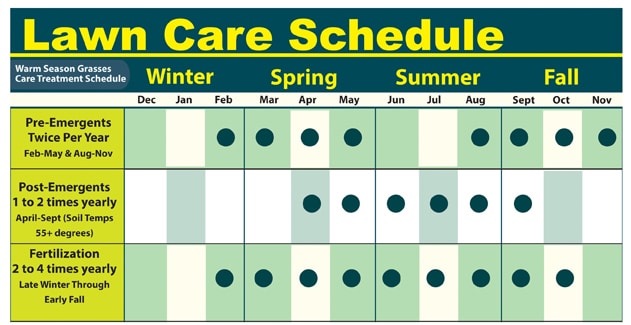
Image Source: www.rynolawncare.com
The Importance of Feeding Your Lawn
Lawns are living ecosystems that constantly use up the nutrients in the soil. Think of your grass as a plant that needs regular meals to grow strong. Without proper feeding, your lawn can become thin, weak, and more susceptible to diseases, pests, and environmental stresses like drought or extreme temperatures.
Fertilizing lawn frequency is directly linked to:
- Nutrient Replenishment: Grass absorbs nutrients from the soil as it grows. Fertilizers replace these essential elements, primarily nitrogen, phosphorus, and potassium, which are the macronutrients critical for plant life.
- Enhanced Growth: Adequate nutrients fuel robust root development and healthy leaf growth, leading to a denser and more vigorous lawn.
- Improved Color: Nitrogen, in particular, is responsible for the green pigment in plants (chlorophyll). Sufficient nitrogen leads to a rich, deep green color.
- Increased Disease and Pest Resistance: A healthy, well-fed lawn has stronger cell walls and a more robust immune system, making it less vulnerable to common lawn problems.
- Better Drought Tolerance: Strong root systems, promoted by proper feeding, allow the grass to access moisture deeper in the soil, improving its ability to withstand dry periods.
Deciphering Your Lawn’s Needs: Grass Type and Climate
The exact lawn feeding schedule you follow will depend on several factors, including the type of grass you have and the climate you live in.
Cool-Season vs. Warm-Season Grasses
- Cool-Season Grasses: These grasses, such as Kentucky Bluegrass, Fescue, and Ryegrass, thrive in cooler temperatures (spring and fall). They are typically dormant or grow slowly during the hot summer months. For cool-season grasses, the primary feeding times are in the early fall and late spring. A lighter feeding in mid-spring can also be beneficial.
- Warm-Season Grasses: These grasses, like Bermuda, Zoysia, and St. Augustine, prefer warmer temperatures and are active during the summer. They go dormant in the fall and winter. For warm-season grasses, the main feeding periods are in late spring and mid-summer. A feeding in early spring as they begin to green up is also recommended.
Climate Considerations
- Northern Climates: With longer, colder winters and shorter growing seasons, focus on feeding cool-season grasses in the fall to help them store energy for winter and then again in the spring for initial growth.
- Southern Climates: These regions often experience longer growing seasons and hotter summers. Warm-season grasses will need feeding during their active growing periods – late spring and mid-summer. Cool-season grasses, if grown, will require careful management to survive summer heat, with fall feeding being the most critical.
- Transitional Zones: These areas experience a mix of conditions, and the best lawn feeding schedule might involve tailoring feeding to the dominant grass type and observing the lawn’s response.
When to Apply Lawn Fertilizer: Key Timing
Knowing when to apply lawn fertilizer is as crucial as choosing the right product. Timing your applications correctly maximizes nutrient uptake and minimizes the risk of damaging your lawn or the environment.
Spring Lawn Feeding
Spring is a vital time for lawn care feeding, especially for cool-season grasses.
- Purpose: To replenish nutrients depleted over winter and encourage new growth as temperatures rise.
- Timing: Aim for late spring, typically after the grass has fully greened up and is actively growing. Avoid fertilizing too early when the grass is still waking up, as this can lead to weak, spindly growth. For cool-season grasses, a light feeding in mid-spring can also be beneficial, but the main push should be in the fall.
- Fertilizer Type: A balanced fertilizer or one with a slightly higher nitrogen content is suitable.
Summer Lawn Feeding
- Purpose: To maintain growth and color during the peak of the growing season.
- Timing: For warm-season grasses, this is a critical feeding time, usually in late spring and mid-summer. For cool-season grasses, avoid heavy fertilization during the hot summer months, as this can stress the lawn. If you must fertilize, use a slow-release formula and apply it sparingly.
- Fertilizer Type: Slow-release nitrogen fertilizers are best for summer to prevent rapid, weak growth that is prone to disease and heat stress.
Fall Lawn Fertilization
Fall is arguably the most important feeding period, especially for cool-season grasses.
- Purpose: To provide essential nutrients for root development and to help the grass store energy for winter survival. A well-fed lawn in the fall will emerge stronger in the spring.
- Timing: Apply fertilizer in early to mid-fall, typically before the first hard frost. For cool-season grasses, a late fall application (dormant feeding) after the grass has stopped growing but before the ground freezes can be very beneficial.
- Fertilizer Type: Fertilizers with a higher phosphorus content can aid root development. A balanced fertilizer is also suitable.
Winter Feeding (Dormant Feeding)
- Purpose: To provide a slow release of nutrients that the grass can absorb in late fall or early spring, promoting early spring green-up.
- Timing: This is primarily for cool-season grasses. Apply just before the ground freezes, typically in late fall after the grass has gone dormant.
- Fertilizer Type: Slow-release nitrogen fertilizers are ideal.
Selecting the Right Fertilizer: N-P-K Explained
Fertilizer labels display three numbers, known as the N-P-K ratio. These represent the percentages by weight of Nitrogen (N), Phosphorus (P), and Potassium (K) – the three primary macronutrients for plant growth.
- Nitrogen (N): This is the workhorse nutrient for lawns. It promotes lush, green leafy growth and is crucial for photosynthesis. Nitrogen fertilizer lawn applications are vital for maintaining color and density. However, too much nitrogen can lead to weak, disease-prone grass.
- Phosphorus (P): Essential for root development, seedling growth, and flowering. While important for establishing new lawns and for overseeding lawn fertilizer, mature lawns typically have sufficient phosphorus in the soil. Excess phosphorus can contribute to water pollution.
- Potassium (K): Crucial for overall plant health, helping to improve drought tolerance, disease resistance, and the ability to withstand extreme temperatures.
Choosing a Fertilizer:
- Balanced Fertilizers: Numbers like 10-10-10 or 20-20-20 provide equal amounts of N, P, and K.
- High-Nitrogen Fertilizers: Numbers like 30-0-4 or 25-3-8 are great for promoting green growth. These are common for spring lawn feeding and summer lawn care feeding for warm-season grasses.
- Starter Fertilizers: These often have higher phosphorus content (e.g., 10-20-10) and are ideal for new lawns or when overseeding a lawn.
- Slow-Release vs. Quick-Release:
- Quick-release fertilizers provide immediate results but can burn the lawn if over-applied and require more frequent applications.
- Slow-release fertilizers release nutrients gradually over several weeks or months, reducing the risk of burning and providing a more consistent supply of food. These are generally preferred for a consistent lawn feeding schedule.
How Often Feed Lawn: A Practical Lawn Feeding Schedule
Here’s a general guide for fertilizing lawn frequency, but always remember to adjust based on your specific grass type, climate, and soil conditions.
General Lawn Feeding Schedule (Cool-Season Grasses)
| Season | Timing | Fertilizer Type Recommendation | Notes |
|---|---|---|---|
| Spring | Late Spring (May) | Balanced fertilizer (e.g., 20-10-10) or a nitrogen fertilizer lawn formula with slow-release N. | Focus on promoting healthy growth after winter dormancy. Avoid excessive nitrogen. |
| Summer | Mid-Summer (July) – Optional/Light | Slow-release, low-nitrogen fertilizer or organic fertilizer. | Only if needed. Avoid heavy fertilization during heat stress. |
| Fall | Early to Mid-Fall (September/October) | Balanced fertilizer or one with higher phosphorus and potassium (e.g., 10-20-20 or 15-15-30). | Crucial for root development and winter hardiness. This is a key fall lawn fertilization application. |
| Late Fall | Before Ground Freezes (November) | Slow-release nitrogen fertilizer (dormant feeding). | Helps the lawn green up quickly in spring and provides stored energy. |
General Lawn Feeding Schedule (Warm-Season Grasses)
| Season | Timing | Fertilizer Type Recommendation | Notes |
|---|---|---|---|
| Spring | Early Spring (April) – as grass greens up | Balanced fertilizer or a nitrogen fertilizer lawn formula. | Kickstarts growth as temperatures rise. |
| Late Spring/Early Summer | Late May/Early June | High-nitrogen, preferably slow-release fertilizer (e.g., 30-0-10). | Supports active growth and provides a good green color. This is a critical lawn care feeding time. |
| Mid-Summer | July/August | High-nitrogen, slow-release fertilizer. | Maintain vigor and color throughout the hottest months. |
| Fall | Late Fall (October/November) – before dormancy | Low-nitrogen, slow-release fertilizer. | Helps the grass store energy for winter and recover from summer stress. Important for fall lawn fertilization. |
Advanced Lawn Feeding Tips for Optimal Results
Beyond the basic schedule, several lawn feeding tips can elevate your lawn care game:
Soil Testing: The Foundation of Smart Feeding
Before you even think about buying fertilizer, get a soil test! Your local cooperative extension office can help with this. A soil test will reveal:
- pH Level: The acidity or alkalinity of your soil, which affects nutrient availability. Most grasses prefer a slightly acidic to neutral pH (6.0-7.0).
- Nutrient Deficiencies: It will identify if your soil is lacking specific nutrients like phosphorus or potassium.
- Organic Matter Content: This indicates the soil’s ability to retain moisture and nutrients.
Armed with this information, you can choose fertilizers that specifically address your lawn’s needs, preventing over-fertilization and saving money.
Understanding Soil pH and Fertilizer Needs
| Soil pH | Nutrient Availability | Recommendations |
|---|---|---|
| Acidic (below 6.0) | Phosphorus, Calcium, Magnesium, and Molybdenum are less available. Nitrogen and Potassium availability can also be affected. | Apply lime to raise pH. Use fertilizers that are less likely to increase acidity. |
| Neutral (6.0 – 7.0) | All essential nutrients are generally available to grass plants. This is the ideal range. | Continue with a regular lawn feeding schedule based on soil test results and grass type. |
| Alkaline (above 7.0) | Iron, Manganese, Zinc, and Phosphorus availability can be reduced, leading to chlorosis (yellowing). | Apply sulfur or organic matter to lower pH. Use acidifying fertilizers like ammonium sulfate. Consider iron supplements if chlorosis is observed. |
The Benefits of Organic Fertilizers
Organic fertilizers, derived from natural sources like compost, manure, or bone meal, offer several advantages:
- Slow-Release Nutrients: They feed your lawn gradually, reducing the risk of burning and leaching.
- Soil Improvement: They add organic matter to the soil, improving its structure, water retention, and microbial activity.
- Environmental Friendliness: They are less likely to pollute waterways.
While organic fertilizers may not provide the instant green-up of synthetic ones, they contribute to long-term soil health and a more resilient lawn. They are excellent for lawn care feeding throughout the growing season.
Applying Fertilizer: Proper Technique is Key
- Calibrate Your Spreader: Ensure your spreader is set to the recommended rate on the fertilizer bag. Over-application can damage your lawn.
- Apply Evenly: Walk at a consistent pace and overlap passes slightly to avoid striping or missed spots.
- Watering In: For most granular fertilizers, watering the lawn after application helps to move the nutrients into the soil and prevents the granules from burning the grass blades. Wait 24-48 hours after fertilizing before watering if the bag advises this. Check the product label.
- Avoid Fertilizing Dry Lawns: Apply fertilizer to moist grass.
- Clean Up Spills: Sweep any fertilizer that lands on sidewalks or driveways back onto the lawn.
The Role of Overseeding Fertilizer
When you overseed a lawn, you’re introducing new grass seed. This process requires specific nutrient support.
- Starter Fertilizers: Use a fertilizer with a higher phosphorus content (the middle number in N-P-K) when overseeding. Phosphorus is vital for root establishment.
- Timing: Apply starter fertilizer just before or at the time of seeding.
- Frequency: You might only need one application of starter fertilizer when overseeding, as the goal is to establish the new seed, not to promote rapid top growth.
Common Mistakes to Avoid in Lawn Feeding
Even with the best intentions, some common errors can hinder your lawn’s progress:
- Over-Fertilizing: This is one of the most damaging mistakes. It can burn the grass, leading to brown patches, and promote weak, leggy growth susceptible to disease. It’s better to under-fertilize slightly than to over-fertilize.
- Fertilizing During Stress: Avoid fertilizing during extreme heat, drought, or when the grass is dormant. This adds stress rather than benefit.
- Ignoring Soil Tests: Applying generic fertilizer without knowing your soil’s specific needs is inefficient and potentially harmful.
- Mowing Too Low After Fertilizing: Wait a few days after fertilizing before mowing to allow the grass to absorb the nutrients.
- Using the Wrong Fertilizer for the Season: Applying a high-nitrogen fertilizer to a dormant lawn or during peak heat can be detrimental.
Frequently Asked Questions (FAQ)
Q1: How do I know if my lawn needs fertilizer?
A1: Signs your lawn might need fertilizer include a pale green or yellowish color, slow growth, thinning turf, and increased susceptibility to weeds and diseases. A soil test is the most definitive way to assess nutrient levels.
Q2: Can I fertilize my lawn when it’s dry?
A2: It’s generally best to fertilize when the grass is moist. If you apply dry granular fertilizer to a dry lawn, it can burn the grass. Watering the lawn after application helps the fertilizer dissolve and move into the soil. Always check the specific product instructions.
Q3: Is it okay to fertilize in the summer?
A3: Fertilizing in the summer can be tricky. For cool-season grasses, avoid heavy fertilization during hot summer months as it can stress the lawn. If you must fertilize, use a slow-release, low-nitrogen formula. Warm-season grasses actively grow in summer and generally benefit from fertilization during this period, but slow-release products are still recommended.
Q4: What is the best time to fertilize grass?
A4: The best time to fertilize grass depends on your grass type. For cool-season grasses, the most critical times are early fall and late spring. For warm-season grasses, it’s late spring and mid-summer.
Q5: How much fertilizer should I use?
A5: Follow the application rates recommended on the fertilizer packaging. These rates are usually given in pounds of product per 1,000 square feet. Using a soil test can help you determine the precise amount of specific nutrients needed.
Q6: What does “slow-release” fertilizer mean?
A6: Slow-release fertilizers release nutrients gradually over a period of weeks or months. This provides a consistent food supply for the lawn, reduces the risk of burning, and minimizes nutrient runoff into waterways. Many lawn care feeding products now utilize slow-release technology.
Q7: My lawn has bare patches. Can fertilizer help?
A7: Fertilizer can help a lawn recover and fill in, but it won’t fix bare patches caused by severe disease, pest infestation, or compacted soil. Addressing the underlying cause is crucial. For bare patches, consider using a starter fertilizer in conjunction with overseeding a lawn.
By following these best practices for fertilizing lawn frequency and understanding your lawn’s specific needs, you can cultivate a healthy, beautiful, and resilient lawn that you can enjoy for years to come. Remember that consistent, informed lawn care feeding is the key to success.