
Do you need to know how to calculate your lawn size? Calculating your lawn size, often referred to as finding the square footage of lawn, is a simple process that involves measuring your yard’s dimensions. Knowing your lawn area calculation is crucial for many lawn care tasks. This includes everything from buying the right amount of fertilizer or grass seed to knowing how much mulch you need for garden beds. It also helps when planning landscaping projects or getting quotes for lawn mowing services. In this guide, we’ll break down how to measure your backyard size and determine the square footage of lawn accurately.
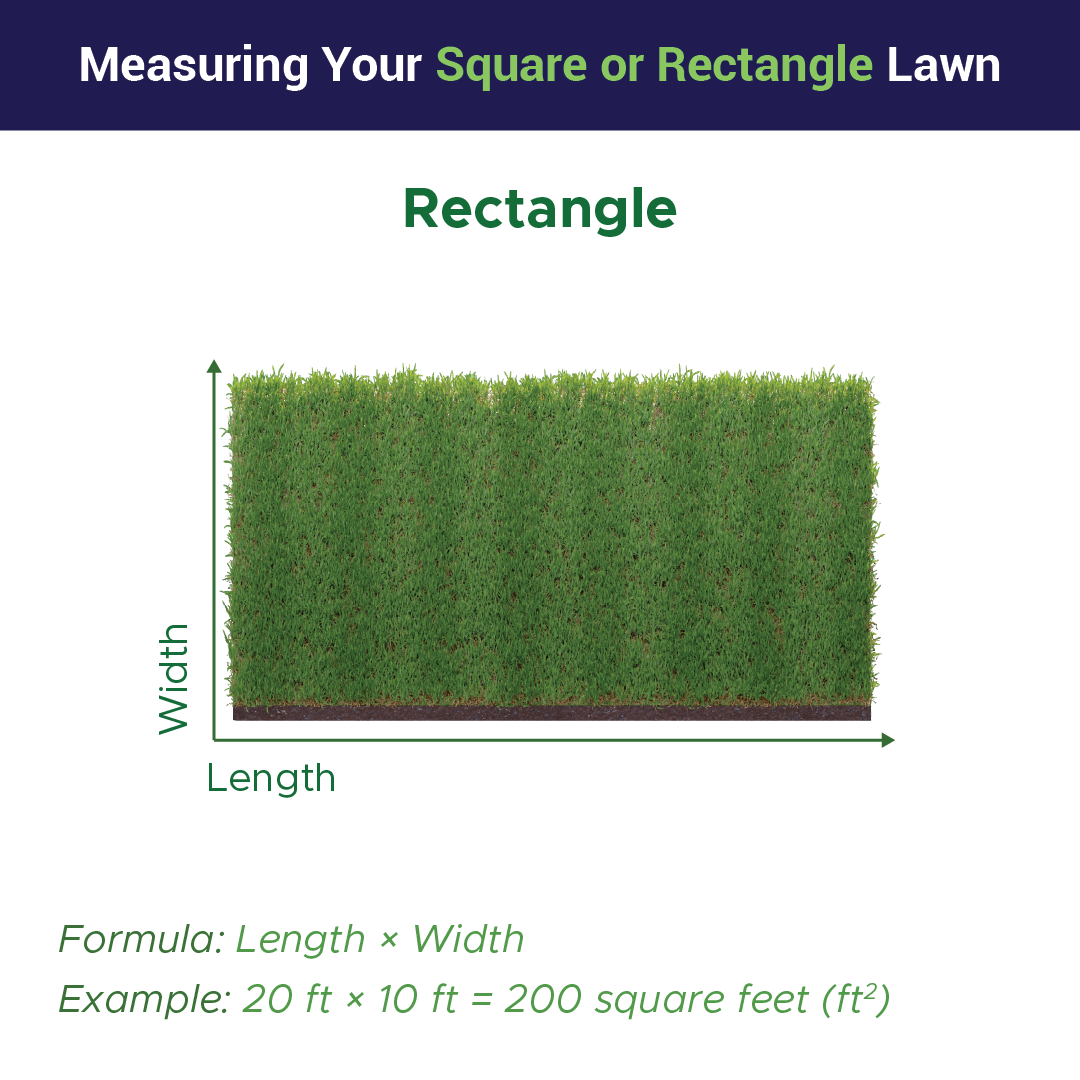
Image Source: lawntolakemidwest.org
Why Knowing Your Lawn Size Matters
Your lawn’s size dictates how much of everything you’ll need. Think about it:
- Fertilizer and Seed: You can’t just guess how much seed to buy. Too little, and you’ll have patchy grass. Too much, and you’ll waste money. Knowing your lawn area calculation ensures you buy the correct amount.
- Pest and Weed Control: Similar to fertilizer, the effectiveness of pesticides and herbicides depends on applying them at the right rate for your specific area.
- Mulch and Soil: If you’re adding mulch to flower beds or amending the soil, accurate measurements help you avoid buying too much or too little.
- Watering: While not a direct calculation of size, knowing the general area helps you gauge how long and how often to water.
- Landscaping Projects: Whether you’re installing a sprinkler system, building a patio, or planting a new garden, your backyard dimensions are the foundation for your design.
- Lawn Maintenance Calculations: For budgeting and planning, knowing your lawn’s size is essential for lawn maintenance calculations. This includes estimating costs for mowing, aerating, or even hiring a professional.
Tools You’ll Need for Measuring Your Lawn
To get accurate lawn measurement tools and techniques, you’ll want a few basic items:
- Measuring Tape: A long tape measure (50 or 100 feet) is ideal. A digital measuring wheel can also be very useful for larger areas.
- Notebook and Pen/Pencil: To jot down your measurements as you go.
- Calculator: Or use the calculator on your phone.
- Helper (Optional): An extra person can make measuring long distances much easier and more accurate.
- Stakes or Markers (Optional): To mark corners or boundaries if needed, especially for irregular shapes.
Simple Steps to Measure Your Lawn
Let’s get to the core of how to measure grass area. The process varies slightly depending on the shape of your lawn.
Step 1: Identify the Shape of Your Lawn
Most lawns can be broken down into simple geometric shapes:
- Rectangles and Squares: These are the easiest. They have four straight sides and four right angles.
- Triangles: Some sections of a yard might be triangular.
- Circles and Semi-circles: These can occur around trees or as part of a design.
- Irregular Shapes: Many yards are a combination of these shapes or have curved boundaries.
Step 2: Measure the Dimensions
This is where your measuring tape comes in.
For Rectangular or Square Lawns:
- Measure the Length: Extend your tape measure along one of the longer sides of your lawn. Record this measurement.
- Measure the Width: Extend your tape measure along one of the shorter sides, ensuring it’s perpendicular to the length (forming a right angle). Record this measurement.
Example: If your lawn is 50 feet long and 30 feet wide, you have your basic dimensions.
For Circular or Semi-Circular Lawns:
- For a Full Circle: Measure the distance across the widest part of the circle, passing through the center. This is the diameter.
- For a Semi-Circle: Measure the straight edge of the semi-circle. This is also considered the diameter for calculation purposes.
Example: If the widest part of your circular garden bed is 10 feet across, your diameter is 10 feet.
For Triangular Lawns:
- Measure the Base: Choose one side of the triangle as the base. Measure its length.
- Measure the Height: Measure the perpendicular distance from the opposite corner to the base. This is the height.
Example: If the base of your triangular patch is 15 feet and its height is 8 feet, you have your measurements.
For Irregularly Shaped Lawns:
This is where it gets a little trickier, but not impossible. The best approach is to break the irregular shape down into smaller, manageable geometric shapes (rectangles, squares, triangles, etc.).
- Sketch Your Lawn: Draw a rough sketch of your lawn, including any pathways, patios, or garden beds you want to exclude from the lawn area calculation.
- Divide and Conquer: Mentally or physically mark out the different sections on your sketch. For example, one section might be a rectangle, and an adjacent section might be a triangle.
- Measure Each Section: Measure the dimensions of each individual shape as described above.
- Calculate Each Section Separately: Use the formulas below to find the area of each shape.
- Add Them Up: Sum the areas of all the sections to get your total square footage of lawn.
Calculating the Area of Different Shapes
Once you have your measurements, you can use simple formulas to find the area. The unit of measurement will typically be square feet for lawn calculations.
H3: Area of a Rectangle or Square
The formula for the area of a rectangle is:
Area = Length × Width
For a square, where length and width are the same, the formula is simply:
Area = Side × Side (or Side²)
Example: If your lawn is 50 feet long and 30 feet wide:
Area = 50 ft × 30 ft = 1500 square feet.
H3: Area of a Circle
The formula for the area of a circle is:
Area = π × radius²
Where:
* π (Pi) is approximately 3.14159.
* radius is half of the diameter.
So, if your diameter is 10 feet, your radius is 10 ft / 2 = 5 feet.
Area = π × (5 ft)²
Area = π × 25 sq ft
Area ≈ 3.14159 × 25 sq ft
Area ≈ 78.54 square feet.
H3: Area of a Semi-Circle
A semi-circle is half a circle. So, you can calculate the area of a full circle and divide it by two:
Area = (π × radius²) / 2
Or, using the diameter:
Area = (π × (diameter / 2)²) / 2
Example: If the straight edge of your semi-circle is 10 feet (diameter), the radius is 5 feet.
Area = (π × 5 ft²) / 2
Area = (π × 25 sq ft) / 2
Area ≈ 78.54 sq ft / 2
Area ≈ 39.27 square feet.
H3: Area of a Triangle
The formula for the area of a triangle is:
Area = (Base × Height) / 2
Example: If the base of your triangle is 15 feet and the height is 8 feet:
Area = (15 ft × 8 ft) / 2
Area = 120 sq ft / 2
Area = 60 square feet.
H4: Combining Areas for Irregular Shapes
Let’s revisit measuring backyard size for an irregular yard. Imagine your yard is shaped like this: a rectangle with a triangle attached to one side.
- Section 1 (Rectangle): Length = 40 ft, Width = 20 ft
- Section 2 (Triangle): Base = 20 ft (same as the width of the rectangle it’s attached to), Height = 10 ft
Calculate Area of Section 1 (Rectangle):
Area1 = 40 ft × 20 ft = 800 sq ft
Calculate Area of Section 2 (Triangle):
Area2 = (20 ft × 10 ft) / 2 = 200 sq ft / 2 = 100 sq ft
Total Lawn Area:
Total Area = Area1 + Area2
Total Area = 800 sq ft + 100 sq ft = 900 sq ft
This is your total square footage of lawn.
Using Online Plot Size Calculators
For those who prefer a digital approach or have very complex shapes, online plot size calculator tools can be incredibly helpful. You typically input your measurements, and the calculator does the math for you. Some advanced tools even allow you to draw your lawn shape on a map. However, always double-check the measurements you input.
Estimating Lawn Size When Precise Measurement Isn’t Possible
Sometimes, you just need a rough idea. If you’re quickly estimating lawn size and don’t have your measuring tape handy:
- Pacing: You can pace out your lawn. Know roughly how long your average step is (e.g., 2.5 feet). Walk the length and width, count your steps, and multiply by your average step length. This is less accurate but can give you a ballpark figure.
- Using Aerial Imagery: Tools like Google Maps or Google Earth allow you to see an aerial view of your property. They often have a measurement tool that lets you click points to measure distance. This is surprisingly accurate for larger areas.
What About Excluding Non-Lawn Areas?
When calculating your lawn area calculation, you might want to exclude areas like:
- Patios and Decks: These are hardscaping and don’t need grass.
- Driveways: Similar to patios, these are not part of the grassy area.
- Flower Beds and Garden Plots: Unless you plan to cover them with grass, measure around them.
- Sheds and Other Structures: Buildings occupy space and aren’t lawn.
How to measure grass area accurately means subtracting these areas from your total yard measurements.
Example: Let’s say your entire backyard is 100 ft by 50 ft (5000 sq ft). You have a patio that is 20 ft by 10 ft (200 sq ft) and a flower bed that is roughly circular with a 5 ft radius (Area = π * 5² ≈ 78.5 sq ft).
Total Yard Area = 5000 sq ft
Patio Area = 200 sq ft
Flower Bed Area ≈ 78.5 sq ft
Total Non-Lawn Area ≈ 200 + 78.5 = 278.5 sq ft
Actual Lawn Area = Total Yard Area – Total Non-Lawn Area
Actual Lawn Area ≈ 5000 sq ft – 278.5 sq ft ≈ 4721.5 sq ft
This gives you a more precise figure for lawn maintenance calculations.
Calculating Lawn Perimeter: When is it Necessary?
While most of the time you focus on the square footage of lawn, knowing the calculating lawn perimeter can be useful for specific tasks.
- Edging: To determine how much edging material you need for your lawn’s borders.
- Fencing: If you plan to fence your lawn, the perimeter is a key measurement.
- Sprinkler System Design: The length of your lawn’s borders can inform sprinkler head placement.
H4: Calculating Perimeter for Rectangles and Squares
The formula for the perimeter of a rectangle is:
Perimeter = 2 × (Length + Width)
For a square:
Perimeter = 4 × Side
Example: For a lawn 50 ft long and 30 ft wide:
Perimeter = 2 × (50 ft + 30 ft)
Perimeter = 2 × (80 ft)
Perimeter = 160 feet.
H4: Calculating Perimeter for Circles
The formula for the circumference (perimeter) of a circle is:
Circumference = π × Diameter
Or:
Circumference = 2 × π × radius
Example: For a circular lawn with a diameter of 10 feet:
Circumference = π × 10 ft
Circumference ≈ 3.14159 × 10 ft
Circumference ≈ 31.42 feet.
H4: Calculating Perimeter for Irregular Shapes
For irregular shapes, you simply add up the lengths of all the outside edges. If you’ve broken your lawn into sections, you’ll need to measure the outside edges of each section and add them together. Be careful not to double-count shared internal borders if you’re only interested in the outermost boundary.
Practical Applications of Knowing Your Lawn Size
Let’s look at how this information is used in real-world lawn maintenance calculations.
H5: Buying Grass Seed
Grass seed bags usually tell you the coverage area in square feet. If your lawn is 1500 sq ft and the bag says it covers 5000 sq ft, you’ll need about 1500/5000 = 0.3 of a bag. It’s often wise to buy a little extra to account for spills or patchy areas that need reseeding.
H5: Ordering Mulch or Topsoil
Mulch and topsoil bags also list coverage. However, they often specify coverage at a certain depth (e.g., 3 inches). You’ll need to ensure your calculated area and desired depth are considered.
Example: You need to cover a flower bed measuring 100 sq ft with 3 inches of mulch. You would calculate the volume:
Volume = Area × Depth
Volume = 100 sq ft × (3 inches / 12 inches/foot)
Volume = 100 sq ft × 0.25 ft
Volume = 25 cubic feet.
You would then check mulch bag sizes to see how many bags you need to reach 25 cubic feet.
H5: Applying Fertilizer and Weed Killers
These products have application rates, usually given in pounds per 1000 sq ft. If your lawn is 1500 sq ft and the product says to apply 1 pound per 1000 sq ft, you’ll need 1.5 pounds of product. Always follow product instructions carefully.
H5: Getting Lawn Care Quotes
When you call a professional lawn care service, they will often ask for your square footage of lawn. This is a primary factor in determining the cost of services like mowing, aeration, or fertilization. Having this number ready saves time and helps you get accurate quotes.
Tips for Accurate Lawn Measurement
- Measure on a Calm Day: Wind can make it difficult to hold your tape measure straight, especially for long distances.
- Be Consistent with Units: Stick to feet and inches for all your measurements.
- Measure at the Property Line: If possible, measure to the exact edge of your property.
- Round Up for Safety: When in doubt, slightly round up your measurements, especially when buying materials. It’s better to have a little extra than not enough.
- Double-Check Your Math: Mistakes in addition or multiplication can lead to significant errors in your total area.
Frequently Asked Questions (FAQ)
Q1: What is the easiest way to measure a circular lawn?
A1: The easiest way is to measure the diameter (the longest distance across the circle, passing through the center) and then use the formula Area = π × (Diameter/2)².
Q2: Can I use a standard tape measure for a large lawn?
A2: For very large lawns, a standard tape measure can be cumbersome. A measuring wheel or a laser measure can be more efficient and accurate.
Q3: Who should I ask if I need help calculating my lawn size?
A3: If you need assistance, you can ask a neighbor, a friend who enjoys DIY projects, or a landscaping professional. Many online resources and even some garden centers offer advice.
Q4: How do I account for sloped areas when measuring my lawn?
A4: For practical purposes like buying seed or fertilizer, you generally measure the surface area as if it were flat. The product application rates are designed to work on typical slopes found in yards. For major landscaping or construction, a surveyor might be needed for precise topographical measurements.
Q5: What if my lawn has many curved edges?
A5: Break the lawn into as many geometric shapes as possible (rectangles, triangles, segments of circles). Measure each part, calculate its area, and then add all the areas together. You might need to approximate some curved sections as triangles or trapezoids for easier calculation.
By following these steps, you can confidently calculate your lawn size, making all your lawn care and landscaping projects more efficient and successful. Knowing your backyard dimensions is the first step to a beautiful and well-maintained outdoor space.