
Yes, you can change your zero turn mower blades yourself! It’s a common maintenance task that keeps your lawn looking its best. Doing it yourself can save you money and give you a better feel for your machine. This guide will walk you through the entire process, from gathering your tools to putting on those shiny new blades.
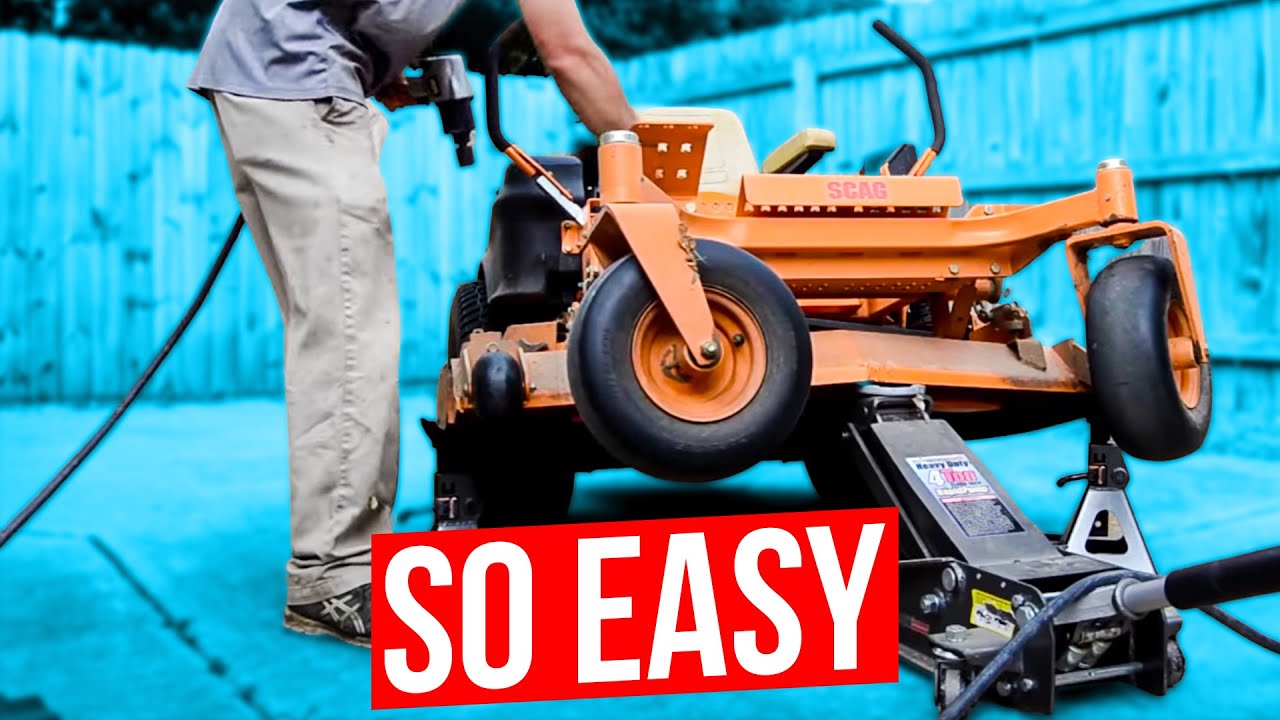
Image Source: i.ytimg.com
Why Change Your Zero Turn Mower Blades?
Over time, your mower blades take a beating. They hit rocks, twigs, dirt, and just regular grass. This wear and tear can lead to a few problems:
- Uneven Cutting: Dull or damaged blades can’t cut grass cleanly. This results in a ragged, uneven lawn that looks messy. You might notice “streaks” or areas where the grass is taller than others.
- Stressed Grass: When blades tear rather than cut, they stress the grass. This makes your lawn more susceptible to diseases and pests. It can also lead to browning or yellowing of the grass tips.
- Reduced Performance: Your mower has to work harder with dull blades. This means more fuel consumption and more strain on the engine and drive system.
- Blade Breakage: Severely damaged blades can break apart while the mower is running. This is a serious safety hazard, as flying metal fragments can cause injury or damage.
Regularly inspecting and replacing your blades is a key part of zero turn mower blade replacement to ensure your mower operates efficiently and safely, and your lawn stays healthy and attractive.
Tools for Changing Zero Turn Mower Blades: What You’ll Need
Having the right tools makes the job much easier and safer. Here’s a list of what you’ll likely need:
- New Mower Blades: Make sure you get the correct blades for your specific zero turn mower model. Check your owner’s manual or the manufacturer’s website.
- Socket Set or Wrenches: You’ll need sockets or wrenches to fit the blade mounting bolts. Common sizes are 15mm, 18mm, or 5/8 inch. A deep socket is often helpful.
- Torque Wrench: This is crucial for tightening the bolts to the correct specification. Overtightening can damage the spindle, while undertightening can cause the blade to loosen.
- Blade Removal Tool/Blade Adapter (Optional but Recommended): Some specialized tools make it easier to hold the blade in place while you loosen the bolt.
- Gloves: Thick work gloves are essential for protecting your hands from sharp blades and grease.
- Safety Glasses: Always wear eye protection when working with mowers.
- Wheel Chocks: To prevent the mower from rolling.
- Piece of Wood (e.g., 2×4): To wedge under the deck to help keep the blades from spinning.
- Wire Brush: For cleaning threads and the spindle housing.
- Penetrating Oil (e.g., WD-40): To help loosen stubborn bolts.
- Cardboard or Tarp: To lay on the ground for comfort and to catch any dropped parts.
Safely Change Zero Turn Mower Blades: Prioritizing Your Well-being
Safety is paramount when working on any piece of machinery, especially a lawn mower. Here’s how to safely change zero turn mower blades:
- Park on a Level Surface: Always park your zero turn mower on a flat, stable surface.
- Disengage the PTO: Make sure the Power Take-Off (PTO) or blade engagement lever is in the disengaged position.
- Shut Off the Engine: Turn the engine off completely and remove the ignition key. This prevents accidental starting.
- Disconnect the Spark Plug Wire: For an extra layer of safety, pull the spark plug wire off the spark plug. This completely disables the engine.
- Lower the Mower Deck: Lower the mower deck to its lowest setting or to a position that provides easier access to the blades.
- Engage the Parking Brake: Ensure the parking brake is firmly engaged.
- Chock the Wheels: Place wheel chocks securely behind the rear wheels to prevent any movement.
How to Remove Zero Turn Mower Blades: Step-by-Step
Now that you’re safely set up, let’s get those old blades off. The process for how to remove zero turn mower blades typically involves accessing the underside of the mower deck.
Step 1: Access the Mower Deck
Most zero turn mowers have decks that can be lifted or tilted for easier access.
- Lifting the Deck: Some models have a deck lift lever or pedal that allows you to raise the deck to a service position. Consult your owner’s manual for specific instructions for your model.
- Tilting the Deck: Other mowers allow you to tilt the deck forward or backward. Again, your manual will be the best resource for this.
- Removing the Deck (Optional but Easier): For many people, the best way to change zero turn mower blades is to actually remove the mower deck from the tractor. This usually involves disconnecting belts, lift arms, and sometimes even gauge wheels or splash guards. This can be a bit more involved, but it provides much better access and visibility. If your deck is difficult to access or you find it awkward to work underneath, consider removing it.
Step 2: Stabilize the Blade
Before you try to loosen the blade bolt, you need to stop the blade from spinning.
- Using a Wood Block: Once you have access to a blade, wedge a sturdy piece of wood (like a 2×4) between the blade and the mower deck housing. Position it so it braces against the deck’s structure and stops the blade from turning when you apply pressure to the bolt.
- Using a Blade Tool: If you have a specialized blade adapter, follow its instructions. These tools often fit over the blade and provide a sturdy handle or leverage point.
Step 3: Loosen and Remove the Blade Bolt
- Identify the Bolt: Locate the bolt that holds the blade to the spindle shaft.
- Apply Penetrating Oil (if needed): If the bolt looks rusty or is difficult to access, spray a little penetrating oil on it and let it sit for a few minutes.
- Loosen the Bolt: Use the correct size socket or wrench to loosen the bolt. Remember that the bolt is usually a standard right-hand thread, meaning you turn it counter-clockwise to loosen.
- Be Prepared for Resistance: These bolts can be very tight. You might need to use a breaker bar for extra leverage, but be careful not to strip the bolt head.
- Remove the Bolt and Blade: Once the bolt is loose, unscrew it completely. The blade should then slide off the spindle shaft. Keep the bolt and any washers or lock nuts – you’ll need them again.
Step 4: Inspect the Spindle and Blade Holder
While the blade is off, take a moment to inspect the spindle.
- Check for Damage: Look for any signs of cracking, bending, or excessive wear on the spindle shaft and the blade mounting area.
- Clean Threads: Use a wire brush to clean the threads on the spindle shaft. This ensures the new blade bolt will thread on smoothly and securely.
- Clean the Blade Holder: Clean any debris or rust from the part of the spindle that the blade attaches to.
Step 5: Repeat for Other Blades
Repeat steps 2 through 4 for all the blades on your mower deck. Most zero turn mowers have two or three blades, depending on the deck size.
Installing New Mower Blades Zero Turn: Putting Them Back On
Now that you’ve removed the old blades and inspected everything, it’s time for installing new mower blades zero turn. This is the reverse of removal, but with a crucial addition: proper torque.
Step 1: Orient the New Blades Correctly
This is a critical step! Mower blades are designed to cut grass in a specific direction.
- Check the Shape: Look at the new blades. One side will be curved upwards more than the other. This upward curve creates airflow that helps lift the grass for a clean cut and also helps to move the grass clippings.
- Mounting Direction: The curved, “high” side of the blade should always face UPWARD, towards the mower deck. If you accidentally install them upside down, they won’t lift the grass properly, will cut poorly, and can even cause damage.
- Consult Manual: Your owner’s manual will have a diagram showing the correct orientation for your specific blades.
Step 2: Attach the New Blade
- Slide the Blade On: Place the new blade onto the spindle shaft, making sure it’s oriented correctly (curved side up).
- Re-install the Bolt and Washer: Put the original bolt and any washers back in place. Make sure the washer is oriented correctly if it’s a specific type (e.g., domed).
Step 3: Tighten the Blade Bolt to the Correct Torque
This is where the torque wrench comes in. Overtightening can strip the threads on the spindle or even break the spindle itself. Undertightening can lead to the blade coming loose, which is extremely dangerous.
- Find the Torque Specification: Your owner’s manual will provide the recommended torque setting for the blade mounting bolts. This is typically in the range of 50-75 foot-pounds (ft-lbs) or 70-100 Newton-meters (Nm), but it varies by manufacturer.
- Set Your Torque Wrench: Adjust your torque wrench to the specified value.
- Stabilize the Blade Again: Use your wood block or blade tool to hold the blade firmly in place.
- Torque the Bolt: Apply steady pressure to the torque wrench until it clicks or indicates that the correct torque has been reached. Do not overtighten beyond the click.
- Check for Wobble: Once torqued, gently try to wiggle the blade. It should be firmly attached with no play.
Step 4: Re-check Mower Blade Balance Zero Turn (Important for New Blades)
New blades, even from the factory, can sometimes be slightly out of balance. Mower blade balance zero turn is essential for smooth operation and to prevent excessive vibration that can damage your mower and cause operator fatigue.
- Blade Balancer Tool: The easiest way to check balance is with a simple blade balancer tool, which you can buy at most hardware stores or mower shops.
- How to Use a Balancer: Place the blade balancer on a level surface and insert the center hole of the blade onto the balancer’s cone.
- Observe: If the blade stays level, it’s balanced. If one side drops, it’s heavier.
- Balancing: If a blade is unbalanced, you can carefully grind a small amount of metal off the heavy end of the blade to bring it into balance. Be conservative – only remove a little metal at a time. If you are unsure about balancing, it’s best to buy pre-balanced blades or have a professional balance them.
Step 5: Repeat for Other Blades
Repeat steps 1 through 4 for all the blades on your mower.
Step 6: Re-attach the Mower Deck (If Removed)
If you removed the mower deck, now is the time to re-attach it according to your owner’s manual. This usually involves:
- Aligning Belts: Ensure the drive belt is properly seated on the pulleys.
- Connecting Lift Arms: Reconnect any lift arms or chains.
- Re-attaching Gauge Wheels and Guards: Put back any components you removed.
Zero Turn Mower Blade Sharpening: Keeping Blades in Top Shape
Beyond replacement, zero turn mower blade sharpening is also a critical maintenance task. Sharpening your blades can extend their life and improve cutting performance, often saving you from needing to buy new blades as frequently.
When to Sharpen:
- After hitting something hard: Always inspect blades after hitting rocks or debris.
- If you notice poor cut quality: Ragged edges or uneven mowing are signs.
- Regularly: Even without hitting obstacles, blades dull with normal use. Aim to sharpen them at least once or twice a season, depending on your mowing hours.
How to Sharpen:
- Remove the Blades: Follow the removal steps outlined earlier.
- Use a Bench Grinder or File:
- Bench Grinder: This is the quickest method. Hold the blade against the grinding wheel at the original bevel angle. Move the blade back and forth to grind evenly. Don’t overheat the blade, as this can weaken the metal.
- Metal File: A sturdy metal file is a good alternative if you don’t have a grinder. Again, maintain the original bevel angle. This method requires more effort but offers more control.
- Sharpen the Cutting Edge: Focus on sharpening the beveled edge of the blade. Aim for a consistent angle, usually around 30-45 degrees.
- Balance the Blade: After sharpening, always check the blade balance using a blade balancer. Grind a little material from the heavier end if needed.
- Clean and Reinstall: Clean the blades, check for any cracks, and reinstall them correctly as described in the installation section.
Note: If your blades are significantly bent, cracked, or have large sections missing, it’s safer and more effective to replace them rather than trying to sharpen or repair them.
Frequently Asked Questions (FAQ)
Q: How often should I change my zero turn mower blades?
A: The frequency depends on how much you mow and what you mow over. Generally, inspect your blades every 25-50 hours of operation. You should replace them if they are significantly worn, chipped, bent, or cracked. Sharpening them as needed can extend their life.
Q: Can I just sharpen my blades instead of replacing them?
A: Yes, you can sharpen your blades, and it’s a good practice to keep them sharp. However, if the blades are severely damaged (bent, cracked, or have large chunks missing), replacement is necessary for safety and performance.
Q: What happens if I don’t tighten the blade bolts enough?
A: If the blade bolts are not tightened properly, the blades can loosen while the mower is in operation. This is extremely dangerous, as a loose blade can fly off and cause serious injury or damage. It can also cause excessive vibration and damage to the spindle.
Q: What happens if I over-tighten the blade bolts?
A: Over-tightening can strip the threads on the spindle shaft or even crack the spindle housing. This can lead to costly repairs. Always use a torque wrench to tighten bolts to the manufacturer’s specifications.
Q: What is the difference between high-lift and mulching blades?
A: High-lift blades have larger “baffles” or curves at the ends, which create more airflow to lift grass for a cleaner cut and help discharge clippings efficiently. Mulching blades are often designed with more curves and sharper angles to chop grass clippings into finer pieces to be returned to the lawn as fertilizer. Ensure you use the type of blade recommended for your mower and mowing conditions.
Q: My zero turn mower is vibrating more than usual. Could it be the blades?
A: Yes, excessive vibration is often caused by unbalanced blades, damaged blades, or blades that are installed incorrectly. Ensure all blades are properly mounted and balanced.
Q: Is it safe to work under a zero turn mower?
A: It can be, but only if you take all necessary safety precautions. Always ensure the engine is off, the spark plug wire is disconnected, the parking brake is engaged, and the wheels are chocked. Never rely solely on the mower’s hydraulics or lift systems to hold it up if you need to work under it for an extended period. If you need to work under the deck for an extended time or feel uncomfortable, consider using jack stands after lifting the mower.
By following these steps, you can confidently tackle the task of changing your zero turn mower blades, ensuring your mower runs smoothly and your lawn looks its best. Remember to always consult your owner’s manual for model-specific instructions and torque specifications.