
Want to know how to get lawn care contracts? The key is a strategic approach that combines excellent service, effective marketing, and clear communication. You can secure more clients by focusing on building relationships, showcasing your expertise, and presenting professional proposals.
Building a successful lawn care business is about more than just pushing a mower. It’s about finding lawn care clients who value your services and are willing to pay for quality. This guide will walk you through the essential steps to secure more clients and grow your business by mastering the art of obtaining lawn care contracts.
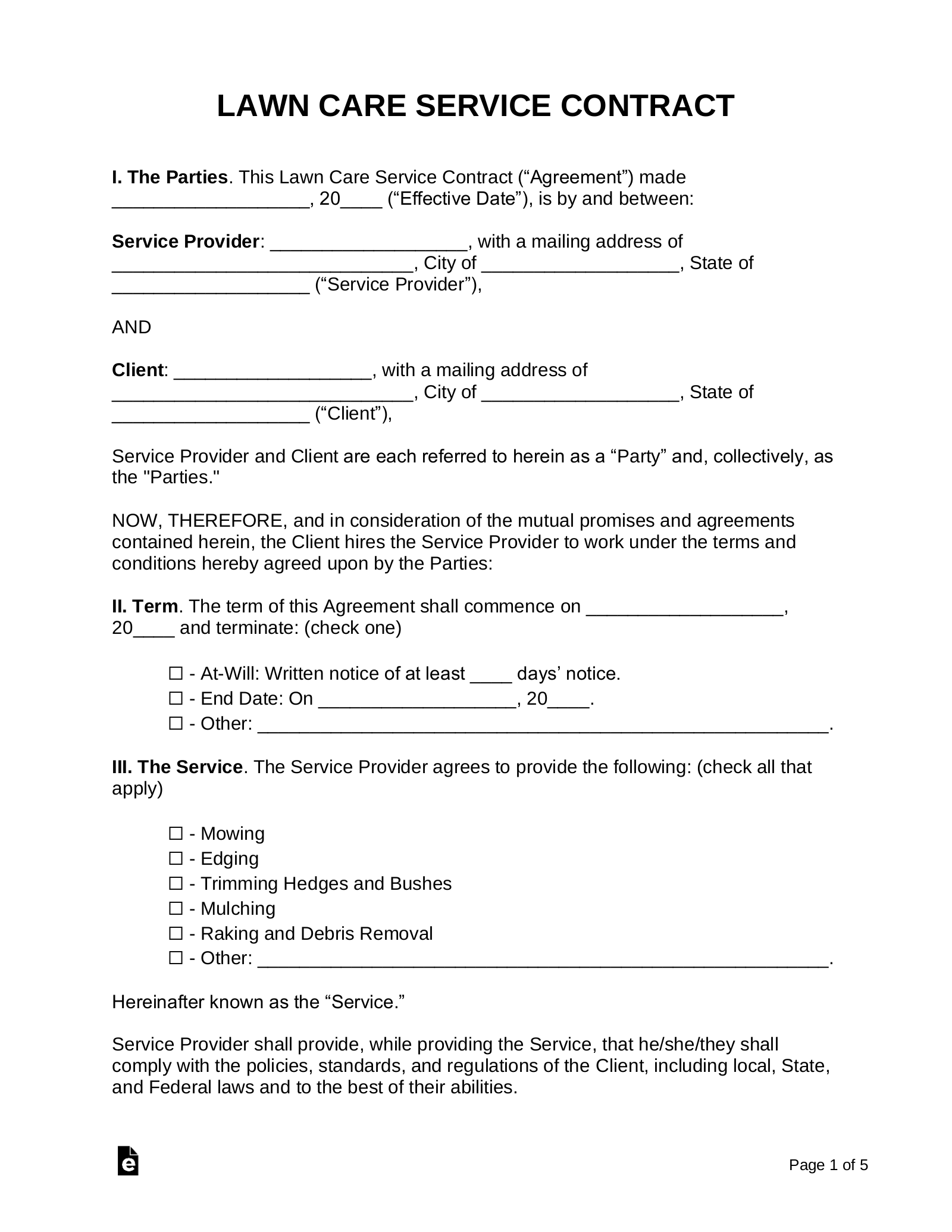
Image Source: eforms.com
Defining Your Target Market and Services
Before you can start securing contracts, you need to know who you’re serving and what you’re offering.
Identifying Your Niche
Who are your ideal clients? Are you focusing on residential lawn maintenance for busy homeowners, or are you aiming for larger commercial lawn care proposals for businesses, HOAs, or municipalities?
- Residential Clients:
- Homeowners seeking regular mowing, trimming, and seasonal cleanups.
- Properties requiring specialized care like aeration, overseeding, or pest control.
- Clients looking for aesthetic enhancements like planting or mulching.
- Commercial Clients:
- Office buildings and corporate campuses.
- Retail centers and shopping malls.
- Homeowners Associations (HOAs) and apartment complexes.
- Schools, parks, and public spaces.
- Industrial properties.
Each market has different needs and expectations. Understanding these differences will help you tailor your services and marketing.
Detailing Your Service Offerings
What specific services will you provide? Be clear and comprehensive.
- Core Services:
- Mowing (including mulching/bagging options)
- Trimming and Edging
- Blowing/Debris Removal
- Fertilization and Weed Control
- Aeration and Overseeding
- Seasonal Cleanups (Spring and Fall)
- Additional Services:
- Planting and Mulching
- Pruning and Shrub Care
- Irrigation System Maintenance
- Pest and Disease Management
- Snow Removal (if applicable in your region)
- Landscape Design and Installation
Having a defined list of services allows you to create accurate landscaping bids and pricing lawn care services.
Mastering the Art of Estimating Lawn Care Jobs
Accurate estimating lawn care jobs is crucial for profitability and client satisfaction. It forms the basis of your landscaping bids.
Key Factors in Estimating
What goes into a fair and accurate estimate?
- Property Size: Measure the total square footage of the area to be serviced.
- Terrain and Complexity: Steep slopes, tight spaces, or obstacles (trees, garden beds) add time.
- Type of Work: Basic mowing differs significantly from complex landscaping.
- Frequency of Service: Weekly, bi-weekly, or monthly services affect pricing.
- Equipment Needed: Will you use standard mowers, or do you need specialized equipment?
- Labor Costs: Factor in wages for your crew, including benefits and taxes.
- Material Costs: For services like mulching or planting, include the cost of materials.
- Overhead Costs: Include insurance, fuel, vehicle maintenance, marketing, and administrative expenses.
- Profit Margin: Ensure your pricing allows for a healthy profit.
Creating Your Pricing Structure
How will you charge for your services?
- Per Service Pricing: Charge a set amount for each individual service performed.
- Hourly Rate: Charge for the time spent on the job. This is often best for unpredictable or complex tasks.
- Package Deals: Offer bundled services at a discounted rate (e.g., weekly mowing + bi-weekly fertilization).
- Subscription Models: For recurring services like lawn maintenance, clients pay a monthly fee.
Table 1: Sample Pricing Considerations for Residential Lawn Maintenance
| Service | Base Rate (e.g., Quarter Acre Lot) | Additional Factors | Estimated Time |
|---|---|---|---|
| Mowing & Trimming | $50 | Lot size, terrain, obstacles | 1-2 hours |
| Edging | $25 | Linear feet of walkways/driveways | 30-60 mins |
| Blowing | $20 | Debris volume, area to clear | 15-30 mins |
| Fertilization | $75 | Square footage, type of fertilizer | 30-60 mins |
| Seasonal Cleanup | $150+ | Debris volume, leaf removal, pruning needs | 2-4 hours |
Pro Tip: Use a consistent formula for your estimating lawn care jobs to ensure fairness and accuracy. Track your time on different job types to refine your estimates.
Developing Effective Lawn Care Marketing Strategies
Getting your name out there is vital for finding lawn care clients.
Building Your Online Presence
In today’s world, a strong online presence is non-negotiable.
- Professional Website: Showcase your services, pricing, testimonials, and contact information. Make sure it’s mobile-friendly.
- Search Engine Optimization (SEO): Use keywords like “lawn care services near me,” “residential lawn maintenance,” and “[your city] landscaping” so people can find you.
- Social Media Marketing: Use platforms like Facebook and Instagram to share before-and-after photos, client testimonials, gardening tips, and special offers. Engage with your local community online.
- Google My Business: Claim and optimize your profile to appear in local search results and on Google Maps. Encourage client reviews.
- Online Advertising: Consider Google Ads or Facebook Ads to target specific demographics and locations.
Offline Marketing Tactics
Don’t underestimate traditional marketing methods.
- Local SEO: Ensure your business is listed in local directories.
- Door Hangers and Flyers: Distribute them in neighborhoods where you offer services.
- Yard Signs: Place signs on properties you service (with client permission).
- Referral Programs: Encourage satisfied clients to refer new business with incentives.
- Networking: Attend local business events and community gatherings.
- Vehicle Wraps: Turn your work vehicles into mobile billboards.
Showcasing Your Expertise
Position yourself as the go-to lawn care professional.
- Before & After Photos: Visual proof of your work is powerful.
- Client Testimonials: Positive reviews build trust and credibility.
- Informative Content: Share tips on lawn care through blog posts or social media.
Crafting Compelling Landscaping Bids and Proposals
Your landscaping bids are your sales tools. They need to be professional, clear, and persuasive.
Key Components of a Winning Bid
What should be included in your commercial lawn care proposals and landscaping bids?
- Company Information: Your logo, name, address, contact details.
- Client Information: Client’s name, address, contact details.
- Date and Proposal Number: For record-keeping.
- Scope of Work: A detailed description of all services to be performed. Be specific.
- Example: “Weekly mowing to a height of 3 inches, trimming around all obstacles, edging all hard surfaces, and blowing all clippings from walkways and driveways.”
- Service Schedule: Frequency of service (e.g., weekly, bi-weekly).
- Pricing: Itemized breakdown of costs for each service or a total package price. Clearly state what is included and what is extra.
- Payment Terms: How and when payment is expected (e.g., upon completion, monthly billing).
- Contract Duration: For ongoing services, specify the term (e.g., one year, seasonal).
- Terms and Conditions: Include clauses on liabilities, insurance, weather delays, cancellation policy, etc.
- Acceptance Section: A space for the client to sign and date to formally accept the bid.
Tailoring Proposals for Different Clients
- Residential: Focus on curb appeal, property value, and ease of maintenance. Use clear, non-technical language.
- Commercial: Emphasize reliability, professionalism, property image, and cost-effectiveness. Highlight your experience with similar properties. Include details about your insurance and licensing.
Table 2: Proposal Checklist for Securing Landscaping Clients
| Item | Residential Focus | Commercial Focus |
|---|---|---|
| Language | Conversational, benefit-oriented | Professional, detailed, ROI-focused |
| Service Detail | Clear, easy to grasp | Specific, measurable, with performance metrics |
| Pricing Clarity | Straightforward | Itemized, transparent, with optional add-ons |
| Proof of Expertise | Testimonials, photos | Case studies, references, insurance documentation |
| Contract Terms | Simple, fair | Comprehensive, covering liabilities and performance |
| Call to Action | “Let’s make your lawn beautiful!” | “Partner with us for superior grounds management.” |
Writing Effective Lawn Service Agreements
A solid lawn service agreement is your contract. It protects both you and your client.
Essential Clauses in a Lawn Service Agreement
What legal protections should your lawn service agreements include?
- Parties Involved: Full legal names and addresses of both parties.
- Service Description: The detailed scope of work, as outlined in the proposal.
- Service Location: The specific property address.
- Term of Agreement: Start date, end date, and renewal terms.
- Fees and Payment Schedule: Clearly state the cost and how payments are to be made.
- Cancellation Policy: Conditions under which either party can terminate the agreement, including notice periods.
- Insurance: Details about your liability insurance and worker’s compensation.
- Indemnification: A clause where one party agrees not to hold the other responsible for certain losses.
- Force Majeure: Clauses related to unforeseen events like extreme weather that may prevent service.
- Governing Law: Which state’s laws will apply to the agreement.
- Signatures: Dated signatures of both parties.
Simplifying the Contract Process
Make your writing lawn care contracts process efficient.
- Use Templates: Develop a standard template for your lawn service agreements.
- Legal Review: Have a lawyer review your contract template to ensure it’s legally sound.
- Digital Signatures: Utilize e-signature platforms for faster client approvals.
Building Strong Client Relationships
Securing landscaping clients is only the first step; keeping them is crucial.
Communication is Key
- Proactive Updates: Inform clients about service schedules, potential delays (e.g., due to weather), or any issues you notice with their lawn.
- Feedback Channels: Encourage clients to provide feedback and be responsive to their concerns.
- Regular Check-ins: For larger commercial contracts, schedule periodic meetings to review service performance.
Delivering Consistent Quality
- Train Your Crew: Ensure your team is well-trained and knowledgeable about best practices.
- Maintain Equipment: Well-maintained equipment leads to better results and fewer breakdowns.
- Attention to Detail: The little things matter – clean edges, tidy work areas, and thorough cleanup.
Going the Extra Mile
- Seasonal Advice: Offer clients tips on how to care for their lawn between your visits.
- Special Offers: Provide loyalty discounts or exclusive offers for long-term clients.
Overcoming Common Challenges in Securing Contracts
Even with the best strategies, you might face obstacles.
Competition
How to stand out when other companies offer similar services?
- Differentiation: Focus on what makes you unique – exceptional customer service, specialized services, eco-friendly practices, or superior craftsmanship.
- Strong Value Proposition: Clearly articulate the benefits of choosing your company.
Pricing Wars
Avoid getting caught in a race to the bottom on price.
- Value-Based Pricing: Price your services based on the value you deliver, not just the cost.
- Educate Clients: Help clients understand that the cheapest option is rarely the best long-term solution. Quality workmanship and reliability have a price.
Proposal Rejection
What to do when your landscaping bids aren’t accepted?
- Seek Feedback: If possible, ask why your bid was not chosen. This can provide valuable insights.
- Refine Your Approach: Analyze your estimating lawn care jobs process, pricing, and proposal content. Are there areas for improvement?
- Persistence: Don’t get discouraged. Every “no” brings you closer to a “yes.”
Frequently Asked Questions (FAQs)
Q1: How do I set prices for my lawn care services?
A1: To set prices, calculate your operating costs (labor, equipment, fuel, insurance, marketing), research competitor pricing, and determine a fair profit margin. Consider the complexity and size of each job when estimating lawn care jobs.
Q2: What’s the best way to find lawn care clients?
A2: The best ways to find clients include a strong online presence (website, social media, Google My Business), local marketing (flyers, yard signs), networking, and offering referral incentives. Building a good reputation for residential lawn maintenance and commercial lawn care is key.
Q3: Should I use a standard contract for all clients?
A3: While using a template is efficient for writing lawn care contracts, each lawn service agreement should be reviewed and potentially customized to fit the specific needs and scope of work for each client, especially for larger commercial lawn care proposals.
Q4: How important is a professional website for a lawn care business?
A4: A professional website is very important. It acts as your digital storefront, providing credibility, showcasing your services, and making it easy for potential clients to contact you and learn about your lawn care marketing strategies.
Q5: What if a client doesn’t pay on time?
A5: Your lawn service agreements should clearly state your payment terms and any late fees. If a client is late, send a polite reminder. If issues persist, you may need to consult your contract’s terms regarding collections or service suspension.
By implementing these strategies, you’ll be well on your way to consistently securing more lawn care contracts and building a thriving business. Remember, professionalism, quality, and consistent client communication are the cornerstones of success in securing landscaping clients.