
Do you want your lawn to look like a professional golf course or a pristine sports field? Achieving those classic, eye-catching stripes is a common goal for many homeowners. The best way to stripe a lawn is by mowing it consistently with the right equipment and technique.
The allure of a striped lawn is undeniable. Those alternating bands of light and dark green create a visually stunning effect that instantly elevates your yard from ordinary to extraordinary. Whether you’re aiming for simple parallel lines or a more intricate checkerboard pattern, mastering the art of lawn striping can transform your outdoor space into a showpiece. But how exactly do you achieve those coveted professional lawn stripes? It’s not just about the mowing itself; it’s a combination of the right tools, a thoughtful approach, and a little bit of know-how. This guide will walk you through everything you need to know about creating lawn stripes that will impress your neighbors and make you proud of your yard.
Image Source: greenpal-production.s3.amazonaws.com
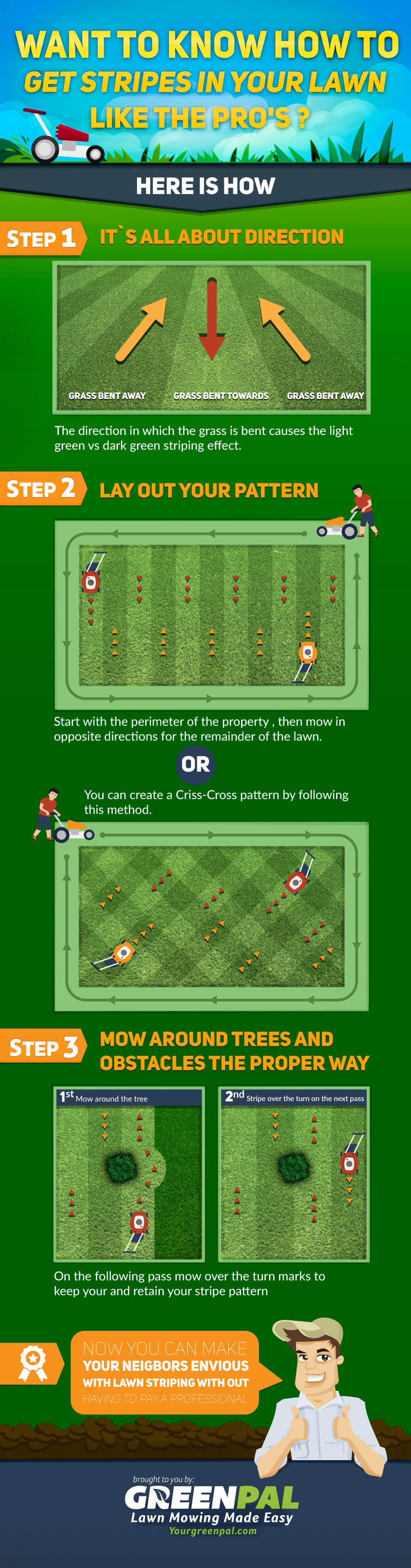
The Science Behind the Stripes
What makes a lawn look striped? It’s all about how light reflects off the grass blades. When you mow, you’re essentially bending the grass blades in a specific direction. Blades bent away from your line of sight will appear lighter because they reflect more light towards you. Conversely, blades bent towards your line of sight will appear darker because they absorb more light. This difference in light reflection is what creates the illusion of stripes.
How Grass Bends
The key to creating lawn stripes lies in bending, not cutting, the grass. As you push your mower, the roller or the deck itself presses down on the grass blades, causing them to lean. This bending action is what changes the angle at which light hits the grass.
- Away from you: Grass bent away from your viewing angle reflects more light, appearing lighter.
- Towards you: Grass bent towards your viewing angle reflects less light, appearing darker.
The Role of the Sun
The position of the sun is also crucial for making lawn stripes visible. On a sunny day, the contrast between the light and dark stripes will be much more pronounced. If the sun is directly overhead, the stripes might be less defined.
Essential Equipment for Lawn Striping
While you can achieve some level of striping with almost any mower, certain types of equipment are far more effective. The type of mower you use significantly impacts your ability to create crisp, defined stripes.
Reel Mowers: The Striping Champions
Reel mowers are widely considered the best way to stripe lawn because they have a built-in roller that gently bends the grass blades as they are cut. This consistent bending action is precisely what’s needed for sharp stripes.
- How they work: Reel mowers use a cylinder of rotating blades that cut grass against a stationary bedknife. This shearing action is clean and efficient, and importantly, the cylinder itself acts as a roller.
- Benefits for striping: The weight of the reel mower and its inherent roller design allow for excellent grass bending, resulting in the most professional lawn stripes.
- Types of Reel Mowers:
- Manual Reel Mowers: Great for smaller lawns, environmentally friendly, and provide a precise cut.
- Powered Reel Mowers: Offer more power and coverage for larger areas, often used by professionals.
Rotary Mowers and Striping Kits
Rotary mowers, the most common type of lawn mower for homeowners, can also create stripes, but they often require an accessory to do so effectively.
- How they work: Rotary mowers use a single blade that spins horizontally, cutting grass by impact.
- Rotary Mower Stripes: To achieve stripes with a rotary mower, you need to add a lawn rolling attachment, often called a striping kit or roller bar. This kit attaches to the rear of the mower deck and acts like a roller, bending the grass blades after they have been cut.
- Striping Kit Effectiveness: The effectiveness of a striping kit depends on its weight and how close it is to the ground. Heavier kits generally produce better results. Some higher-end rotary mowers come with integrated rollers.
Lawn Rollers: For Extra Definition
A dedicated lawn roller can be used before or after mowing to enhance the bending of grass blades.
- When to use: While you can stripe without a separate roller, using one can help achieve even deeper and more defined stripes, especially if your mower doesn’t have a good built-in roller or striping kit.
- How to use: You can roll your lawn in the direction you intend to mow before you start, or follow your mower with the roller.
Mastering the Lawn Striping Pattern
Once you have the right equipment, the next step is to learn how to create a lawn striping pattern effectively. This involves planning your mowing path and executing it with precision.
Planning Your Stripes
- Direction: Decide on the direction of your stripes. Common choices include parallel lines across the entire lawn, or radiating lines from a central point.
- Lines of Sight: Consider how your stripes will look from different vantage points, especially from your house or patio.
Mowing Techniques for Stripes
The key to creating lawn stripes is to maintain consistency in your mowing pattern.
- Start with a Straight Line: Begin mowing along the edge of your lawn or a designated straight line. This sets the foundation for the rest of your stripes.
- The “Lawn Mowing Stripes” Method:
- Mow a straight line down the length of your lawn.
- At the end of the line, turn your mower and mow back in the opposite direction, keeping the mower in line with the previous pass.
- For the next pass, turn your mower and mow back again, ensuring your wheels follow the same path as the previous pass’s wheels. This is crucial for crisp lines.
- Bending the Grass: As you mow, the roller (or striping kit) will bend the grass.
- For a light stripe, the roller bends the grass away from you.
- For a dark stripe, the roller bends the grass towards you.
- Maintaining Consistency: Keep your mowing speed consistent. Drastic changes in speed can affect how the grass is bent. Also, ensure your mower deck is level.
Creating Different Lawn Striping Patterns
- Parallel Stripes: The most common pattern, achieved by mowing back and forth in straight lines.
- Checkerboard Stripes: Requires alternating the direction of the stripes in adjacent sections of the lawn. To create a checkerboard, you mow one set of parallel stripes, then turn 90 degrees and mow another set of parallel stripes perpendicular to the first.
- Concentric Circles: This more complex pattern involves mowing in circular paths, often around a central point. It requires significant skill and precision.
Tips for Perfect Lawn Stripes
Achieving professional lawn stripes requires attention to detail and a bit of practice. Here are some pro tips and tricks to help you get the best results.
Optimizing Grass Height
- Mow Higher: Taller grass is easier to bend and creates more pronounced stripes. Aim for a mowing height of around 2.5 to 3.5 inches for most cool-season grasses.
- Don’t Scalp: Avoid mowing too short, as this can damage the grass and make striping difficult.
Grass Type Matters
Some grass types are naturally better for striping than others.
- Best Grass Types:
- Perennial Ryegrass: Has a stiff blade that bends well.
- Fine Fescues: Similar to ryegrass in their ability to hold a bend.
- Kentucky Bluegrass: Can produce excellent stripes, especially when healthy and well-maintained.
- Less Ideal Grass Types:
- Bermuda Grass: Can be more difficult to stripe due to its finer texture and tendency to grow horizontally.
- Zoysia Grass: Similar challenges to Bermuda grass.
Mowing Frequency and Condition
- Mow Regularly: Frequent mowing helps maintain optimal grass height and encourages thicker growth, which is ideal for striping.
- Sharp Blades: Always use sharp mower blades. Dull blades tear the grass, leading to a ragged appearance and making it harder to achieve clean stripes.
- Clean Mower Deck: Ensure your mower deck is clean and free of grass clippings. Built-up debris can interfere with the roller’s action.
Weather Considerations
- Dry Grass: Mow when the grass is dry. Wet grass is heavier and harder to bend, and mowing wet grass can also compact the soil and spread diseases.
- Sunny Days: The contrast is most visible on sunny days. Overcast days can make your stripes less apparent.
Practice and Patience
Creating perfect lawn stripes takes practice. Don’t get discouraged if your first few attempts aren’t perfect. Experiment with different mowing patterns and techniques until you find what works best for your lawn and equipment.
Advanced Striping Techniques
For those looking to take their lawn striping to the next level, consider these advanced techniques.
Combining Mowers and Rollers
For ultimate stripe definition, you can combine a rotary mower with a striping kit with a separate lawn roller.
- Pre-Rolling: Roll your lawn in the desired stripe direction before mowing. This pre-bends the grass, making it easier for the mower to set the bend.
- Post-Rolling: After mowing, you can go over the lawn again with a roller, following your mowing lines. This can help to further set the bend and create sharper contrast.
Using an Offset Mower
Some professional landscapers use offset mowers, where the mower deck is not centered but positioned to one side. This allows the operator to walk in the previously mown stripe, ensuring the wheels of the mower run in the exact same path, which is key for crisp edges.
The “Alternating Direction” Trick
When mowing parallel stripes, consistently alternate the direction of your mowing passes. This ensures that one set of stripes is always bent away from you (lighter) and the next set is always bent towards you (darker).
Common Challenges and Solutions
Even with the best intentions, you might encounter some challenges when trying to achieve lawn stripes.
Fading Stripes
- Cause: Grass blades not bending enough, or returning to an upright position too quickly.
- Solution: Ensure your mower roller or striping kit is heavy enough and positioned correctly. Mow at a slightly higher grass height. Consider a pre-mow rolling pass.
Uneven Stripes
- Cause: Inconsistent mowing speed, uneven terrain, or a mower deck that isn’t level.
- Solution: Maintain a steady mowing pace. Ensure your mower is properly maintained and the deck is level. For uneven terrain, try to keep the mower as level as possible.
Difficulty with Certain Grass Types
- Cause: Some grasses have finer blades or grow in a way that resists bending.
- Solution: Focus on healthy lawn care practices to encourage thicker growth. Experiment with slightly higher mowing heights. Patience and consistent application of striping techniques are key.
Stripes Not Showing on Overcast Days
- Cause: Lack of direct sunlight reduces the contrast between bent grass blades.
- Solution: While you can’t control the weather, you can try to maximize the bend. Ensure your roller is working effectively and consider if your grass height is optimal. The stripes will be more apparent once the sun returns.
Frequently Asked Questions About Lawn Stripes
Here are some common questions people ask about lawn striping.
Q1: Can I get lawn stripes with a basic push mower?
Yes, you can get lawn stripes with a basic push mower, especially if it has a rear roller. If it doesn’t, you can purchase a striping kit designed for rotary mowers. The effectiveness will depend on the weight and design of the kit.
Q2: How often should I mow to maintain stripes?
You should mow regularly, typically once a week, depending on your grass growth rate. Consistent mowing is key to maintaining healthy turf that can hold a stripe.
Q3: What is the best time of day to stripe my lawn?
The best time to stripe your lawn is when the grass is dry and the sun is at an angle, usually in the morning or late afternoon. This provides the best contrast for the stripes to be visible.
Q4: How do I create a checkerboard lawn striping pattern?
To create a checkerboard pattern, you first mow a series of parallel stripes. Then, you turn your mower 90 degrees and mow another series of parallel stripes perpendicular to the first set. This creates alternating light and dark sections that form the checkerboard effect.
Q5: Will lawn rolling improve my stripes?
Yes, lawn rolling can significantly improve your stripes. Rolling before mowing bends the grass, making it easier for the mower to set the stripe. Rolling after mowing can help to further set the bend and increase the visual contrast.
Q6: What grass type is best for lawn care striping?
Turfgrasses with stiffer blades, such as perennial ryegrass, fine fescues, and Kentucky bluegrass, are generally best for creating distinct lawn stripes because they hold a bend more effectively.
Conclusion
Achieving beautiful lawn stripes is a rewarding aspect of lawn care that can dramatically improve the aesthetic appeal of your yard. By selecting the right equipment, understanding the principles of light reflection and grass bending, and practicing consistent mowing techniques, you can transform your lawn into a masterpiece. Whether you choose the effortless effectiveness of a reel mower or enhance your rotary mower with a striping kit, the journey to professional lawn stripes is within your reach. With a little patience and attention to detail, your lawn will soon boast those envy-inducing, perfectly manicured stripes. Enjoy the process and the stunning results!