
Can you spread compost on your lawn? Yes, you absolutely can! Spreading compost on your lawn is one of the best things you can do for greener, healthier grass. It’s a fantastic way to improve your soil, feed your grass naturally, and create a beautiful, lush lawn.
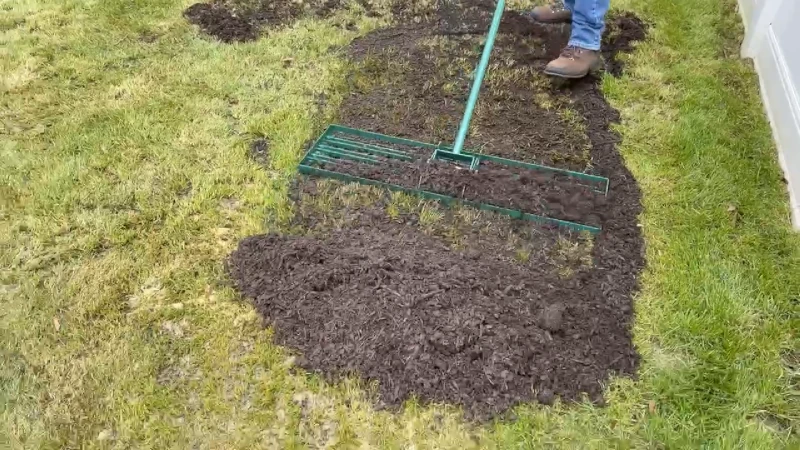
Image Source: landzie.com
Why Composting Your Lawn Matters
Compost is a powerhouse for your lawn. It acts as a natural fertilizer and a soil amendment, bringing a host of benefits that synthetic fertilizers often can’t match. Think of it as a superfood for your soil, packed with the nutrients your grass craves. This organic material slowly releases food for your grass, promoting steady, healthy growth rather than quick, unsustainable spurts.
Key Benefits of Compost Application
- Improved Soil Structure: Compost loosens heavy clay soils, allowing better drainage and air circulation. It also helps sandy soils retain moisture and nutrients.
- Nutrient Richness: Compost provides a balanced blend of essential nutrients that grass needs to thrive, acting as a slow-release organic fertilizer.
- Enhanced Water Retention: Healthy soil with plenty of organic matter holds water more effectively, meaning you’ll need to water less often.
- Beneficial Microorganisms: Compost teems with beneficial bacteria, fungi, and earthworms that break down thatch, improve nutrient cycling, and fight off lawn diseases.
- Reduced Thatch Buildup: Earthworms and microbes in compost help break down the layer of dead grass and roots that can choke your lawn.
- pH Balance: Compost can help buffer soil pH, making it more favorable for grass growth.
- Reduced Need for Chemicals: By using compost, you can often reduce or eliminate the need for synthetic fertilizers and pesticides.
Getting Ready for Compost Application
Before you start spreading, a little preparation goes a long way. Proper timing and having the right tools will make the job easier and more effective.
When to Spread Compost
The best times to spread compost on your lawn are typically during the spring or fall. These are the seasons when your grass is actively growing and can best utilize the nutrients.
- Spring: After the last frost but before the peak heat of summer. This gives your lawn a boost for the growing season.
- Fall: After the summer heat has subsided but before the ground freezes. This helps your lawn recover from summer stress and prepares it for winter.
Avoid spreading compost on frozen or waterlogged ground, as this can damage your lawn and compact the soil.
What Kind of Compost to Use
For lawn care, fine-screened compost is generally best. This means the compost has had larger, undecomposed materials removed. This ensures a finer texture that spreads easily and integrates well with your existing soil.
- Finished Compost: Ensure your compost is fully decomposed and doesn’t smell sour or ammonia-like. This indicates it’s ready to use.
- Avoid Unfinished Compost: Unfinished compost can tie up nitrogen from your soil as it continues to break down, which can actually harm your grass.
- Particle Size: Finer compost spreads more evenly and filters down into the soil and thatch layers more effectively.
Essential Tools for the Job
Having the right tools will make the compost application process much smoother.
- Shovel and Wheelbarrow: For moving compost from your stockpile to the application area.
- Spreader: This is your most important tool for even distribution.
- Broadcast Spreader: Excellent for covering large areas quickly. Choose one with adjustable settings.
- Drop Spreader: Provides more precise application, especially around garden beds or delicate areas.
- Rake: A garden rake or a landscape rake is useful for leveling and working the compost into the soil.
- Garden Hose or Sprinkler: To lightly water the compost into the soil after application.
How to Spread Compost: Step-by-Step
Spreading compost correctly ensures your lawn gets the maximum benefit. The goal is an even layer that allows the grass to grow through it.
Step 1: Prepare Your Lawn
Before you apply compost, consider these preparatory steps for optimal results.
- Mow Your Lawn: Mow your grass to a lower setting than usual. This creates more space for the compost to reach the soil and makes spreading easier.
- Remove Debris: Rake up any excess leaves, twigs, or debris from the lawn. This ensures the compost can directly contact the soil.
- Consider Lawn Aeration: If your soil is compacted, lawn aeration is a highly beneficial pre-step. Aeration creates small holes in the soil, allowing air, water, and nutrients (including compost) to penetrate deeper. This is a crucial step for soil amendment in compacted lawns.
Step 2: Load Your Spreader
This is where having a good spreader comes in handy.
- Fill the Spreader: Load your compost into the spreader. Don’t overfill it, as this can make it difficult to push or pull.
- Set the Spreader: Consult your spreader’s manual for recommended settings for compost. If no specific setting is listed, start with a low setting and adjust as needed. The aim is to apply a thin, even layer.
Step 3: Even Compost Application
The key to successful compost application is an even layer.
- Start at the Edges: Begin spreading along the perimeter of your lawn.
- Walk in Straight Lines: Walk in straight, overlapping passes. This ensures you don’t miss any spots and avoid applying too much in one area.
- Control the Flow: Many spreaders have a shut-off mechanism. Use this when turning or pausing to prevent excess material from dropping.
- Visual Check: Aim for a layer about 1/4 to 1/2 inch thick. You should be able to see the grass blades through the compost. If you can’t see any grass, it’s likely too thick.
Step 4: Spreading Without a Spreader
If you don’t have a spreader, you can still apply compost effectively.
- Use a Shovel and Wheelbarrow: Shovel small piles of compost onto the lawn. Distribute these piles evenly across the area.
- Rake it Out: Use a stiff garden rake or a landscape rake to spread the compost from the piles across the lawn. Work in sections, raking the compost thinly and evenly. This method requires more effort but can be very effective.
- Layering: Aim for thin layers. You can build up the thickness over time if needed.
Step 5: Rake and Integrate (Optional but Recommended)
After spreading, a light raking can help incorporate the compost.
- Gentle Raking: Use a rake to lightly brush over the compost layer. This helps work the compost down into the grass and soil, particularly if the layer is a bit thicker.
- Don’t Bury the Grass: Be careful not to bury the grass blades entirely. The grass needs sunlight and air.
Step 6: Water Your Lawn
Lightly watering the compost after application helps it settle and begin to break down.
- Light Watering: Use your garden hose or sprinkler to water the lawn. You don’t need to soak it, just moisten the compost layer.
- Aids Integration: The water helps the compost move into the soil and thatch layers.
How Much Compost Should You Use?
The amount of compost to apply depends on your soil’s condition and the type of compost you’re using.
General Guidelines
- Thin Layer: A common recommendation is to apply compost at a rate of about 1/4 to 1/2 inch thick.
- Soil Health Focus: For most lawns, a yearly application of about 1/2 inch of compost is ideal for improving soil health and grass growth.
- Calculation Example: For a 1,000 square foot lawn, applying 1/2 inch of compost requires approximately 2 cubic yards of compost (0.5 inches / 12 inches/foot * 1,000 sq ft = 41.7 cubic feet. Since 1 cubic yard = 27 cubic feet, 41.7 / 27 ≈ 1.5 cubic yards. A commonly used approximation is about 1 cubic yard per 100-200 sq ft for a 1/2 inch layer). It’s better to apply a little less and add more next time if needed than to overdo it.
Factors Influencing Application Rate
- Soil Type: Clay soils benefit from slightly more compost to improve drainage. Sandy soils benefit from compost to increase water and nutrient retention.
- Compost Quality: Nutrient-dense compost may require a thinner application.
- Grass Condition: Lawns that are thin, struggling, or have compacted soil will benefit more from a good compost application.
When to Avoid Spreading Compost
While compost is beneficial, there are times when spreading it might not be ideal.
- During Drought: If your lawn is already stressed from lack of water, adding a layer of compost might further dry it out.
- Extreme Heat: Applying compost during the hottest part of summer can sometimes stress the grass.
- Heavy Rain: Applying compost to already saturated soil can lead to runoff and compaction.
- When Seed is Present: If you’ve recently seeded your lawn, wait until the new grass has been mowed a few times before applying compost. A very thin layer might be okay, but thick layers can smother new seedlings.
Long-Term Lawn Care with Compost
Compost is not a one-time fix; it’s a cornerstone of a healthy natural lawn care program. Regularly incorporating compost will lead to sustained improvements in your lawn’s vitality.
Compost as Organic Fertilizer
Think of compost as a premium organic fertilizer. Unlike synthetic fertilizers that provide a quick burst of nutrients, compost releases nutrients slowly over time. This consistent feeding promotes deep root development and overall plant vigor. This type of feeding is essential for building a resilient lawn that can withstand stress.
Compost and Fertilizing Lawn
Using compost means you might need less traditional fertilizing lawn products. However, if your lawn is severely deficient in certain nutrients, you might still choose to supplement with an organic fertilizer.
- Compost First: Always consider compost as your primary soil amendment and nutrient source.
- Test Your Soil: A soil test can tell you if your lawn is lacking specific nutrients that compost alone might not fully provide.
- Organic Boost: If needed, choose an organic fertilizer that complements the benefits of compost.
Compost and Lawn Aeration Synergy
The combination of lawn aeration and compost application is a powerful duo for soil amendment. Aeration opens up the soil, and then the compost can be worked into these newly created channels. This maximizes the compost’s ability to reach the root zone, where it can do the most good.
- Aeration Before Compost: Aerating before spreading compost ensures that the compost penetrates deeper into the soil profile.
- Compost After Aeration: The compost fills the aeration holes, and as it decomposes, it improves the soil structure from within.
Common Questions About Spreading Compost on Lawns
Here are answers to some frequently asked questions about compost application for a greener lawn.
Frequently Asked Questions (FAQ)
Q1: Can I spread compost on my lawn in the summer?
A1: It’s generally best to avoid spreading thick layers of compost during the hottest parts of summer, as it can stress the grass. However, a very thin layer of finely screened compost might be acceptable if applied during cooler periods or with diligent watering. Fall and spring are typically preferred.
Q2: Will compost smother my grass?
A2: If applied too thickly, yes, compost can smother grass by blocking sunlight and air. The key is to apply it in a thin, even layer (1/4 to 1/2 inch) so that grass blades can easily grow through it.
Q3: How often should I spread compost?
A3: For optimal soil health and grass growth, applying compost once a year, typically in the spring or fall, is a good practice. If your soil is very poor or compacted, you might consider a second, thinner application.
Q4: What is the best type of compost for a lawn?
A4: Finely screened, well-decomposed compost is ideal. It spreads easily and integrates well into the soil and thatch layers. Avoid compost with large, undecomposed chunks.
Q5: How much compost do I need?
A5: For a 1,000 sq ft lawn, a 1/2 inch layer of compost is about 1.5 to 2 cubic yards. It’s always better to err on the side of a thinner layer and add more next time if needed.
Q6: Can I spread compost on a new lawn?
A6: Yes, it’s highly recommended to incorporate compost into the soil before seeding a new lawn. If applying to an established new lawn, wait until the grass has been mowed a few times and then apply a very thin layer to avoid smothering the young grass.
Q7: Does compost act as a fertilizer?
A7: Yes, compost is an excellent organic fertilizer. It provides a wide range of macro- and micronutrients that grass needs, releasing them slowly and steadily, which is beneficial for sustained grass growth.
Q8: What’s the difference between compost and top dressing a lawn?
A8: Top dressing lawn is the general practice of applying a thin layer of material to the surface of the lawn. Compost is a specific type of material used for top dressing lawn. Other top dressing materials can include sand or a soil/compost mix.
By following these guidelines, you can effectively spread compost on your lawn, transforming it into a vibrant, green, and healthy space. It’s a rewarding process that benefits your lawn and the environment.