
Does your car suddenly sound like it’s trying to start a landscaping business? A car that sounds like a lawn mower is a common and often alarming issue for drivers. This unusual noise can stem from a variety of mechanical problems, ranging from simple exhaust system issues to more complex internal engine troubles.
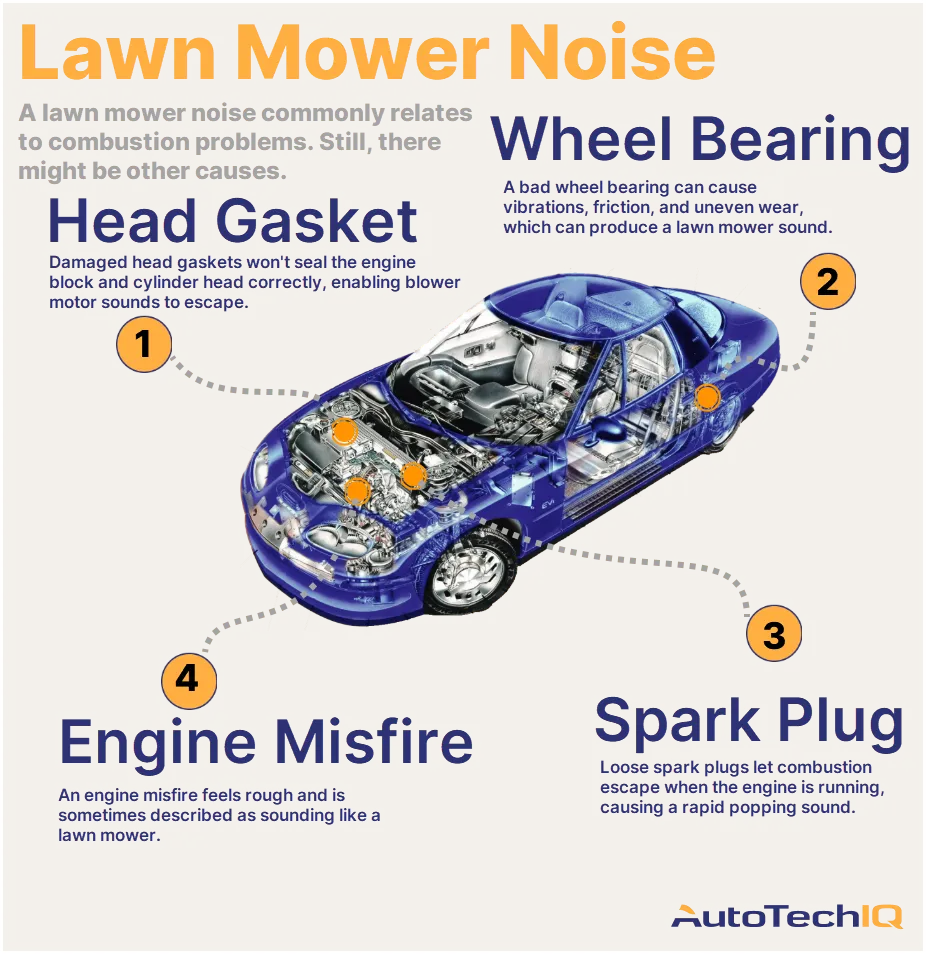
Image Source: www.autotechiq.com
Deciphering the “Lawn Mower” Sound: What’s the Cause?
The “lawn mower” sound in a car is typically characterized by a rough, sputtering, or uneven idling noise, often accompanied by a loss of power or unusual vibrations. This distinct sound is usually a symptom of something amiss with your vehicle’s engine misfire, its exhaust system, or even the timing of its internal components.
Fathoming the Root Causes
When your car makes a sound akin to a lawn mower, it’s crucial to investigate the potential culprits. These noises are rarely spontaneous and usually indicate a specific mechanical issue that needs attention. Let’s dive into the common reasons behind this peculiar auditory phenomenon.
Exhaust System Shenanigans
The exhaust system is a prime suspect when your car starts sounding like a garden tool. It’s responsible for expelling burnt gases from the engine, and any disruption in its flow can lead to unusual noises.
The Tale of an Exhaust Leak
An exhaust leak is a very common reason for a car to sound like a lawn mower. Think of it like a leaky hose – the air (or in this case, exhaust gases) escapes where it shouldn’t, creating a sputtering, puffing, or even a loud, hissing sound that can mimic the chugging of a small engine.
Where do leaks typically occur?
- Manifold Gasket Leak: The exhaust manifold is the first component that collects exhaust gases from each cylinder. The manifold gasket leak is a seal between the manifold and the engine block. If this gasket fails, exhaust gases can escape here, producing a loud puffing or ticking sound, especially noticeable at idle.
- Cracks in the Manifold: The exhaust manifold itself can develop cracks due to heat stress and age. These cracks act like leaks, allowing gases to escape.
- Loose or Damaged Pipes: Exhaust pipes connect various parts of the system. If a pipe comes loose or has a hole in it, exhaust gases will escape, creating the characteristic lawn mower sound.
- Catalytic Converter Issue: The catalytic converter is a vital part of the exhaust system that reduces harmful emissions. A catalytic converter issue can manifest in various ways. If the internal honeycomb structure breaks apart, these loose pieces can rattle around and restrict exhaust flow, leading to a noisy, sputtering exhaust. Sometimes, a severely clogged catalytic converter can also cause the engine to struggle and produce a lawn mower-like sound.
The Whispers of Muffler Damage
The muffler’s job is to quiet down the exhaust noise. When it’s damaged, this silencing effect is lost, and the raw exhaust sound becomes much more prominent, often resembling a lawn mower.
- Internal Baffles Compromised: Mufflers contain internal chambers and baffles designed to absorb sound waves. If these baffles rust away or break loose, they can rattle and cause a loud, droning, or sputtering noise. This is a direct cause of a lawn mower sound.
- Holes or Rust: Like any metal part exposed to the elements and exhaust gases, mufflers can rust through, creating holes that allow sound to escape.
Internal Engine Groans and Moans
While the exhaust system is a frequent culprit, issues within the engine itself can also create a lawn mower sound. These problems are generally more serious and require prompt attention.
The Rattle of Piston Slap
Piston slap occurs when there’s too much clearance between the piston and the cylinder wall. As the piston moves up and down, it can “slap” against the cylinder wall, creating a distinct knocking or rattling sound. This sound is often more pronounced when the engine is cold and can lessen as it warms up. While not exactly a lawn mower sound, the irregular slapping can contribute to a rough, noisy operation that some might interpret as such, especially when combined with other minor issues.
The Rumble of Engine Knocking
Engine knocking, also known as detonation or pinging, is a sharp, metallic noise that occurs when fuel in the cylinder ignites prematurely or unevenly. This can be caused by several factors, including:
- Low-Octane Fuel: Using gasoline with an octane rating lower than recommended by the manufacturer.
- Carbon Buildup: Deposits in the combustion chamber can create hot spots that ignite the fuel mixture too early.
- Incorrect Ignition Timing: If the spark plugs fire at the wrong time, it can lead to knocking.
- Overheating: An engine that runs too hot is more prone to knocking.
The rhythmic knocking sound, especially under acceleration, can contribute to the overall rough and noisy impression that might be likened to a lawn mower.
The Chug of an Engine Misfire
An engine misfire happens when one or more cylinders fail to combust the fuel-air mixture properly. This results in an uneven engine operation, often felt as a shudder or hesitation, and can produce a rough, sputtering sound. If several cylinders are misfiring, the collective sputtering and lack of smooth power can definitely sound like a lawn mower struggling to run. Common causes include:
- Faulty Spark Plugs or Wires: These are responsible for igniting the fuel.
- Bad Ignition Coils: These provide the electrical current to the spark plugs.
- Fuel Injector Problems: If an injector is clogged or faulty, it won’t deliver fuel correctly.
- Vacuum Leaks: Air entering the engine where it shouldn’t can disrupt the fuel-air mixture.
The Hum of Timing Belt Noise
While not typically sounding like a lawn mower, a worn or improperly tensioned timing belt noise can contribute to an overall rough engine operation. A timing belt synchronizes the rotation of the crankshaft and camshafts, ensuring the valves open and close at the correct times. If the belt is slack or has damaged teeth, it can create a slapping or whirring sound. In some cases, combined with other minor issues, this can add to the unpleasant mechanical symphony.
Other Contributors to the Cacophony
Beyond the primary culprits, a few other issues can contribute to a lawn mower-like sound.
The Shriek of Belt Squeal
A belt squeal is a high-pitched, often intermittent squeaking or squealing noise, most commonly heard when starting the engine or when the engine is under load (like when turning the steering wheel or using the air conditioning). This is usually caused by a worn or loose serpentine belt or accessory belt. While not a lawn mower sound itself, a persistently squealing belt can be a sign of overall poor engine belt condition, which might be occurring alongside other issues that are creating the lawn mower noise.
The Jangle of a Rattling Sound
A general rattling sound can be a symptom of many things. It could be a loose heat shield on the exhaust system, a failing catalytic converter internal component, or even something as simple as a loose piece of trim. If this rattling is rhythmic and occurs with the engine’s operation, it can contribute to the perception of a rough, unrefined engine sound, similar to a lawn mower.
Diagnosing the “Lawn Mower” Symphony
Pinpointing the exact cause of your car’s lawn mower sound requires a systematic approach. Here’s a breakdown of how a mechanic (or a diligent DIYer) might go about it:
Visual Inspection: A First Look
A visual check of the exhaust system is always the first step.
- Look for Obvious Damage: Check the entire exhaust system from the engine back to the tailpipe for any signs of rust, holes, cracks, or loose connections. Pay close attention to the exhaust manifold, the muffler, and the pipes in between.
- Inspect Heat Shields: Heat shields are metal plates that protect surrounding components from the heat of the exhaust system. They can come loose and rattle, creating a noise.
Listening to the Engine: The Sonic Clues
The specific type of noise and when it occurs can provide valuable clues.
- Idle vs. Acceleration: Does the sound only happen at idle, or does it get louder and more pronounced when you accelerate? A sound that’s worse under load might point towards an exhaust leak or engine misfire.
- Cold vs. Warm Engine: Some sounds, like piston slap, are more noticeable when the engine is cold.
- Location of the Sound: Try to identify if the sound is coming from the front, middle, or rear of the car. This can help narrow down the source.
Diagnostic Tools and Techniques
Modern vehicles come equipped with sophisticated diagnostic systems.
- Check Engine Light (CEL): If your check engine light is on, a diagnostic scanner can retrieve trouble codes that directly point to specific system failures, such as an engine misfire in a particular cylinder or an issue with the catalytic converter.
- Exhaust Backpressure Test: This test can help determine if there’s a blockage in the exhaust system, such as a clogged catalytic converter.
- Compression Test: This test measures the pressure inside each cylinder, helping to identify issues like worn piston rings or valve problems that could lead to piston slap or other internal noises.
- Vacuum Gauge Test: This can help detect vacuum leaks, which can cause rough idling and misfires.
Addressing the Lawn Mower Sound: Repair Options
Once the cause is identified, the repair will depend on the specific problem.
Exhaust System Repairs
- Exhaust Leak Repair: This might involve replacing a manifold gasket leak, welding a crack in a pipe, or replacing a section of the exhaust pipe.
- Muffler Replacement: If the muffler is rusted or internally damaged, it will need to be replaced.
- Catalytic Converter Replacement: If the catalytic converter issue is severe, replacement is usually the only option. This can be an expensive repair.
Engine Component Repairs
- Spark Plug and Wire Replacement: For engine misfire due to ignition issues.
- Fuel Injector Cleaning or Replacement: To resolve misfires caused by fuel delivery problems.
- Timing Belt Replacement: If the timing belt is the source of noise or is nearing its service interval.
- Addressing Piston Slap: This is a more significant repair, often involving engine rebuilding or replacement if it’s severe.
Belt and Pulley Maintenance
- Serpentine Belt Replacement: If a belt squeal is the primary issue.
- Pulley Inspection: Worn pulleys can also cause belt noise.
When to Seek Professional Help
While some minor exhaust issues might be manageable for a DIY enthusiast, most “lawn mower” sounds indicate problems that are best handled by a qualified mechanic.
- Complex Diagnostics: Identifying the precise cause of internal engine noises or subtle exhaust leaks can be challenging.
- Specialized Tools: Many exhaust and engine repairs require specific tools and equipment.
- Safety Concerns: Working on exhaust systems, especially those that have been hot, can be dangerous.
Can I Drive My Car if It Sounds Like a Lawn Mower?
It is generally not recommended to drive your car for extended periods if it sounds like a lawn mower. While you might be able to drive short distances, continuing to operate the vehicle can:
- Exacerbate the Problem: A small issue can quickly turn into a much larger, more expensive one if left unaddressed.
- Cause Further Damage: An engine misfire or severe exhaust leak can lead to unburnt fuel entering the exhaust system, potentially damaging the catalytic converter.
- Reduce Fuel Efficiency: An engine not running smoothly will consume more fuel.
- Compromise Safety: A sudden failure of a critical component, especially related to the exhaust or engine, could lead to a breakdown or a dangerous situation.
Preventing the “Lawn Mower” Syndrome
Regular maintenance is key to preventing most of these issues.
- Follow Manufacturer’s Maintenance Schedule: This includes regular oil changes, spark plug replacements, and inspection of the exhaust system.
- Address Minor Issues Promptly: Don’t ignore small noises or warning lights. A minor exhaust leak or a slight belt squeal can escalate if ignored.
- Use Quality Fuel: Always use the octane rating recommended in your owner’s manual to prevent engine knocking.
Frequently Asked Questions (FAQ)
Q1: My car sounds like a lawn mower, but the check engine light isn’t on. What should I do?
A1: Even without a check engine light, unusual noises are a sign something is wrong. It’s still advisable to have a mechanic inspect the vehicle, especially the exhaust system and engine, to identify the cause before it becomes a more serious problem.
Q2: Is a lawn mower sound always an exhaust leak?
A2: No, while an exhaust leak is a very common cause, it’s not the only one. Engine misfire, catalytic converter issue, muffler damage, and even internal engine problems like piston slap can also produce similar sounds.
Q3: Can I fix a lawn mower sound myself?
A3: Depending on your mechanical skill and the specific cause, some issues might be fixable by a DIYer. Simple exhaust leaks or a worn belt might be within reach. However, for internal engine issues or complex exhaust system repairs, professional help is usually required.
Q4: How much does it typically cost to fix a car that sounds like a lawn mower?
A4: The cost varies greatly. A minor exhaust pipe repair might cost a few hundred dollars, while replacing a catalytic converter or addressing internal engine problems like piston slap or a persistent engine misfire could run into thousands of dollars.
Q5: My car has a rattling sound that seems to be part of the lawn mower noise. What could it be?
A5: A rattling sound accompanying the lawn mower noise could be a loose heat shield, failing muffler internals, or even debris caught in the exhaust system.
By paying attention to the sounds your car makes and addressing them promptly, you can keep your vehicle running smoothly and prevent minor issues from becoming major headaches. The “lawn mower” sound is a signal; listen to it and act accordingly.