
What is the best way to bill lawn care customers? The best way to bill lawn care customers is by using clear, detailed invoices sent promptly after service, offering convenient payment options, and establishing transparent communication about pricing and payment terms.
Getting paid for lawn mowing and other lawn maintenance services doesn’t have to be a headache. For any successful lawn care business, efficient and professional invoicing is crucial. It ensures you get paid for your hard work, maintains positive client relationships, and keeps your business finances healthy. This comprehensive guide will walk you through everything you need to know about invoicing lawn care clients and getting paid fast.
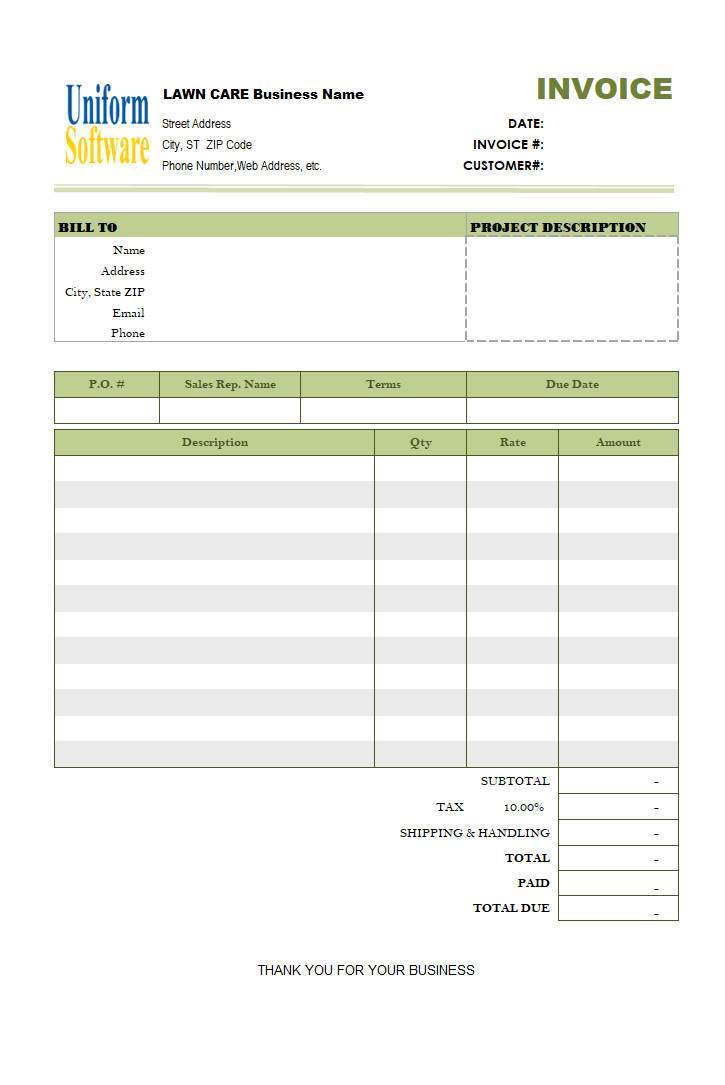
Image Source: uniformsoftware.com
Setting Up Your Billing System
Before you even think about sending out your first invoice, you need a solid billing system in place. This foundation will make the entire process smoother and more professional.
Lawn Care Pricing Strategies: Building Your Foundation
Your pricing directly impacts how you invoice. Having clear, justifiable lawn care pricing strategies is the first step.
- Hourly Rates: Simple and effective for unpredictable jobs. You bill for the actual time spent.
- Pros: Fair for both parties if job scope varies.
- Cons: Clients might feel uneasy about unknown final costs; requires accurate time tracking.
- Per-Service Rates: Set prices for specific tasks like mowing, trimming, or aeration.
- Pros: Predictable for clients, easy to quote.
- Cons: Might undervalue extensive work or overcharge for simple tasks if not priced carefully.
- Package Deals/Contracts: Offer bundled services at a slightly discounted rate for recurring clients. This is where lawn care service contracts become vital.
- Pros: Encourages customer loyalty, predictable revenue.
- Cons: Requires careful management to ensure profitability for all services.
- Square Footage Pricing: Common for mowing and landscaping. Price is based on the size of the property.
- Pros: Objective and fair for standardized services.
- Cons: Doesn’t account for complexity (e.g., steep slopes, obstacles).
When developing your pricing, consider:
- Labor Costs: Your time, your employees’ time, benefits.
- Equipment Costs: Depreciation, maintenance, fuel.
- Supplies: Fertilizers, pesticides, mulch, etc.
- Overhead: Insurance, vehicle costs, marketing, software.
- Profit Margin: What you need to reinvest and grow.
- Market Rates: What are competitors charging in your area?
Choosing Your Lawn Care Billing Software
Manual invoicing can work for very small operations, but it quickly becomes inefficient. Investing in lawn care client billing software is a game-changer for efficiency and professionalism.
Benefits of Billing Software:
- Professional Invoice Creation: Generates polished, branded invoices.
- Automated Reminders: Sends payment reminders to clients.
- Payment Tracking: Keeps a clear record of paid and outstanding invoices.
- Client Management: Stores client contact information, service history, and payment preferences.
- Reporting: Provides insights into revenue, outstanding payments, and client profitability.
- Integration: Many software solutions integrate with accounting tools and payment processors.
Popular options include QuickBooks, Xero, Jobber, Service Autopilot, and Square. When selecting, consider ease of use, features relevant to your business size, customer support, and cost.
Establishing Clear Payment Terms
Transparency is key to getting paid for lawn mowing and other services. Clearly outline your payment terms:
- When is payment due? Net 15, Net 30, or upon receipt?
- What payment methods do you accept? (See “Lawn Care Payment Processing” below).
- Are there late fees? If so, what is the percentage and when do they apply?
- What is your cancellation policy?
These terms should be clearly stated on every invoice and ideally in your lawn care service contracts or client agreements.
Crafting Professional Invoices
Your invoice is your professional representation to the client. It needs to be clear, accurate, and contain all necessary information. These are lawn maintenance billing best practices.
Essential Invoice Components
A well-structured invoice should include:
- Your Business Information:
- Business Name
- Logo (if applicable)
- Full Address
- Phone Number
- Email Address
- Website (optional)
- Client Information:
- Client’s Full Name/Company Name
- Client’s Address
- Client’s Phone Number and Email
- Invoice Details:
- Unique Invoice Number: Crucial for tracking. Start with a sequential numbering system (e.g., INV-0001, INV-0002).
- Invoice Date: The date the invoice was issued.
- Service Date(s): The date(s) the services were performed.
- Due Date: The date payment is expected.
- Service Description:
- Be specific about the services rendered. Instead of “Lawn Care,” list:
- Lawn Mowing (Front & Back)
- Edging Along Driveway & Sidewalks
- String Trimming Around House & Trees
- Blowing Debris from Hard Surfaces
- Fertilization Application (Zone 3)
- Be specific about the services rendered. Instead of “Lawn Care,” list:
- Quantities and Rates:
- For hourly services, list hours worked and the hourly rate.
- For per-service rates, list the service and its price.
- For material costs (e.g., mulch, fertilizer), list the item and its cost.
- Line Item Subtotals: Calculate the cost for each service or item.
- Subtotal: The total cost of services before taxes.
- Taxes: If applicable, clearly show the tax rate and the amount added.
- Total Amount Due: The final amount the client owes.
- Payment Instructions:
- Accepted payment methods (e.g., Check, Credit Card, Online Payment).
- How to pay (e.g., “Make checks payable to [Your Business Name],” link to online payment portal).
- Payment Terms: Reiterate your payment due date and any late fee policies.
- Notes/Thank You: A brief message thanking the client for their business.
Formatting for Readability
Sending invoices for lawn maintenance should be done in a way that’s easy for clients to read and understand.
- Use Clear Fonts: Arial, Calibri, or Times New Roman are good choices.
- Maintain White Space: Don’t cram too much information together.
- Use Bullet Points or Numbered Lists: For service descriptions.
- Bold Key Information: Like the Total Amount Due and Due Date.
- Branding: Incorporate your logo and company colors for a professional look.
Example Invoice Structure (Table Format)
| Item | Quantity | Rate | Amount |
|---|---|---|---|
| Lawn Mowing (Approx. 1/4 acre) | 1 | $50.00 | $50.00 |
| Edging (Driveway & Sidewalks) | 1 | $25.00 | $25.00 |
| String Trimming (House & Trees) | 1 | $20.00 | $20.00 |
| Blower Service (Driveways & Patios) | 1 | $15.00 | $15.00 |
| Subtotal | $110.00 | ||
| Tax (e.g., 7%) | $7.70 | ||
| Total Amount Due | $117.70 | ||
| Payment Terms: Due upon receipt. | |||
| Payment Methods Accepted: Check, Visa, Mastercard. |
Sending Invoices and Tracking Payments
The method of delivery and your follow-up process are critical to getting paid fast.
Methods of Sending Invoices
- Email: The most common and efficient method.
- Pros: Fast, cost-effective, easy to track delivery and opens (with some software). Attach the invoice as a PDF.
- Cons: Emails can be overlooked or land in spam folders.
- Physical Mail: Still an option for clients who prefer it.
- Pros: Tangible, can feel more formal to some clients.
- Cons: Slower, higher cost (postage, printing), harder to track delivery.
- Client Portal: Many lawn care client billing software solutions offer a portal where clients can view and pay invoices.
- Pros: Secure, organized, accessible 24/7 for clients, often automated.
- Cons: Requires clients to log in.
Lawn Care Payment Processing: Making it Easy to Pay
The easier you make it for clients to pay, the faster you’ll get paid.
- Accept Checks: Traditional, but can be slower to clear.
- Accept Credit Cards/Debit Cards:
- How: Through a payment processor (Stripe, Square, PayPal) or a POS system if you have a physical location. Many billing software solutions integrate with these.
- Pros: Fast payment, convenient for clients.
- Cons: Transaction fees. Be transparent if you pass these fees on (some businesses add a small percentage).
- Online Payment Portals: Link directly from the invoice (via your software or a payment gateway).
- Pros: Streamlined, secure, clients can pay anytime.
- Cons: Requires setup and potential transaction fees.
- ACH/Direct Deposit: For larger recurring payments or commercial clients.
- Pros: Low fees, efficient.
- Cons: Requires client bank details (ensure security).
- Mobile Payment Apps: Venmo, Cash App (use with caution for business, ensure terms of service are met).
Recommendation: Offer at least two convenient payment options.
Tracking Outstanding Invoices
Even with the best systems, some invoices may become overdue. Proactive tracking is essential.
- Regularly Review Your Accounts Receivable: Check your software daily or weekly.
- Set Up Automated Reminders: Most lawn care client billing software can send friendly email reminders before the due date and after if payment is missed.
- Personalized Follow-Up:
- A few days after due date: A polite email or phone call. “Hi [Client Name], just a friendly reminder that invoice #[Invoice Number] was due on [Due Date]. Please let us know if you’ve already sent the payment or if you have any questions.”
- A week or two after due date: A firmer follow-up. Mention late fees if applicable and reiterate payment methods.
- 30+ days past due: Consider a more formal letter or a call from management.
Building Long-Term Client Relationships Through Billing
Your billing process is an extension of your customer service.
Lawn Care Service Contracts Reinforce Billing
For recurring services, a lawn care service contract is invaluable. It should clearly state:
- Scope of services
- Frequency of service
- Pricing (including how price adjustments will be handled)
- Payment schedule and terms
- Termination clause
Having this in writing upfront minimizes disputes and clarifies expectations around billing and payment.
Communicating About Invoicing Lawn Care Clients
- Set Expectations Early: Discuss pricing and payment terms during the initial consultation.
- Provide Service Summaries: Along with the invoice, a brief email summarizing the work done can be helpful, especially for larger properties or complex jobs.
- Be Responsive: If a client has a question about their invoice, respond promptly and professionally. This builds trust.
- Offer Discounts for Early Payment: Consider a small discount (e.g., 1-2%) for payments received well before the due date. This is part of effective lawn maintenance billing best practices.
Common Challenges and Solutions
Even with a great system, issues can arise.
Late Payments
Challenge: Clients consistently pay late.
Solutions:
* Strict Payment Terms: Enforce Net 15 or Net 30.
* Late Fees: Clearly state and apply late fees as per your terms.
* Automated Reminders: Leverage software for timely nudges.
* Prepayment or Deposits: For new clients or large projects, ask for a deposit upfront.
* Payment Plans: For clients facing temporary financial hardship, offer a structured payment plan.
Disputes Over Invoices
Challenge: Clients question charges or service descriptions.
Solutions:
* Detailed Invoices: Specific descriptions leave less room for interpretation.
* Service Records: Keep logs of services performed, including date, time, and specific tasks. Photos of before/after work can be useful.
* Clear Communication: Address disputes calmly and professionally. Refer to your contract and service records.
* Resolution: Be willing to negotiate or offer a reasonable adjustment if a genuine mistake was made on your part.
Cash Flow Management
Challenge: Inconsistent cash flow due to payment delays.
Solutions:
* Diversify Payment Options: Make it easy for clients to pay promptly.
* Invoice Promptly: Don’t delay sending invoices after service.
* Aggressive Follow-Up: Implement your process for overdue invoices immediately.
* Build a Reserve Fund: Keep some cash on hand to cover expenses during leaner periods.
* Consider Invoice Factoring (Advanced): Selling your outstanding invoices to a third party for immediate cash, minus a fee. This is typically for businesses needing significant working capital.
Getting Paid Fast: Key Takeaways for Professional Lawn Care Invoicing
To summarize, here are the most important steps for getting paid fast and maintaining a professional billing process:
- Set Clear Pricing: Base your lawn care pricing strategies on costs and market value.
- Use Professional Software: Invest in lawn care client billing software for efficiency and appearance.
- Create Detailed Invoices: Include all necessary information and be specific about services.
- Offer Multiple Payment Options: Make it easy for clients to pay using your preferred lawn care payment processing methods.
- Invoice Promptly: Send invoices immediately after service completion.
- Follow Up Consistently: Have a system for tracking and following up on overdue payments.
- Utilize Contracts: Lawn care service contracts set clear expectations for payment.
- Maintain Good Communication: Be responsive and transparent with your clients.
By implementing these lawn maintenance billing best practices, you can ensure your lawn care business runs smoothly, efficiently, and profitably, leading to satisfied clients and a healthy bottom line.
Frequently Asked Questions (FAQ)
Q1: How often should I send invoices?
A1: For recurring services like mowing, monthly invoicing is common. For one-off projects or seasonal services, invoice upon completion. Always send invoices promptly after the service is rendered.
Q2: What if a client doesn’t pay after multiple reminders?
A2: If polite reminders and firmer follow-ups don’t yield payment, you may need to consider more formal collection methods. This could include sending a demand letter or, as a last resort, engaging a collection agency or small claims court. However, focus on prevention through clear contracts and consistent follow-up first.
Q3: Can I charge a late fee?
A3: Yes, you can charge a late fee, provided your payment terms clearly state this. Be specific about the percentage and when it applies. Ensure this is included in your contracts and on your invoices.
Q4: Should I use a generic invoice template or dedicated software?
A4: While generic templates can work initially, dedicated lawn care client billing software offers significant advantages in professionalism, automation, tracking, and client management, which are crucial for scaling your business and getting paid fast.
Q5: How do I handle credit card processing fees?
A5: Many businesses choose to absorb the fees to keep pricing simple for clients. Others add a small surcharge (e.g., 3%) to cover the cost, which must be clearly disclosed on the invoice and in your payment terms. Check local regulations regarding credit card surcharges.
Q6: What’s the best way to manage payment for recurring lawn maintenance clients?
A6: Setting up automatic payments (e.g., via credit card on file or ACH) through your lawn care client billing software is often the most efficient way. This ensures consistent cash flow and reduces the administrative burden of manual invoicing and payment collection for regular services.