
Spreading compost on your lawn can seem like a chore, but with the right knowledge and tools, it’s a simple and effective way to boost your lawn’s health. You can spread compost on a lawn easily using a shovel and rake for smaller areas, or a broadcast spreader or compost spreader for larger lawns. This process, often called lawn dressing or top dressing a lawn, offers numerous benefits for your grass.
Compost is a powerhouse for organic lawn fertilization. It’s not just about feeding your grass; it’s about improving the entire soil ecosystem. When you learn how to apply compost to grass, you’re investing in a healthier, more vibrant lawn that’s more resistant to pests and diseases. This guide will walk you through the best way to spread compost and the many advantages of integrating compost for lawn care into your routine.
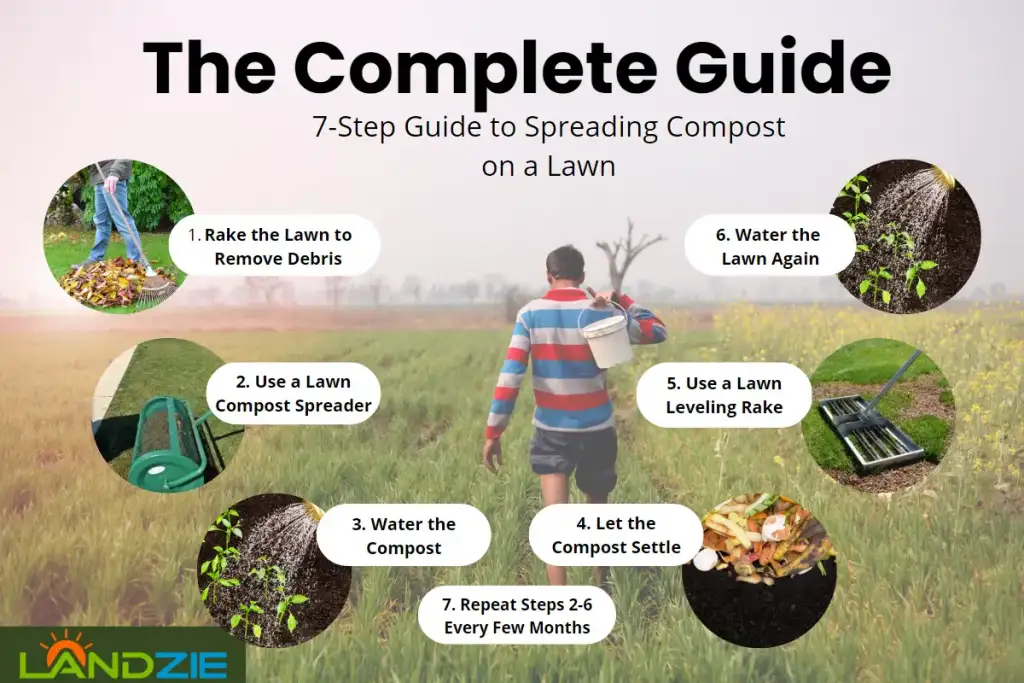
Image Source: landzie.com
The Marvels of Compost for Your Lawn
Before we delve into the practicalities of compost application, let’s explore why this natural amendment is so beneficial. Compost is essentially decomposed organic matter, rich in nutrients and beneficial microorganisms. When applied to your lawn, it acts like a multi-vitamin for your soil and grass.
Here’s a breakdown of the benefits of compost on lawn:
- Improved Soil Structure: Compost helps break up heavy clay soils, improving drainage and aeration, and it helps sandy soils retain moisture and nutrients. This creates a more hospitable environment for grass roots to grow deep and strong.
- Nutrient Enrichment: It slowly releases essential nutrients that grass needs to thrive, such as nitrogen, phosphorus, and potassium. This reduces the need for synthetic fertilizers and promotes sustainable growth.
- Enhanced Water Retention: Compost acts like a sponge, absorbing and holding water. This means your lawn will need less frequent watering, especially during dry spells, and it will be more resilient to drought.
- Beneficial Microorganism Introduction: Compost is teeming with bacteria, fungi, and other microbes that break down organic matter, making nutrients more available to plants. These microbes also help suppress soil-borne diseases.
- Weed Suppression: A thick, healthy lawn grown with compost crowds out weeds, reducing the need for herbicides.
- Increased Disease Resistance: Healthy soil leads to healthy grass, which is naturally more resistant to common lawn diseases and pest infestations.
- pH Balance: Compost can help buffer soil pH, bringing it closer to the ideal range for most turfgrasses, which is typically between 6.0 and 7.0.
When is the Best Time for Compost Application?
Timing is crucial for successful compost application. Applying compost at the right time of year ensures your lawn can effectively utilize the nutrients and improvements it offers.
Ideal Seasons for Lawn Dressing
The best times to spread compost on your lawn are during periods of active growth for your grass.
- Spring: After the last frost but before the heat of summer sets in. This allows the compost to integrate into the soil as the grass begins its vigorous spring growth.
- Fall: Before the ground freezes but after the intense heat of summer has subsided. This gives the roots time to absorb nutrients and for the compost to begin breaking down before winter dormancy.
Avoid spreading compost during:
- Extreme Heat: High temperatures can stress your lawn, and adding a layer of compost might hinder air circulation.
- Drought Conditions: If the soil is very dry, the compost may not integrate properly. Water the lawn lightly before and after application if possible.
- Frozen Ground: Compost won’t be able to penetrate frozen soil.
How to Apply Compost to Grass: Step-by-Step
The method you choose for how to apply compost to grass will depend on the size of your lawn and the amount of compost you have. Here’s a breakdown of common and effective methods.
Method 1: The Manual Method (Shovel and Rake)
This is the most straightforward approach, best suited for smaller lawns or when you only have a small amount of compost.
What you’ll need:
- Finished compost (well-rotted and free of large clumps)
- Shovel
- Garden rake or lawn rake
- Wheelbarrow (optional, for transporting compost)
Steps:
- Prepare the Compost: Ensure your compost is finished and has a crumbly texture. If it has large clumps, you might want to break them up.
- Transport the Compost: Load your wheelbarrow with compost and move it to the area you plan to spread it.
- Distribute Small Piles: Using the shovel, spread the compost in small, manageable piles across the lawn. Aim for piles that are about 1-2 inches deep.
- Spread Evenly: Use the garden rake to spread the compost from the piles. Work it into a thin, even layer, ideally no more than 1/4 to 1/2 inch thick across the entire lawn. You want to be able to see some of the underlying grass.
- Rake In: Gently rake the surface to help the compost settle into the soil and around the grass blades. This also helps break up any remaining lumps.
- Water Lightly: If the soil is dry, a light watering will help the compost begin to integrate.
Method 2: Using a Broadcast Spreader
For larger lawns, a broadcast spreader is an efficient tool for an even compost application. There are two main types: push spreaders and tow-behind spreaders.
What you’ll need:
- Finished compost (granulated or fine-textured compost works best for spreaders)
- Broadcast spreader (push or tow-behind)
- Hose or sprinkler (for watering)
Steps:
- Choose the Right Compost: For spreaders, finer, more composted material is ideal. Some commercially available compost products are specifically formulated for lawn spreading. Ensure it’s not too wet, as this can clog the spreader.
- Calibrate Your Spreader: Most spreaders have settings for different materials. Check the spreader manual or the compost bag for recommendations on the correct setting. It’s often a good idea to do a test run in a small, non-visible area to ensure an even distribution.
- Load the Spreader: Fill the hopper with compost, being careful not to overfill it.
- Start Spreading: Begin pushing or towing the spreader at a consistent pace. Overlap your passes slightly to ensure complete coverage and avoid streaks.
- Follow a Pattern: Spread in a systematic pattern, such as back and forth in one direction, then perpendicular to that direction. This ensures the most even coverage.
- Rake if Necessary: If you notice any uneven patches or clumps, use a rake to gently distribute them.
- Water: Water the lawn thoroughly after application to help the compost work its way into the soil.
Method 3: Using a Compost Spreader (Screening and Spreading)
Some specialized compost spreaders are designed to screen as they spread, making them ideal for using coarser compost or dealing with any small debris. These are often used by professionals but can be rented or purchased.
What you’ll need:
- Compost (can be slightly coarser than for broadcast spreaders)
- Compost spreader
- Hose or sprinkler
Steps:
- Load the Spreader: Fill the hopper with your compost. The spreader’s mechanism will break down clumps and screen out larger materials.
- Set the Application Rate: Adjust the settings on the spreader to achieve your desired compost thickness.
- Spread Evenly: Operate the spreader according to the manufacturer’s instructions, ensuring consistent coverage across the lawn.
- Final Rake (Optional): A light raking can help integrate the compost further into the turf.
- Water: Water the lawn to help the compost settle.
How Thick Should the Compost Layer Be?
This is a common question, and the answer is generally quite thin. The goal of top dressing lawn with compost is to provide a nutrient-rich top layer, not to bury your grass.
- Ideal Thickness: Aim for a layer of 1/4 to 1/2 inch of compost.
- What to Aim For: You should still be able to see a good amount of the green grass blades through the compost layer. If the layer is too thick, it can smother the grass, block sunlight, and reduce air circulation.
- Too Thin is Okay: It’s better to apply a thinner layer of compost more frequently than one very thick application.
If you are using compost to help level out minor bumps and dips in your lawn, you can apply a slightly thicker layer in those specific areas, but still be mindful not to suffocate the grass.
Tools for Compost Spreading
Choosing the right compost spreading tools can make a significant difference in the ease and effectiveness of your compost application.
Here’s a look at some popular options:
Hand Tools
- Shovel: Essential for moving compost from a pile or wheelbarrow.
- Garden Fork: Can be used to aerate the soil before spreading compost, helping it penetrate better.
- Leaf Rake or Garden Rake: Crucial for distributing the compost evenly and breaking up clumps. A good quality metal rake is usually preferred.
- Wheelbarrow: Makes transporting larger quantities of compost much easier.
Spreaders
- Broadcast Spreader (Push):
- Pros: Widely available, relatively inexpensive, good for medium-sized lawns, provides even coverage.
- Cons: Requires physical effort, can be tricky to maneuver on slopes.
- Broadcast Spreader (Tow-Behind):
- Pros: Ideal for large lawns, requires less physical effort when used with a lawn tractor or ATV, can cover large areas quickly.
- Cons: More expensive, requires a towing vehicle, can be bulky to store.
- Compost Spreader (Rotary or Sifting):
- Pros: Designed specifically for compost, often includes screening to break up clumps, excellent for spreading coarser materials.
- Cons: Can be expensive, less common for homeowners.
Other Useful Items
- Gloves: To protect your hands.
- Dust Mask: If the compost is dry and dusty.
Composting for Lawn Care: Frequently Asked Questions
How Often Should I Compost My Lawn?
How often to compost lawn depends on your lawn’s specific needs and the quality of your soil. Generally, applying compost once a year is sufficient for most lawns to maintain health and vitality. However, you might consider applying it twice a year (spring and fall) if your soil is particularly depleted or if you’re aiming for significant improvement.
Can I Spread Compost Directly Over Grass?
Yes, absolutely! That’s the primary purpose of lawn dressing. The key is to apply it in a thin layer (1/4 to 1/2 inch) so that sunlight and air can still reach the grass blades.
What Kind of Compost Should I Use?
You should use well-finished, mature compost. This means it has fully decomposed and is dark, crumbly, and smells earthy. Avoid using fresh compost, as it can still contain weed seeds or pathogens and can be high in ammonia, which can burn your grass. Look for compost that is free of large debris and has a fine texture, especially if you are using a spreader.
Will Compost Hurt My Grass?
When applied correctly in a thin layer, compost will not hurt your grass; it will benefit it. Over-applying compost, creating a layer that is too thick (over 1 inch), is the main risk. This can smother the grass, block sunlight, and reduce airflow, potentially leading to fungal diseases.
What if My Compost Has Clumps?
If your compost has clumps, you can break them up with a rake before spreading, especially if you are using the manual shovel and rake method. If using a spreader, finer compost will work best. Some specialized compost spreaders have mechanisms to break up clumps. A light raking after spreading also helps to integrate any remaining clumps.
Is Compost Better Than Chemical Fertilizers?
For long-term lawn health and environmental sustainability, compost is generally considered superior to chemical fertilizers. While chemical fertilizers provide a quick burst of nutrients, they can leach into waterways, damage soil microbial life, and require repeated applications. Compost, on the other hand, improves soil structure, water retention, and introduces beneficial microbes, providing a more holistic and sustainable approach to organic lawn fertilization.
Can I Spread Compost on a Newly Seeded Lawn?
Yes, applying a thin layer of compost (about 1/4 inch) over a newly seeded lawn can be very beneficial. It helps retain moisture, which is crucial for seed germination, and provides nutrients to the new seedlings as they establish. Ensure the compost is very fine to avoid dislodging the seeds.
What are the Long-Term Effects of Regular Compost Application?
Regular compost application leads to a healthier, more resilient lawn over time. You’ll notice improved soil structure, better water management, reduced weed growth, and a greener, more vibrant turf that is less susceptible to pests and diseases. It’s a fundamental practice for sustainable compost for lawn care.
How Do I Know If My Compost is Ready?
Mature compost is dark brown, crumbly, and has an earthy smell. It should not smell sour, ammonia-like, or like rotting material. You shouldn’t be able to recognize the original materials it was made from. If it’s still hot, or if you see visible signs of decomposition like mold or distinct layers, it may not be fully finished.
Can I Use Compost with Aeration?
Yes, aerating your lawn before spreading compost is an excellent practice. Aeration creates small holes in the soil, allowing the compost to penetrate more effectively and reach the root zone. This enhances nutrient uptake and improves soil structure more efficiently. It’s a great combination for top dressing lawn with the goal of deeper soil improvement.
What is the Best Way to Spread Compost on a Sloped Lawn?
On sloped lawns, it’s especially important to spread compost in thin, even layers to prevent erosion. Using a broadcast spreader on a slope can be challenging. The manual shovel and rake method might be more controlled. Alternatively, consider spreading compost in contour lines across the slope or using it in conjunction with aeration to help it settle into the ground. Avoid dumping large piles that could wash away.
By following these guidelines, you can effectively and easily spread compost on your lawn, transforming it into a lush, healthy, and environmentally friendly green space.