
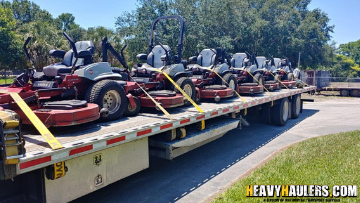
Image Source: www.heavyhaulers.com
How Much Does It Cost To Ship A Lawn Mower?
Shipping a lawn mower can cost anywhere from $200 to over $1,000, depending on the type of mower, distance, speed of delivery, and the company you choose. Yes, it is possible to ship a lawn mower. This guide will help you figure out the costs involved in getting your lawn mower from point A to point B, whether you’re moving, selling one, or buying a used one. We’ll cover everything from compact push mowers to hefty riding mowers, exploring the factors that influence lawn mower shipping prices and how to get the best deal for moving a lawn mower.
Deciphering the Factors Influencing Lawn Mower Shipping Costs
Shipping a lawn mower isn’t like sending a letter or a small package. These are bulky, heavy, and often awkward items. Several key elements play a significant role in determining lawn mower shipping prices.
Weight and Size of the Mower
This is the most fundamental factor. A small electric push mower will weigh considerably less than a powerful, gas-powered zero-turn mower or a lawn tractor shipping cost.
- Push Mowers: Typically range from 50 to 150 pounds.
- Self-Propelled Mowers: Can be anywhere from 80 to 200 pounds.
- Riding Mowers and Lawn Tractors: These are the heaviest, often weighing 400 pounds to over 800 pounds, and sometimes even more for commercial-grade machines. The larger the mower, the higher the shipping cost.
Shipping companies charge based on both the actual weight and the dimensional weight (how much space it takes up). A large but light item can sometimes be charged based on its size.
Distance of Shipment
The farther your lawn mower needs to travel, the more it will cost to ship. This is a standard practice in the logistics industry.
- Local or Regional Moves: Shorter distances will naturally be less expensive.
- Cross-Country or International Shipments: These will incur significantly higher costs due to fuel, driver hours, and the complexity of longer hauls.
When getting quotes, be precise about the origin and destination zip codes.
Type of Mower
As mentioned, the type of mower significantly impacts cost. Let’s break down some common scenarios:
Cost to Ship a Riding Mower
Shipping a riding mower is considerably more expensive than a push mower due to its size and weight. You’re essentially looking at heavy equipment shipping rates.
- Weight: Riding mowers can easily weigh 500-800 lbs or more.
- Bulk: Their footprint is much larger, requiring specialized handling and often a pallet.
- Service: You’ll likely need freight services, which are more expensive than standard parcel shipping.
Lawn Tractor Shipping Cost
Similar to riding mowers, the lawn tractor shipping cost will be substantial. Lawn tractors are built for durability and power, translating to a higher weight and larger dimensions. Expect costs comparable to, or even exceeding, that of shipping a riding mower.
Shipping Method: Freight vs. Parcel
For most lawn mowers, especially riding ones, you’ll be looking at freight shipping.
- Parcel Shipping: This is for smaller, lighter items and typically handled by carriers like UPS, FedEx, or USPS. It’s not suitable for lawn mowers.
- Freight Shipping: This involves larger shipments that are transported on trucks. There are different types of freight:
- Less Than Truckload (LTL): Your mower shares space with other shipments on a truck. This is generally the most cost-effective option for single pieces of equipment like a lawn mower.
- Full Truckload (FTL): You hire an entire truck just for your shipment. This is usually only economical for very large quantities or extremely valuable/sensitive items.
Speed of Delivery
Like most shipping services, expedited delivery will cost more.
- Standard Shipping: This is the most affordable option, with delivery times ranging from a few days to a couple of weeks, depending on the distance.
- Expedited Shipping: If you need your lawn mower delivered faster, expect to pay a premium.
Packaging and Preparation
Proper packaging is crucial to prevent damage during transit. This is a significant cost consideration.
- Drain Fluids: Gasoline and oil must be drained from the mower. This is a safety requirement for most carriers.
- Secure Parts: Detach any loose parts like the grass bag or seat, and secure them.
- Palletizing: For riding mowers and lawn tractors, you’ll likely need to secure the mower to a pallet. This requires a sturdy pallet, straps, and potentially shrink wrap. You might incur costs for the pallet itself or for a professional to do this.
- Crating: In some cases, especially for very valuable or delicate mowers, crating might be recommended. This adds significant cost.
Additional Services
Certain services can increase the overall cost.
- Residential Pickup/Delivery: Shipping to or from a residential address is often more expensive than shipping to a commercial address with a loading dock. This is often referred to as residential lawn mower shipping surcharges.
- Liftgate Service: If the pickup or delivery location doesn’t have a forklift or loading dock, a liftgate (a mechanical platform at the back of the truck that lowers the shipment to the ground) will be needed. This service comes with an extra charge.
- Insurance: While not always mandatory, purchasing shipping insurance is highly recommended for valuable items like a lawn mower to protect against damage or loss.
Estimating Your Lawn Mower Shipping Costs
To give you a rough idea, here’s a general breakdown of potential costs. These are estimates and can vary widely.
Estimated Lawn Mower Shipping Prices by Mower Type
| Mower Type | Estimated Shipping Cost Range | Key Factors |
|---|---|---|
| Push Mower | $200 – $500 | Weight, distance, speed, packaging |
| Self-Propelled | $250 – $600 | Weight, distance, speed, packaging, potential for LTL |
| Riding Mower | $400 – $1,000+ | Heavy freight, distance, palletization, liftgate, residential |
| Lawn Tractor | $400 – $1,000+ | Heavy freight, distance, palletization, liftgate, residential |
Note: These are ballpark figures. Actual costs can be higher or lower.
Getting Quotes for Yard Equipment Transport
To get accurate lawn mower shipping prices, you’ll need to obtain quotes from several shipping companies.
Step-by-Step Guide to Getting Quotes
- Gather Mower Details:
- Exact make and model.
- Actual weight (if possible, weigh it).
- Dimensions (length, width, height).
- Condition (does it run? is it operable?).
- Determine Pickup and Delivery Locations:
- Full street addresses.
- Are they residential or commercial?
- Do they have loading docks or forklifts?
- Specify Service Needs:
- Standard or expedited shipping?
- Do you need a liftgate?
- Do you need the shipper to crate it?
- Do you need insurance?
- Contact Shipping Companies:
- Freight Brokers: Companies like uShip, Freightquote, or TSI (Transit Systems Inc.) work with a network of carriers. They can often find competitive rates.
- Direct LTL Carriers: Companies like FedEx Freight, UPS Freight, XPO Logistics, or Estes can provide quotes directly.
- Specialized Equipment Transport: For very large or heavy items, you might look at companies specializing in heavy equipment shipping.
- Compare Quotes: Don’t just go with the first quote. Compare prices, transit times, insurance options, and customer reviews.
Preparing Your Lawn Mower for Shipping
Proper preparation is key to ensuring your lawn mower arrives safely and to avoid extra charges or refused shipments. This is a crucial part of moving a lawn mower.
Essential Preparation Steps
- Clean the Mower: Remove all dirt, grass clippings, and debris from the mower deck, engine, and body. A clean mower is easier to inspect and handle.
- Drain All Fluids: This is a non-negotiable step for safety and regulatory compliance.
- Gasoline: Empty the fuel tank completely. Start the mower and let it run until it stalls from lack of fuel, or siphon it out. Dispose of gasoline responsibly.
- Oil: Drain the engine oil.
- Disconnect the Battery: If your mower has an electric start or is an electric mower, disconnect and ideally remove the battery. Batteries often have specific shipping regulations.
- Secure or Remove Attachments:
- Remove the grass bag, mulch plug, or any other detachable components. Package these separately and label them clearly with the mower’s destination.
- Fold down or remove any adjustable handlebars or seats if possible.
- Secure Loose Parts: Tie down any cables, levers, or other parts that could move and get damaged during transit using zip ties or sturdy tape.
- Tire Inflation: Ensure tires are properly inflated.
Packaging for Protection
- For Push Mowers:
- Wrap the entire mower in heavy-duty plastic wrap or moving blankets.
- Secure the wrapping with packing tape.
- Consider adding cardboard protection to vulnerable areas like the mower deck or handles.
- For Riding Mowers and Lawn Tractors:
- Palletization is Highly Recommended: Place the mower on a heavy-duty wooden pallet.
- Secure to the Pallet: Use heavy-duty ratchet straps to firmly attach the mower to the pallet. Ensure it’s centered and stable.
- Protect Vulnerable Parts: Wrap the mower deck, steering column, and any exposed engine parts with protective wrap or blankets.
- Shrink Wrap: Cover the entire mower and pallet with multiple layers of industrial shrink wrap for added protection and to keep everything in place.
- Labeling: Clearly label the pallet with the destination address, sender’s information, and handling instructions (e.g., “This Side Up,” “Fragile”).
Choosing the Right Shipping Provider
Selecting the right company is vital for a smooth shipping experience. Different providers offer varying levels of service and pricing for yard equipment transport.
Types of Shipping Services for Lawn Mowers
- Freight Brokers:
- Pros: Access to a wide network of carriers, competitive pricing, often handle all the logistics, can find specialized carriers.
- Cons: May not offer the absolute lowest price compared to booking directly with a carrier if you know what you’re doing.
- Examples: uShip, Freightquote, Shiply, TSI.
- LTL (Less Than Truckload) Freight Carriers:
- Pros: Cost-effective for single, heavy items, reliable if you choose a reputable carrier.
- Cons: Requires more effort in getting quotes and understanding their specific shipping requirements, may have stricter packaging rules.
- Examples: FedEx Freight, UPS Freight, XPO Logistics, Old Dominion Freight Line, Estes.
- Specialized Equipment Transport Companies:
- Pros: Expertise in handling bulky and heavy items, often offer door-to-door service with specialized equipment.
- Cons: Can be more expensive than general freight.
- Examples: Look for local or national companies that advertise heavy equipment shipping or specialty freight.
Key Considerations When Selecting a Shipper
- Insurance: What is the carrier’s liability for damage? What are the options for purchasing additional insurance?
- Customer Reviews: What do other customers say about their reliability, customer service, and handling of similar items?
- Transit Times: How long will it take for the mower to arrive? Does it meet your needs?
- Services Offered: Do they offer residential pickup/delivery, liftgate services, or packaging assistance if you need it?
- Pricing Transparency: Are all fees clearly outlined, or are there hidden costs?
The Cost of Shipping a Lawn Mower: A Deeper Dive
Let’s explore some scenarios to paint a clearer picture of the costs involved in shipping large items like lawn mowers.
Scenario 1: Shipping a Push Mower Across State Lines
- Item: Honda HRX217 (approx. 90 lbs, 65″ L x 26″ W x 45″ H).
- Distance: 1,000 miles (e.g., California to Texas).
- Preparation: Drained fluids, cleaned. Wrapped in plastic and cardboard.
- Shipping Method: LTL freight.
- Estimated Cost: $250 – $500. This would likely include a residential pickup and delivery. If shipped to a business with a dock, it might be slightly cheaper.
Scenario 2: Shipping a Riding Mower for a Move
- Item: John Deere X300 (approx. 500 lbs, 70″ L x 50″ W x 40″ H).
- Distance: 500 miles (e.g., New York to Ohio).
- Preparation: Drained fluids, battery disconnected. Secured to a pallet with straps and shrink wrap.
- Shipping Method: LTL freight with residential pickup and delivery, requiring a liftgate at both ends.
- Estimated Cost: $500 – $900. The liftgate fees and residential surcharges can add $100-$200 to the base freight cost.
Scenario 3: Shipping a Lawn Tractor to a Buyer
- Item: Craftsman YTS3000 Lawn Tractor (approx. 600 lbs, 75″ L x 55″ W x 45″ H).
- Distance: 2,000 miles (e.g., Florida to Washington State).
- Preparation: Fluids drained, battery disconnected, secured to a heavy-duty pallet, shrink-wrapped.
- Shipping Method: LTL freight, commercial pickup (from seller’s business), residential delivery (to buyer’s home).
- Estimated Cost: $700 – $1,200+. This range accounts for the significant distance and the residential delivery surcharge for the buyer.
Factors That Can Increase Costs
- Non-palletized Mower: If a riding mower isn’t properly palletized, some LTL carriers may refuse it or charge a significant handling fee.
- Fragile Components: If parts like antennas, mirrors, or delicate plastic fairings are not protected, they can break and lead to costly repairs or replacements.
- Unprepared Mower: If fluids are not drained, the shipment will likely be rejected by the carrier.
- Oversized or Overweight Charges: Exceeding standard LTL freight dimensions or weight limits can result in substantial extra fees.
Is It Worth Shipping a Lawn Mower?
The decision to ship a lawn mower often comes down to cost-benefit analysis.
- Buying a Used Mower: If you find a great deal on a mower online or from a private seller in another state, shipping costs need to be factored into the total purchase price. If the shipping cost approaches the price of a similar mower locally, it might not be worth it.
- Moving: If you’re relocating, shipping your mower is often more economical than buying a new one at your destination, especially if it’s a high-quality or specialized model.
- Selling: If you’re selling a mower and the buyer is out of state, you need to be transparent about shipping costs. Some sellers include shipping, while others ask the buyer to arrange and pay for it.
Frequently Asked Questions (FAQ)
Q1: Can I ship a lawn mower with fuel in the tank?
A1: No, absolutely not. All gasoline and oil must be drained from the lawn mower before shipping. This is a critical safety and regulatory requirement.
Q2: Do I need to palletize my riding mower?
A2: While not always strictly mandatory for every carrier, it is highly recommended. Palletizing ensures the mower is stable, protected, and easier for forklifts to load and unload, which can prevent damage and avoid additional handling fees.
Q3: What if the pickup or delivery location doesn’t have a loading dock?
A3: You will likely need to request a liftgate service from the shipping company. This service incurs an additional fee.
Q4: How long does it typically take to ship a lawn mower?
A4: Standard LTL freight shipping can take anywhere from 3 to 14 business days, depending on the distance and the carrier’s routes. Expedited options are available for a higher cost.
Q5: Is shipping insurance necessary for a lawn mower?
A5: It is highly recommended. While carriers have basic liability, it may not cover the full value of your mower in case of significant damage or loss. Purchasing additional insurance provides greater peace of mind.
Q6: Can I ship an electric lawn mower?
A6: Yes, you can ship an electric lawn mower. You’ll still need to drain any residual charge from the battery, and if the battery is removable, you may need to ship it separately according to battery shipping regulations, or ensure it’s disconnected and secured.
Q7: How do I find companies that ship heavy equipment?
A7: Search for “heavy equipment shipping,” “specialty freight carriers,” or “freight brokers” online. Companies that transport vehicles, machinery, or industrial equipment are good places to start. Using a freight broker can simplify the process of finding suitable carriers.
By carefully considering these factors and preparing your equipment properly, you can navigate the process of shipping a lawn mower and get your yard essential to its new location without unnecessary hassle or expense.