
How often should you fertilize a lawn? Most lawns benefit from fertilization 3-4 times per year, with a specific focus on spring and fall applications. The exact frequency and timing depend on your grass type, climate, soil health, and the type of fertilizer used.
A healthy, green lawn isn’t just about luck; it’s often the result of a consistent and well-timed feeding program. This guide will help you decipher the best lawn feeding schedule for your specific needs, ensuring your grass receives the vital nutrients it craves. We’ll cover everything from understanding grass nutrient needs to creating a personalized lawn care calendar.
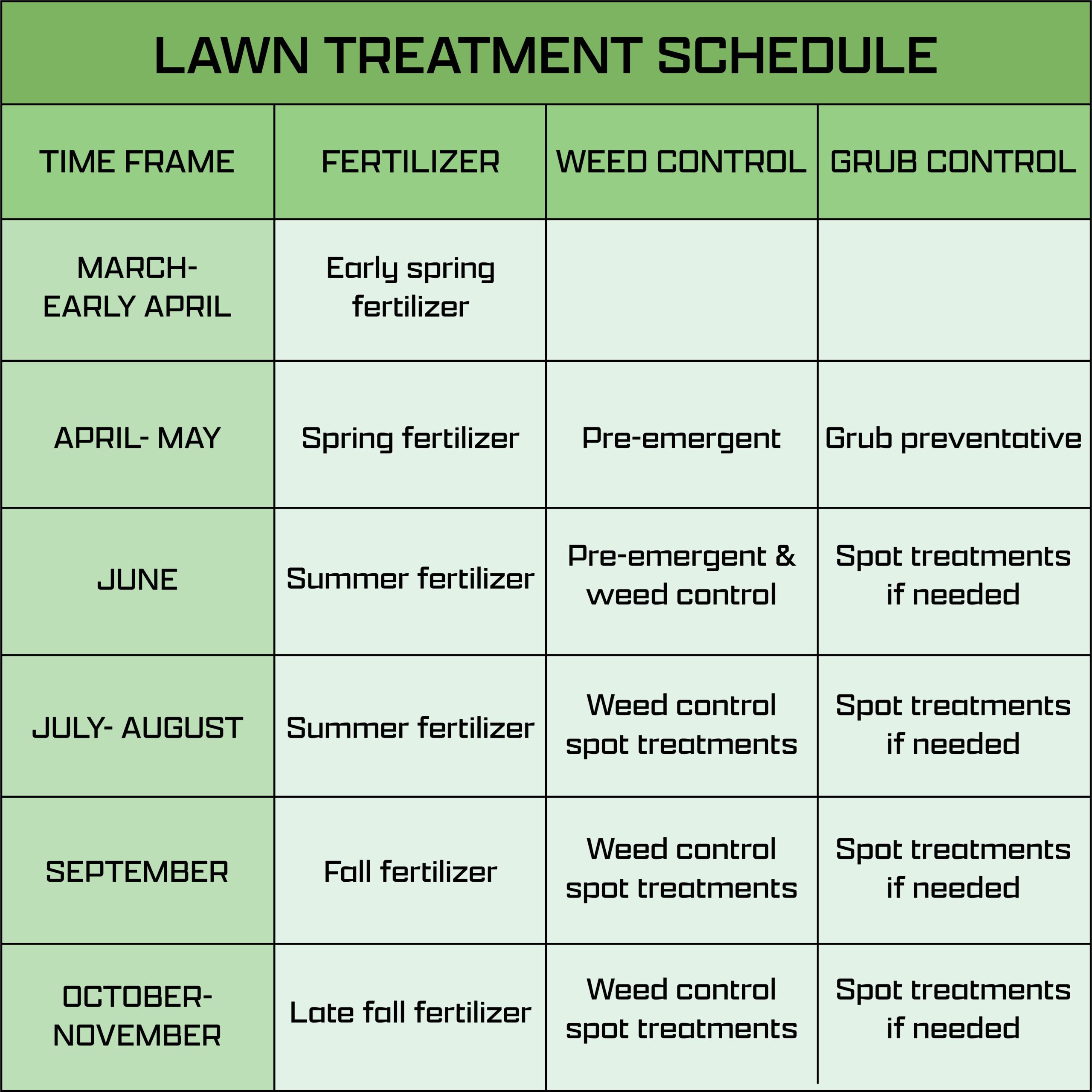
Image Source: stewartslawn.com
Why Fertilizing Your Lawn Matters
Think of fertilizer as a multivitamin for your grass. Lawns, like all living things, need a balanced intake of nutrients to thrive. Over time, grass uses up the nutrients available in the soil. Regular fertilization replenishes these essential elements, promoting strong root development, vibrant green color, and resilience against pests, diseases, and environmental stress.
Key Nutrients for Lawn Health
The primary nutrients found in lawn fertilizers are Nitrogen (N), Phosphorus (P), and Potassium (K), often represented by three numbers on a fertilizer bag (e.g., 10-10-10).
- Nitrogen (N): This is the most crucial nutrient for leaf growth and that sought-after green color. It fuels photosynthesis, the process by which grass converts sunlight into energy. Too little nitrogen results in pale, yellowish grass, while too much can lead to excessive, weak growth susceptible to disease.
- Phosphorus (P): Essential for root development and establishing new lawns, phosphorus helps the grass build a strong foundation. While important, many established lawns and soils already have adequate phosphorus, so excessive application can be harmful to water systems.
- Potassium (K): This nutrient boosts overall plant health, improves drought tolerance, disease resistance, and cold hardiness. It helps the grass manage stress from heat, cold, and foot traffic.
The Impact of Soil Type
Your soil’s composition plays a significant role in how often and what type of fertilizer your lawn needs. Sandy soils tend to leach nutrients more quickly, requiring more frequent, lighter applications. Clay soils hold nutrients better but can suffer from compaction, hindering root growth and nutrient uptake. A soil test is the best way to determine your soil’s nutrient levels and pH, guiding your fertilization strategy.
Determining Your Lawn’s Fertilizing Frequency
The general recommendation of 3-4 applications per year is a good starting point, but fertilizing frequency can be adjusted based on several factors:
Grass Type
Different grass species have varying nutrient demands and growth cycles.
- Cool-Season Grasses: (e.g., Kentucky Bluegrass, Perennial Ryegrass, Fescues) These grasses are most active in cooler temperatures, typically spring and fall. They benefit from feeding in early spring as they break dormancy, late spring/early summer to support growth, and most importantly, in the fall to help them recover from summer stress and prepare for winter.
- Warm-Season Grasses: (e.g., Bermuda Grass, Zoysia Grass, St. Augustine Grass) These grasses thrive in heat and are dormant in cooler months. Their primary feeding times are in late spring as they green up, throughout the summer for active growth, and a final application in early fall to help them store energy before winter dormancy.
Climate and Growing Season
Your local climate dictates the length and intensity of your grass’s growing season.
- Long Growing Seasons: Lawns in regions with extended warm periods might benefit from additional applications, especially if they are high-traffic areas or a specific grass type that demands more nutrients.
- Short Growing Seasons: Lawns in areas with shorter growing seasons may need fewer applications, focusing on the critical periods of active growth and recovery.
Soil Fertility
As mentioned, a soil test is invaluable. If your soil test reveals deficiencies, you might need to fertilize more frequently or use a fertilizer with a higher concentration of the missing nutrients. Conversely, if your soil is already rich, you might be able to reduce the frequency.
Fertilizer Type
The type of fertilizer you use impacts how often to fertilize a lawn.
- Quick-Release Fertilizers: These provide nutrients rapidly, leading to a quick green-up. However, they can also lead to nutrient leaching and require more frequent applications (every 4-6 weeks during the growing season).
- Slow-Release Fertilizers: These release nutrients gradually over several weeks or months. They provide a more consistent supply of food for the grass, reduce the risk of burning the lawn, and are generally preferred for their efficiency and reduced environmental impact. Fertilizing with slow-release products can often be done less frequently, aligning with the 3-4 times a year schedule.
- Organic Fertilizers: These are derived from natural sources like compost, manure, and bone meal. They improve soil structure and release nutrients slowly as they decompose. They often require more frequent applications than synthetic slow-release fertilizers but contribute to long-term soil health.
Crafting Your Lawn Care Calendar: Seasonal Lawn Feeding
A lawn care calendar helps ensure your lawn gets the right nutrients at the right time. Here’s a general guide for seasonal lawn feeding, which you can adapt based on your grass type and local climate.
Spring Lawn Fertilization: The Kickstart
Spring lawn fertilization is crucial for helping your lawn recover from winter dormancy and prepare for the active growing season.
- When: Apply the first fertilizer in early to mid-spring, typically when the grass begins to actively grow and turn green. For cool-season grasses, this is often March or April. For warm-season grasses, wait until they have fully greened up, usually in May or June.
- What: A fertilizer with a higher nitrogen content (e.g., 20-5-10 or 25-0-5) is generally recommended for spring to promote lush, green growth. If you’re looking to improve root development, a fertilizer with some phosphorus can be beneficial, especially for new lawns or if your soil test indicates a deficiency. However, be mindful of phosphorus regulations in your area.
Summer Feeding: A Careful Approach
Summer can be a stressful time for lawns due to heat and potential drought.
- When: Avoid fertilizing during the hottest part of summer, especially with quick-release nitrogen, as this can stress the grass. If you choose to fertilize, do so in late spring or early summer, and opt for slow-release formulations.
- What: If you’re fertilizing in summer, use a slow-release fertilizer with a balanced N-P-K ratio or one that emphasizes potassium for stress tolerance. For warm-season grasses, a mid-summer application can be beneficial if growth seems to be slowing.
Fall Lawn Feeding: The Most Important Application
Fall lawn feeding is arguably the most critical feeding of the year. It helps the grass recover from summer stress, rebuilds root reserves, and prepares it for the coming winter.
- When: Apply fertilizer in early to mid-fall, typically September or October for cool-season grasses. For warm-season grasses, an early fall application (late August to early September) is beneficial.
- What: A fertilizer with a good balance of nitrogen and potassium is ideal (e.g., 10-10-20 or 16-4-8). The nitrogen will help the grass remain green and continue to store energy, while the potassium will improve its hardiness and ability to withstand winter conditions.
Winterizer Fertilizers
Some fertilizers marketed as “winterizers” are specifically designed for late fall application. They often have higher potassium content to promote root health and winter survival.
Applying Fertilizer Correctly: How Much Fertilizer for Lawn?
Knowing when to fertilize is only half the battle; knowing how much fertilizer for lawn is equally important. Over-fertilizing can be as detrimental as under-fertilizing.
Read the Label!
The most crucial step is to always read and follow the instructions on the fertilizer bag. The label will provide a recommended application rate, usually expressed in pounds of actual nitrogen per 1,000 square feet.
Calculating Application Rate
Let’s say you have a 5,000 sq ft lawn and your fertilizer is a 25-0-5. The first number (25) indicates that 25% of the fertilizer’s weight is nitrogen.
If the bag recommends applying 1 pound of actual nitrogen per 1,000 sq ft:
- Desired Nitrogen: 1 lb N / 1,000 sq ft
- Total Lawn Area: 5,000 sq ft
- Total Nitrogen Needed: (1 lb N / 1,000 sq ft) * 5,000 sq ft = 5 lbs of actual N
- Fertilizer Weight: Since the fertilizer is 25% nitrogen, you need to find out how much of the product contains 5 lbs of N.
- (5 lbs N) / (0.25 lbs N / lb of product) = 20 lbs of fertilizer product.
So, for your 5,000 sq ft lawn, you would need 20 lbs of the 25-0-5 fertilizer.
Application Methods
- Broadcast Spreader: The most common type for lawns. Ensure it’s calibrated correctly to distribute the fertilizer evenly. Overlapping passes slightly can help avoid missed spots.
- Drop Spreader: Provides more precise application, ideal for smaller areas or when fertilizing close to garden beds.
Important Considerations Before Fertilizing
- Moisture: Water your lawn lightly a day or two before fertilizing. Fertilizing dry grass can increase the risk of burning.
- Mowing: Mow your lawn before fertilizing. This allows the fertilizer granules to reach the soil surface without sticking to the grass blades.
- Weather: Avoid fertilizing if rain is expected immediately after application, as it can wash the fertilizer away. Also, avoid fertilizing in extreme heat or drought.
- Leaf Litter: Rake up any fallen leaves before fertilizing to ensure even distribution.
Special Situations: Overseeding and Fertilizing
When is the best time to fertilize if you plan on overseeding and fertilizing?
- Overseeding in Fall: Fall is the ideal time to overseed cool-season lawns. You can apply a starter fertilizer (which is typically higher in phosphorus) along with or immediately after overseeding. This provides the young seedlings with the necessary nutrients for establishment.
- Overseeding in Spring: If you overseed in spring, use a starter fertilizer specifically designed for new grass. Wait a few weeks after the seedlings have emerged before applying any fertilizer, and opt for a fertilizer with a lower nitrogen content to avoid burning the young grass.
What is Overseeding?
Overseeding is the process of sowing grass seed directly into an existing lawn without tearing up the turf. It’s a great way to thicken a lawn, improve its color, and introduce more resilient grass varieties.
Fertilizing After Aeration
Aeration, which involves pulling out small plugs of soil, is often done in conjunction with overseeding or on its own to improve soil structure and air circulation. Fertilizing after aeration can be very beneficial as the nutrients can penetrate deeper into the soil and reach the root zone more effectively. The best time to fertilize after aeration is typically a few weeks after the process, especially if you haven’t fertilized recently.
Factors Influencing Your Lawn Feeding Schedule
Beyond the basics, several other factors can influence your fertilizing frequency:
Lawn Health and Vigor
A struggling lawn might benefit from more frequent, lighter feeding. A robust, well-established lawn might need less. Observe your lawn’s response to fertilization.
Weed and Disease Pressure
Lawns that are frequently plagued by weeds or diseases may need a more consistent feeding schedule to maintain their vigor and outcompete unwanted growth. Healthy, well-fed grass is more resistant.
High-Traffic Areas
Lawns in high-traffic areas (e.g., near a play area or walkway) will experience more stress and nutrient depletion, potentially requiring more frequent fertilization.
Drought Conditions
During periods of drought, it’s best to reduce or halt fertilization. Fertilizing stressed grass can cause further damage. Wait until rainfall has resumed and the grass shows signs of recovery.
When is the Best Time to Fertilize Lawn?
The best time to fertilize lawn depends primarily on your grass type and local climate, but also on the type of fertilizer you’re using.
- For Cool-Season Grasses:
- Early Spring: As the grass begins to grow after winter.
- Late Spring/Early Summer: To support peak growth.
- Early to Mid-Fall: The most crucial feeding to prepare for winter and promote root growth.
- For Warm-Season Grasses:
- Late Spring: As the grass greens up and starts active growth.
- Summer: Throughout the growing season for continued vigor.
- Early Fall: To help the grass store energy before dormancy.
Common Fertilizing Mistakes to Avoid
- Over-fertilizing: Can burn the grass, cause excessive thatch, and contribute to water pollution.
- Under-fertilizing: Leads to weak, pale growth susceptible to stress.
- Fertilizing Dormant Grass: Applying fertilizer when the grass is not actively growing is wasteful and can harm the lawn.
- Ignoring Soil Tests: Fertilizing without knowing your soil’s needs can lead to imbalances.
- Applying Fertilizer to Wet or Dry Grass: Can increase the risk of burn or wash-off.
- Not Calibrating Spreaders: Leads to uneven application and patchy results.
Advanced Lawn Feeding Strategies
Slow-Release vs. Quick-Release Nitrogen
Choosing between slow-release and quick-release nitrogen depends on your goals. For a quick green-up, quick-release is effective. However, for sustained growth and reduced risk of damage, slow-release nitrogen is generally preferred, allowing for less frequent applications and a more consistent nutrient supply.
Micronutrients
While NPK are the macronutrients, lawns also need micronutrients like iron, manganese, and zinc for optimal health. If your soil test indicates deficiencies or your lawn shows signs of chlorosis (yellowing between the veins), consider a fertilizer that includes micronutrients or a separate micronutrient supplement.
Liquid vs. Granular Fertilizers
- Granular Fertilizers: These are the most common and typically applied with a spreader. They offer both quick- and slow-release options and are generally easier to apply evenly.
- Liquid Fertilizers: These are applied with a hose-end sprayer and provide nutrients that are quickly absorbed by the grass. They can be useful for a rapid boost but may require more frequent application and can be more challenging to apply evenly without specialized equipment.
Frequently Asked Questions (FAQ)
Q1: Can I fertilize my lawn in the winter?
A1: No, it’s generally not recommended. Grass is either dormant or growing very slowly in winter. Fertilizing during this time can damage the roots and is largely ineffective. The best time for winter preparation is late fall.
Q2: How soon after seeding can I fertilize?
A2: For newly seeded lawns, wait until the grass has been mowed at least twice. Use a starter fertilizer specifically designed for new grass and follow the label instructions carefully to avoid damaging the delicate seedlings.
Q3: What does the N-P-K ratio on a fertilizer bag mean?
A3: The N-P-K ratio represents the percentage by weight of Nitrogen (N), Phosphorus (P), and Potassium (K) in the fertilizer. For example, a 10-10-10 fertilizer contains 10% nitrogen, 10% phosphorus, and 10% potassium.
Q4: Is it okay to fertilize if it’s going to rain?
A4: Light rain can be beneficial as it helps water the fertilizer into the soil. However, heavy rain shortly after application can wash the fertilizer away, reducing its effectiveness and potentially causing water pollution. It’s best to wait for a period of light rain or water it in yourself if no rain is expected.
Q5: How do I know if my lawn needs fertilizer?
A5: Signs include a pale or yellowish color, slow growth, thin patches, and increased susceptibility to weeds and diseases. A soil test is the most accurate way to determine nutrient deficiencies.
By following these expert tips and creating a tailored lawn care calendar, you can ensure your lawn receives the consistent, appropriate nutrition it needs to thrive throughout the seasons. Remember to observe your lawn’s response and adjust your lawn feeding schedule accordingly for the most vibrant and healthy turf.