
What is the recommended amount of grass seed per acre for a lawn? Typically, you’ll need between 5 to 10 pounds of grass seed per 1,000 square feet, which translates to roughly 217 to 435 pounds of seed per acre. This guide will help you figure out exactly how much seed your lawn project requires, ensuring healthy growth and a beautiful yard.
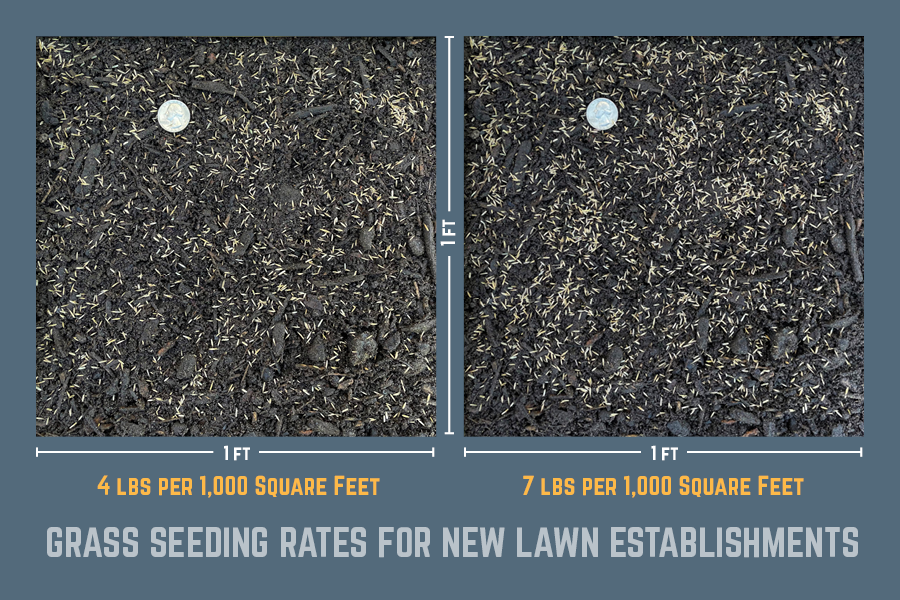
Image Source: alseed.com
Deciphering Your Seeding Needs: How Much Grass Seed Per Acre?
Starting a new lawn or refreshing an existing one is an exciting project. A key question that comes up is, “How much grass seed do I need?” Getting this right is crucial for successful lawn establishment. Too little seed means a thin, patchy lawn, while too much can lead to wasted money and unhealthy competition among seedlings. This comprehensive lawn seeding guide will walk you through the factors that determine your grass seed coverage needs and provide a clear path to calculating the right amount of seed for your acreage.
Factors Influencing Seed Requirements
Several elements play a role in deciding how many pounds of seed per acre you’ll need. It’s not a one-size-fits-all answer. Let’s break down the key considerations:
- Type of Grass Seed: Different grass species have different germination rates and growth habits. Fine fescues, for instance, might be planted at a slightly lower rate than Kentucky bluegrass.
- Seeding Method: Are you starting a lawn from scratch, or are you overseeding an existing lawn?
- Desired Density: Do you want a thick, lush lawn, or is a moderate density acceptable?
- Environmental Conditions: Soil type, sunlight exposure, and climate can influence how well the seed germinates and establishes.
- Seed Quality: Higher quality seeds often have better germination rates, potentially allowing for slightly lower application rates.
Calculating Your Lawn’s Acreage
Before you can determine how much seed to buy, you need to know the size of the area you’re working with. An acre is a large space – specifically, 43,560 square feet.
To calculate the acreage of your lawn:
- Measure the Length and Width: If your lawn is a simple rectangle or square, measure its length and width in feet.
- Calculate the Area: Multiply the length by the width to get the total square footage.
- Example: A lawn that is 200 feet long and 150 feet wide has an area of 200 ft * 150 ft = 30,000 sq ft.
- Convert to Acres: Divide your total square footage by 43,560 to find the acreage.
- Example: 30,000 sq ft / 43,560 sq ft/acre = approximately 0.69 acres.
For irregularly shaped lawns, you might need to break the area down into smaller, manageable shapes (rectangles, triangles, circles) and calculate the area of each, then sum them up. Online mapping tools or even simple string and stakes can help with this process.
Determining the Right Seeding Rate: The Core of Your Project
The seeding rate is the amount of seed applied per unit of area. This is the most critical number in your grass seed coverage calculation. Seeding rates are typically provided by seed manufacturers on the product packaging and can vary significantly.
General Seeding Rate Guidelines (Per 1,000 Sq Ft)
These are common recommendations, but always check your specific seed blend for precise guidance.
| Grass Type | New Lawn Seeding (lbs/1,000 sq ft) | Overseeding (lbs/1,000 sq ft) |
|---|---|---|
| Kentucky Bluegrass | 2-4 | 1-3 |
| Perennial Ryegrass | 3-5 | 2-4 |
| Tall Fescue | 5-8 | 4-6 |
| Fine Fescues (Creeping) | 2-3 | 1-2 |
| Fine Fescues (Chewings) | 3-5 | 2-4 |
| Fine Fescues (Red) | 3-5 | 2-4 |
| Fine Fescues (Hard) | 2-4 | 1-3 |
| Annual Ryegrass | 4-6 | N/A (typically not overseeded) |
Important Note: These are general figures. Some premium seed blends might be formulated for slightly different application rates.
Converting to Per Acre Rates
To find out how many pounds of seed per acre you need, you’ll use your calculated acreage and the per 1,000 sq ft seeding rate.
Formula:
Total Seed Needed (lbs) = (Area in sq ft / 1,000) * Seeding Rate (lbs/1,000 sq ft)
Example Calculation:
Let’s say you have a 1-acre lawn (43,560 sq ft) and you are planting Tall Fescue as a new lawn. The recommended seeding rate for Tall Fescue is 6 lbs per 1,000 sq ft.
Total Seed Needed = (43,560 sq ft / 1,000) * 6 lbs/1,000 sq ft
Total Seed Needed = 43.56 * 6 lbs
Total Seed Needed = 261.36 lbs
So, for a 1-acre lawn of Tall Fescue, you would need approximately 261.36 pounds of seed.
Using a Seeding Rate Calculator
Many online resources offer a seeding rate calculator. These tools simplify the process. You typically input your lawn’s square footage and the recommended seeding rate from your seed bag, and the calculator does the math for you, providing the total amount of seed needed in pounds.
Achieving Optimal Seed Density
The goal of seeding is to achieve an optimal seed density – the perfect number of grass plants per square foot. This density ensures a uniform, healthy turf that can resist weeds and environmental stress.
- Too sparse: Leads to bare patches, weed invasion, and an unattractive lawn.
- Too dense: Causes seedlings to compete fiercely for light, water, and nutrients, leading to weak growth and increased susceptibility to disease.
Seed manufacturers usually state the target seed density for their products. Following their recommended seeding rates is the best way to achieve this optimal density.
Overseeding: When and How Much
Overseeding is the process of sowing grass seed into an existing lawn to fill in thin areas, improve the lawn’s density, and introduce improved grass varieties. It’s a vital part of maintaining a healthy lawn, especially after harsh winters or summers.
Best Time to Overseed
The best time to overseed depends on your climate and the type of grass you have.
- Cool-Season Grasses (e.g., Kentucky Bluegrass, Perennial Ryegrass, Fescues): The ideal time to overseed is in the fall (late August to early October in most Northern regions). The soil is still warm from summer, and air temperatures are cooler, providing excellent germination conditions. The grass also has time to establish before winter. Spring overseeding is also possible, but it’s less ideal as weeds tend to germinate more aggressively in the spring.
- Warm-Season Grasses (e.g., Bermuda, Zoysia, Centipede): These grasses are best overseeded in late spring or early summer when soil temperatures are consistently warm, and the grass is actively growing.
Overseeding Rates
When overseeding, you generally use a lower seeding rate than for starting a new lawn. This is because you are supplementing existing grass, not replacing it entirely. The goal is to introduce new seeds into the existing turf without overwhelming it.
- General Overseeding Rate: Typically, you’ll use about 50-75% of the recommended rate for a new lawn. For example, if a new lawn requires 5 lbs per 1,000 sq ft, you might overseed at 2.5 to 3.75 lbs per 1,000 sq ft.
- Check Your Seed Bag: Always refer to the specific recommendations for overseeding on your chosen grass seed blend.
Preparing for Seeding: The Foundation for Success
Even with the correct amount of seed, success hinges on proper preparation. Soil preparation for seeding is non-negotiable for healthy lawn establishment.
Key Soil Preparation Steps
- Mow Low: If overseeding, mow the existing lawn very short. This allows the new seeds to reach the soil surface.
- Dethatch (If Necessary): If your lawn has more than half an inch of thatch (a layer of dead grass stems and roots), dethatch it. Thatch can prevent seeds from contacting the soil.
- Aerate: Core aeration helps to relieve soil compaction, making it easier for seeds to germinate and roots to penetrate. It also improves air and water movement into the soil.
- Remove Debris: Rake up any loose thatch, rocks, sticks, or other debris.
- Loosen Soil: For bare areas or heavily compacted spots, lightly loosen the top 1-2 inches of soil with a rake or tiller. This creates a better seedbed.
- Level the Ground: Fill in any low spots with topsoil to prevent water from pooling. Smooth out any high spots.
- Apply Starter Fertilizer: This is a crucial step for new seed. A fertilizer for new grass should be low in nitrogen and higher in phosphorus. Phosphorus is essential for root development, giving your new seedlings the best start. Apply the starter fertilizer before seeding and lightly rake it into the top layer of soil.
Applying the Seed: Techniques for Even Coverage
Once your soil is prepped, it’s time to apply the seed. Even distribution is key to achieving uniform grass seed coverage.
Methods for Seed Application
- Broadcast Spreader: These are excellent for covering large areas like entire acres. They work by scattering seed in a wide arc.
- Calibration is Crucial: Calibrate your spreader according to the instructions on the seed bag. This ensures you apply the seed at the correct rate. Most spreader bags have charts indicating settings for various seeds.
- Two Passes: For the most even coverage, make one pass in one direction (e.g., north-south) and a second pass at a 90-degree angle (e.g., east-west). This helps fill in any gaps.
- Drop Spreader: These spreaders drop seed in a narrow, controlled pattern. They are more precise and good for smaller areas or for ensuring you don’t miss spots, but they take longer for large areas. Again, proper calibration is vital.
- Hand Spreading: For very small areas, you can hand-broadcast seed. It’s challenging to achieve even coverage this way, so practice and consider dividing your seed into smaller portions to spread evenly.
Post-Seeding Care
After you’ve applied the seed:
- Light Rake: Lightly rake the seeded area to ensure good seed-to-soil contact. This is essential. You want to barely cover the seed with a thin layer of soil.
- Roll (Optional): For very loose soil, you can lightly roll the seeded area to further improve seed-to-soil contact. Be careful not to compact the soil too much.
- Watering: This is perhaps the MOST critical part of post-seeding care.
- Keep Seed Moist: The soil surface needs to be kept consistently moist until germination occurs, which can take anywhere from 7 to 21 days, depending on the grass type.
- Light, Frequent Watering: Water lightly several times a day. Avoid heavy watering, which can wash seeds away.
- After Germination: Once the grass is about an inch tall, you can gradually transition to less frequent, deeper watering.
Comparing Sod vs. Seed Cost
When planning a new lawn, many people consider sod vs seed cost. While sod provides an instant lawn, seeding is generally much more economical, especially for large areas like an acre.
Sod Considerations
- Pros: Instant green lawn, immediate erosion control, less weed competition initially.
- Cons: Significantly higher upfront cost, heavier to transport and lay, requires immediate watering and care to prevent drying out.
- Cost: Sod can cost anywhere from $0.30 to $1.00+ per square foot, meaning a 1-acre lawn could cost anywhere from $13,000 to $43,560 or more!
Seed Considerations
- Pros: Much lower cost, more flexibility in grass variety selection, good for larger areas.
- Cons: Takes time to establish (weeks to months for a mature lawn), requires diligent watering and care during establishment, more susceptible to initial weed competition.
- Cost: Grass seed can range from $2 to $10+ per pound. For our 1-acre Tall Fescue example needing 261.36 lbs, at $5/lb, the seed cost would be around $1,306.80. This is dramatically less than sod.
For large acreage projects, seeding is almost always the more cost-effective choice.
Common Questions About Seeding an Acre
What is a good seeding rate for an acre?
A good seeding rate for an acre typically falls between 200 and 450 pounds, depending on the grass type and whether you are establishing a new lawn or overseeding. Always check the specific recommendations on your seed packaging.
How much grass seed do I need for a 2-acre lawn?
If you need 261.36 lbs for 1 acre, then for a 2-acre lawn, you would need approximately double that amount: 522.72 lbs of seed. Always scale your calculations based on your specific seeding rate and the total acreage.
When should I fertilize new grass seed?
You should apply a starter fertilizer with a higher phosphorus content before you seed. Then, once the grass has been mowed a couple of times (typically 4-6 weeks after germination), you can switch to a balanced lawn fertilizer to support continued growth.
Can I seed my lawn in the summer?
Seeding in summer is generally not recommended, especially for cool-season grasses. The high temperatures and potential for drought stress can make germination and establishment very difficult. Fall is typically the best time for cool-season grasses, and late spring/early summer for warm-season grasses.
How do I know if I’ve applied enough or too much seed?
Visual inspection is key. If you can clearly see large gaps of bare soil after application and raking, you may have not applied enough. If the ground looks like a dense, solid mat of seeds, you might have over-applied. Relying on a calibrated spreader and following the manufacturer’s recommendations is the best way to avoid these issues.
What is the purpose of soil preparation for seeding?
Proper soil preparation ensures good seed-to-soil contact, aids in germination, promotes healthy root development, and provides the necessary nutrients for young grass seedlings. It’s the foundation for a successful lawn.
This comprehensive guide should equip you with the knowledge to accurately calculate your grass seed needs and achieve a beautiful, healthy lawn on any acreage. Happy seeding!