
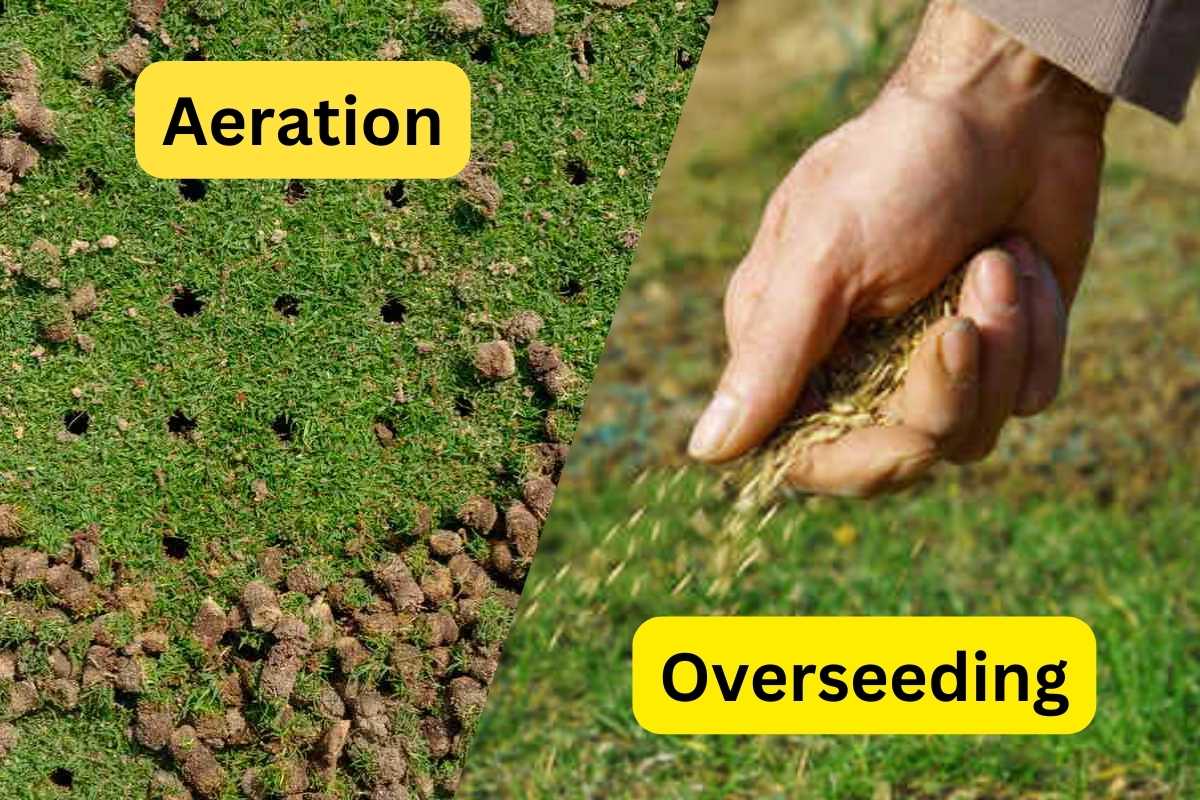
Image Source: www.lawnstarter.com
How To Aerate And Overseed Lawn Successfully: Best Tips
What is lawn aeration, and when is the best time to overseed a lawn? Lawn aeration is a process that helps your grass grow by loosening compacted soil. Overseeding a lawn means planting new grass seed over an existing lawn. The best time to overseed is typically in the fall, when temperatures are cooler and weeds are less active, or in the early spring.
Giving your lawn the care it needs to thrive can seem like a lot of work, but the rewards are clear: a lush, green carpet of grass that enhances your home’s curb appeal and provides a beautiful space for outdoor enjoyment. Two of the most impactful practices for achieving this are lawn aeration and overseeding a lawn. These aren’t just buzzwords; they are essential components of a robust lawn care regimen that rejuvenates tired turf and promotes vigorous growth.
This guide will walk you through everything you need to know to successfully aerate and overseed your lawn, transforming it from lackluster to lovely. We’ll cover the “why” and the “how,” ensuring you have the knowledge to tackle this project with confidence.
The Power of Soil Aeration: Why It Matters
Soil aeration might sound technical, but its purpose is simple: to improve the health of your soil and, by extension, your grass. Over time, foot traffic, mowing, and the natural decomposition of grass clippings can lead to soil compaction. When soil becomes compacted, air, water, and nutrients can’t penetrate the dense layers. This starves grass roots of essential elements, leading to stunted growth, thin patches, and increased susceptibility to diseases and drought.
- Improved Airflow: Aeration creates small holes in the soil, allowing air to reach the root zone. Grass needs oxygen just like any other living organism.
- Enhanced Water Penetration: Compacted soil repels water. Aeration allows water to soak deeper into the ground, reaching the roots where it’s needed most.
- Better Nutrient Uptake: With improved air and water flow, nutrients from fertilizers can more easily be absorbed by the grass roots.
- Reduced Thatch Buildup: Thatch is a layer of dead and living grass stems and roots that accumulates on the soil surface. While a thin layer is beneficial, excessive thatch can block air and water, making the lawn prone to disease. Aeration helps break down thatch.
- Stronger Root Development: When roots can easily access air, water, and nutrients, they grow deeper and stronger, creating a more resilient lawn.
When to Aerate Your Lawn
The timing of aeration is crucial for its effectiveness. The goal is to aerate when the grass is actively growing, so it can quickly recover from the process and take advantage of the improved conditions.
- Cool-Season Grasses: For lawns planted with cool-season grasses like fescue, bluegrass, and ryegrass, the best time to overseed and aerate is during the fall. Aim for late summer to early fall (August through October) when temperatures are cooling down.
- Warm-Season Grasses: For lawns with warm-season grasses such as Bermuda, Zoysia, and St. Augustine, the ideal time is late spring to early summer (May through June) when these grasses are actively growing and recovering from dormancy.
Key Principle: Aerate when your grass is at its most vigorous. This allows it to heal quickly and benefit from the loosened soil.
The Aeration Process: Step-by-Step
There are two main ways to aerate your lawn: core aeration and spike aeration.
Core Aeration: The Gold Standard
Core aeration is the most effective method. It uses a machine to pull out small plugs of soil from the lawn. These lawn plugs are left on the surface to decompose, returning valuable organic matter to the soil.
Equipment Needed:
- Core Aerator: You can rent these from most garden centers or home improvement stores. They are either self-propelled or can be attached to a riding mower or tractor.
- Gloves and Eye Protection: Safety first!
- Shovel or Rake (Optional): For collecting larger soil cores if desired.
Steps for Core Aeration:
- Mow the Lawn: Mow your lawn to a height of about 2-3 inches. This makes it easier for the aerator to penetrate the soil.
- Check for Obstacles: Before you begin, walk your lawn and mark any sprinkler heads, irrigation valves, or buried utility lines. Most aerators will pass over small objects, but it’s better to be safe.
- Operate the Aerator:
- Start the aerator and guide it across your lawn.
- Overlap each pass slightly to ensure complete coverage.
- The aerator will deposit small soil cores onto the surface.
- The ideal spacing for the plugs is typically every 2-4 inches.
- Address the Plugs: Don’t be alarmed by the plugs! They will break down naturally over a few weeks. You can speed up this process by raking over them lightly. Some people prefer to collect the plugs for composting.
- Post-Aeration Care: Avoid walking on the aerated lawn for a day or two to prevent re-compacting the soil.
Spike Aeration: A Simpler Approach
Spike aeration involves pushing spikes into the soil without removing plugs. While less effective than core aeration, it can still provide some benefit for lighter compaction.
Equipment Needed:
- Spike Aerator: These can be manual (like spiked shoes you walk in) or mechanical.
- Gloves and Eye Protection.
Steps for Spike Aeration:
- Mow the Lawn: Mow to a normal height.
- Operate the Aerator:
- If using spiked shoes, simply walk across the lawn.
- If using a mechanical spike aerator, guide it over the lawn, ensuring the spikes penetrate the soil.
- Overlap passes for thoroughness.
Comparison of Aeration Methods:
| Feature | Core Aeration | Spike Aeration |
|---|---|---|
| Effectiveness | High; removes soil cores, loosens deep compaction | Moderate; pokes holes, can help with surface issues |
| Soil Disturbance | Significant; leaves soil plugs on the surface | Minimal; leaves soil largely intact |
| Equipment | Mechanical core aerator (rental common) | Manual (spiked shoes) or mechanical spike aerator |
| Cost | Higher (rental fee) | Lower (especially manual) |
| Best For | Heavily compacted soil, significant lawn renovation | Lightly compacted soil, general lawn maintenance |
Preparing for Overseeding
Once your lawn has been aerated, it’s in the perfect state for overseeding a lawn. The aeration holes provide ideal spots for new grass seed to germinate and establish.
Dethatching Your Lawn (If Necessary)
Before you aerate, consider if your lawn needs dethatching. Dethatching is the process of removing excess thatch from the surface of the lawn. If the thatch layer is more than half an inch thick, it can hinder the benefits of aeration and overseeding.
- When to Dethatch: Dethatch cool-season grasses in the early fall, just before overseeding. Dethatch warm-season grasses in late spring or early summer when they are actively growing.
- How to Dethatch: You can rent a dethatcher (also called a power rake) or use a stiff garden rake for smaller areas. Rake the lawn vigorously in one direction, then cross-rake in the other direction. You’ll be surprised how much material you remove!
Important Note: Dethatching can be stressful for your lawn. If you aerate and overseed in the fall, it’s often best to dethatch first, then aerate, and then overseed.
The Art of Overseeding: Boosting Your Lawn’s Density
Overseeding a lawn is about introducing new, healthy grass seed to fill in thin areas, improve its resilience, and enhance its overall appearance. It’s a crucial step in lawn renovation and maintenance.
Choosing the Right Grass Seed
The type of grass seed you choose is critical. Select a blend that is suited to your climate and the specific conditions of your lawn (sunlight, shade, traffic).
-
For Cool-Season Lawns:
- Perennial Ryegrass: Germinates quickly, good for overseeding in fall. Tolerates moderate shade.
- Fine Fescues: Excellent for shady areas and drought tolerance.
- Kentucky Bluegrass: Creates a dense, beautiful lawn, but germinates slowly and needs full sun.
- Tall Fescue: Deeper roots, good drought tolerance, and wear resistance. Best for higher traffic areas.
-
For Warm-Season Lawns: Overseeding warm-season lawns is typically done with plugs or sod, not seed, as most common warm-season grasses are not easily overseeded with seed. However, some varieties can be overseeded.
Pro Tip: Buy high-quality seed from a reputable supplier. Look for seed that is specifically blended for overseeding. Many products are formulated with starter fertilizer to give the new seedlings a boost.
The Overseeding Process
Now that your lawn is aerated (and possibly dethatched), it’s time to sow the new seed.
Equipment Needed:
- Grass Seed: Your chosen variety.
- Spreader: A broadcast spreader is best for even distribution.
- Fertilizer (Optional but Recommended): A starter fertilizer high in phosphorus can help new seedlings establish.
- Rake: For lightly covering the seed.
- Watering Can or Hose with a Sprinkler: For consistent moisture.
Steps for Overseeding:
- Sow the Seed:
- Calculate the amount of seed needed based on your lawn size and the seed manufacturer’s recommendations.
- Set your spreader according to the seed bag’s instructions.
- Spread the seed evenly across the aerated lawn. If possible, spread half the seed in one direction and the other half at a perpendicular angle to ensure uniform coverage.
- Fertilize (Optional): If you are using a starter fertilizer, apply it according to the product’s directions, either before or after spreading the seed. Many overseeding seed mixes already contain starter fertilizer.
- Lightly Rake: Use a garden rake to gently work the seed into the soil and ensure good seed-to-soil contact. You want the seed to be about 1/4 inch deep. The aeration holes make this easier.
- Water Gently:
- Water the lawn lightly but consistently. The goal is to keep the top layer of soil moist, not waterlogged.
- New seed needs consistent moisture to germinate. You may need to water several times a day, especially during dry spells.
- Avoid heavy watering, which can wash the seeds away.
- Continue Watering: Keep the soil consistently moist until the new seedlings are about 2-3 inches tall.
- Adjust Mowing: Once the new grass reaches about 3 inches, it’s time to mow. However, don’t cut it too short. Set your mower to a higher setting than usual for the first few mows. Avoid mowing when the grass is wet.
Table: Overseeding Schedule and Care
| Stage | Activity | Frequency/Notes |
|---|---|---|
| Pre-Overseeding | Mow lawn, dethatch (if needed), aerate | Mow to 2-3 inches, dethatch if thatch > 0.5 inch, aerate when grass is actively growing |
| Overseeding | Apply grass seed, spread fertilizer (optional) | Use spreader for even coverage, aim for 1/4 inch depth, ensure seed-to-soil contact |
| Germination | Water lightly and frequently | Keep top inch of soil consistently moist; avoid heavy watering |
| Early Growth | Continue watering, avoid heavy foot traffic | Water until new grass is 2-3 inches tall |
| Mowing New Grass | Mow at a higher setting, don’t cut more than 1/3 of the blade | Wait until new grass is 3 inches tall; mow when dry |
| Ongoing Care | Regular watering, appropriate fertilization, weed control | Monitor lawn nutrient needs and adjust care as needed |
Post-Overseeding Care: Nurturing New Growth
The job isn’t done once the seed is sown and watered. Ongoing care is essential for the success of your overseeding effort.
Watering
- Critical for Germination: As mentioned, keeping the seedbed consistently moist is paramount for germination.
- Establishing Deeper Roots: Once the seedlings are established, gradually reduce the frequency of watering but increase the duration. This encourages the roots to grow deeper in search of water, making the lawn more drought-tolerant.
- Seasonally Appropriate: Adjust watering based on rainfall and temperature.
Fertilization and Lawn Nutrient Needs
New grass seed has specific lawn nutrient needs. Starter fertilizers are formulated with higher levels of phosphorus to promote root development.
- Initial Feeding: If you didn’t use a starter fertilizer at overseeding, apply one once the new grass has been mowed a couple of times.
- Ongoing Feeding: Follow a regular fertilization schedule for your grass type. Fall is typically the most important feeding time for cool-season grasses, followed by spring. Avoid over-fertilizing, which can burn new grass.
- Soil Testing: Consider getting a soil test to determine the specific nutrient deficiencies in your lawn. This will help you choose the most effective fertilizers and amendments.
Mowing
- First Cut: Wait until the new grass is about 3 inches tall before the first mowing.
- Mowing Height: Set your mower to a higher setting for the initial few mows. This allows the new grass to develop a strong root system. Avoid cutting off more than one-third of the grass blade at any time.
- Sharp Blades: Always use a sharp mower blade. Dull blades can tear the grass, making it more susceptible to disease.
Weed Control
- Pre-Emergent Herbicides: Avoid using pre-emergent herbicides immediately after overseeding, as they can prevent the new seed from germinating.
- Post-Emergent Herbicides: If you need to control weeds in the newly overseeded areas, use a broadleaf weed killer that is safe for young grass. Read the label carefully. It’s often best to wait until the new grass is well-established before applying any herbicides.
Troubleshooting Common Issues
Even with the best intentions, you might encounter a few bumps in the road.
Patchy Germination
- Cause: Uneven seed distribution, poor seed-to-soil contact, inconsistent watering, or excessive thatch.
- Solution: Rake the areas lightly to improve seed-to-soil contact. Ensure consistent moisture. If germination is still patchy, you may need to re-seed those areas in the fall or spring.
Weed Invasion
- Cause: Existing weed seeds germinating along with the grass seed, or new weeds blowing in.
- Solution: Proper mowing techniques (higher cut), adequate watering, and timely fertilization can help the grass outcompete weeds. Hand-pulling small weed infestations is effective. If necessary, use spot treatments with appropriate herbicides once the grass is established.
Fungus or Disease
- Cause: Overwatering, poor air circulation, or planting disease-prone grass varieties.
- Solution: Ensure proper watering practices (water deeply, less often). Improve air circulation through aeration. Choose disease-resistant grass seed varieties.
Final Thoughts on Lawn Renovation
Aerating and overseeding your lawn is a powerful combination for lawn renovation. It’s an investment in the long-term health and beauty of your turf. By understanding the principles behind soil aeration and the best practices for overseeding a lawn, you can achieve a denser, greener, and more resilient lawn that you’ll be proud to showcase. Remember that consistent lawn care is key, and these two practices are foundational to a truly spectacular lawn.
Frequently Asked Questions (FAQ)
Q1: How often should I aerate my lawn?
A1: For most lawns, aerating once a year is sufficient. Heavily compacted lawns or those with high traffic might benefit from aeration every six months.
Q2: Can I aerate and overseed at the same time?
A2: Yes, aerating before overseeding is highly recommended. The aeration holes provide ideal conditions for the new grass seed to make contact with the soil and germinate.
Q3: My lawn is very thin. Is overseeding enough?
A3: Overseeding is excellent for thinning lawns, but if your lawn is severely damaged or very sparse, you might consider a more extensive lawn renovation process, which could include dethatching, aerating, overseeding, and potentially even sodding certain areas.
Q4: What if I miss the best time to overseed?
A4: While fall is ideal for cool-season grasses, you can often get away with overseeding in early spring. However, spring overseeding comes with the challenge of competing with emerging weeds. If you miss both windows, it’s best to wait for the next optimal season.
Q5: How long does it take for overseeded grass to grow?
A5: Germination times vary depending on the grass type and conditions, but you should see new growth within 7-14 days. The new grass will continue to fill in over several weeks and months.
Q6: Can I fertilize before aerating?
A6: It’s generally best to aerate first, then fertilize. This ensures the fertilizer reaches the root zone more effectively after the soil has been loosened. However, if you’re using a starter fertilizer with your overseeding seed, it’s often applied right after sowing.
Q7: What are “lawn plugs”?
A7: Lawn plugs are small cores of soil and grass that are removed from the lawn during core aeration. These plugs are left on the surface to break down and return nutrients to the soil.